678 (film)
678, released internationally as Cairo 6,7,8,, is a 2010 Egyptian political thriller film written and directed by Mohamed Diab. The film focuses on the daily sexual harassment of women in public places and events in Egypt. The film took the Top Prize in the 2010 Dubai International Film Festival, Muhr Arab category.
| 678 | |
|---|---|
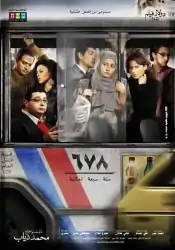 Theatrical release poster | |
| Directed by | Mohamed Diab |
| Written by | Mohamed Diab |
| Produced by | Sarah Goher |
| Starring | Bushra Nelly Karim Maged El Kedwany Bassem Samara Sawsan Badr Ahmed Al Fishawy |
| Cinematography | Ahmed Gabr |
| Edited by | Amr Salah |
| Music by | Hany Adel |
Production company | New Century Production |
| Distributed by | Renaissance Egypt Company (2010) (Egypt, theatrical) Global Film Initiative (2012) (US, all media) |
Release date |
|
| Country | Egypt |
| Language | Arabic |
Plot
The film focuses on the lives of three women of different social classes who get publicly assaulted.
Fayza (Bushra), a low-income government employee, is harassed in a taxi and assaulted in a bus (numbered 678) on the way to work. When she arrives home, she resists her husband's attempts to be intimate and doesn't explain why. Every week, she signs up for a free one-day self-defense class at Sawy Cultural Center. The class participants deny being ever sexually harassed, due to being ashamed, much to the instructor's frustration. The instructor tells Fayza not to return to the class, as she continuously denies being harassed due to being ashamed. The family is struggling for money and still needs to pay school fees. On the way home from work and defends herself using a pin from her hijab. She has then kicked off the bus.
Seba is a recently married middle-class jewelry designer, while her husband is a doctor obsessed with soccer. Before attending a match, she takes a pregnancy test and is excited to share the news with her husband. During the post-game celebration, she is assaulted in a stadium by a group of men while her husband is unable to reach her to stop it. Her husband, unable to live with what happened, starts to become distant, coming home late, avoiding her touch, and avoiding her phone calls. In her frustration, she is desperate to report her assault to the authorities but is discouraged by her mother, who insists that her report will be buried and that Seba's father's position cannot handle such a scandal. She wakes up the next morning to find herself bleeding. Left alone with no emotional support, she separates from her husband. While her husband is driving home, Fayza, who has been kicked off her bus, steps in front of his car.
Nelly Roushdy, 22 years old, is a stand-up comedian, as is her fiance, Omar. He introduces her act, jokingly stating that she isn't funny and a £E20 tip will keep her happy, to applause. However, when she appears, nobody laughs or applauds her jokes. While returning home, the majority-male audience congratulates her fiance but ignores her. While working at a call center, she is verbally harassed on a call with a customer. On her way home, while crossing the street to see her mother, a driver grabs her, groping her, and pulling her in the street. Despite being bruised and scraped, she chases the truck and grabs on. Her mother, along with other witnesses, come to her assistance, pulling the driver out of the truck and hand him over to the police. Her fiance, hearing about the event, comes to the police station. After checking that she is ok, he starts to beat up the driver, Ramadan, before being pulled away by officers. Nelly tries to file a report of assault, but the police delay, until Omar insists on a report. Nelly wants to add on a charge of harassment, but the police resist, suggesting that they don't want to make a scandal. The police change their mind, stating that they will only file an assault report and that the group needs to bring Ramadan to another precinct. Nelly appears on TV, becoming the first woman to file a sexual harassment lawsuit in Egypt.
While filming the show, various calls come in from viewers. A female viewer congratulates and supports Nelly, while a male viewer denies that harassment occurs in Egypt, insisting that Nelly had been assaulted because of her outfit. While having dinner, Nelly's mother, a professor, tells Nelly that she, along with Omar's father, have agreed to drop the lawsuit at the next court hearing, to Nelly's anger. Omar's parents insist that Nelly's reputation is more important, and that most people were against Nelly filing her report. They state that if her reputation is ruined, Omar's reputation will be ruined, too. While alone together on the balcony, Nelly tells Omar that she won't drop the lawsuit, and he tells her that he doesn't want her to drop it either. However, he suggests that if the lawsuit prevents them from marrying, Nelly should drop the case. It is revealed that Omar also works in a bank so that he and Nelly can be together, although his ideal career is his comedy. After the two go inside, the scene of Fayza getting kicked off the bus and stepping infront of Seba's husband's car is shown in the streets below.
After being kicked off the bus, Fayza is groped on her way home, and uses a knife to retaliate against her attacker. Fayza then goes to her course instructor, who is revealed to be Seba, who brings her to her house and gives her a new clothes to wear, as Fayza's has a blood stain. The next day, Fayza goes to her children's school to bring them home, only to find out that due to failure to pay the school fees, they have been punished and are left standing outside. Fayza's husband has two jobs, but they have limited money, as Fayza takes a taxi regularly to work to avoid harassment. The next day, she takes the bus to work, and the man from her previous bus trip attacks her again. She retaliates by stabbing the attacker with a knife in the groin area and leaves the bus. Fayza visits Seba at her shop, and Seba is angry with Fayza for attacking again with a knife.
Essam, an astute police detective, gets called in to investigate the blood stains on the buses from Fayza's attacks, while driving his wife, Magda, to the hospital as she is heavily pregnant. Magda wants to have a daughter, as the couple already has two sons. He places an informant on every bus. Essam visits the bus victim in the hospital, who is revealed to be an unemployed man named Nasr. Essam asks Nasr if he was stabbed in retaliation due to groping, which Nasr denies. That same evening, Fayza's husband confronts her about their lack of intimacy, but Fayza is unwilling to admit her assaults. She asks her husband if he only married her for intimacy, to which he says "yes". Essam visits the second stabbing victim, Maher, in the hospital. Essam notices a lemon in Maher's coat pocket. He asks Maher if he was carrying the lemon to do a "lemon test", where one carries a lemon in one's pocket and press against a woman. If she says nothing, she could be groped, but if she confronts him, he can deny it. Maher admits he had been stabbed in retaliation for assault. Newspapers start reporting of a mysterious person stabbing men who molest women. Following the reports, Fayza is able to take the bus more comfortably.
Essam visits Seba to inquire whether any of the course participants have been acting strangely. Fayza drops by Seba's store, but is noticed by Essam, who calls her over to him. Fayza tells him that she is just an employee stopping by, and then hides her knife in the store's bathroom. Essam visits the hospital, where he examines the jeans of the man who was stabbed in the street by Fayza. He uses a phone card and social engineering to determine the man's address. At the same time, Nelly visits the venue for Omar's next show, which is also hosting Seba's defense course, as the number of participants has multiplied. Nelly, after speaking with Seba, is sent to find Fayza, asking Fayza to sign a form giving power of attorney to Seba. Seba and Nelly tell Fayza that lawsuits don't work in Egypt, and that only Fayza's method has been working to stop men assaulting women. They tell her to attack one more time.
After discovering his identity, Essam goes with Hamdi to visit the place of his attack, discovering a pink pin, the same as from Fayza's hijab. Using the response sheets from Seba's course, Essam discovers Fayza's identity. Fayza, still with Seba and Nelly, tells them that she cannot commit any more attacks on buses because they are under surveillance. Seba says that there is one place where there can be an attack without being discovered: a post-match celebration. Seba is uncomfortable being at the game, and Essam and his team are in attendance at the game, looking for Fayza. The women cheer for the opposing team and are happy when the Egyptian team loses, as it means there will be no post-game celebration.
The three women are summoned to the police station by Essam, who tells them that if he arrests Fayza, she will receive a life sentence, but other women will come out and commit copy-cat crimes, and women's rights organizations will come out in support of the women. Thus, the women are released and warned to no longer commit any crimes. Seba starts exercising inside, and Fayza starts walking to work. On her way home, her husband gives her a rose, but Fayza doesn't want to make up. Seba is harassed by a young boy while shopping, who she catches and starts to beat up. Omar is requested by the bank to become a manager, which means that he must give up his comedy career. Essam is called to the hospital, only to find Magda went into labor and delivered a baby, but died in childbirth. Seba's husband visits her later that evening, but she tells him that she wants a divorce. She tells him that she was pregnant, and that she had lost the baby because he wasn't around when she needed him after the attack. Seba's husband is revealed to have been Magda's doctor, and the baby is a girl.
Before her next show, Nelly calls Seba and Fayza to see her, and tell them that she will take responsibility for the stabbings, as she has found the hidden knife. Seba and Fayza discourage her from doing so, and Seba says that what they did wasn't right either. Fayza gets angry and tells Seba that the reason she was attacked was because she does not wear a hijab and her clothes are short and scanty.She tells Nelly that she should feel guilty as well, because Nelly, who also doesn't wear a hijab, goes freely with her fiance, giving men the impression that women are more liberal and that women wearing hijab suffer as a result. Seba says that Fayza's backward thinking is the reason that women get harassed; what clothes a woman wears doesn't matter.
Seba cuts off her long hair, and Nelly gives the story of her assault as her act. On the bus home, Fayza sees a women getting assaulted again, but does nothing to stop it. On her bus ride home, Seba sees a man moving to grope a woman, and he is attacked with a razor blade. The man is revealed to be Fayza's husband. Fayza's husband is brought home, and Fayza finds a lemon in his clothes. She realizes what he has done and confronts him. Seba turns herself into Essam. He tells her the media will come, and to stay calm so they do not paint her as a crazy woman. Essam releases Seba, as no complaint has been made against her, since doing so would mean admitting to harassing a woman. The next day, Fayza goes to her children's school and carries out the same punishment on herself as they had, telling the principal not to punish her kids again.
At Nelly's hearing, the judge asks her if she will drop her case. Omar speaks from the audience, shouting that she will not drop her case, which Nelly echoes and Nelly's mom supports her. Essam, Seba, and Fayza are also in attendance. The film ends with Seba and Fayza making peace.
Cast
- Bushra as Fayza
- Nelly Karim as Seba
- Maged El Kedwany as Essam
- Nahed El Sebai as Nelly
- Bassem Samra as Adel
- Ahmed El-Fishawy as Sherif
- Omar El Saeed as Omar
- Sawsan Badr as Nelly's mother
- Yara Goubran as Amina
- Marwa Mahran as Magda
- Moataz Al-Demerdash as Himself
Controversies
Controversies around the film include a threatened lawsuit by Egyptian pop singer Tamer Hosny for the film's use of his song, as he did not wish it associated with the subject.[1]
Attorney Abdel Hamid Shabaan made an attempt to block the film's exhibition in the Dubai International Film Festival due to its "poor portrayal" of Egypt.[2][3] The filmmaker denied any intention to defame Egypt, as he believes the issues narrated in the film are universal.[4][5][6]
Mahmoud Hanfy Mahmoud of the Association for Human rights and Social Justice requested that the film be banned as potentially inciting women to injure men's genitals with sharp tools, but filmmakers argued that it did not encourage but merely documented the practice of some women carrying such tools for self-defense.[7]


References
- تامر حسنى غاضب من مخرج فيلم 678 [678 film doen't smear Egypt's reputation] (in Arabic). EgyTv. 2010-12-09. Archived from the original on 2010-12-11.
- "678 film doesn't smear Egypt's reputation". Horeytna. 2010-11-12. Archived from the original on 2010-11-24. Retrieved 2012-02-20.
- "Film shines spotlight on Egypt's sexual harassment". The national. 2010-12-14.
- "678 film doesn't tarnish Egypt's reputation, the whole world is suffering from sexual harassment". The national. 2010-10-09. Archived from the original on 2010-12-19. Retrieved 2012-02-20.
- "Film shines spotlight on Egypt's sexual harassment". The National. 2010-12-21.
- "Does not defame Egypt". NDP. 2010-12-14.
- "Citing potential harm to men's 'sensitive spots,' activist urges film ban". Al-Masry Al-Youm. 2010-12-27. Archived from the original on 2011-02-02. Archived from the original in Wayback Machine
External links
- 678 at IMDb
- "SIX, SEVEN, EIGHT". Dubai International Film Festival Official Website. 2010-12-19. Archived from the original on 2010-12-22.
- "An Exposé on Sexual Harassment". Cairo 360.
- El-Hennawy, Noha (2010-12-17). "678: Sexual harassment in a movie". Egypt Independent (Al-Masry Al-Youm). Retrieved 2013-05-14.
- 2010 Dubai International Film Festival
- Lebanese Civil War drama wins best film at DIFF; Egypt receives best acting prizes
- El Shoush, Maey. "Film shines spotlight on Egypt's sexual harassment." The National. December 14, 2010.
- Mohsen, Ali Abdel. "The ‘S’ word: Egyptian documentary film examines Cairo’s sex life" (Archive). Egypt Independent. Monday 11/10/2010.