Abdel Karim al Kabli
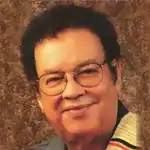
Abdel Karim al Kabli (Arabic: عبد الكريم الكابلي), sometimes spelled el Kably or al Kably (1932 – 2 December 2021), was a Sudanese singer, poet, composer, songwriter and humanitarian known for his songs with themes of love, passion, nationalism, Sudanese culture and folklore.
Abdel Karim el Kabli | |
|---|---|
 | |
| Background information | |
| Born | 1932[1] Port Sudan, Anglo-Egyptian Sudan, Egypt |
| Died | (aged 89)[1] |
| Genres | Music of Sudan, Arabic music |
| Occupation(s) | Singer, songwriter, composer, poet, oud player, humanitarian |
| Instruments | oud, shetern and pennywhistle |
| Years active | 1960–2021 |
| Website | http://www.alkabli.net |
Early life
Al Kabli was born in the city of Port Sudan in 1932.[1] During childhood, he developed an interest in the Arabic language, especially the old Arabic poems, and learned to play music on a penny whistle. At the age of sixteen, he moved to Khartoum to attend the Khartoum Commercial Secondary School, where he studied Sudanese folk music and Arabic poetry. His musical interest evolved to the oud (lute) and shetern (small drum), which he learned by himself.[2]
Al Kabli's songs
Al Kabli's songs contain a diversity of topics and scenes including love, passion, revolution, nationalism and Sudanese folklore. Some of his songs make use of old Arabic poems. Others are in Sudanese Arabic dialect that require deep knowledge of the language and customs.
Some of his famous songs include "Ya Bint Ashreen" (O that Girl in her twenties), "Husenek Fa Masher" (My Love Is More Than The Sweet Perfume...), "Sukker Sukker" (Sugar Sugar),[3] "Asia wa Africa" (Asia and Africa), "Noama", "Cleopatra", "Limaza" (Why?), and "Merowi".
He was very active in peace and reconciliation efforts in Darfur and South Sudan and, through his music and his social influence, stressed the richness of the ethnic diversity in the country. In 2005, he joined other well-known artists and musicians and travelled to South Darfur during the 16 Days of Activism for Violence Against Women, where he performed in camps for the internally displaced and in the Nyala stadium. His music and his poetry latterly focussed on women's equality and women's health. He was an honorary Goodwill Ambassador for the United Nations Population Fund.
Death
Al Kabli died on 2 December 2021, in the United States, where he had lived with his family in the years before his death.[4]
Awards
- On 12 May 2002, El Kabli was awarded an honorary doctorate in literature from Nyala University, Nyala, Sudan
- He was presented with the Gold Award by Algerian President Abdelaziz Bouteflika
- On 7 October 2004, he was awarded the UNFPA Goodwill Ambassador for Obstetric Fistula in Sudan for his advocacy for women's health, gender equality and human rights.
- In January 2008, he was awarded his second honorary doctorate in music and arts from Sudan University.
See also
References
- "Décès d'Abdel Karim al-Kabli, icône de la musique et de la révolution soudanaise". Radio France Internationale. 3 December 2021. Retrieved 3 December 2021.
- "Abdel Karim el Kabli | Biography & History | AllMusic". AllMusic. Retrieved 2 August 2018.
- "Abdel Karim El Kably* – Sudan: The Music And Songs Of Abdel Karim El Kably". discogs. Retrieved 2 August 2018.
- "Saad Alkabli*". twitter. Retrieved 2 December 2021.
External links
- Al Kabli Official Homepage
- Al Kabli KIF Official Organization Homepage
- Al Kabli's Facebook page
- Al Kabli CDs Online
- Al Kabli's Book "Melodies not Militants "
- Abdel Karim al Kabli discography at Discogs
Authority control  |
|---|