BASICS Scotland
The British Association for Immediate Care Scotland (BASICS Scotland) is an organisation involved with prehospital care. It has the aims of providing encouragement and aid with the formation of immediate care schemes and to provide training to support those working in prehospital care. It shares its origins with the British Association for Immediate Care (BASICS), a similar organisation which has UK wide coverage.. In 1993, the British Association for Immediate Care began running prehospital care courses in Scotland, which were met with a warm welcome and it became clear there was a large audience for such education,[1] especially in remote and rural areas of Scotland. This need for training and organisational leadership became clearer after the 1994 Scotland RAF Chinook crash on the Mull of Kintyre. This led to the training provided by BASICS to be modified for a more rural setting, and to the development of BASICS Scotland as a separate organisation in 2002.
 BASICS Scotland logo | |
| Formation | 1977 / 2002 |
|---|---|
| Type | |
| Headquarters | Sandpiper House, Aberuthven Enterprise Park, Aberruthven, PH3 1EL |
Region | United Kingdom |
Chairperson | Dave Bywater |
Vice Chairperson | Duncan Tripp |
| Website | basics-scotland |
Purpose
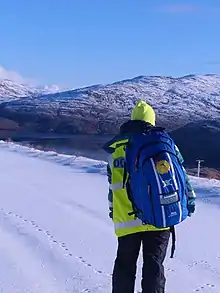
BASICS Scotland is an association of health care professionals, who undertake additional training as immediate care practitioners. The members provide their services in support of the statutory or voluntary ambulance services.[2][3] BASICS Scotland in coordination with The Sandpiper Trust is also a keen promoter of first aid and emergency prehospital care.[4]
BASICS Scotland responders, many of whom are General Practitioners,[5][6] are able to offer additional skills and resources to the other statutory and voluntary emergency services.[7][8] In this role, responders are dispatched by the Scottish Ambulance Service control room, and many responders carry radios or telephones with tracking capabilities to allow control room staff to know when a responder is in close proximity to an incident. These responders are integrated into the pan-Scotland trauma network.[9] Responders who are medical doctors on the General Medical Council register may use emergency Green Beacons on their car to alert other road users intentions (although such lights do not provide exemptions from road traffic law).[10]
BASICS Scotland responders have been present at many serious incidents across Scotland for many years, including:
BASICS Scotland also provided initial and now ongoing support to the Highland PICT Team, a prehospital enhanced care team working in the North of Scotland.
Notable Individuals
Throughout the history of BASICS Scotland there have been a number of individuals, notable for their huge contributions to prehospital care in Scotland.
- Prof Colville Laird FIMC (RCSEd) MBE - Founder and later medical director of BASICS Scotland until 2018. He is an expert in prehospital care, particularly in relation to rural Scotland[18][19][20][21] and major incident management.[22]
- Dr Richard Price FRCA FFICM DipIMC (RCSEd) - Clinical Director and Consultant in Anaesthesia and Intensive Care.
- Mr Duncan Tripp OBE, Winchman Paramedic, Board of Directors [23][24][25][26]
The Role the Sandpiper Trust

The Sandpiper Trust is a charity formed to provide remote and rural medical (and paramedical) practitioners with equipment that would allow them to safely provide high quality immediate care at the scene of an illness or accident.[27] The organisation has also supported leaps forwards in prehospital care in Scotland.[20] An early benefit of this organisation was the bespoke design of the Sandpiper Bag specifically for rural prehospital care.
The Sandpiper Bag is now the recognised standard pre-hospital care equipment in Scotland and is used extensively on the BASICS Scotland courses. It is also the being used on the prehospital Diploma examinations by the Faculty of Prehospital Care, Royal College of Surgeons of Edinburgh.[28] Sandpiper Bags have also made their way to Australia with the development of Sandpiper Australia.[29]
History
BASICS Scotland originally formed as part of the British Association for Immediate Care, which was established in June 1977.[30] Kenneth Easton, a General Practitioner, was the first chairman of the organisation.[31] Since then BASICS Scotland has become fully independent from BASICS[32] and has diversified its educational provision across Scotland. In 2001 The Sandpiper Trust was formed, which raises significant amounts of money to support the work of BASICS Scotland.
COP26 Conference Medical Centre
In 2021, BASICS Scotland and the Scottish Ambulance Service ran a medical centre for attendees at the COP26 Climate Change Conference in Glasgow, during October and November 2021.[33]
Educational Activity
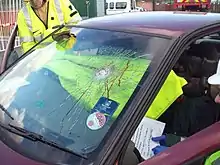
BASICS Scotland provides a number of face-to-face and online courses as well as annual conferences. It also has a voice at national level[34] and direct involvement with the work of the Royal College of Surgeons in relation to their Faculty of Prehospital Care. Training provided by the organisation has also included the use of a simulation vehicle to practice extrication of casualties who have been involved in a car crash.[35] The organisations has also delivered bespoke training courses, to audiences such as dental practitioners, individual GP practices, Occupational Health Doctors and Nurses, Custody Doctors and Immigration Centre Health Practitioners. They have also been involved in public health messages related to acute illness and injury.[36]
Conferences
BASICS Scotland holds annual conferences covering a range of topics of interest to those involved in prehospital and rural emergency care. These conferences are usually held in Aviemore, Scotland. In light of the global pandemic, the 2021 conference was a Virtual Conference focusing on Hypothermia.[37] This was attended by delegates from around the world, and recordings of the talks were placed online for members of BASICS Scotland to view.
Conference Themes
- 2015 - "Back to Basics"
- 2016 - "The Evidence, The Practice"
- 2017 - Cardiac Arrest: "It Takes a System to Save a Life"
- 2018 - Prehospital Care: "Across the Generations"
- 2019 - Prehospital Trauma
- 2021 - Hypothermia
Courses
BASICS Scotland run a number of courses;
- Prehospital Emergency Care Course (PhEC):[38] The material covered and assessed is based on the RCSEd material from the “ Foundation Material For Prehospital Care ” manual from the Faculty of Pre-Hospital Care. The course is open to doctors, nurses and paramedics who work, or have an interest in working in, the pre-hospital environment and is being redesigned and updated for 2021.
- PHPLS: The Prehospital Paediatric Life Support[39] course is accredited by the ALSG. It aims to provide the knowledge and practical procedures necessary for assessment and effective treatment of childhood emergencies prior to hospital admission.
- GIC
- Custody Suite Training
- MIMMS
- HMIMMS
- Tele-Education
- Remote Skills
- Portfolio Project[40][41]
Podcasts
The organisation also produce a suite of podcasts, which included various guest speakers form other emergency services, such as Police Scotland and HM Coastguard. These have covered a wide range of topics such as traumatic and paediatric cardiac arrest management, forensic considerations for responders and prehospital analgesia.
Medical Students
BASICS Scotland aims to undertake annual teaching for medical students. Having previously taught students from Dundee University, University of St Andrews and University of Central Lancashire.
See also
Other Scottish emergency and non-emergency services:
References
- "Colville Laird retires from BASICS Scotland". Clinical Skills Managed Education Network. NHS Scotland.
- Ian Greaves; Keith Porter; Keith M. Porter (2007). Oxford Handbook of Pre-Hospital Care. OUP Oxford. pp. 62–. ISBN 978-0-19-851584-5.
- "Call for NHS to fund BASICS emergency doctors". BBC News. 22 September 2012. Retrieved 25 May 2014.
- Baker, Pete. "What to do if you're 'first on scene' to a motorcycle accident". Motorcycle News. Retrieved 31 May 2020.
- Matt Burkes; Alec Logan (2 June 2014). The Good GP Training Guide. Royal College of General Practitioners. pp. 320–. ISBN 978-0-85084-394-1.
- Scottish Ambulance Service (2009). Our Future Strategy Consultation Findings 2009 (PDF).
- Price, R J; Laird, C (2009). "A survey of surgical airway experiences and equipment among immediate care doctors". Emergency Medicine Journal. 26 (6): 438–441. doi:10.1136/emj.2008.059998. ISSN 1472-0205. PMID 19465621. S2CID 8203159.
- Carlin, B (2005). "Commentary from BASICS Scotland". Emergency Medicine Journal. 22 (4): 296. doi:10.1136/emj.2004.022871. ISSN 1472-0205. PMC 1726751. PMID 15788841.
- "The Scottish Trauma Network: Developments and impact" (PDF). Scottish Trauma Network. Retrieved 31 May 2020.
- Mallinson, Tom (2020-10-06). "Does driving using a Green Beacon reduce emergency response times in a rural setting?". www.rrh.org.au. Retrieved 2021-03-14.
- Keyden, Nicholas (2019-03-07). "School bus carrying children collides with lorry in rush-hour car smash". Daily Record. Retrieved 2020-09-01.
- Robertson, Kirsten. "Teen taken to hospital following A90 school bus crash". Press and Journal. Retrieved 2020-09-01.
- "BASICS Doctor treated trapped patient – BASICS Scotland". Retrieved 2020-09-01.
- MacLennan, Scott. "Latest road death victim named by police after A9 horror crash". Press and Journal. Retrieved 2020-09-01.
- "Car crashes into house and bursts into flames". BBC News. 2019-11-23. Retrieved 2020-09-01.
- Currie, David (2019). "The Avalanche at Lewes: East Sussex (1836)". Journal of Paramedic Practice. 11 (7): 314–315. doi:10.12968/jpar.2019.11.7.314. ISSN 1759-1376. S2CID 199097248.
- "Moffat Mountain Rescue Team". Retrieved 2020-09-01.
- Holly, Deirdre; Swanson, Vivien; Cachia, Philip; Beasant, Beverley; Laird, Colville (2017). "Development of a behaviour rating system for rural/remote pre-hospital settings". Applied Ergonomics. 58: 405–413. doi:10.1016/j.apergo.2016.08.002. hdl:1893/24056. ISSN 0003-6870. PMID 27633237.
- Fitzpatrick, David; McKenna, Michael; Duncan, Edward A. S.; Laird, Colville; Lyon, Richard; Corfield, Alasdair (2018). "Critcomms: a national cross-sectional questionnaire based study to investigate prehospital handover practices between ambulance clinicians and specialist prehospital teams in Scotland". Scandinavian Journal of Trauma, Resuscitation and Emergency Medicine. 26 (1): 45. doi:10.1186/s13049-018-0512-3. ISSN 1757-7241. PMC 5984735. PMID 29859121.
- Fickling, Keri; Clegg, Gareth; Jensen, Keith; Donaldson, Lorna; Laird, Colville; Bywater, Dave (2019). "PP22 Sandpiper wildcat project – saving lives after out-of-hospital cardiac arrest in rural grampian". Emergency Medicine Journal. 36 (1): e9.1–e9. doi:10.1136/emermed-2019-999.22. ISSN 1472-0205. S2CID 81246069.
- Jim Wardrope; Peter Driscoll; Colville Laird; Malcolm Woollard (1 January 2008). Community Emergency Medicine. Elsevier Health Sciences. ISBN 978-0-443-10325-4.
- Advanced Life Support Group (ALSG) (12 March 2012). Major Incident Medical Management and Support: The Practical Approach at the Scene. John Wiley & Sons. pp. 11–. ISBN 978-1-4051-8757-2.
- "Bristow Winchman Duncan Tripp Recognized as Member of the Order of the British Empire by the Queen". Bristow Group Inc. Retrieved 2021-03-05.
- "Duncan TRIPP". www.thegazette.co.uk. Retrieved 2021-03-05.
- "2015 birthday honours for service personnel and defence civilians". GOV.UK. Retrieved 2021-03-05.
- "Working-with-Search-and-Rescue-Helicopters-V1.0 | Search And Rescue | Emergency Services". Scribd. Retrieved 2021-03-05.
- "TOGETHER WE CAN SAVE MORE LIVES IN SCOTLAND". The Sandpiper Trust. Retrieved 31 May 2020.
- "Sandpiper Bags". RCSEd. Retrieved 31 May 2020.
- "Sandpiper Bags". Sandpiper Australia. Retrieved 31 May 2020.
- "BASICS". The Journal of the Royal College of General Practitioners. 29 (200): 133–135. March 1979.
- "Basics" (PDF). British Medical Journal. 2 (6142): 912. 30 September 1978. doi:10.1136/bmj.2.6142.912. PMC 1608035. PMID 709123.
- "BASICS SCOTLAND Company number SC226924". Companies House. Retrieved 31 May 2020.
- https://twitter.com/scotgovhealth/status/1458129519160725504?s=20
- Scottish Government. OUT-OF-HOSPITAL CARDIAC ARREST A STRATEGY FOR SCOTLAND (PDF).
- Langran, M (2006). "A road traffic accident simulation vehicle for training prehospital practitioners". Emergency Medicine Journal. 23 (4): 318–320. doi:10.1136/emj.2005.029546. ISSN 1472-0205. PMC 2579513. PMID 16549584.
- "What to do if you're 'first on scene' to a motorcycle accident". www.motorcyclenews.com. Retrieved 2021-03-14.
- Galpin, Hamish. "BASICS Scotland Hypothermia Virtual Conference – The BASICS of Hypothermia: An International Approach". Retrieved 2021-03-14.
- BASICS Scotland. PHEC Course Factsheet (PDF). BASICS SCOTLAND.
- "Pre-Hospital Paediatric Life Support (PHPLS) – BASICS Scotland". Retrieved 2021-03-14.
- Ford, Steve. "Emergency training scheme for nurses in remote Scottish areas". Nursing Times. Retrieved 31 May 2020.
- BASICS Scotland. "BASICS Scotland Emergency Medicine Training Portfolio Project". BASICS Scotland. Retrieved 31 May 2020.

