M.I.U. Album
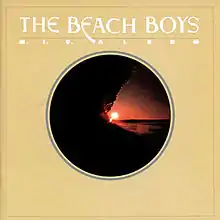
M.I.U. Album is the 22nd studio album by American rock band the Beach Boys. Released on September 25, 1978, it marked their final recording for Reprise. Recorded during one of the most acrimonious periods in the band's history, only Mike Love, Al Jardine, and Brian Wilson appear consistently throughout the album, with Carl and Dennis Wilson's contributions confined to a handful of tracks. Produced by Jardine and Beach Boys touring member Ron Altbach under the nominal aegis of executive producer Brian Wilson, the album's title stems from Maharishi International University in Fairfield, Iowa, where the majority of the album was recorded.
| M.I.U. Album | ||||
|---|---|---|---|---|
 | ||||
| Studio album by | ||||
| Released | September 25, 1978 | |||
| Recorded |
| |||
| Studio |
| |||
| Genre | ||||
| Length | 32:19 | |||
| Label | Brother/Reprise | |||
| Producer | ||||
| The Beach Boys chronology | ||||
| ||||
| Singles from M.I.U. Album | ||||
| ||||
Background
Their last album for Reprise, M.I.U. Album was mostly recorded at Maharishi International University in Iowa at the suggestion of Mike Love.[1] It was largely produced by Al Jardine and Beach Boys touring member Ron Altbach. Dennis and Carl Wilsons' contributions were limited.[2] Reflecting on M.I.U. Album in a 1992 interview, Love opined that "there's some neat gems there but there wasn't a coherence."[3]
Brian Wilson, speaking in 1995, said that he could not remember making the album, claiming that he had gone through a "mental blank-out" during this period.[4] He had been credited as the album's "executive producer", but according to biographer Peter Ames Carlin, the credit was likely for contractual reasons.[2] Wilson's former bodyguard Stan Love said, "Brian was putting in his time, but he wasn't too happy. He was depressed and on medication."[5] Stan added that Wilson did not want to produce his bandmates because he resented them personally. In particular, "Brian didn't want to write with [Mike] anymore, but of course Mike tried to hang on."[6]
Release
M.I.U. Album peaked at number 151 in the U.S. and was the Beach Boys' first album since 1964 to miss the UK chart completely. Asked about M.I.U. Album in the British press, Dennis Wilson said that he did not "believe in that album" and that it was "an embarrassment to my life. It should self-destruct... I hope that the karma will fuck up Mike Love's meditation forever."[7] The Jardine-led cover of The Del-Vikings' "Come Go with Me" became a US No. 18 hit in late 1981, when it was released by Brother/Caribou/CBS as a single from the Ten Years of Harmony compilation.
According to music critic Nick Kent, the album was so "dreadful" that its "pitiful content" was ignored by critics.[8] Upon release, Rolling Stone's Tom Carson stated,
M.I.U. Album seems contrived and artificial right from the start. The tracks strive to recapture the dreamy, adolescent innocence of the Beach Boys' earliest hits, and fail not so much because the concepts are dated but because the group can't infuse the new material with the same sense of grandeur that made the old songs such archetypal triumphs. [...] Throughout, the lackluster playing and singing has a melancholy edge, almost as if the Beach Boys are fully aware that they've outgrown this kind of teen fantasy, but can't think of anyplace else to go.[9]
Retrospective assessments
| Review scores | |
|---|---|
| Source | Rating |
| AllMusic |   [10] [10] |
| Blender | [11] |
| Christgau's Record Guide | C[12] |
| Encyclopedia of Popular Music | [13] |
| MusicHound | woof![14] |
| The Rolling Stone Album Guide | [15] |
Reviewing the album's 2002 reissue, The A.V. Club's Keith Phipps stated, "M.I.U. is competent enough, but it's also the sound of a group buying into its own mythology, a retrograde salute to the pinstripes and sunshine image it had abandoned years before."[16] AllMusic's John Bush issued a more negative review, stating, "The mainstream late-'70s production techniques are predictable and frequently cloying. M.I.U. Album also included several of the worst Beach Boys songs ever to make it to vinyl. [...] Compared with what had come before, M.I.U. Album was a pathetic attempt at music making; compared with what was to come however, this was a highlight."[10]
Track listing
Track details per 2000 CD liner notes.[17]
| No. | Title | Writer(s) | Lead vocals | Length |
|---|---|---|---|---|
| 1. | "She's Got Rhythm" | Brian Wilson, Mike Love, Ron Altbach | B. Wilson | 2:27 |
| 2. | "Come Go With Me" | C.E. Quick | Al Jardine | 2:06 |
| 3. | "Hey Little Tomboy" | B. Wilson | Love, C. Wilson, B. Wilson | 2:25 |
| 4. | "Kona Coast" | Al Jardine, Love | Love and Jardine | 2:33 |
| 5. | "Peggy Sue" | Buddy Holly, Jerry Allison, Norman Petty | Jardine | 2:15 |
| 6. | "Wontcha Come Out Tonight" | B. Wilson, Love | B. Wilson and Love | 2:30 |
| No. | Title | Writer(s) | Lead Vocals | Length |
|---|---|---|---|---|
| 1. | "Sweet Sunday Kinda Love" | B. Wilson, Love | C. Wilson | 2:42 |
| 2. | "Belles of Paris" | B. Wilson, Love, Altbach | Love | 2:27 |
| 3. | "Pitter Patter" | B. Wilson, Love, Jardine | Love and Jardine | 3:14 |
| 4. | "My Diane" | B. Wilson | Dennis Wilson | 2:37 |
| 5. | "Match Point of Our Love" | B. Wilson, Love | B. Wilson | 3:29 |
| 6. | "Winds of Change" | Altbach, Ed Tuleja | Jardine and Love | 3:14 |
| Total length: | 32:19 | |||
Personnel
Per 2000 CD liner notes.[17]
The Beach Boys
- Al Jardine – vocals, guitar, bass guitar, vocal arrangements
- Mike Love – vocals
- Carl Wilson – vocals, guitar
- Brian Wilson – vocals, piano, electric piano, vocal and horn arrangements
- Dennis Wilson – vocals, drums (on "My Diane", "Hey Little Tomboy", "Come Go With Me" and "Peggy Sue"[18])
Additional musicians
- Ron Altbach – piano, electric piano, organ, percussion, synthesizer, horns
- Gary Griffin – piano, electric piano, organ, synthesizer, string arrangements
- Ed Carter – guitar, bass guitar
- Billy Hinsche – guitar
- Mike Kowalski – drums, percussion
- Chris Midaugh – steel pedal guitar
- Michael Andreas – saxophone, horn arrangements
- Charles Lloyd – saxophone
- Lance Buller – trumpet
- John Foss – trumpet
- Rod Novak – saxophone
- Charlie McCarthy – saxophone
- Bob Williams – saxophone
- Roberleigh Barnhardt – string arrangements
Recording engineering personnel & assistants
- Al Jardine – producer
- Ron Altbach – producer
- Brian Wilson – executive producer
- Diane Rovell – music coordinator
- John Hanlon – recording engineer
- Earle Mankey – recording engineer
- Stephen Moffitt – recording engineer
- Jeff Peters – recording engineer, final mixdown producer
- Bob Rose – recording engineer
Artwork
- Dean O. Torrence – album design, graphics
- The Beach Boys – album design, graphics
- Warren Bolster/Surfer Magazine – front cover photography
- Guy Webster – back cover photography
References
Citations
- Carlin 2006, p. 224.
- Carlin 2006, p. 225.
- "Good Vibrations? The Beach Boys' Mike Love gets his turn". Goldmine. September 18, 1992.
- Benci, Jacopo (January 1995). "Brian Wilson interview". Record Collector. UK (185).
- Gaines 1986, p. 305.
- Carlin 2006, pp. 223–224.
- Adam, Webb (December 14, 2003). "A Profile of Dennis Wilson – The Lonely One". The Guardian.
- Gaines, Steven S. (1995-08-21). Heroes and villains: the true story of the Beach Boys. Basic Books. p. 305. ISBN 978-0-306-80647-6.
- Carson, Tom (November 16, 1978). "M.I.U. Album". Rolling Stone.
- Bush, John. "M.I.U. Album". AllMusic.
- Wolk, Douglas (October 2004). "The Beach Boys M.I.U. Album/L.A. (Light Album) ". Blender. Archived from the original on June 30, 2006. Retrieved June 2, 2017.
- Christgau, Robert (1981). "Consumer Guide '70s: B". Christgau's Record Guide: Rock Albums of the Seventies. Ticknor & Fields. ISBN 089919026X. Retrieved February 21, 2019.
- Larkin, Colin, ed. (2006). The Encyclopedia of Popular Music (4th ed.). London: Oxford University Press. p. 479. ISBN 978-0-19-531373-4.
- Graff, Gary; Durchholz, Daniel (eds) (1999). MusicHound Rock: The Essential Album Guide. Farmington Hills, MI: Visible Ink Press. p. 84. ISBN 1-57859-061-2.CS1 maint: extra text: authors list (link)
- Brackett, Nathan; with Hoard, Christian, eds. (2004). The New Rolling Stone Album Guide (4th ed.). New York, NY: Fireside/Simon & Schuster. p. 46. ISBN 0-7432-0169-8.
- Phipps, Keith (Mar 29, 2002). "The Beach Boys: M.I.U. Album/L.A. (Light Album)". The A.V. Club.
- Tamarkin, Jeff (2000). M.I.U./L.A. Light Album (booklet). The Beach Boys. California: Capitol Records.
- http://smileysmile.net/board/index.php/topic,21772.25.html
Bibliography
- Carlin, Peter Ames (2006). Catch a Wave: The Rise, Fall, and Redemption of the Beach Boys' Brian Wilson. Rodale. ISBN 978-1-59486-320-2.
- Gaines, Steven (1986). Heroes and Villains: The True Story of The Beach Boys. New York: Da Capo Press. ISBN 0306806479.
External links
- M.I.U. Album at Discogs (list of releases)

Authority control  |
|---|