Bir el Qutt inscriptions
The Bir el Qutt inscriptions[a] (Georgian: ბირ ელ ქუტის წარწერები) are the Old Georgian Byzantine mosaic inscriptions written in the Georgian Asomtavruli script which were excavated at a St. Theodore[2] Georgian monastery in 1952[3][4] by Italian archaeologist Virgilio Canio Corbo[5] near Bir el Qutt, in the Judaean Desert, 6 km (3.7 mi) south-east of Jerusalem and 2 km (1.2 mi) north of Bethlehem.[6] The whole complex was built of reddish limestone.[7]
| Bir el Qutt inscriptions | |
|---|---|
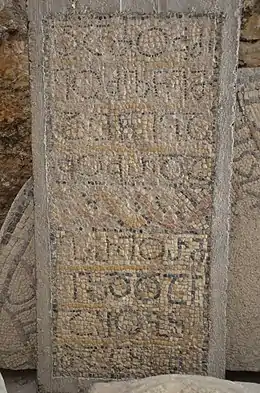 Inscription 1 | |
| Material | Mosaic |
| Size | 98 cm × 45 cm (39 in × 18 in) (inscription 1)[1] |
| Writing | Georgian script |
| Created | AD 430 (inscription 1 & 2) AD 532 (inscription 3) |
| Discovered | 1952, by Virgilio Canio Corbo |
| Present location | Studium Biblicum Franciscanum, Jerusalem |
| Language | Old Georgian |
Georgian inscriptions were found on a mosaic floor.[8][9] Two inscriptions are dated AD 430 and the third one AD 532.[10][11] The inscriptions in memoriam mention Peter the Iberian[12] alongside his father, and also Bacurius the Iberian who is thought to be a possible maternal great-uncle[13] or grandfather of Peter.[14][15] Peter reputedly was the founder of the monastery.[16]
So far, the first two carvings are the oldest extant Georgian inscriptions.[17] The inscriptions are kept at the museum of the Studium Biblicum Franciscanum in Jerusalem.[18] Inscription 2 mentioning Peter the Iberian is currently missing.[19]
Inscriptions
Inscription 1
ႣႠ ႻႭჃႻ
ႤႭჃႪႬႨ Ⴋ
ႠႧႬႨ ႡႠ
ႩႭჃႰ ႣႠ
ႢႰႨ ႭႰႫ
ႨႦႣ ႣႠ Ⴌ
ႠႸႭႡႬႨႫႠႧႬႨ Ⴕ
Inscription 2
ႼႫႨႣႠႭ ႧႤႭႣႭႰ
Ⴄ ႫႠႰ Ⴌ ႣႠ ႡႭჃ
ႰႦ Ⴌ ႤႬ ႠႫႨ
Inscription 3
.jpg.webp)
ႸႤႼႤႥႬႨႧႠ Ⴕ ჁႱႨႧႠ ႣႠ Ⴋ
ႤႭႾႤႡႨႧႠ ႼႫႨႣႨႱႠ ႣႠ Ⴇ ႤჂႱႨႧႠ
ႸႬ ႠႬႲႭႬႨ ႠႡႠჂ ႣႠ ႨႭႱႨႠ ႫႭ
ႫႱႾႫႤႪႨ ႠႫႨႱ ႱႤႴႨႱႠჂ ႣႠ ႫႠႫႠ ႣႤႣႠჂ ႨႭႱႨႠჂႱႨ ႠႫႤႬ
Notes
References
- Tchekhanovets, p. 144
- Khurtsilava, p. 26
- Khurtsilava, p. 13
- Corbo, p. 110
- Khurtsilava, p. 6
- Tchekhanovets, p. 137
- Tchekhanovets, p. 138
- Tchekhanovets, p. 140
- Corbo, p. 136
- Rayfield, p. 41
- Khurtsilava, p. 17
- Corbo, p. 130
- Rayfield, p. 39
- Khurtsilava, p. 24
- Tchekhanovets, p. 148
- Rayfield, p. 40
- Tchekhanovets, p. 146
- Tchekhanovets, p. 141
- Khurtsilava, p. 18
- Tchekhanovets, pp. 144—145
- Khurtsilava, p. 23
- Corbo, pp. 137—138
- Tchekhanovets, p. 145
- Khurtsilava, p. 19
- Corbo, p. 138
- Tchekhanovets, p. 143
- Khurtsilava, p. 16
- Corbo, p. 135
Bibliography
- Corbo, V. C. (1955) Gli scavi di Kh. Siyar el-Ghanam (Campo dei pastori) e i monasteri dei dintorni, Tip. dei PP. Francescani
- Tchekhanovets, Y. (2018) The Caucasian Archaeology of the Holy Land: Armenian, Georgian and Albanian communities between the fourth and eleventh centuries CE, Brill Publishers, ISBN 978-90-04-36224-6
- Khurtsilava, B. (2018) Traces of the Georgians on the Holy Land, Tbilisi, ISBN 978-9941-8-0042-9
- Rayfield, D. (2013) Edge of Empires: A History of Georgia, Reaktion Books, ISBN 9781780230702
Further reading
- Hewitt, B.G. (1995). Georgian: A Structural Reference Grammar. John Benjamins Publishing. ISBN 978-90-272-3802-3.
- Djobadze, W. (1976) Materials for the study of Georgian monasteries in the Western environs of Antioch on the Orontes, Volume 48; Volume 372, Corpussco
- Tsereteli, G. (1961) The oldest Georgian inscriptions from Palestine, Tbilisi, 1960
- Chachanidze, V. (1977) Peter the Iberian and the archaeological excavations of Georgian monastery in Jerusalem, Tbilisi
External links
- Lombardo, S. & Scardigno, C. (2018) I mosaici di Bir el-Qutt, tra le più antiche testimonianze di lingua georgiana Terra Sancta Museum