Bisober massacre
The Bisober massacre was a mass extrajudicial killing that took place in Bisober (Tigrinya: ብሶበር) in the Tigray Region of Ethiopia during the Tigray War, on 14–17 November 2020.[1] Bisober is a village that belongs to tabiya Bala Ulaga, woreda Chercher, Southern zone of Tigray; its population is composed of Tigrayans, Oromo, Afar and Amhara.[2][3]
| Bisober massacre | |
|---|---|
| Part of Tigray War | |
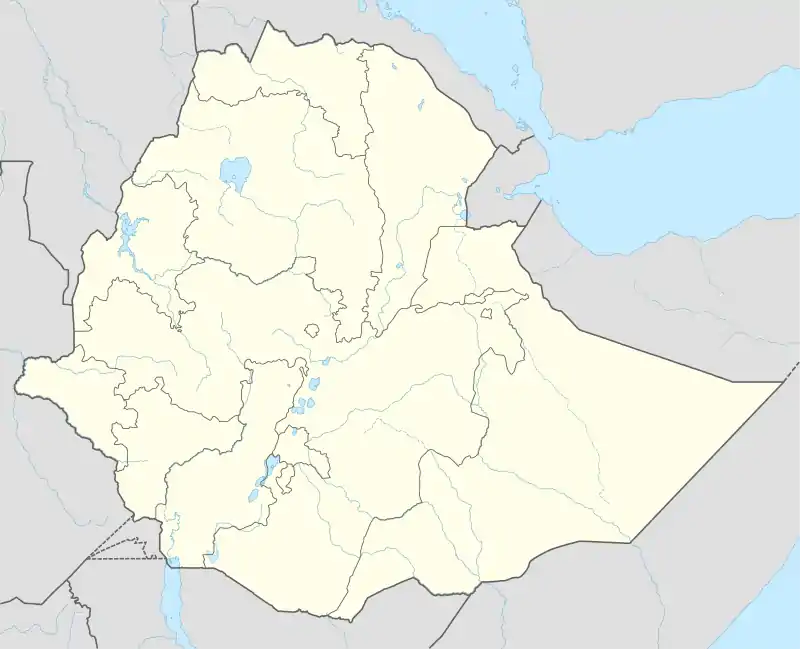  Bisober 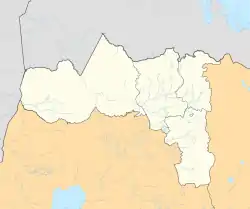 Bisober Location of Bisober in Ethiopia | |
| Location | Bisober (Tigrinya: ብሶበር), Tigray Region, Ethiopia |
| Date | 14–17 November 2020 |
| Target | Tigrayans |
Attack type | |
| Deaths | 27-31 civilians |
| Perpetrators |  Ethiopian National Defence Force Ethiopian National Defence Force |
Massacre
During the first week of war, artillery shelling killed 27 civilians in Bisober (Southern Tigray) on 14–17 November 2021.[1][4] In the three days it took the ENDF to wrest control of the village from the Tigray regional forces, 27 civilians died, according to local officials and residents: 21 from shelling and six in extrajudicial killings, particularly of people who were accused of being “TPLF informants”.[5]
In an apparent rage, the soldiers accused [my son] Miskana and two other men in the group of aiding the Tigray People's Liberation Front (TPLF). (…) They asked us who we were, and we said we are just farmers and elderly women. They came back again and said 'Get out', and separated the men from the women. The soldiers made the men including Miskana sit down and, before Jano fully realised what was happening, shot them dead with Kalashnikov rifles.
— Jano, a soft-spoken woman in her sixties who tried to escape with her eldest son, 46-year-old Miskana, 'Terrified' survivors recount attacks on civilians in Tigray, AFP[5]
Typical massacres committed by Ethiopian and Eritrean soldiers in the Tigray war are (1) revenge when they lose a battle; (2) to terrorise and extract information about whereabouts of TPLF leaders; (3) murder of suspected family members of TDF fighters and (4) terrorising the Tigray society as a whole such as in case of mass killings in churches.[6] In the Bisober massacre, most people were killed by shelling, but the last three characteristics also apply.
.jpg.webp)
Perpetrators
Residents and local administration interpreted the identity of the perpetrators as Ethiopian soldiers.[7]
Victims
Aiming at a correct use of methods and standards in casualty recording, the “Tigray: Atlas of the humanitarian situation” -a cooperation between Ghent University researchers (Belgium) and the UK-based NGO Every Casualty Counts- and its associated online database mention 31 victims,[1][4] of which 26 have been identified.[3]
Reactions
The massacre was widely reported in international media,[7] which forced the Ethiopian Human Rights Commission to carry out an investigation.[3]
References
- Annys, S., Vanden Bempt, T., Negash, E., De Sloover, L., Ghekiere, R., Haegeman, K., Temmerman, D., Nyssen, J., 2021. Tigray: Atlas of the humanitarian situation, version 2.1. Ghent (Belgium): Ghent University, Department of Geography Archived 2021-10-13 at archive.today
- Nyssen, J. and colleagues (2019). At the edge between Ethiopian plateau and Rift Valley. In: Nyssen, J., Biadgilgn Demissie, Tesfaalem Ghebreyohannes (eds.). Land, water, people and landscapes in north Ethiopia's grabens, pp. 48-54. VLIR-UOS, Mekelle University, Ghent University, KU Leuven. ISBN 9789082922226.
- Ethiopian Human Rights Commission: Brief Monitoring Report on the Situation of Civilians in Humera, Dansha and Bissober
- Ghent University and Every Casualty Counts, 2021: Ethiopia Tigray War, Incident 96 – Bisober, Ullaga (Chercher woreda) iTtTc Archived 2021-12-11(Date mismatch)(Timestamp date length) at archive.today
- "'Terrified' survivors recount attacks on civilians in Tigray". www.france24.com. 15 December 2020. Retrieved 2020-12-26.
- The World radio (2 April 2021): Counting the victims in Tigray
- AfricaNews, 15 December 2020: First foreign aid arrives in Tigray as civillians[sic] recount the horrors
External links
- Tigray: Atlas of the humanitarian situation, particularly Annex A, that lists the massacres of the Tigray War
- TGHAT: A compilation of the verified list of civilian victims from different sources
- Associated Press, 15 November 2021: 'You can't even cry loudly': Counting Ethiopia's war dead
- World Peace Foundation: Starving Tigray
- Getty photos of the aftermath of the Bisober massacre – the Afar regional soldiers patrolling the area would have come later and hence were not involved in the massacre