List of caliphs
This is a list of people who have held the title of Caliph, the supreme religious and political leader of an Islamic state known as the Caliphate, and the title for the ruler of the Islamic Ummah, as the political successors to Muhammad. All years are according to the Common Era. Some Muslims believe that, after the death of Muhammad in 632, a succession crisis arose as Muhammad had not left a generally acknowledged heir.
| Khalīfah (Caliph) خَليفة | |
|---|---|
_-_%D8%A3%D8%A8%D9%88_%D8%A8%D9%83%D8%B1_%D8%A7%D9%84%D8%B5%D8%AF%D9%8A%D9%82_%D8%B9%D8%A8%D8%AF_%D8%A7%D9%84%D9%84%D9%87_%D8%A8%D9%86_%D8%B9%D8%AB%D9%85%D8%A7%D9%86_%D8%A7%D9%84%D8%AA%D9%8A%D9%85%D9%8A_%D8%A7%D9%84%D9%82%D8%B1%D8%B4%D9%8A_%D8%A3%D9%88%D9%84_%D8%A7%D9%84%D8%AE%D9%84%D9%81%D8%A7%D8%A1_%D8%A7%D9%84%D8%B1%D8%A7%D8%B4%D8%AF%D9%8A%D9%86.svg.png.webp) Calligraphic of Abū Bakr as-Șiddīq, the first caliph | |
| Style | Amir al-Mu'minin |
| Residence | |
| Appointer | Hereditary (since 661) |
| Formation | 8 June 632 |
| First holder | Abu Bakr |
| Final holder | Abdulmejid II |
| Abolished | 3 March 1924 |
Rashidun Caliphate (632–661)
| Calligraphic/Coin | Name (and titles) | Born | Reigned from | Reigned until | Died | Relationship with Muhammad | Parents | House | Notes |
|---|---|---|---|---|---|---|---|---|---|
|
Abū Bakr (أبو بكر) Al-Ṣiddīq |
573 | 8 June 632 (03-13-11 AH) | 22 August 634 |
|
Banu Taim |
| ||
 |
ʿOmar (عمر بن الخطاب) Al-Farooq |
584 | 23 August 634 (06-22-13 AH) | 3 November 644 (assassinated) |
|
Banu Adi |
| ||
 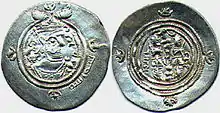 |
'Uthman (عثمان بن عفان) Dhun Nurayn Al-Ghani |
579 | 11 November 644 (01-05-24 AH) | 20 June 656 (assassinated at the end of a siege upon his house) |
|
Banu Ummaya |
| ||
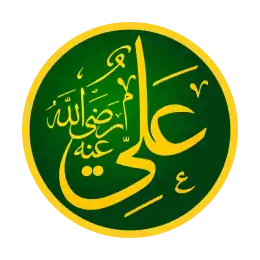  |
'Ali (علي بن أبي طالب) Haydar Abu Turab Al-Murtaza |
15 September 601 | 20 June 656 (12-21-35 AH) | 29 January 661 (assassinated while praying in the Mosque of Kufa) |
|
Banu Hashim |
| ||
Umayyad Caliphate (661–750)
| Image/Coin | Name (and titles) | Born | Reigned from | Reigned until | Died | Relationship with Muhammad (or previous Caliph) | Parents | Notes |
|---|---|---|---|---|---|---|---|---|

|
Mu'awiyah I (معاوية) |
602 | 661 | 29 April or 1 May 680 |
|
| ||
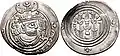 |
Yazid I (يزيد) |
647 | 680 | 11 November 683 |
|
|
| |
 |
Mu'awiyah II (معاوية الثاني) |
664 | November 683 | 684 |
|
|
| |
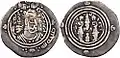 |
Marwan I (مروان بن الحکم) |
623–626 | 684 | 7 May 685 |
|
|
| |
|
'Abd al-Malik (عبد الملك بن مروان) |
646 | 685 | 8 October 705 |
|
|
| |
 |
Al-Walid I (الوليد الأول) |
668 | October 705 | 23 February 715 |
|
|
| |
 |
Sulayman (سلیمان بن عبدالملک) |
674 | February 715 | 22 September 717 |
|
|
| |
 |
'Umar ibn 'Abd al-'Aziz (عمر بن عبد العزيز) |
2 November 682 | September 717 | February 720 |
|
|
| |
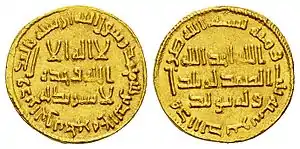 |
Yazid II (يزيد الثاني) |
687 | 10 February 720 | 26 January 724 |
|
|
| |
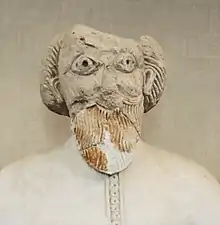 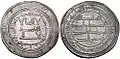 |
Hisham (هشام بن عبد الملك) |
691 | 26 January 724 | 6 February 743 |
|
|
| |
_Walid_bin_Yazid.jpg.webp)  |
Al-Walid II (الوليد الثاني) |
709 | 6 February 743 | 17 April 744 (assassinated) |
|
|
| |
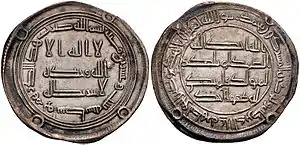 |
Yazid III (يزيد الثالث) |
701 | 17 April 744 | 3/4 October 744 |
|
|
| |
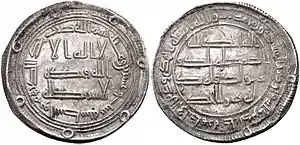 |
Ibrahim (ابراهيم ابن الوليد) |
744 (few weeks) | 25 January 750 (executed) |
|
|
| ||
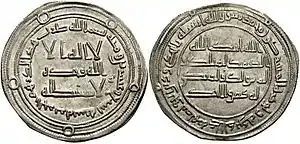 |
Marwan II (مروان بن محمد) |
691 | 744 | 6 August 750 (killed) |
|
|
| |
.jpg.webp)
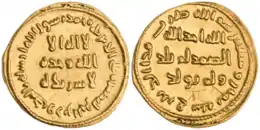
Abbasid Caliphate (750–1258)
| Image/Coin | Regnal name | Personal name | Born | Reigned from | Reigned until | Died | Parents | Notes |
|---|---|---|---|---|---|---|---|---|
 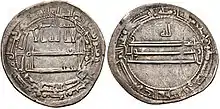 |
As-Sāffaḥ | Abul-'Abbās 'Abdallah | 721 | 25 January 750 | 10 June 754 |
|
| |
.jpg.webp) .JPG.webp) |
Al-Mansur | Abu Ja'far 'Abdallah | 714 | 10 June 754 | 775 | |||
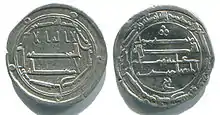 |
Al-Mahdi | Abu 'Abdallah Muhammad | 744/745 | 775 | 4 August 785 |
|
| |
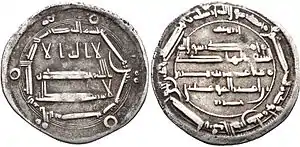 |
Al-Hadi | Abu Muhammad Musa | 764 | August 785 | 14 September 786 |
|
| |
 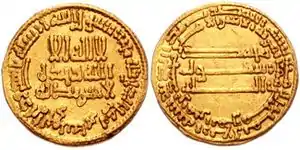 |
Al-Rashid | Harun | 763/766 | 14 September 786 | 24 March 809 |
|
| |
.jpg.webp) |
Al-Amin | Muhammad | 787 | March 809 | 24/25 September 813 |
|
| |
.png.webp) 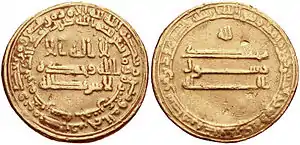 |
Al-Ma'mun | Abu al-Abbas 'Abdallah | 13/14 September 786 | September 813 | 9 August 833 |
|
| |
.jpg.webp) 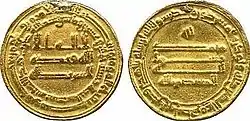 |
Al-Mu'tasim | Abū Ishaq Muhammad | October 796 | 9 August 833 | 5 January 842 |
|
| |
%252C_Death_of_Anbakh_(verso)%252C_Folio_from_a_Tarikh-I_Alfi_Manuscript_LACMA_M.78.9.4_(1_of_2).jpg.webp)
|
Al-Wathiq | Abu Ja'far Harun | 811–813 | 5 January 842 | 10 August 847 |
|
||
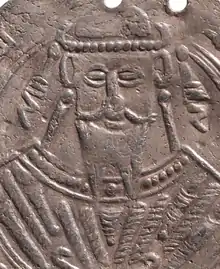
|
Al-Mutawakkil | Ja'far | February/March 822 | 10 August 847 | 11 December 861 (assassinated) |
|
| |
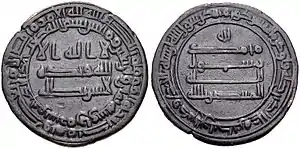 |
Al-Muntasir | Abu Ja'far Muhammad | November 837 | 861 | 7 or 8 June 862 |
|
| |
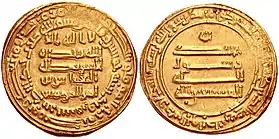 |
Al-Musta'in | Ahmad | 836 | 862 | 866 (executed) |
| ||
.jpg.webp) 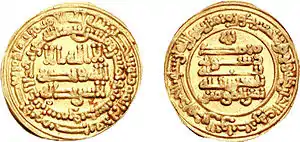 |
Al-Mu'tazz | Abū ʿAbd allāh Muhammad | 847 | 866 | 869 |
| ||
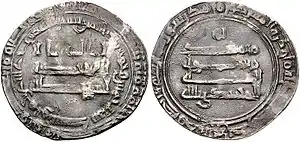 |
Al-Muhtadi | Abū Isḥāq Muḥammad | 869 | 21 June 870 |
| |||
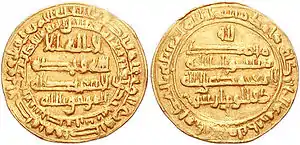 |
Al-Mu'tamid | Abu’l-ʿAbbās Aḥmad | 842 | 21 June 870 | 15 October 892 |
|
| |
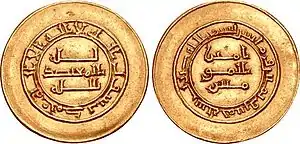 |
Al-Mu'tadid | Abu'l-'Abbas Ahmad | 854/861 | October 892 | 5 April 902 |
|
| |
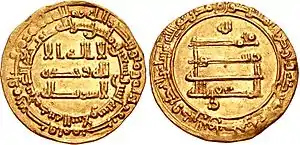 |
Al-Muktafi | Abu Muhammad ʿAlî | 877/878 | 5 April 902 | 13 August 908 |
|
| |
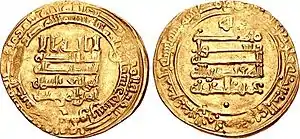 |
Al-Muqtadir | Abu al-Fadl Ja'far | 895 | 13 August 908 | 929 | 31 October 932 (killed) |
|
|
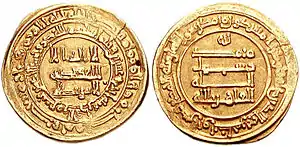 |
Al-Qahir | Abu Mansur Muhammad | 899 | 929 | 950 |
|
| |
|
Al-Muqtadir | Abu al-Fadl Ja'far | 895 | 929 | 31 October 932 (killed) |
|
| |
|
Al-Qahir | Abu Mansur Muhammad | 899 | 31 October 932 | 934 | 950 |
|
|
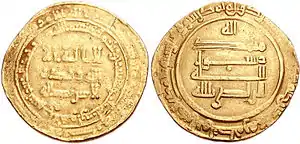 |
Al-Radi | Abu al-'Abbas Muhammad | December 909 | 934 | 23 December 940 |
|
| |
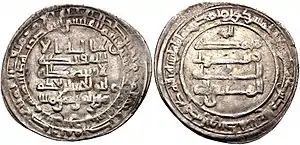 |
Al-Muttaqi | Abu Ishaq Ibrahim | 908 | 940 | 944 | July 968 |
|
|
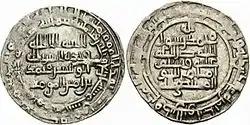 |
Al-Mustakfi | Abu’l-Qasim 'Abdallah | 905 | September 944 | January 946 | September/October 949 |
|
|
.jpg.webp) |
Al-Muti | Abu al-Qasim al-Faḍl | 914 | January 946 | 5 August 974 | 12 October 974 |
|
|
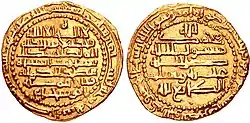 |
At-Ta'i | Abd al-Karīm | 932 | 974 | 991 | 3 August 1003 |
|
|
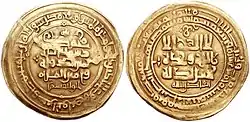 |
Al-Qadir | Abu'l-Abbas Ahmad ibn Ishaq ibn al-Muqtadir | 947 | 1 November 991 | 29 November 1031 |
|
| |
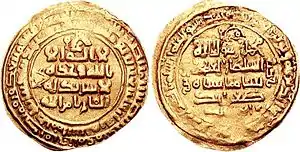 |
Al-Qa'im | Abu Ja'far | 1001 | 29 November 1031 | 2 April 1075 |
|
||
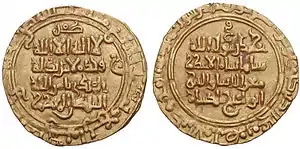 |
Al-Muqtadi | Abū'l-Qāsim ʿAbd Allāh ibn Muhammad ibn al-Qa'im | 1056 | 2 April 1075 | February 1094 |
|
| |
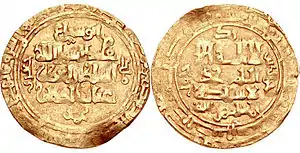 |
Al-Mustazhir | Abū l-ʿAbbās Ahmad | April/May 1078 | February 1094 | 6 August 1118 |
|
| |
.jpg.webp) |
Al-Mustarshid | Abū'l-Manṣūr al-Faḍl | April/May 1092 | 6 August 1118 | 29 August 1135 |
|
| |
| Al-Rashid Billah | Abu Jaʿfar Manṣūr | 1109 | 29 August 1135 | 1136 | 6 June 1138 (killed by Hashshashins) |
|
| |
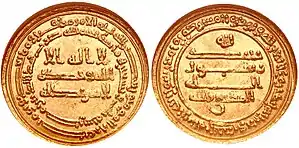 |
Al-Muqtafi | Abū ʿAbd Allāh Muḥammad | 9 March 1096 | 1136 | 12 March 1160 |
|
| |
| Al-Mustanjid | Abū'l-Muẓaffar Yūsuf | 1124 | 12 March 1160 | 20 December 1170 |
|
| ||
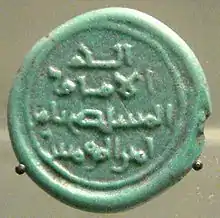 |
Al-Mustadi | Hassan | 1142 | 20 December 1170 | 30 March 1180 |
|
| |
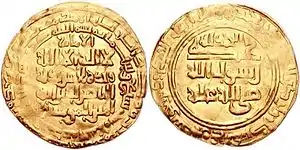 |
Al-Nasir | Abu'l-ʿAbbās Ahmad | 6 August 1158 | 2 March 1180 | 4 October 1225 |
|
| |
| Al-Zahir | Abu Nasr Muhammad | 1176 | 5 October 1225 | 11 July 1226 |
|
| ||
| Al-Mustansir | Abû Ja`far al-Manṣūr | 17 February 1192 | 11 July 1226 | 2 December 1242 |
|
|||
.JPG.webp) 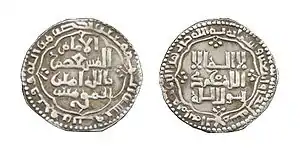 |
Al-Musta'sim | Abu Ahmad Abdallah | 1213 | 2 December 1242 | 20 February 1258 |
|
| |
| Interregnum | ||||||||
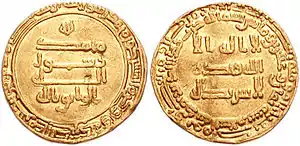
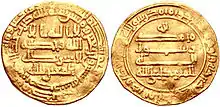
During the later period of Abbasid rule, Muslim rulers began using other titles, such as Amir al-umara and Sultan.
Mamluk Abbasid dynasty (1261–1517)
The Cairo Abbasids were largely ceremonial Caliphs under the patronage of the Mamluk Sultanate that existed after the takeover of the Ayyubid dynasty.[17][18]
| Regnal name | Personal name | Reign | Parents | Notes |
|---|---|---|---|---|
| Al-Mustansir | Abu al-Qasim Ahmad | 13 June 1261 – 28 November 1261 |
| |
| Al-Hakim I | Abu 'Abdullah Muhammad | 16 November 1262 – 19 January 1302 |
|
|
| Al-Mustakfi I | Abu ar-Rabi' Sulaiman | 20 January 1302 – February 1340 | ||
| Al-Wathiq I | Abu Ishaq Ibrahim | February 1340 – 17 June 1341 |
|
|
| Al-Hakim II | Abu al-'Abbas Ahmad | 1341–1352 | ||
| Al-Mu'tadid I | Abu Bakr | 1352–1362 | ||
| Al-Mutawakkil I | Abu 'Abdillah Muhammad | 1362–1377 | ||
| Al-Mus'tasim | Abu Yahya Zakariya | 1377 | ||
| Al-Mutawakkil I | Abu 'Abdillah Muhammad | 1377–1383 | ||
| Al-Wathiq II | 'Umar | September 1383 – 13 November 1386 | ||
| Al-Mus'tasim | Abu Yahya Zakariya | 1386–1389 | ||
| Al-Mutawakkil I | Abu 'Abdillah Muhammad | 1389 – 9 January 1406 | ||
| Al-Musta'in | Abu al-Fadl al-'Abbas | 22 January 1406 – 9 March 1414 |
|
|
| Al-Mu'tadid II | Abu al-Fath Dawud | 1414–1441 |
|
|
| Al-Mustakfi II | Abu ar-Rabi' Sulayman | 1441 – 29 January 1451 | ||
| Al-Qa'im | Abu Al-Baqa Hamzah | 1451–1455 | ||
| Al-Mustanjid | Abu al-Mahasin Yusuf | 1455 – 7 April 1479 | ||
| Al-Mutawakkil II | Abu al-'Izz 'Abdul 'Aziz | 5 April 1479 – 27 September 1497 |
|
|
| Al-Mustamsik | Abu as-Sabr | 1497–1508 | ||
| Al-Mutawakkil III | Muhammad | 1508–1516 | ||
| Al-Mustamsik | Abu as-Sabr | 1516–1517 | ||
| Al-Mutawakkil III | Muhammad | 1517 |
|
Ottoman Caliphate (1517–3 March 1924)
The head of the Ottoman dynasty was just entitled Sultan originally, but soon it started accumulating titles assumed from subjected peoples.[19][20] Murad I (reigned 1362–1389) was the first Ottoman claimant to the title of Caliph; claimed the title after conquering Edirne.[21]
| Image | Tughra | Name | Reign | Parents | Notes |
|---|---|---|---|---|---|
 |
 Tughra of Selim I |
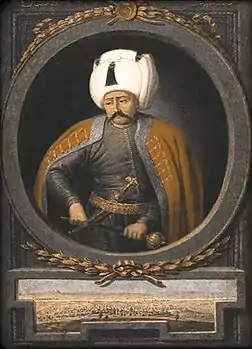
Selim I | 1517 – 21 September 1520 |
| |
 |
 Tughra of Suleiman I |
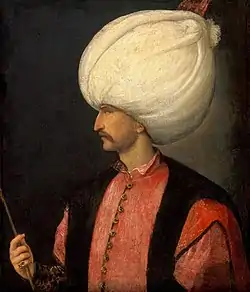
Suleiman I | 30 September 1520 – 6 or 7 September 1566 |
|
|
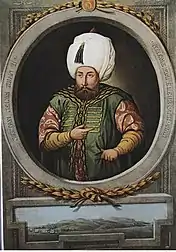 |
 Tughra of Selim II |
Selim II | 29 September 1566 – 21 December 1574 |
|
|
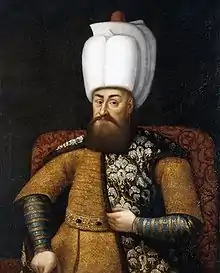 |
 Tughra of Murad III |
Murad III | 22 December 1574 – 16 January 1595 |
|
|
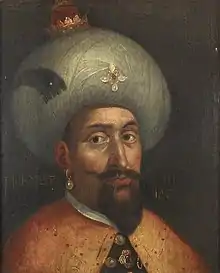 |
 Tughra of Mehmed III |
Mehmed III | 27 January 1595 – 20 or 21 December 1603 |
|
|
 |
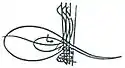 Tughra of Ahmed I |
Ahmed I | 21 December 1603 – 22 November 1617 |
|
|
.jpg.webp) |
 Tughra of Mustafa I |
Mustafa I | 22 November 1617 – 26 February 1618 |
| |
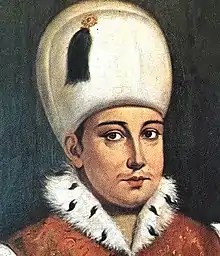 |
 Tughra of Osman II |
Osman II | 26 February 1618 – 19 May 1622 |
|
|
|
Tughra of Mustafa I |
Mustafa I | 20 May 1622 – 10 September 1623 |
| |
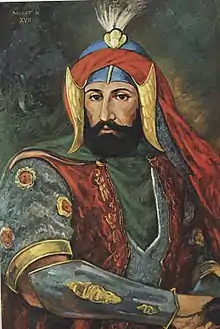 |
 Tughra of Murad IV |
Murad IV | 10 September 1623 – 8 or 9 February 1640 |
|
|
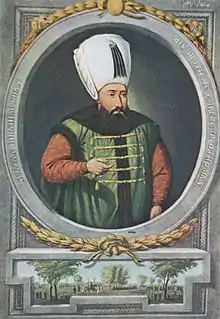 |
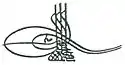 Tughra of Ibrahim |
Ibrahim | 9 February 1640 – 8 August 1648 |
| |
.jpg.webp) |
 Tughra of Mehmed IV |
Mehmed IV | 8 August 1648 – 8 November 1687 |
|
|
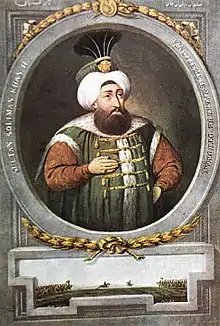 |
 Tughra of Suleiman II |
Suleiman II | 8 November 1687 – 22 June 1691 |
|
|
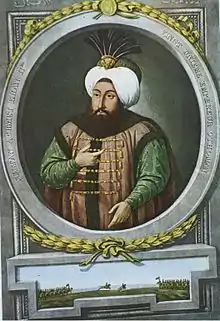 |
 Tughra of Ahmed II |
Ahmed II | 22 June 1691 – 6 February 1695 |
|
|
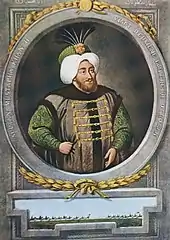 |
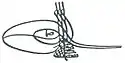 Tughra of Mustafa II |
Mustafa II | 6 February 1695 – 22 August 1703 |
|
|
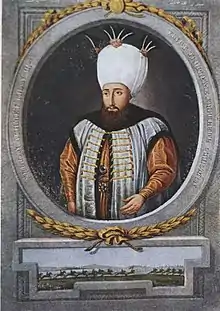 |
 Tughra of Ahmed III |
Ahmed III | 22 August 1703 – 1 or 2 October 1730 |
|
|
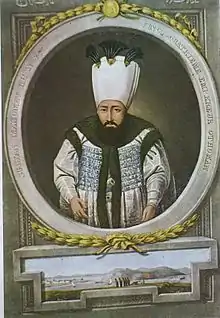 |
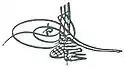 Tughra of Mahmud I |
Mahmud I | 2 October 1730 – 13 December 1754 |
|
|
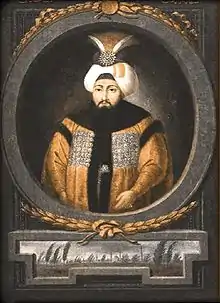 |
 Tughra of Osman III |
Osman III | 13 December 1754 – 29 or 30 October 1757 |
|
|
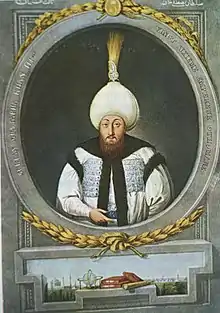 |
 Tughra of Mustafa III |
Mustafa III | 30 October 1757 – 21 January 1774 |
|
|
 |
 Tughra of Abdülhamid I |
Abdul Hamid I | 21 January 1774 – 6 or 7 April 1789 |
|
|
 |
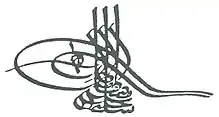 Tughra of Selim III |
Selim III | 7 April 1789 – 29 May 1807 |
|
|
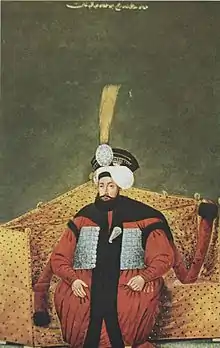 |
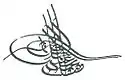 Tughra of Mustafa IV |
Mustafa IV | 29 May 1807 – 28 July 1808 |
|
|
 |
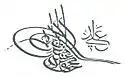 Tughra of Mahmud II |
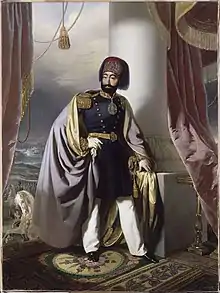
Mahmud II | 28 July 1808 – 1 July 1839 |
|
|
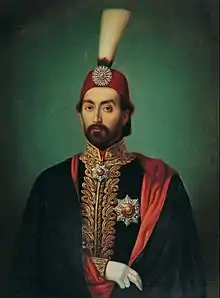 |
 Tughra of Abdülmecid I |
Abdulmejid I | 1 July 1839 – 25 June 1861 |
|
|
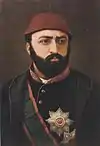 |
 Tughra of Abdulaziz |
Abdulaziz | 25 June 1861 – 30 May 1876 |
|
|
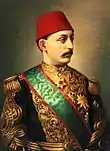 |
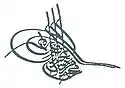 Tughra of Murad V |
Murad V | 30 May 1876 – 31 August 1876 |
|
|
 |
 Tughra of Abdülhamid II |
Abdul Hamid II | 31 August 1876 – 27 April 1909 |
|
|
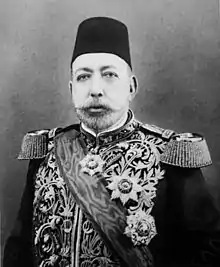 |
 Tughra of Mehmed V |
Mehmed V | 27 April 1909 – 3 July 1918 |
|
|
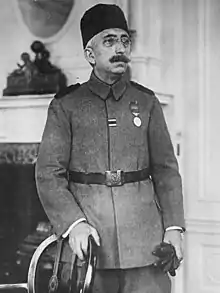 |
 Tughra of Mehmed VI |
Mehmed VI | 4 July 1918 – 1 November 1922 |
|
|
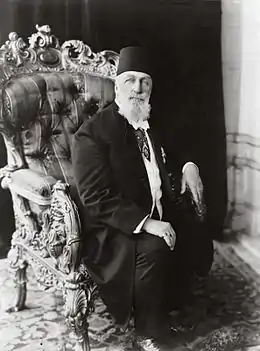 |
— [nb 1] |
Abdulmejid II | 18 November 1922 – 3 March 1924 |
|
|
The Office of the Ottoman Caliphate was transferred to the Grand National Assembly of Turkey which dissolved the office on March 3, 1924, in keeping with the policies of secularism that were adopted in the early years of the Republic of Turkey by its President Mustafa Kemal Atatürk.
After the abolition of the Caliphate, the Grand National Assembly of Turkey founded the Presidency of Religious Affairs as the new highest Islamic religious authority in the country.
Disputed caliphates
Caliphates not accepted as legitimate by the majority of Muslims.
Sharifian Caliphate (1924–1925)
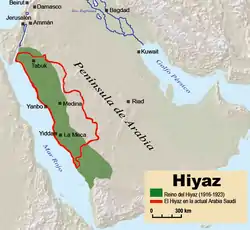
A last attempt at restoring the caliphal office and style with ecumenical recognition was made by Hussein bin Ali, King of Hejaz and Sharif of Mecca, who assumed both on 11 March 1924 and held them until 3 October 1924, when he passed the kingship to his son `Ali ibn al-Husayn al-Hashimi, who did not adopt the caliphal office and style.[53] Like the Fatimid caliphs, he was a descendant of Muhammad through a grandson of Hasan ibn Ali. Hussein's claim for caliphate was not accepted by the Wahhabi and Salafi movements, and in 1925 he was driven from Hejaz by the forces of Ibn Saud as an outcome of the Second Saudi-Hashemite War. He continued to use the title of caliph during his remaining life in exile, until his death in 1931.
Ahmadiyya Caliphate (1908–present)

The Khalīfatul Masīh (Arabic: خليفة المسيح; Urdu: خلیفہ المسیح; English: Successor of the Messiah), sometimes simply referred to as Khalifah (i.e. Caliph, successor), is the elected spiritual and organizational leader of the worldwide Ahmadiyya Muslim Community and is the successor of Mirza Ghulam Ahmad, who had taken the titles of Mahdi and Messiah of Islam.[nb 2] The Caliph is believed to be divinely guided and is also referred to by members of current Khalifatul Masih is Mirza Masroor Ahmad.
After the death of Ghulam Ahmad, his successors directed the Ahmadiyya Muslim Community from Qadian in Punjab, British India, which remained the headquarters of the community until 1947 with the independence of Pakistan. From this time on, the headquarters moved to and remained in Rabwah, a town built on land bought in Pakistan by the community in 1948. In 1984, Ordinance XX was promulgated by the government of Pakistan which rendered the Khalifatul Masih unable to perform his duties and put the very institution in jeopardy. Due to these circumstances, Khalifatul Masih IV left Pakistan and migrated to London, England, provisionally moving the headquarters to the Fazl Mosque.[57]
Islamic State (2014–present)
On 29 June 2014, the Islamic State proclaimed the return of the Islamic caliphate, with its first "caliph" as Amir al-Mu'minin Abu Bakr Ibrahim bin Awwad Al-Badri Al-Husaini Al-Hashimi Al-Quraishi As-sammera'i al-Baghdadi.[58][59] The caliphate's claimed territory at its peak controlled 12 million people. Territories under the control of the Islamic State included Wilayat Al-'iraq, Wilyat Ash-sham, Wilayat gharb Ifriqiyyah (the state of West Africa), Wilayat Sharq Asia (the State of North Asia), Wilayat Khorasan, Wilayat wasat Ifriqiyyah (the State of Central of Africa), Wilayat Al-Yaman (the State of Yemen), and Wilayat Sina' (the State of Sinai).[60][61]
On 7 March 2015, Abubakar Shekau pledged allegiance to The Islamic State via an official audio message.[62][63] Afterwords, jama'ah Ahlu-sunnah lilda'wah wal-jihad assumed the name "Wilāyat Gharb Ifriqiyyah" (Arabic: ولاية غرب إفريقية, "West Africa Province") or "Islamic State of West Africa" (ISWAP).[64]
On 10 April 2018, during a rally of U.S. President Donald Trump in Elkhart, Indiana in support of Mike Braun’s bid for the US Senate, Vice President Mike Pence referred to ISIS as a Caliphate, claiming "ISIS is on the run, their Caliphate has crumbled, and we will soon drive them out of existence once and for all."[65]
| Image | "Caliph" | Date of birth | Reigned from | Reigned until |
|---|---|---|---|---|
 |
Abu-Bakr Ibrahim bin Awwad al-Baghdadi | 28 July 1971 | 29 June 2014 | 27 October 2019 |
 |
Abu-Ibrahim Al-Hashimi Al-Quraishi | October 1976 | 31 October 2019 | Present |
Sokoto Caliphate (1804–1903)
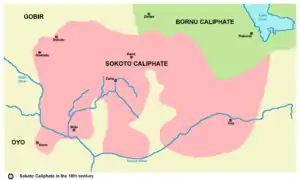
(Not widely accepted, actual dominions were parts of West Africa)
Established by Tariqa Islamic scholar and religious leader Usman dan Fodio through the Fulani War (alternatively known as the Fulani Jihad), which sought to reduce the influence of pre-Islamic religious practices and spread a more vigorous form of Islam through the auspices of a Caliphate.
Almohad Caliphate (1145–1269)
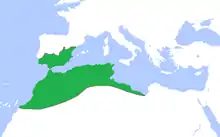
(Not widely accepted, actual dominions were parts of North Africa and Iberia)[66][67]
| Name | Reign | Notes |
|---|---|---|
| Abd al-Mu'min | 1145–1163 | |
| Abu Yaqub Yusuf I | 1163–1184 | |
| Yaqub al-Mansur | 1184–1199 | |
| Muhammad an-Nasir | 1199–1213 | |
| Abu Ya'qub Yusuf II | 1213–1224 | |
| Abd al-Wahid I | 1224 | |
| Abdallah al-Adil | 1224–1227 | |
| Yahya | 1227–1235 | |
| Idris I | 1227–1232 | |
| Abdul-Wahid II | 1232–1242 | |
| Ali | 1242–1248 | |
| Umar | 1248–1266 | |
| Idris II | 1266–1269 |
Caliphate of Córdoba (929–1031)
(Not universally accepted; actual authority confined to Spain and parts of Maghreb)[68][69]
| Name | Reign | Parents | Notes |
|---|---|---|---|
| Abd-ar-Rahman III | 929–961 |
|
|
| Al-Hakam II | 961–976 |
|
|
| Hisham II al-Hakam | 976–1009 | ||
| Muhammad II | 1009 |
|
|
| Sulayman ibn al-Hakam | 1009–1010 |
|
|
| Hisham II al-Hakam | 1010–1013 | ||
| Sulayman ibn al-Hakam | 1013–1016 |
|
|
| Abd ar-Rahman IV | 1021–1022 |
|
|
| Abd ar-Rahman V | 1022–1023 |
|
|
| Muhammad III | 1023–1024 |
|
|
| Hisham III | 1027–1031 |
|
Fatimid Caliphate (909–1171)
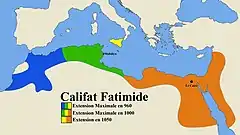
(The Fatimids were Isma'ili Shia who claimed to be descendants of Muhammad's daughter Fatimah and were seen as heretics by Sunnis. Their claims to a caliphate are also not recognized by the Muslim Ummah as a legitimate successor of the title of Caliph passed down from Muhammad, as no legitimate proof existed they were descendant from Fatimah).[70][71]
| Name | Reign | Parents | Notes |
|---|---|---|---|
| Al-Mahdi Billah | 909–934 | ||
| Al-Qa'im Bi-Amrillah | 934–946 | ||
| Al-Mansur bi-Nasr Allah | 946–953 | ||
| Al-Muizz Lideenillah | 953–975 | Egypt is conquered during his reign. Cairo is founded and becomes the new seat of the dynasty. | |
| Al-Aziz Billah | 975–996 | ||
| Al-Hakim bi-Amr Allah | 996–1021 | ||
| Ali az-Zahir | 1021–1036 | ||
| Al-Mustansir Billah | 1036–1094 | ||
| Al-Musta'li | 1094–1101 | Quarrels over his succession led to the Nizari–Musta'li schism | |
| Al-Amir | 1101–1130 | ||
| Al-Hafiz | 1130–1149 |
|
Hafizi–Tayyibi schism in Musta'li Isma'ilism |
| Al-Zafir | 1149–1154 | ||
| Al-Faiz | 1154–1160 | ||
| Al-Azid | 1160–1171 |
|
Saladin abolishes the Fatimid Caliphate |
Hasan ibn Ali's Caliphate (661)
After the death of Ali, the Muslims selected Hasan ibn Ali as the caliph. He somehow successfully made a treaty with governor Mu'awiyah that led to the latter assuming political power. Later, he abdicated as the caliph after ruled for six or seven months.
| Calligraphic/Coin | Name (and titles) | Birth | Reigned from | Reigned until | Death | Relationship with Muhammad (or previous Caliph) | Parents | House | Notes |
|---|---|---|---|---|---|---|---|---|---|
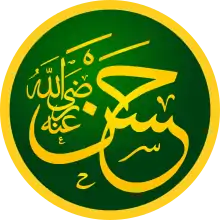 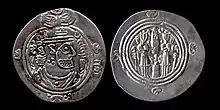 |
Hasan ibn Ali (حسن بن علي) Ahl al-Bayt Al-Mujtaba |
624 | 661 (six or seven months) | 670 |
|
|
Banu Hashim |
| |
Abd Allah ibn al-Zubayr's Caliphate (684–692)
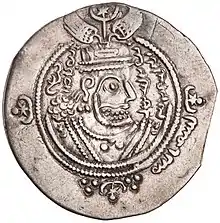
Abd Allah ibn al-Zubayr, the nephew of Aisha, the third wife of Muhammad led a rebellion against the Umayyad Caliphate in 684 AD. He was proclaimed caliph in Mecca but was defeated and killed there in 692 AD after a six-month siege by general Al-Hajjaj ibn Yusuf.[72]
| Coin | Name (and titles) | Birth | Reigned from | Reigned until | Death | Parents | House | Notes |
|---|---|---|---|---|---|---|---|---|
 |
Abd Allah ibn al-Zubayr (عبد الله ابن الزبير) |
May, 624 AD | November 683 AD | November 692 AD | November 692 AD | Banu Asad | Grandchild of Abu Bakar as-Siddiq (first caliph of the Rashidun Caliphate) |
Indian caliphates
Since the 12th century, despite the South Asian domination of numerous Muslim empires, kingdoms and sultanates, Islamic caliphates were not fully attempted to be established across the Indian subcontinent. However, under the sharia based reigns of Sunni emperors such as Alauddin Khalji, Mughal Empire's Aurangzeb, and Mysore's rulers Hyder Ali and Tipu Sultan, absolute forms of caliphates were clearly to have appeared. These largely impacted the French-Italian emperor Napoleone Bonaparte and soldiers of the British Empire.[73][74][75][76]
Bornu and Songhai Empires

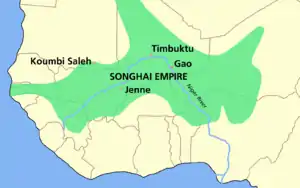
Several rulers of West Africa adopted the title of Caliph. Mai Ali Ghaji ibn Dunama was the first ruler of Bornu Empire to assume the title. Askia Mohammad I of Songhai Empire also assumed the title around the same time.[77]
See also
Notes
- Abdulmejid II, the last Ottoman Caliph, lacked a tughra of his own, since he did not serve as head of state (that position being held by Mustafa Kemal, President of the newly founded Republic of Turkey) but as a religious and royal figurehead.
- Mirza Ghulam Ahmad is the founder of the Ahmadiyya sect of Islam. The Sunni mainstream and the majority of Muslims reject the sect as it believes in prophethood after Muhammad;[54][55][56] see also Persecution of Ahmadis on this topic.
References
- Islamic Imperialism, Efraim Karsh, p. 25
- Wellhausen 1927, p. 223.
- Lammens & Blankinship 2002, p. 311.
- Powers 1989, p. 105.
- al-Tabari (pp. 106–115)
- Dionysius of Telmahre apud Hoyland, 661 n 193
- Aikin, John (1747). General biography: or, Lives, critical and historical, of the most eminent persons of all ages, countries, conditions, and professions, arranged according to alphabetical order. London: G. G. and J. Robinson. p. 201. ISBN 1333072457.
- Bobrick 2012, p. 24.
- Bosworth 1987, pp. 222–223, 225.
- Kennedy 2006, p. 232.
- Bosworth, "Mu'tazz," p. 793
- Zetterstéen 1987, p. 777.
- Lane-Poole 2004, pp. 12–13
- Bosworth 2004, pp. 6–7
- Daftary, Farhad (1992). The Isma'ilis: Their History and Doctrines. Cambridge University Press. p. 384. ISBN 978-0-521-42974-0.
- Hanne, Eric J. (2007). Putting the Caliph in His Place: Power, Authority, and the Late Abbasid Caliphate. Fairleigh Dickinson University Press. p. 204. ISBN 978-0-8386-4113-2.
- Bosworth 2004, p. 7
- Houtsma & Wensinck 1993, p. 3
- Lane-Poole 2004, p. 195
- Bosworth 2004, pp. 239–240
- Lambton, Ann; Lewis, Bernard (1995). The Cambridge History of Islam: The Indian sub-continent, South-East Asia, Africa and the Muslim west. 2. Cambridge University Press. p. 320. ISBN 9780521223102. Retrieved 14 March 2015.
- "Yavuz Sultan Selim Han". Republic of Turkey Ministry of Culture and Tourism. Retrieved 2009-02-06.
- "Kanuni Sultan Süleyman Han". Republic of Turkey Ministry of Culture and Tourism. Retrieved 2009-02-06.
- "Sultan II. Selim Han". Republic of Turkey Ministry of Culture and Tourism. Retrieved 2009-02-06.
- "Sultan III. Murad Han". Republic of Turkey Ministry of Culture and Tourism. Retrieved 2009-02-06.
- "Sultan III. Mehmed Han". Republic of Turkey Ministry of Culture and Tourism. Retrieved 2009-02-06.
- "Sultan I. Ahmed". Republic of Turkey Ministry of Culture and Tourism. Retrieved 2009-02-06.
- "Sultan I. Mustafa". Republic of Turkey Ministry of Culture and Tourism. Retrieved 2009-02-06.
- "Sultan II. Osman Han". Republic of Turkey Ministry of Culture and Tourism. Retrieved 2009-02-06.
- "Sultan IV. Murad Han". Republic of Turkey Ministry of Culture and Tourism. Retrieved 2009-02-06.
- "Sultan İbrahim Han". Republic of Turkey Ministry of Culture and Tourism. Retrieved 2009-02-06.
- "Sultan IV. Mehmed". Republic of Turkey Ministry of Culture and Tourism. Retrieved 2009-02-06.
- "Sultan II. Süleyman Han". Republic of Turkey Ministry of Culture and Tourism. Retrieved 2009-02-06.
- "Sultan II. Ahmed Han". Republic of Turkey Ministry of Culture and Tourism. Retrieved 2009-02-06.
- "Sultan II. Mustafa Han". Republic of Turkey Ministry of Culture and Tourism. Retrieved 2009-02-06.
- "Sultan III. Ahmed Han". Republic of Turkey Ministry of Culture and Tourism. Retrieved 2009-02-06.
- "Sultan I. Mahmud Han". Republic of Turkey Ministry of Culture and Tourism. Retrieved 2009-02-06.
- "Sultan III. Osman Han". Republic of Turkey Ministry of Culture and Tourism. Retrieved 2009-02-06.
- "Sultan III. Mustafa Han". Republic of Turkey Ministry of Culture and Tourism. Retrieved 2009-02-06.
- "Sultan I. Abdülhamit Han". Republic of Turkey Ministry of Culture and Tourism. Retrieved 2009-02-06.
- "Sultan III. Selim Han". Republic of Turkey Ministry of Culture and Tourism. Retrieved 2009-02-06.
- "Sultan IV. Mustafa Han". Republic of Turkey Ministry of Culture and Tourism. Retrieved 2009-02-06.
- "Sultan II. Mahmud Han". Republic of Turkey Ministry of Culture and Tourism. Retrieved 2009-02-06.
- "Sultan Abdülmecid Han". Republic of Turkey Ministry of Culture and Tourism. Retrieved 2009-02-06.
- "Sultan Abdülaziz Han". Republic of Turkey Ministry of Culture and Tourism. Retrieved 2009-02-06.
- "Sultan V. Murad Han". Republic of Turkey Ministry of Culture and Tourism. Retrieved 2009-02-06.
- "Sultan II. Abdülhamid Han". Republic of Turkey Ministry of Culture and Tourism. Retrieved 2009-02-06.
- "Sultan V. Mehmed Reşad Han". Republic of Turkey Ministry of Culture and Tourism. Retrieved 2009-02-06.
- "Sultan VI. Mehmed Vahdettin Han". Republic of Turkey Ministry of Culture and Tourism. Retrieved 2009-02-06.
- As̜iroğlu 1992, p. 13
- As̜iroğlu 1992, p. 17
- As̜iroğlu 1992, p. 14
- Bosworth 2004, p. 118
- "Ahmadis – Oxford Islamic Studies Online". www.oxfordislamicstudies.com. Retrieved 2018-09-03.
Controversial messianic movement founded by Mirza Ghulam Ahmad in Qadian, Punjab (British-controlled India), in 1889. Founder claimed to be a “nonlegislating” prophet (thus not in opposition to the mainstream belief in the finality of Muhammad 's “legislative” prophecy) with a divine mandate for the revival and renewal of Islam ...
- "The Ahmadiyyah Movement – Islamic Studies – Oxford Bibliographies – obo". Retrieved 2018-09-03.
- "Ghulam Ahmad, Mirza – Oxford Islamic Studies Online". www.oxfordislamicstudies.com. Retrieved 2018-09-08.
Founder of Ahmadi movement in Punjab, India, in 1889... The movement is labeled non-Muslim and fiercely opposed by Muslims, although the group considers itself Muslim.
- "Khilafat – Caliphate – The Guided Khilafat – Khilafat e Ahmadiyya – Al Islam Online". www.alislam.org.
- Adam Withnall (2014-06-30). "Iraq crisis: Isis declares its territories a new Islamic state with 'restoration of caliphate' in Middle East – Middle East – World". The Independent. Retrieved 2014-07-04.
- "ISIS Spokesman Declares Caliphate, Rebrands Group as "Islamic State"". SITE Institute. 29 June 2014. Retrieved 29 June 2014.
- "Islamic State-controlled parts of Syria, Iraq largely out of reach: Red Cross". 13 March 2015 – via Reuters.
- Yusuf al-Qaradawi stated: "[The] declaration issued by the Islamic State is void under sharia and has dangerous consequences for the Sunnis in Iraq and for the revolt in Syria", adding that the title of caliph can "only be given by the entire Muslim nation", not by a single group. Strange, Hannah (5 July 2014). "Islamic State leader Abu Bakr al-Baghdadi addresses Muslims in Mosul". The Telegraph. Retrieved 6 July 2014.
- "Nigeria's Boko Haram pledges allegiance to Islamic State". BBC news. BBC. 2015-03-07. Retrieved 2015-03-07.
- Adam Chandler (March 9, 2015). "The Islamic State of Boko Haram? :The terrorist group has pledged its allegiance to ISIS. But what does that really mean?". The Atlantic.
- "Africa blog: Islamic State strengthens ties with Boko Haram". BBC News. Retrieved 25 April 2015.
- Trump TV Network (2018-05-10), FULL EVENT: President Donald Trump MASSIVE Rally in Elkhart, Indiana – May 10, 2018, retrieved 2018-05-12. See 6:00
- Lane-Poole 2004, p. 47
- Bosworth 2004, p. 39
- Lane-Poole 2004, p. 21
- Bosworth 2004, p. 11
- Lane-Poole 2004, p. 71
- Bosworth 2004, p. 63
- Dictionary of Battles and Sieges: F-O edited by Tony Jacques
- Jackson, Roy (2010). Mawlana Mawdudi and Political Islam: Authority and the Islamic State. Routledge. ISBN 9781136950360.
- Shah Muhammad Waseem (2003): هندوستان ميں فارسى تاريخ نگارى: ٧١ويں صدى كے آخرى نصف سے ٨١ويں صدى كے پهلے نصف تک فارسى تاريخ نگارى كا ارتقاء, Kanishka Publishing, original source from the University of Michigan ISBN 9788173915376
- Hussein, S M (2002). Structure of Politics Under Aurangzeb 1658–1707. Kanishka Publishers Distributors (2002). ISBN 978-8173914898.
- Banarsi Prasad Saksena (1992) [1970]. "The Khaljis: Alauddin Khalji". In Mohammad Habib and Khaliq Ahmad Nizami (ed.). A Comprehensive History of India: The Delhi Sultanat (A.D. 1206–1526). 5 (Second ed.). The Indian History Congress / People's Publishing House. OCLC 31870180.
- Nehemia Levtzion; Randall Pouwels. The History of Islam in Africa. Ohio University Press. p. 81.
Bibliography
- Bosworth, C.E., ed. (1987). The History of al-Ṭabarī, Volume XXXII: The Reunification of the ʿAbbāsid Caliphate: The Caliphate of al-Maʾmūn, A.D. 813–33/A.H. 198–213. SUNY Series in Near Eastern Studies. Albany, New York: State University of New York Press. ISBN 978-0-88706-058-8.
- Bosworth, Clifford Edmund (2004) [1996]. The New Islamic Dynasties: A Chronological and Genealogical Manual. New Edinburgh Islamic Surveys (2nd ed.). Edinburgh University Press. ISBN 978-0-7486-2137-8. OCLC 56639413.
- Wellhausen, Julius (1927). The Arab Kingdom and its Fall. Translated by Margaret Graham Weir. Calcutta: University of Calcutta. OCLC 752790641.
- Lammens, H. & Blankinship, Kh. Y. (2002). "Yazīd (II) b. ʿAbd al-Malik". In Bearman, P. J.; Bianquis, Th.; Bosworth, C. E.; van Donzel, E. & Heinrichs, W. P. (eds.). The Encyclopaedia of Islam, New Edition, Volume XI: W–Z. Leiden: E. J. Brill. p. 311. ISBN 978-90-04-12756-2.
- Powers, Stephan, ed. (1989). The History of al-Ṭabarī, Volume XXIV: The Empire in Transition: The Caliphates of Sulaymān, ʿUmar, and Yazīd, A.D. 715–724/A.H. 96–105. SUNY Series in Near Eastern Studies. Albany, New York: State University of New York Press. ISBN 978-0-7914-0072-2.
- Bosworth, C.E. (1993). "Al-Muntasir". In Bosworth, C. E.; van Donzel, E.; Heinrichs, W. P. & Pellat, Ch. (eds.). The Encyclopaedia of Islam, New Edition, Volume VII: Mif–Naz. Leiden: E. J. Brill. ISBN 978-90-04-09419-2.
- Bobrick, Benson (2012). The Caliph's Splendor: Islam and the West in the Golden Age of Baghdad. Simon & Schuster. ISBN 978-1416567622.
- Houtsma, M. Th.; Wensinck, A. J. (1993). E.J. Brill's First Encyclopaedia of Islam 1913–1936 (Reprint)
|format=requires|url=(help). Volume IX. Leiden: BRILL. ISBN 978-90-04-09796-4.|volume=has extra text (help) - Kennedy, Hugh (2006). When Baghdad Ruled the Muslim World: The Rise and Fall of Islam's Greatest Dynasty. Cambridge, MA: Da Capo Press. ISBN 978-0-306814808.
- Lane-Poole, Stanley (1894). The Mohammedan Dynasties: Chronological and Genealogical Tables with Historical Introductions. Westminster: Archibald Constable and Company. OCLC 1199708.
- Zetterstéen, K. V. (1987). "al-Muʿtaḍid Bi'llāh". In Houtsma, Martijn Theodoor (ed.). E.J. Brill's First Encyclopaedia of Islam, 1913–1936, Volume VI: Morocco–Ruzzik. Leiden: Brill. p. 777. ISBN 978-90-04-08265-6.
|