Censorship on TikTok
Censorship on TikTok affects material published by people on TikTok, a social media platform. There is evidence that TikTok has down-weighted the posts of political dissidents, LGBT people, people with disabilities, and certain African-American hashtags. Explanations for this vary, and range from attempting to protect users from bullying,[1] to algorithmic mistakes.[2]
Political censorship
In January 2019, the Chinese government said that it would start to hold app developers like ByteDance responsible for user content shared via apps such as Douyin,[3] and listed 100 types of content that the Chinese government would censor.[4] It was reported that certain content unfavorable to the Chinese Communist Party has already been limited for users outside of China such as content related to the 2019–20 Hong Kong protests or Tibetan independence.[5] TikTok has blocked videos about human rights in China, particularly those that reference Xinjiang internment camps and abuses of ethnic and religious minorities such as the Uyghurs, and disabled the accounts of users who post them.[6][7][8][9] TikTok's policies also ban content related to a specific list of foreign leaders such as Vladimir Putin, Donald Trump, Barack Obama, and Mahatma Gandhi because it can stir controversy and attacks on political views.[10] Its policies also ban content critical of Recep Tayyip Erdoğan and content considered pro-Kurdish.[11] TikTok was reported to have censored users supportive of the Citizenship Amendment Act protests in India and those who promote Hindu-Muslim unity.[12] On 27 November 2019, TikTok temporarily suspended the account of 17-year-old Afghan-American user Feroza Aziz after she posted a video, disguised as a makeup tutorial, drawing attention to the internment camps of Muslim Uyghurs in Xinjiang, China.[13] TikTok later apologized and explained that her account was suspended as a result of human error, and her account has since been reinstated.[14] In July 2020, TikTok suspended the account of another user whose viral video called attention to human rights of the Uyghurs.[9]
In June 2020, The Wall Street Journal reported that some previously non-political TikTok users were airing pro-Beijing views for the explicit purpose of boosting subscribers and avoiding "shadow" bans.[15] In July 2020, the company announced it was pulling out of Hong Kong responding to the Hong Kong national security law.[16]
In March 2020, internal documents leaked to The Intercept revealed that moderators had been instructed to suppress posts created by users deemed "too ugly, poor, or disabled" for the platform, and to censor political speech in livestreams, punishing those who harmed "national honor" or broadcast streams about "state organs such as police" with bans from the platform.[17][18][19] In response to censorship concerns, TikTok's parent company hired K&L Gates, including former U.S. Congressmen Bart Gordon and Jeff Denham, to advise it on its content moderation policies.[20][21] TikTok also hired lobbying firm, Monument Advocacy.[22] In January 2021, TikTok banned Trump content deemed to be inciting violence.[23]
In June 2020, The Times of India reported that TikTok was "shadow banning" videos related to the Sino-Indian border dispute and the 2020 China–India skirmishes.[24]
In November 2020, a former TikTok executive stated to a UK parliamentary committee that TikTok censored content critical of China and particularly content related to the Uyghur genocide.[25]
On 3 February 2021, TikTok received praise from Russian officials because social app's cooperation with them in deletion of "forbidden" content, mostly related to protest activity in Russia. In particular, as media censorship agency Roskomnadzor official Evgeniy Zaitsev stated that, "we need to highlight TikTok among other social media platforms because it has office in Russia and actively cooperated with us, which cannot be said about others".[26] Also, the State Duma deputy Alexander Khinshtein said that TikTok new anti-fake news policies go well with the ideology of Russian content censorship law and edition of those "should be considered a very positive signal".[27]
Minority groups
According to Mar Hicks, creators on TikTok feel that they have to be overly cautious about what they post "because the rules change at any given moment, there's no transparency".[28] Hicks said that the sudden disappearance of tags, intentional or not, has "incredibly problematic effects and negative effects on communities that are already marginalized and erased".[28] The muddiness around content removal and moderation on TikTok is an ongoing frustration for the app's users.[28] TikTok has community guidelines, but there is no public list of specific words and phrases that are banned, and it is not clear how much moderation is done algorithmically versus by actual people.[28] In instances of protesting against acts of racism and racism as a whole, users have felt that there was a change in the popularity of their content, even so much as their content not showing up as frequently or even at all.[29]
LGBT and disabled people
In countries where LGBT discrimination is the socio-political norm, TikTok moderators have blocked content that could be perceived as being positive towards LGBT people or LGBT rights, including same-sex couples holding hands, including in countries where homosexuality has never been illegal.[11][30] Former U.S. employees of TikTok reported to The Washington Post that final decisions to remove content were made by parent company employees in Beijing.[31]
On December 3, 2019, TikTok admitted that they artificially reduced the virality of videos the TikTok algorithm identified as made by people who are LGBT to reduce bullying in the comments of the videos.[1] It was reported in December 2019 by the German website Netzpolitik.org that TikTok artificially reduced the virality of videos the TikTok algorithm identified as made by members of the LGBT community, fat people, people with "facial disfigurement, autism, Down syndrome, [or] disabled people or people with some facial problems". Those affected may not have their video shown outside of their native country, or their content would not reach the "For You" page, TikTok's personalized algorithmic feed.[1] According to The Verge, some lesbian women on TikTok refer to themselves jokingly as "le dolla bean", referring to the spelling of "le$bian" used to avoid TikTok removing the video. Mar Hicks, a historian of technology, told The Verge that "It became this whole joke, because things that have the word lesbian in them were either getting flagged for deletion or causing the users' accounts to get in trouble."[32]
In May 2021, Pidgeon Pagonis, an American intersex activist, reported that for the second time the intersex hashtag was unavailable on TikTok. TikTok told The Verge that in both of the instances Pagonis noticed, the tag had been removed by mistake and was subsequently restored. The statement led to public speculation about whether the hashtag was censored.[28]
Black people
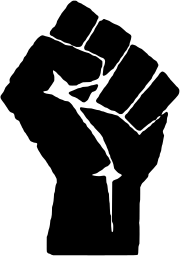
On May 7, 2020, in honor of the upcoming birthday of Malcolm X on May 19, a TikTok user named Lex Scott encouraged viewers to protest TikTok suppression of African-American creators by changing their profile pictures to the raised fist symbol, following black creators, and unfollowing creators who didn't support the initiative. The day was termed the #ImBlackMovement. Thousands of TikTok users changed their profile picture, and the hashtag #blackvoicesheard reached over 6 million views by the morning of May 19.[33] After the murder of George Floyd sparked racial unrest in the United States, creators on TikTok claimed that TikTok was deliberately suppressing videos using the hashtags "#BlackLivesMatter" and "#GeorgeFloyd", in that videos that used these hashtags appeared to receive no views. TikTok released a statement apologizing for this, saying a technical glitch had caused the display error and that the hashtags had received more than 2 billion views.[2] Hicks argues that LGBT people and people of color have found that the guidelines are enforced "wildly differently", meaning their content will be suppressed or removed for supposed violations and that reports of harassment from other users are not acted upon. "Not only is it hurting their ability to speak and be seen on the app", says Hicks, "but it's also allowing them to get attacked and have hate speech thrown their way."[28]
References
- "TikTok owns up to censoring some users' videos to stop bullying". The Guardian. 2019-12-03. Retrieved 2021-04-21.
- Molina, Brett. "TikTok apologizes after claims it blocked #BlackLivesMatter, George Floyd posts". USA Today. Retrieved 2021-04-21.
- "Chinese government to start blaming social apps for what their users' post". Metro. 14 January 2019. Archived from the original on 2 March 2019. Retrieved 1 March 2019.
- Davis, Rebecca (18 January 2019). "Farewell to Concubines: China Tightens Restrictions on Short-Form Videos". Variety. Archived from the original on 2 March 2019. Retrieved 1 March 2019.
- Harwell, Drew; Romm, Tony (15 September 2019). "TikTok's Beijing roots fuel censorship suspicion as it builds a huge U.S. audience". The Washington Post. Archived from the original on 16 September 2019. Retrieved 15 September 2019.
- Cockerell, Isobel (25 September 2019). "TikTok – Yes, TikTok – Is the Latest Window Into China's Police State". Wired. Archived from the original on 2 October 2019. Retrieved 29 September 2019.
- Chan, Holmes; Grundy, Tom (27 November 2019). "'Suspension won't silence me': Teen speaks out after embedding message about Xinjiang Uyghurs in TikTok make-up vid". Hong Kong Free Press. Archived from the original on 27 November 2019. Retrieved 27 November 2019.
- Handley, Erin (28 November 2019). "TikTok parent company complicit in censorship and Xinjiang police propaganda: report". Australian Broadcasting Corporation. Archived from the original on 26 December 2019. Retrieved 23 May 2020.
- Lipes, Joshua (28 July 2020). "'You Would Want Somebody to Speak up For You': TikToker Who Posted Viral Video on Uyghurs". Radio Free Asia. Archived from the original on 29 July 2020. Retrieved 29 July 2020.
- Hern, Alex (25 September 2019). "Revealed: how TikTok censors videos that do not please Beijing". The Guardian. ISSN 0261-3077. Archived from the original on 21 October 2019. Retrieved 25 September 2019.
- Hern, Alex (26 September 2019). "TikTok's local moderation guidelines ban pro-LGBT content". The Guardian. ISSN 0261-3077. Archived from the original on 26 September 2019. Retrieved 26 September 2019.
- Christopher, Nilesh (31 January 2020). "Censorship claims emerge as TikTok gets political in India". BBC News. Archived from the original on 31 January 2020. Retrieved 1 February 2020.
- Lee, David; Tannahill, Jordan (28 November 2019). "TikTok apologises and reinstates banned teen". BBC News. Archived from the original on 28 November 2019. Retrieved 28 November 2019.
- "TikTok Denies Censoring A Teen Who Criticized China's Concentration Camps – They Said They Banned Her After A Joke About Osama Bin Laden Thirst". BuzzFeed News. Archived from the original on 27 November 2019. Retrieved 4 December 2019.
- Xiao, Eva (17 June 2020). "TikTok Users Gush About China, Hoping to Boost Views". The Wall Street Journal. ISSN 0099-9660. Archived from the original on 19 June 2020. Retrieved 20 June 2020.
- Byford, Sam (7 July 2020). "TikTok pulls out of Hong Kong due to new security law". The Verge. Archived from the original on 7 July 2020.
- Biddle, Sam; Ribeiro, Paulo Victor; Dias, Tatiana (16 March 2020). "Invisible Censorship – TikTok Told Moderators to Suppress Posts by "Ugly" People and the Poor to Attract New Users". The Intercept. Archived from the original on 17 March 2020. Retrieved 17 March 2020.
- Hern, Alex (17 March 2020). "TikTok 'tried to filter out videos from ugly, poor or disabled users'". The Guardian. Archived from the original on 17 March 2020. Retrieved 17 March 2020.
- Dodds, Laurence (12 July 2020). "Inside TikTok's dystopian Chinese censorship machine". The Telegraph. ISSN 0307-1235. Archived from the original on 12 July 2020. Retrieved 12 July 2020.
- Li, Jane (16 October 2019). "TikTok wants to prove it's not a new front in China's information war". Quartz. Archived from the original on 17 October 2019. Retrieved 16 October 2019.
- Lee, Cyrus (16 October 2019). "TikTok hires legal experts for content moderation amid censorship concerns". ZDNet. Archived from the original on 19 October 2019. Retrieved 16 October 2019.
- Brody, Ben; Wilson, Megan (12 November 2019). "TikTok Revamps Lobbying as Washington Targets Chinese Ownership". Bloomberg News. Archived from the original on 13 November 2019. Retrieved 12 November 2019.
- "TikTok banned Trump before Trump could ban TikTok". Fortune. Archived from the original on 11 January 2021. Retrieved 11 January 2021.
- Banerjee, Chandrima (6 June 2020). "Does TikTok censor content that's critical of China?". The Times of India. Archived from the original on 6 July 2020. Retrieved 18 June 2020.
- Shead, Sam (2020-11-05). "TikTok invites UK lawmakers to review algorithm after being probed on China censorship concerns". CNBC. Archived from the original on 24 November 2020. Retrieved 2020-11-07.
- "В Роскомнадзоре похвалили TikTok за удаление постов с призывами к протестам" [Roskomnadzor praised the TikTok for deletion of posts with calls for protest activity]. Interfax.ru (in Russian). 3 February 2021. Archived from the original on 3 February 2021. Retrieved 3 February 2021.
- "Хинштейн: функция для борьбы с фейками в TikTok вписывается в идеологию принятого в РФ закона" [Khinstein: function to block fake content in TikTok fits well into ideology of recently adopted law in Russia]. Парламентская газета (in Russian). 3 February 2021. Archived from the original on 3 February 2021. Retrieved 3 February 2021.
- Sanchez, Kait (2021-06-04). "TikTok says the repeat removal of the intersex hashtag was a mistake". The Verge. Retrieved 2021-06-06.
- Ryan, Fergus; Fritz, Audrey; Impiombato, Daria (2020). "TikTok censorship". Tiktok and Wechat: 04–24.
- Criddle, Cristina (12 February 2020). "Transgender users accuse TikTok of censorship". BBC News. Archived from the original on 13 February 2020. Retrieved 12 February 2020.
- Harwell, Drew; Romm, Tony (5 November 2019). "Inside TikTok: A culture clash where U.S. views about censorship often were overridden by the Chinese bosses". The Washington Post. Archived from the original on 10 November 2019. Retrieved 9 November 2019.
- Sanchez, Kait (2021-06-04). "TikTok says the repeat removal of the intersex hashtag was a mistake". The Verge. Retrieved 2021-06-06.
- Elassar, Alaa. "TikTokers stand in solidarity with black creators to protest censorship". CNN. Retrieved 2021-04-21.