Cypriot nationalism
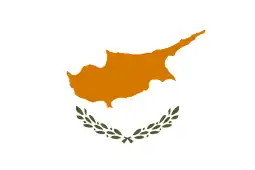
Cypriot nationalism, also known as Cypriotism, refers to one of the nationalisms of Cyprus. It focuses on the shared identity of Greek Cypriots and Turkish Cypriots regarding their "Cypriotness", highlighting their common Cypriot culture, heritage, traditions, and economic, political, and social rights.[1] Cypriot nationalism, as a form of civic nationalism, supports the peaceful reunification of Cyprus and the end of interference of external powers in its domestic affairs. Some Cypriotists advocate a federal state, while others express a preference for a unitary state instead.[2] Cypriot nationalists consider Cypriots as one nationality and even ethnicity, referring to linguistic distinction between Cypriots as "Greek"-speaking Cypriots and "Turkish"-speaking Cypriots, rather than two separate ethnic groups.
On the level of practical politics, Cypriotism is generally associated with the Left, both in Greek Cypriot and Turkish Cypriot politics. The most important political parties supporting a Cypriot nationalist agenda are the Progressive Party of Working People (AKEL) among Greek Cypriots and the Republican Turkish Party (CTP) among Turkish Cypriots. Not all leftists advocate Cypriotism; for example, the Movement for Social Democracy (EDEK) combines a left-wing economic agenda with a Greek Cypriot nationalist approach to the Cyprus problem. Cypriotism is further officially supported by the Union of Cypriots.[3] There are also civil society activists and smaller liberal groups that also hold Cypriotist positions, although their political influence remains arguably limited.
First Cypriotism movement of the history
The Linobambaki are an inspirational precursor to modern-day Cypriot nationalism for Turkish-Cypriots, as they show how they were able to effectively bridge the division between two different prominent cultures in Cyprus – a telling precedent for Cyprus today.
Consider also the revolt of Gavur Imam in 1833. Imam was a Turkish-Cypriot origin, who is likely to have belonged to the wider [Linobambaki] community. Gavur Imam took exception against the imposition of unjust taxes by the Ottoman authorities (echoes of the American Revolution maybe?) and led a popular movement against the unfair tax. Gavur Imam’s great revolt was supported by both Turkish-Cypriot and Greek-Cypriot communities, with all Cypriots fighting against Ottomans together, side by side.
While Gavur Imam’s rebellion eventually ran out of steam, the legacy of proto-Cypriotism was created and maintained to this day.[4]
Gavur Imam Revolt
Gavur Imam Revolt is the first action towards the formation of the Cypriot identity.
Gavur Imam, according to the Ottoman sources, was from in the village of Trimithousa in Chrysochous area of Paphos district. It was a Linobambaki village like many other Turkish-speaking Cypriot villages. It is believed that the reason that he is called “Gavur Imam” (infidel imam) in history, even though his real name is “Ibrahim Agha” of Polis, was related to this fact.
The beginning of the Gavur Imam struggle dates back to 1832, when he turned his place of residence into a camp without drawing the attention of the Ottoman authorities. In that period, the forces under his control were growing as Turkish-speaking Cypriots from Trimithousa and the surrounding villagers were joining him.
In March 1833, when popular dissatisfaction because of the imposed taxes started, Gavur Imam had already found enough Turkish-speaking Cypriot and Greek-speaking Cypriot villagers to join him. He was declaring that his purpose was to benefit all Cypriot villagers, whom he wanted to exempt from heavy taxation. As a result, his speech was addressed and got response from all Cypriot community.
The struggle started in Trimithousa, continued to south from Giolou and soon the entire province of Paphos was under his control. At the risk of moving to Limassol, some Christian officials, such as Kojabasis Pilavakis, have sought help from the Ottomans to suppress the rebellion. But this option was impossible for the Ottomans who always had weak existence in Cyprus and had also trouble with the revolt of Mehmet Ali Pasha of Egypt at the time.
The correspondence of the period shows us clearly that Gavur Imam’s plan was to proceed to Limassol, Larnaca and Nicosia after Paphos, and free Cyprus by declaring his own rule. He became the leader of the Turkish-speaking and Greek-speaking Cypriots in a short period of time by promising them salvation from the taxation and the humiliation by Ottomans. According to the Ottoman sources, the main concern of the governor of the island and the European consuls who resided in the island was the rumours that the rebels in the Karpasia and Gavur Imam in Paphos would proceed to Nicosia together. For the European consuls, the idea of Cyprus being in the hands of a Cypriot rebel instead of the Ottoman authorities that they knew and trusted was horrible.
In the light of these events and especially the pressure of the European consuls, the Ottomans decided for a military campaign against all odds of the period. The Ottomans were ready with the aid of troops arriving from Anatolia to Karavostasi, and forces of the collaborationist Orthodox elites and the Archbishop Panaretos who did not support any of these revolts.
After the revolt repressed and his supporters dispersed, Gavur Imam fled to Alexandria in order not to get arrested. There are many versions of Gavur Imam’s fate, but it is certain that he was eventually finally back to Cyprus, where he was executed.[5]
Development and support
During 1930s, Turkish Cypriot and Greek Cypriot communities began outspokenly criticizing the British presence in the island.[6] The Governor Richmond Palmer was one of the people who used the term of "Cypriot nationalism" in his report dated 23 October 1936, while explaining the situation to London by mentioning:
In order to have ease in the future on the island, we have to continue the administration on the basis of exceptis excipiendis (opening the way to exceptions), on the basis of districts. Thus the concept of Cypriot nationalism -which will be emerging as a new concept after Enosis becomes an eroded value- should be pushed away as much as possible and left in the dark.[7]
With the rise of the internationalist ideas of both liberalism and the political Left, variants of a Cypriot identity began to be cultivated and espoused by native Cypriot political groups (both Greek Cypriot and Turkish Cypriot), most notably the Progressive Party of Working People (AKEL),[8] the liberal United Democrats[1] and organisations like the Union of Cypriots.[9] The Turkish invasion of Cyprus, which followed a coup d’état in Cyprus ordered by the military junta in Greece, led to a revival of Cypriot nationalism.[10]
Opposition to Cypriotism
Cypriotism is strongly opposed by both Greek (and Greek Cypriot) nationalists and Turkish (Turkish Cypriot) nationalists.[11][10]
Among Greek Cypriots identifying as Greeks above all else, the central political slogan has always been "Cyprus is Greek".[10] Political parties such as DIKO, EDEK and the Greek nationalist wing of DISY, as well as the Church of Cyprus, dismiss Cypriotism as a betrayal of Greek history and identity, and a sell-out to foreign interests who wish for Cyprus to submit to Turkish aggression.[12]
Among Turkish Cypriots, the idea of Cypriotism was vociferously rejected by the long-serving Turkish Cypriot leader Rauf Denktaş, a Turkish nationalist and partitionist[11] who believed that "in Cyprus there are Greeks and Turks", and that "the only true Cypriot is the Cyprus donkey".[13][11] Accordingly, UBP, the political party founded by him, believes that Cypriot nationalism is a Greek ploy to subjugate and assimilate Turkish Cypriots.
Adoption of aspects of Cypriotism by some Greek Cypriot nationalists
President Tassos Papadopoulos, generally seen as a Greek nationalist, can be said to have adopted a strategy of Cypriot nationalism (called "a strategy of osmosis" by him) by which he offered individual benefits to Turkish Cypriots (such as Republic of Cyprus passports, free medical care, employment opportunities etc.) while at the same time maintaining a very hard line towards the (internationally unrecognised) breakaway Turkish Cypriot administration. Thus Papadopoulos hoped to cultivate an allegiance to the Government of Cyprus among some Turkish Cypriots, and exacerbate the already existing tensions between the Turkish Cypriots and the Turkish settlers in Northern Cyprus.[14][15]
References
- Colin Hay; Anand Menon (18 January 2007). European Politics. OUP Oxford. p. 125. ISBN 978-0-19-928428-3.
- Kent, Holly (2 October 2018). "Cyprus: Options for a Solution". International Policy Digest. South Korea. ISSN 2332-9416. Archived from the original on 2 October 2018. Retrieved 5 October 2018.
- Kerekes, Klaudia (30 October 2019). "Prospects for Cypriot Unity". Policy Network. Archived from the original on 30 October 2019. Retrieved 31 October 2019.
- Aldrich, Alan. "Cypriotism in the Twenty-First Century". Bella Caledonia. Bella Caledonia. Retrieved 15 November 2021.
- "GAVUR IMAM REVOLT – REMEMBERING THE MOST HEROIC FIGHT OF CYPRIOTS". Kıbrıslılar Birliği. Union of Cypriots. Retrieved 15 November 2021.
- An, Ahmet (1998). Kıbrıslılık Bilincinin Geliştirilmesi [The Development of Cypriot Awareness]. Nicosia: Galeri Kültür Yayınları. p. 43.
- Gürel, Şükrü S. (1984). Kıbrıs Tarihi (1878-1960) Kolonyalizm, Ulusçuluk ve Uluslararası Politika [History of Cyprus (1878-1960) Colonialism, Nationalism and International Politics]. 1. Istanbul: Kaynak Yayınları. p. 155.
- Anastasiou, Maria (2007). The Institutionalization of Protracted Ethnic Conflicts: A Discourse Analysis of "The Cyprus Problem". p. 129. ISBN 9780549209935. Retrieved March 15, 2017.
- Aldrich, Alan (17 August 2018). "Cypriotism in the Twenty-First Century". Bella Caledonia. Scotland. Archived from the original on 21 August 2018. Retrieved 21 August 2018.
- Mirca Madianou (12 November 2012). Mediating the Nation. Routledge. p. 40. ISBN 978-1-136-61105-6.
- Vamik Volkan, Cyprus: War and Adaptation
- Carl Waldman and Catherine Mason, Encyclopedia of European Peoples, 2006, pp. 194-195
- The Guardian, Rauf Denktash obituary
- Michael Bilirakis, 32nd Anniversary of Turkish Illegal Invasion and Occupation of Cyprus, House of Representatives, July 20, 2006
- Dimitris Konstantakopoulos, Papadopoulos rebukes "friends", O Kosmos toy Ependyti, June 5, 2004