Dawn Raids (New Zealand)
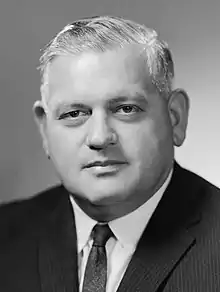
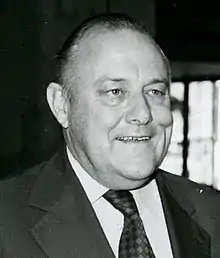
The Dawn Raids were a crackdown in New Zealand from the mid-1970s to the early 1980s on illegal overstayers from the Pacific Islands. The raids were first introduced in 1973 by Prime Minister Norman Kirk's Labour government and were continued by his successor Rob Muldoon's National government.[1] These operations involved special police squads conducting raids on the homes and workplaces of overstayers throughout New Zealand usually at dawn. Overstayers and their families were often prosecuted and then deported back to their countries.[2][3] Dawn Raids were particularly controversial as despite Pacific Islanders only making up one-third of overstayers, they accounted for 86% of those arrested and prosecuted.[4] The majority of overstayers were from Great Britain, South Africa and the United States.[2][5]
In early August 2021, Prime Minister Jacinda Ardern formally apologised for the Dawn Raids on behalf of the New Zealand Government.[6][7][8]
Background
The Dawn Raids were a product of the New Zealand government's immigration policies to attract more Pacific Islanders. Since the 1950s, the New Zealand government had encouraged substantial emigration from several Pacific countries including Samoa, Tonga, and Fiji to fill a labour shortage caused by the post-war economic boom. Consequently, the Pacific Islander population in New Zealand had grown to 45,000 by 1971, with a substantial number overstaying their visas.[9] During the late 1960s and early 1970s, New Zealand's economy had declined due to several international developments: a decline in international wool prices in 1966, Britain joining the European Economic Community in 1973 which deprived New Zealand of a major market for dairy products, and the 1973 oil crisis. This economic downturn led to increased crime, unemployment and other social ailments, which disproportionately affected the Pacific Islander community.[10]
Policy responses
In response to these social problems, Prime Minister Kirk created a special police task force in Auckland in 1973 which was tasked with dealing with overstayers. Its powers also included the power to conduct random checks on suspected overstayers. Throughout 1974, the New Zealand Police conducted dawn raids against overstayers which sparked criticism from human rights groups and sections of the press. In response to public criticism, the Labour Immigration Minister Fraser Colman suspended the dawn raids until the government developed a "concerted plan." In April 1974, Kirk also introduced a two-month amnesty period for overstayers to register themselves with the authorities and be granted a two-month visa extension. Kirk's changes in policies were criticised by the mainstream press, which highlighted crimes and violence perpetrated by Māori and Pacific Islanders.[1]
In July 1974, the opposition National Party leader Muldoon promised to reduce immigration and to "get tough" on law and order issues if his party was elected as government. He criticised the Labour government's immigration policies for contributing to the economic recession and a housing shortage. During the 1975 general elections, the National Party also played a controversial electoral advertisement that was later criticised for stoking negative racial sentiments about Polynesian migrants.[11] Once in power, Muldoon's government accelerated the Kirk government's police raids against Pacific overstayers.[3]
Opposition and abandonment
The Dawn Raids were condemned by different sections of New Zealand society including the Pacific Islander and Māori communities, church groups, employers and workers' unions, anti-racist groups, and the opposition Labour Party. One Pacific group known as the Polynesian Panthers combated the Dawn Raids by providing legal aid to detainees and staging retaliatory "dawn raids" on several National cabinet ministers including Bill Birch and Frank Gill, the Minister of Immigration. The raids were also criticised by elements of the police and the ruling National Party for damaging race relations with the Pacific Island community.[12] Kim Workman, who was a senior sergeant in Lower Hutt at the time, left the police force over his opposition to the racism displayed in the police response.[13]
Critics also alleged that the Dawn Raids unfairly targeted Pacific Islanders since Pacific Islanders only comprised one-third of the overstayers but made up 86% of those arrested and prosecuted for overstaying.[4] The majority of overstayers were from Great Britain, South Africa and the United States.[2][5] The Muldoon government's treatment of overstayers also damaged relations with Pacific countries like Samoa and Tonga, and generated criticism from the South Pacific Forum. By 1979, the Muldoon government terminated the Dawn Raids since the deportation of Pacific over-stayers had failed to alleviate the ailing New Zealand economy.[2]
During the late 1970s and 1980s, Pacific migrants continued to enter and settle in New Zealand through both legal and illegal means. In 2002, the New Zealand Government introduced a Samoan immigration quota that allowed 1,100 Samoan citizens each year to receive New Zealand residency provided they had a job offer and met other immigration requirements. In addition, the Government introduced a Pacific Access category which set quotas for people from Tonga, Fiji, Tuvalu and Kiribati to be granted residency in New Zealand. Pitcairn Islanders were also considered eligible for residence provided they had a firm job offer in NZ.[4]
Official apology

In April 2021, members of the Pasifika community called for an official apology, describing the dawn raids as "government‑sanctioned racism".[14]
On 14 June 2021, Prime Minister Jacinda Ardern confirmed that the New Zealand Government would formally apologise for the Dawn Raids at the Auckland Town Hall on 26 June 2021.[15] However, this official apology was postponed due to Covid-19. That same day though, the Minister for Pacific Peoples William Sio gave an emotional testimony of his family's experiences with a dawn raid, stating that the apology restored mana for the victims of these raids.[16][5] The opposition National Party leader Judith Collins also supported the Government's official apology for the dawn raids, stating that "this historic act of discrimination against our Pasifika communities caused anguish that reverberated across decades and it is right that we acknowledge this." The National Party's support was in recognition that both Labour and National had been equally involved in the raids themselves, and therefore equally owed the apology.[5]
While the apology was originally scheduled to be held on 26 June, it was later postponed to 1 August due to the Wellington COVID-19 scare in June 2021.[17] On 1 August, this formal apology was finally given by Ardern in a public ifoga ceremony before 1,000 Pasifika guests at the Auckland Town Hall on 1 August, 2021.[18][6] The apology was covered by several media including The Guardian, Al Jazeera, the Sydney Morning Herald, and BBC News.[7][8][19][20]
Tongan Princess Mele Siu'ilikutapu Kalaniuvalu Fotofili welcomed the apology as a step in the right direction while the Ministry for Culture and Heritage and the Ministry for Pacific Peoples promised to provide support for Pacific artists and historians to work with their communities to develop a comprehensive history of the Dawn Raids period.[21] University of Auckland senior research fellow Melanie Anae described the apology as insufficient gestures and said that the Government had to go further before they could expect "real change."[22] Members of the Christchurch-based Pacific Youth Leadership and Transformation (PYLAT) welcomed the Government's apology as a start but said that more work was needed to be done.[23]
Legacy
The Dawn Raids have been the subject of several literary works and media including Oscar Kightley's play Dawn raids, Pauline Vaeluaga Smith's novel Dawn raid, Albert Wendt's Sons for the return home, the documentaries Dawn Raids (2005) and Polynesian Panthers (2010), and Oscar Kightley's 2021 documentary Dawn Raid. The Danny 'Brotha D' Leaosavai'i and Andy Murnane's record label Dawn Raid Entertainment and King Kapisi's clothing label "Overstayer" also re-appropriated the dawn raids for artistic purposes.[24] In addition, the Dawn Raids were depicted in Halaifonua Finau and Tom Hern's TVNZ miniseries The Panthers, which premiered on 15 August 2021.[25][26]
The Dawn Raids were also covered by general and scholarly works including Sharon Alice Liava'a's 1998 MA thesis "Dawn raids: when Pacific Islanders were forced to go "home"," anthropologist Melanie Anae's chapter "Overstayers, Dawn Raids and the Polynesian Panthers" in the edited volume Tangata O Le Moana: New Zealand and the People of the Pacific, and Anae, Lautofa (Ta) Iuli and Leilani Tamu's Polynesian Panthers: Pacific protest and affirmative action in Aotearoa New Zealand 1971–1981.[24][27]
Notes and references
- Anae 2012, p. 227-230.
- Damon Fepulea'I, Rachel Jean, Tarx Morrison (2005). Dawn Raids (documentary). TVNZ, Isola Publications.
- Anae 2012, p. 230-233.
- Beaglehole, Ann. "Controlling Pacific Island immigration". Te Ara: The Encyclopedia of New Zealand. Ministry for Culture and Heritage. Retrieved 30 October 2020.
- Cooke, Henry; Basagre, Bernadette (14 June 2021). "Government to formally apologise for race-based dawn raids". Stuff. Archived from the original on 14 June 2021. Retrieved 14 June 2021.
- "Ardern gives formal apology on behalf of government for Dawn Raids". Radio New Zealand. 1 August 2021. Archived from the original on 3 August 2021. Retrieved 4 August 2021.
- "Jacinda Ardern apologises for New Zealand 'dawn raids' on Pasifika people in 1970s". The Guardian. Australian Associated Press. 2 August 2021. Archived from the original on 6 August 2021. Retrieved 4 August 2021.
- "New Zealand apologises for 1970s 'Dawn Raids'". Al Jazeera. 1 August 2021. Archived from the original on 3 August 2021. Retrieved 4 August 2021.
- Parker 2005, p. 28-29, 64–65.
- Parker 2005, p. 64-65.
- National Party advertisement (documentary). TVNZ. 1975 – via Te Ara: The Encyclopedia of New Zealand.
- Anae 2012, p. 234-236.
- Workman, Kim (11 July 2021). "Policing the Dawn Raids". E-Tangata. Retrieved 11 July 2021.
- Ma'ia'i, Leni (10 April 2021). "'Government-sanctioned racism': Pasifika in New Zealand call for apology for dawn raid policy". The Guardian. London, United Kingdom. ISSN 0261-3077. Archived from the original on 15 May 2021. Retrieved 12 April 2021.
- Neilson, Michael (14 June 2021). "Prime Minister Jacinda Ardern announces apology for dawn raids targeting Pasifika". The New Zealand Herald. Archived from the original on 14 June 2021. Retrieved 14 June 2021.
- Whyte, Anna (14 June 2021). "Government Minister Aupito William Sio in tears as he recalls family being subjected to dawn raid". 1 News. Archived from the original on 14 June 2021. Retrieved 14 June 2021.
- Whyte, Anna (15 July 2021). "New date announced for official dawn raids apology". 1 News. Archived from the original on 4 August 2021. Retrieved 4 August 2021.
- Ardern, Jacinda (1 August 2021). "Speech to Dawn Raids Apology". Beehive.govt.nz. New Zealand Government. Archived from the original on 6 August 2021. Retrieved 4 August 2021.
- Perry, Nick (1 August 2021). "Jacinda Ardern apologises for New Zealand's 'dawn raids' on Pacific people". The Sydney Morning Herald. Archived from the original on 6 August 2021. Retrieved 4 August 2021.
- "ew Zealand Dawn Raids: Jacinda Ardern formally apologises". BBC News. 2 August 2021. Archived from the original on 3 August 2021. Retrieved 4 August 2021.
- "Tongan princess in tears as she accepts formal dawn raids apology". 1 News. TVNZ. 1 August 2021. Archived from the original on 6 August 2021. Retrieved 4 August 2021.
- "Pasifika leaders want more following Dawn Raids apology". 1 News. TVNZ. 2 August 2021. Archived from the original on 4 August 2021. Retrieved 4 August 2021.
- Anderson, Vicki (2 August 2021). "Government's apology for dawn raids 'just the beginning', Pasifika youth say". Stuff. Archived from the original on 4 August 2021. Retrieved 4 August 2021.
- "The dawn raids: causes, impacts and legacy". New Zealand History. Ministry for Culture and Heritage. 9 June 2021. Archived from the original on 15 May 2021. Retrieved 16 June 2021.
- "The Mixtape 'The Panthers' writers Tom Hern and Nua Finau". Radio New Zealand. 14 August 2021. Archived from the original on 14 August 2021. Retrieved 16 August 2021.
- Te Rina Triponel (21 July 2021). "Watch: Dawn raids: TV series The Panthers hits the screen, explores injustices of the 1970s". The New Zealand Herald. Archived from the original on 30 July 2021. Retrieved 19 August 2021.
- Anae 2012, p. 221-240.
Further reading
- Anae, Melanie (2012). "Overstayers, Dawn Raids and the Polynesian Panthers". In Sean, Mallon; Māhina-Tuai, Kolokesa; Salesa, Damon (eds.). Tangata O Le Moana: New Zealand and the People of the Pacific. Te Papa Press. ISBN 978-1-877385-72-8.
- Parker, John (2005), Frontier of Dreams: The Story of New Zealand—Into the 21st Century, 1946–2005, Auckland: TVNZ and Scholastic, pp. 28–29, 64–65