Dmitry Rybolovlev
Dmitry Yevgenyevich Rybolovlev (Russian: Дмитрий Евгеньевич Рыболовлев; Russian pronunciation: [ˈdmʲitrʲɪj ɪvˈɡʲenʲjɪvʲɪtɕ rɨbɐˈɫovlʲɪf]; born 22 November 1966) is a Russian businessman and investor. Rybolovlev owned the potash producer Uralkali and, in 2011, became the President of Monaco's football club AS Monaco.[2] He has two daughters, Ekaterina and Anna Rybolovleva.[3]
Dmitry Rybolovlev | |
|---|---|
Дмитрий Рыболовлев | |
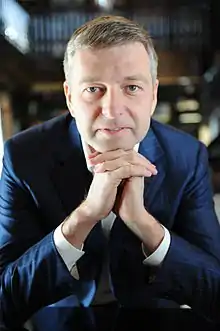 Dmitry Rybolovlev, 2012 | |
| Born | Дмитрий Евгеньевич Рыболовлев (in Russian) Dmitry Yevgenyevich Rybolovlev 22 November 1966 |
| Citizenship | Russian |
| Occupation | Oligarch |
| Known for |
|
| Spouse(s) | Divorced |
| Children | Ekaterina and Anna[1] |
As of July 2021, Rybolovlev is ranked 391st on Forbes's list of billionaires with a net worth of $6.7 billion.[4][5] He is one of the alleged victims of Swiss art transporter Yves Bouvier as part of The Bouvier Affair.
Early business career
Dmitry Rybolovlev entered the business world in 1990 after graduating with honors from the Perm Medical Institute,[6] when he first started working as a doctor but then decided to engage in business.[7]
While in his third year in medical school, he married Elena, a fellow student, and in 1989 his eldest daughter, Ekaterina, was born.[7]
Because a doctor's income was not enough to support a family in the final years of the Soviet Union, Rybolovlev began his first business project, a small medical enterprise that served the workers of local factories he set up together with his father, a professor of medicine.[8][9][10] Rybolovlev earned his first million dollars by reselling products, which the factories used to pay for in services rather than cash as was then a common practice in Russia.[11]
In 1992 Rybolovlev went to Moscow to take a business course and received a brokerage license from the Russian Ministry of Finance, one of the first in Russian and the first in the Perm region, which permitted him to trade and deal with securities.[7] Upon his return to Perm, he founded a brokerage and investment company and started buying up shares of local enterprises such as Uralkali, Silvinit, Azot, Metafrax,Solikamskbumprom.[7]
Development of Uralkali
In early 1994, Rybolovlev persuaded directors of these and some other enterprises to establish a bank, which he headed.[7]
He later decided to concentrate on two assets, Uralkali and Silvinit, given that the Russian potash industry was underdeveloped at the time due to the lack of interest from investors, unlike in the oil and gas sectors. Additionally, no one had been able to acquire controlling stakes in the industry's firms.[8] In 1993 to 1995, Rybolovlev's portfolio included securities of Uralkali, Silvinit, Metafrax and Neftekhimik.[8] These companies jointly developed the Verkhnekamskoye potash deposit, one of the world's largest deposits.[8] The violent nature of capital accumulation in early to mid-1990s Russia, including in the country's industrially developed regions like the Perm Krai, gave rise to violent criminals battling over control of companies and imposing "protection" fees on businesses.[12][13]
Refusing to cooperate with criminal gangs, Rybolovlev was forced to hire a bodyguard in 1993 before moving his family to safety in Switzerland in 1995. He also assigned bodyguards to all the directors of his enterprises, with only one, Evgeny Panteleimonov, director of Neftekhimik, refusing to accept.[12][14][8] Together with Rybolovlev, he had insisted on stopping the supply of the company's products through a mafia-controlled straw firm, "Trade House FD". That same year, Evgeny Panteleimonov was killed at the doorstep of his house.[15][8] A local gangster Oleg Lomakin, who turned out to be the organizer of the murder and who was detained in April 1996 accused Rybolovlev of being behind the murder (in order to get a lighter sentence), leading to Rybolovlev being arrested and spending 11 months in pretrial detention.[15][8] Oleg Lomakin eventually withdrew his testimony, and, together with two accomplices, was sentenced to 15 years in prison for the murder of Panteleimonov.[8] The judge concluded that the gangsters had killed the director of the company for breaking off relations with "Trade House FD".[8] In 1997 Rybolovlev was acquitted by courts of law at three levels, including the Presidium of the Supreme Court of the Russian Federation. In media reports, Rybolovlev stated that he was extorted in jail to sell the shares of his company in exchange for his freedom, but had refused.[8]
Growth and IPO
Over the next 15 years Rybolovlev focused on developing Uralkali and eventually built it into a major global enterprise.[16] According to the Russian business newspaper Vedomosti, by 2000 he had consolidated his controlling interest in the company and begun to reform and develop it. While in 2000 the capitalization of Uralkali was no more than $15 million, in just eight years it reached $20 billion.[8] While the overall market outlook for mineral fertilizers improved over this time, reforms made under Rybolovlev's leadership played an important role in transforming a Soviet era enterprise into a worldwide industry leader.[8] In 2000, Rybolovlev replaced the entire management of Uralkali was replaced, setting an increase in labor productivity as a key indicator, and as a result, the indicator increased by 2.5 times in the period from 2000 to 2007.[8] Following this rapid growth throughout the early 2000s, in 2002 Uralkali built the Baltic Bulk Terminal in St. Petersburg port as its own transport hub, providing the company with a high-tech universal transshipment complex for mineral fertilizers, and thereby improving logistics capabilities.[17][18]
In 2005, the largest Uralkali and Belarusian potash producer Belaruskali combined their trade flows via a single trader, theBelarusian Potash Company (BPC), of which Rybolovlev became chief executive.[19] There were plans to float Uralkali on the London Stock Exchange in 2006, but Rybolovlev canceled the listing after the order book had already been closed because he considered the company's valuation by investors to be unfairly low.[20] As it would soon show, the decision turned out to be correct in many respects, since just a few days after the cancellation of the IPO, a major accident occurred at one of Uralkali's mines.[21] Uralkali's IPO finally went ahead in 2007, making it one of the most successful in the history of Russian business.[22] For 14.38% of shares Uralkali raised almost $1 billion, with demand for shares exceeding supply by 23 times.[23] The listing attracted major international investors due to the company's strong financial results and proved to be a pivot point for the traditionally closed off Russian chemical industry, setting new standards for corporate governance transparency.[24]
In June 2010, Rybolovlev sold a 53% shareholding in Uralkali to a group of Russian investors: Kaliha Finance Limited (Suleiman Kerimov, 25%), Aerellia Investments Limited (Alexander Nesis, 15%) and Becounioco Holdings Limited (Filaret Galchev, 13.2%).[25][26] The transaction price was not disclosed, but was reported to be around $5.3 billion.[27]
In December 2010, Uralkali bought a 20% stake in Silvinit for $1.4 billion from Rybolovlev.[28][29] The merger was finalized in July 2011, after Rybolovlev had sold the remaining shares of Uralkali.[30]
Berezniki mine collapse
In October 2006, a freshwater spring began flowing into one of Uralkali's mines under the city of Berezniki, leading the walls and pillars supporting the ceilings of large caverns to dissolve.[31] There were attempts to keep the mine operable, but Rybolovlev decided to close it to avoid fatalities.[32] As a result, mining equipment worth tens of millions of dollars and unexploited reserves of potash ore remained underground, but human casualties were avoided.[32]
As a result of the mine's collapse, large sinkholes appeared around the mine and in the city of Berezniki, forcing some 12,000 residents to evacuate their homes.[33] New sinkholes continue to appear regularly throughout the Perm region though it is not clear whether all of them are caused by mining activities.[34] The causes of the accident were investigated by commissions of Rostekhnadzor, the Ministry of Emergencies and the Ministry of Natural Resources. The investigation concluded that the accident occurred for geological reasons, specifically a "previously unknown anomaly of geological structure".[35] Then-head of the Ministry of Emergency Situations Sergei Shoygu said that "the situation that we have today has been accumulating for decades. There are mistakes, including wartime, when very active and, perhaps, not very cautious works were performed".[36]
The neutrality of the commission's report has been challenged by some observers, who argued that the report was partly written by OAO Galurgia, a company affiliated to Uralkali.[37] Some Russian sources claimed that Uralkali failed to undertake all the necessary work in order to fill the holes in the mines, which may have directly caused the appearance of the sinkholes.[37] Uralkali repeatedly denied the allegations, with Russian economic newspaper Kommersant reporting that the company's experts carried out the backfilling of the mines based on the technical projects and mining operations plans in the volumes necessary to ensure the safety of existing mines.[38] When Rybolovlev became a shareholder in Uralkali, the company began to actively engage in backfilling the voids inherited from the Soviet era. More than 70% of the funding was provided by Uralkali, the rest came from the federal budget.[39] A report in The New York Times suggested that the situation was partially caused by the fact that Berezniki began as a Soviet labor camp, and was built directly over the mine to be within marching distance of work areas.[40]
In October 2008, Russian Vice Premier Igor Sechin reopened the investigation, prompting speculation in international news outlets, including The New York Times, that a raider attack had been launched against Uralkali.[41] The results of this investigation turned out to be almost identical to the conclusion of the first investigation, namely that the cause of the accident was a combination of geological and technological factors.[42]
In December 2008, Uralkali pledged to pay $218 million to the Russian government as compensation for costs incurred by the mine collapse.[43] In February 2009, the company agreed to a payment of $71.8 million to the Perm region.[44]
Investment in Bank of Cyprus
In September 2010, Rybolovlev bought a 9.7% stake in Cyprus largest bank, Bank of Cyprus.[45] Rybolovlev's investment in Bank of Cyprus followed significant financial dealings in the country. Following the country's deep recession, on 25 March 2013 the Eurogroup agreed with the government of Cyprus that the Bank of Cyprus would take over the remnants of Laiki Bank. To finance the deal and save Bank of Cyprus from bankruptcy, it was also decided that accounts over €100,000 would suffer a haircut on their assets of about 50%, which mostly wiped out Rybolovlev's stake and ended his involvement in the Bank with a $600 million loss.[46] In 2012, he acquired Cypriot citizenship upon becoming an investor in Bank of Cyprus.[47]
AS Monaco
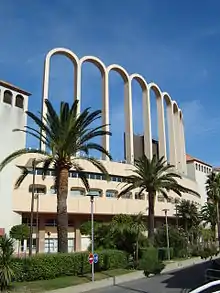
Rybolovlev relocated to Monaco in 2010 and in December 2011, a trust acting on behalf of Rybolovlev's daughter Ekaterina, bought a 66% stake in the Monegasque association football club AS Monaco FC.[48][49] The club was in a bad state at the time, playing at the bottom of the French second league and highly in debt, and the Monaco Palace was looking for an investor to improve the club's prospects.[50] According to French media reports, Ryboloblev acquired the club for a symbolic €1, but with a commitment to invest at least €100 million ($129.4 million) into the club over the next four years.[51][52]
The remaining 33% stake in the club is owned by Monaco's ruling family, the House of Grimaldi, with Rybolovlev's acquisition of the stake in the club approved by Prince Albert II of Monaco. Dmitry Rybolovlev was subsequently appointed president of the club.[48]
Though historically Monaco is one of France's most successful clubs, they were struggling at the time of Rybolovlev's arrival, and had been relegated to the second tier of French football, Ligue 2. Étienne Franzi, AS Monaco's former president, and the DNCG, the French football authority, both gave positive assessments of the club's progress after Rybolovlev's first year of ownership in December 2012.[53]
In May 2013, Monaco was promoted to Ligue 1 after securing the second division title. Monaco became one of the most prodigious spenders in European football in the summer of 2013 under Rybolovlev's presidency, spending £146 million on players including Radamel Falcao, James Rodríguez and João Moutinho. Ricardo Carvalho and Eric Abidal were also signed on free transfers with large salaries.[48][54]
In January 2014, Monaco agreed to pay the governing body of French football, the Ligue de Football Professionnel (LFP), a one-off voluntary payment of €50 million to remain exempt from a ruling by the LFP that its clubs must have their head offices located in France. Based in the tax haven of Monaco, the club managed to avoid the effects of tax increases in neighboring France. Rybolovlev and the head of the French league, Noël Le Graët, had initially failed to find an agreement over the matter and Rybolovlev had initiated legal action against the league which was later dropped. The €50 million figure was calculated by the league as the amount saved by Monaco a result of their unique location.[48][55]
Rodríguez and Falcao subsequently left Monaco in the summer of 2014, the latter leaving on loan to Manchester United and Chelsea (returning to Monaco in 2016[56]) and the former being sold to Real Madrid for almost double the transfer fee Monaco had paid Porto for his services one year prior.[57] The transfers were explained by Monaco's vice president Vadim Vasilyev as part of a new strategy. He stated that "There are two ways to go... One is either you invest a lot of money and do it quickly, the other is you build up an intelligent project and you have to base yourself on your academy and sound principles of working and scouting well and basically that's what we've decided to do."[48]
The departure of star players and a decline in spending was also attributed by Vasilyev to the introduction of the UEFA Financial Fair Play Regulations and the resultant threat of sanctions. Vasilyev said in an interview that Rybolovlev had told him that he was "...already investing big money and if the club has to pay fines over and on top of that, this is something that is really not on. This really goes against any common sense".[54] In a March 2015 interview with Nice Matin, Rybolovlev re-iterated his long-term commitment to the club and also expressed his delight at Monaco's successes since his arrival.[58]
In 2017, Monaco enjoyed its most successful season yet, winning the French Ligue 1 title and reaching the semi-final of the European Champions League.[59] Reflecting on the club's unexpected success, The Independent wrote that "Monaco's policy of buying low and selling high has made the club a true Champion's League power at last" and called Monaco as "one of the best run clubs in Europe".[59]
In July 2018, media reported that Rybolovlev was a potential buyer of Chinese businessman Li Yonghong's stake in AC Milan, but the deal didn't materialize.[60] Rybolovlev's son-in-law, prominent Uruguayan businessman Juan Sartori, is an owner of a 20% stake in England's Sunderland AFC.
Following an unsuccessful start to the 2018–2019 season, the club in October 2018 officially announced the departure of its head coach, Leonardo Jardim.[61] On 13 October, the club confirmed Thierry Henry as the new head coach until 2021.[62] On January 25, Henry was sacked after only 20 matches, of which only five ended in victory. He was replaced with his predecessor Jardim.[63]
In July 2020, former Bayern coach Niko Kovac became AS Monaco's new coach, replacing Robert Moreno.[64]
On 16 January 2019, AS Monaco announced a €55 million investment into a brand new "Centre for sporting excellence" that is planned to include three football fields in addition to a fitness and medical centre. The investment will also include renovations on the Louis II stadium and the construction of a dormitory for the club's youth academy. The centre is slated to be operational by the 2020–2021 season.[65]
It was announced in October 2020 that club president Dmitry Rybolovlev would make a personal donation to help rebuild the pitch of Saint-Martin-Vésubie, which was destroyed during storm Alex.[66] According to press reports, the donation follows a letter written by two local boys to Rybolovlev asking for financial help in the matter. Though not confirmed, the donation would amount to 250,000 Euros.[67][68]
Philanthropy
Rybolovlev provided financial assistance to the reconstruction of Saint Petersburg's Oranienbaum Palace, as well as to the restoration of the Conception Convent (also known as Zachatyevsky Monastery) in Moscow.[69] He donated €17.5 million for the re-building of the Cathedral of Nativity of Theotokos in Moscow, and was involved in the restoration of several icon paintings in the Cathedral of Exaltation of the Cross recreated in Belogorsk Saint Nicolas Monastery.[69]
Rybolovlev is also involved in the construction of the Russian Orthodox Church of St. Nicholas in Limassol, Cyprus, for estimated project costs of €5 million.[70][71] With a size of 1050 m2, the church is expected to host 500 to 600 people once the constructions are completed.[69]
Rybolovlev is also involved in Les Arts Gstaad, a new cultural center dedicated to music, arts and literature in the Swiss town Gstaad.[72]
Controversies
Pollution of Kama river
In June 2012, Green Patrol, a Russian environmental NGO, listed Uralkali as one of the top 100 polluters in Russia, based on information gathered during the previous years.[73] An expedition organized into the Perm Krai by the same NGO in 2010, when Rybolovlev was still the company's owner, revealed that Uralkali's sinks contained at least 16 harmful elements (including zinc and ammonium), exceeding the maximum permissible levels by 1,850 times.[74] According to Green Patrol's President Roman Pukalov, Uralkali failed to fully disclose a complete list of harmful elements that it routinely ejected into the local river Kama. He described Kama water as "very polluted", declaring that small rivers around Berezniki had in fact turned into brine.[75]
Furthermore, Uralkali's environmental spending under Rybolovlev was exceptionally low.[76]
Panama Papers scandal
In April 2016, it was alleged by the International Consortium of Investigative Journalists (ICIJ)[77] that Rybolovlev used a company registered in the Virgin Islands to hide art from his former wife Elena during their divorce proceeding.[78] Rybolovlev's use of offshore companies was described as a "textbook example of the lengths rich people go to protect their considerable wealth in case of a marital breakup" by the Süddeutsche Zeitung.[79] However, subsequent media reports noted that the offshore structures established by the Rybolovlev family trust pre-dated the divorce proceedings by several years. Furthermore, the family trust had publicly disclosed the companies as owners of the art works long before the Panama Papers report was published, a fact that the original Panama Papers report had omitted.[80]
Liberation of Georgi Bedjamov
Georgi Bedjamov, President of the Federation of Bobsleigh and Skeleton of Russia and former co-owner of Vneshprombank, was arrested in March 2016 in Monaco after an international arrest warrant was issued against him by the Russian authorities on charges of fraudulent bankruptcy and embezzlement. Bedjamov was liberated in July 2016 by the Prince, a decision that was later confirmed by the Monaco Appeal Court.[81] Russian sources alleged that Dmitry Rybolovlev helped Georgi Bedjamov escape Russian authorities,[82][83] but Rybolovlev denied these claims in an interview to the French newspaper Le Parisien in late October 2016.[84][85]
Football Leaks scandal
In December 2016 the Football Leaks scandal revealed that Rybolovlev and football agent Jorge Mendes had set up a secret system to illegally buy players' shares. Using a Cyprus-based offshore investment fund named Browsefish Limited, Rybolovlev manipulated the price of his own players through third-party ownerships (TPO).[86] Rybolovlev resorted to the use of offshore companies to hide his identity, as TPO's are illegal in Europe.[87] Investigations revealed for example that football player Fabinho was already 48.5% owned by Rybolovlev when he was loaned to AS Monaco by Rio Ave F.C.[88][87]
AS Monaco denied these allegations and that such a scheme was ever put into place, arguing that reports published in the French and European press to the contrary "contain false information and many inaccuracies."[89][90][91]
Property
Trusts in the name of his Rybolovlev's daughter, Ekaterina, have made several significant property purchases around the world since 2008. The trusts have bought properties in Florida, Hawaii, New York City, Monaco, as well as two islands in Greece. Rybolovlev also owns an estate in Saint-Tropez on the Cote d'Azur in the south of France, houses in Gstaad, Switzerland, and used to own property in Geneva and Paris with his former wife.[92][93][94] In 2013, the property purchases were contested by Rybolovlev's wife, Elena Rybolovleva, during the couple's divorce proceedings.[95]
Florida
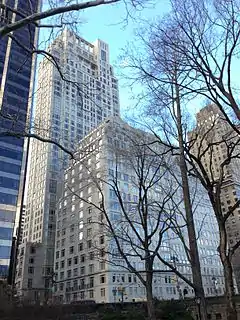
The New York Times reported that in 2008, Rybolovlev and his wife made house-hunting trips to New York City and aimed to buy their first property in the US, eyeing an apartment at 15 Central Park West, but the seller eventually withdrew from the deal.[96] Rybolovlev subsequently looked to Florida, where American businessman Donald Trump was selling a 6 acres Palm Beach residence at the coast of the Atlantic Ocean.[96]
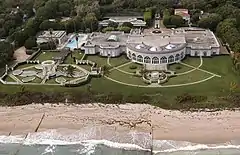
In 2008, Ekaterina Rybolovlev's trust bought the 18-bedroom Maison de L'Amitie in Palm Beach, Florida, from the American businessman Donald Trump.[93][97] Amidst concerns during his campaign about rubbing shoulders with Russian officials, Trump has claimed that the sale of Maison de L'Amitié, which he purchased for $40 million in 2004 and sold to Rybolovlev for $95 million, is the only dealing he has done with a Russian.[98] In February 2018, Oregon Senator Ron Wyden wrote to the US Treasury Department to request records on the purchase of the property. However, a spokesman for the Rybolovev family reiterated that the deal has long been publicly scrutinized since it was announced over a decade ago.[99] As of February 2018, the trust's investment in the property looked on track to yield a significant return.[100]
In 2016, Rybolovlev razed the mansion on the property after being granted permission to subdivide the land into three lots, two of which have since sold for a combined $71.34 million.[101] The third lot of 2.23 acres was sold in July 2019 for $37.3 million.[102] Although the property's price was originally listed at $42 million,[101][103] all three lots were sold for a total of $108.2 million, still roughly $13 million more than what Rybolovlev had paid for the property in 2008.[104]
New York
In December 2011, the trust bought a 10-room, 626 m2 (6,740 sq ft) apartment at 15 Central Park West in New York City for $88 million, from Joan Weill, the wife of Sanford I. Weill, the former chairman of Citigroup. This was a record price for an apartment in the city at the time of its purchase.[105]
Hawaii
In 2011, Rybololev also bought a $20 million property in Kauai, Hawaii, from the American actor Will Smith.[95] During his ownership, 21 acres were added to the estate, and put on the market for $29.5 million in 2015.[106]
Greece
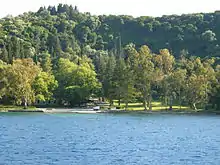
In April 2013, Ekaterina Rybolovlev's trust bought a group of companies from the Greek heiress Athina Onassis Roussel. The assets included the 74 acre Greek island of Skorpios and its smaller islet, Sparti.[107][108] The sale price was reported as $154 million.[109] In October 2018, Rybolovlev started a major development project on the island with the aim to transform it into a luxury resort. The total investment in the project amounts to €184 million. The work was supposed to end in 2020.[110] At the beginning of 2021, the completion date was shifted to 2024. The investment in the resort was estimated at €165 million, and the estimated price of a weekly rental was estimated at €1 million.[111]
On 8 November 2021, the Co-Ordination Authority of the Peloponnese, Western Sterea Hellas, and Ionian islands prefecture, after a petition was submitted by a number of inhabitants of nearby Lefkada island, annulled a permit allowing enlargement works on the Skorpios small port. This made continuation of construction works for the luxury complex impossible to continue due to the large size of the construction vehicles needed for the project. Representatives of the Rybolovlev investment company declared that they would appeal the decision.[112]
Monaco
In 2010, Rybolovlev bought the 2,000m2 Belle Époque style penthouse apartment on the Avenue d'Ostende in the Monte Carlo district of Monaco. The property was bought for €220 million. Its previous owners include Nick and Christian Candy, the brothers behind the Candy & Candy interior design and property development business, and earlier, the Brazilian banker Edmond Safra, who died in a fire at the apartment in 1999.[113][114][115]
Switzerland
Rybolovlev and his former wife owned a property in Geneva, Switzerland, which they demolished in 2008 and planned to replace with a replica of the palace of Marie-Antoinette, the Petit Trianon at the Palace of Versailles. The project was abandoned amidst the couple's divorce proceedings.[93]
Rybolovlev has also built two houses worth $135 million in the Swiss alpine resort of Gstaad.[92][93]
Art collection
Rybolovlev's art collection has included paintings by Paul Gauguin, Auguste Rodin, Amedeo Modigliani (Nude on a Blue Cushion), Pablo Picasso, Henri Matisse, Claude Monet, Mark Rothko, (No. 6).[116] and Vincent van Gogh.[117] He was also the owner of Salvator Mundi by Leonardo da Vinci, or studio, until it was sold at Christie's auction house for a total cost of $450 million on 15 November 2017.[118] In early 2015, it was reported that Rybolovlev may have been a victim of a complex art fraud to the tune of $1 billion allegedly perpetrated by the art dealer Yves Bouvier, who was indicted on charges of fraud and complicity in money laundering.[119][120] In 2016, Rybolovlev was again at the center of a controversy after it was alleged that he bought three stolen Picassos from art dealer Olivier Thomas.[121][122] In October 2018, Rybolovlev launched a lawsuit against Sotheby's in Manhattan federal court, alleging that the auction house "materially assisted the largest art fraud in history".[123] Rybolovlev's lawyers said "Sotheby's was the willing auction house that knowingly and intentionally made the fraud possible" because it knew how much Bouvier paid the sellers.[123] Sotheby's has denied these allegations.[124]
On 6 November 2018, Rybolovlev was questioned by the Monegasque police.[125][126] His lawyers stated that this happened on the basis of information obtained from the phone of one of Rybolovlev's previous lawyers, Tetiana Bersheda, which is the subject of an appeal in Monaco.[126] Rybolovlev was subsequently named a "formal suspect" in a graft investigation by Monaco's chief prosecutor. He was released from custody and placed under judicial control.[127]
In an interview with the daily Nice Matin in December 2018, Rybolovlev's lawyer, Me Hervé Temime, criticised repeated violations of the investigation's secrecy that he attributed to vested interests against Rybolovlev. He also stated that "the seriousness of the initial scam" was understated "because of the wealth" of Rybolovlev in what he described as an ostracism of rich Russians.[128]
In June 2019, Sotheby's request to have the case against it thrown out was denied by a US federal court in Manhattan.[129] The court argued that Sotheby's had failed to establish "exceptional circumstances" to justify such a move. The auction house also had to allow public access to previously sealed or redacted documents detailing correspondence between Yves Bouvier, Sotheby's staff as well as Sotheby's senior director and vice-chairman for private sales Samuel Valette.[130] According to the Art Newspaper, the correspondence reveals "that Bouvier paid Sotheby's $83 million for Salvator Mundi, suggesting a 53.62% markup on the painting, as Rybolovlev had alleged."[130][131] Next to Salvator Mundi, the documents pertain to pricing negotiations between Bouvier and Sotheby's for Gustav Klimt's Wasserschlangen II in 2012, Picasso's L'Homme Assis Au Verre and Modigliani's Nu Couché au Coussin Bleu.[130]
In July 2020, criminal proceedings against Bouvier for fraud and money laundering were dismissed by Monaco's Court of Revision on the procedural grounds that "the investigations had been conducted in a biased and unfair manner."[132] In January 2021, Swiss prosecutors closed a two-year-long investigation into Bouvier, though Rybolovlev may appeal the filing order.[133] As of February 2021, litigation between Rybolovlev and Bouvier is still ongoing in a number of jurisdictions, including the US, London and Paris.[133]
Awards and honours
In 2010 Rybolovlev was awarded the Order of St. Seraphim of Sarov I degree by Patriarch Kirill for funding the restoration of the Cathedral of the Nativity of the Most Holy Mother of God in Zachatyevsky Convent.[134]
Personal life
Rybolovlev married Elena Rybolovleva in 1987 in Perm, Russia. Together they have two daughters: Ekaterina, born in 1989, and Anna, born in 2001.[135] In 2015, Ekaterina married Uruguayan businessman Juan Sartori.
Divorce
Elena Rybolovleva filed for divorce on December 22, 2008,[136] citing in her divorce petition the "serial infidelity" of her husband.[137][138] At the same occasion, Elena Rybolovleva officially asked the Geneva State prosecutor for protection of her assets from Rybolovlev.[136]
In February 2014, Elena Rybolovleva was detained in Cyprus for allegedly stealing a $28 million diamond ring she later proved her ex-husband had given her while they were still married.[139][140]
In May that year, a Geneva court awarded Rybolovlev's ex-wife a record settlement of $4.8 billion. This would have been the most expensive divorce settlement in history at the time.[141] However, Rybolovlev's lawyers successfully appealed the 2014 ruling in June 2015. The Geneva court reversed the earlier decision, ruling that Rybolovleva's settlement be reduced to 564 million Swiss francs.[142]
Finally, in October 2015, Rybolovlev and his ex-wife Elena announced they had reached an amicable settlement of their divorce, and that all legal actions in relation to the case would cease. Financial terms of the settlement were not disclosed.[143]
Hobbies and interests
Rybolovlev enjoys surfing, especially in Hawaii.[144]
He is also engaged in sailing and yachting, being the owner of €80 million superyacht Anna I and his new $250 million yacht, also called Anna.[145][146] Both yachts were built by Feadship and designed by Michael Leach, with Anna being the company's biggest superyacht to date.[147]
In July 2021, Dmitry Rybolovlev acquired a new sailing ClubSwan 125 yacht, named Skorpios after the Greek island owned by his family trusts.[148] The 43-meter racing vessel took four years to build at Nautor's Swan yard in Finland.[149] The yacht was designed to be a record-breaker and is able to reach a speed of roughly 15 knots upwind and remain consistently faster than the wind speed downwind thanks to innovations including the addition of a single curved foil that provides sideways and vertical lift in varying conditions.[150][149] Skorpios' skipper is Olympic gold medalist and two-world champion Fernando Echávarri, while Rybolovlev is the racing yacht's helmsman.[148][149]
Rybolovlev also owns a racing yacht of the ClubSwan 50 model, now renamed Sparti.[151] With this model, he won the ClubSwan 50 World Championship title during The Nations Trophy regatta in Palma Bay, Spain in October 2019.[152] In the event's 2020 reiteration, Rybolovlev's ClubSwan 50 yacht took third place overall after winning two of that year's four races, making it the only team to win medals in the ClubSwan World Championship over two consecutive years.[153][154]
Forbes ranking
In the Forbes billionaires list for 2021 Rybolovlev was ranked the 391st richest person in the world with a net worth of $6.7 billion.[155]
| Indicator[156] | 2006 | 2007 | 2008 | 2009 | 2010 | 2011 | 2012 | 2013 | 2014 | 2015 | 2016 | 2017 | 2018 | 2019 | 2020 | 2021 |
|---|---|---|---|---|---|---|---|---|---|---|---|---|---|---|---|---|
| Net worth ($ billion) | 1.6 | 3.3 | 12.8 | 3.1 | 8.6 | 9.5 | 9 | 9.1 | 8.8 | 8.5 | 7.7 | 7.3 | 6.8 | 6.6 | 6.6 | 6.7 |
| Rank (in the world) | 486 | 271 | 59 | 196 | 79 | 93 | 100 | 119 | 147 | 156 | 170 | 190 | 242 | 224 | 224 | 391 |
| Rank (in Russia) | 32 | 29 | 11 | 13 | 10 | 14 | 13 | 14 | 17 | 14 | 12 | 15 | 18 | 17 | 17 | 26 |
Notes
- The club was owned by a trust that attributed to Ekaterina Rybolovleva, daughter of Dmitry.[1]
References
- Conn, David. "Monaco have plenty of money and ambition but not many supporters". The Guardian.
- Conn, David (2013-09-20). "Monaco have plenty of money and ambition but not many supporters | David Conn". the Guardian. Retrieved 2018-10-18.
- "Russia's Potash King Is Getting Destroyed By A $12 Billion Divorce". Business Insider. Retrieved 2018-10-18.
- "Dmitry Rybolovlev". Forbes. Retrieved 2021-07-09.
- "The World's Billionaires". Forbes. Retrieved 2018-10-18.
- "Dmitry Rybolovlev". Bloomberg. Retrieved 18 October 2018.
- "Время разбрасывать калий". www.kommersant.ru (in Russian). 2010-06-21. Retrieved 2021-11-18.
- "Дмитрий Рыболовлев, хозяин «Уралкалия». В чем соль". Forbes.ru (in Russian). Retrieved 2021-11-18.
- "Дмитрий Рыболовлев: от одержимого футболом олигарха до фигуранта дела о коррупции". Ведомости (in Russian). Retrieved 2021-11-18.
- "Дмитрия Рыболовлева начали разводить". www.beriki.ru. Retrieved 2021-11-18.
- "«Спаситель мира»: сенсация в криминальных тонах".
- "Дмитрий Рыболовлев: от одержимого футболом олигарха до фигуранта дела о коррупции". Ведомости (in Russian). Retrieved 2021-11-18.
- "Gangster's paradise: how organised crime took over Russia". the Guardian. 2018-03-23. Retrieved 2021-11-18.
- "Борьба валдайских мальчиков — 2". www.kommersant.ru (in Russian). 2021-10-22. Retrieved 2021-11-18.
- "Рыболовлев, Дмитрий Известный предприниматель, бывший владелец ОАО "Уралкалий"". lenta.ru. Retrieved 2021-11-18.
- "Uralkali to Spend $5.8 Billion to Boost Potash Capacity 80% - Business..." archive.ph. 2013-01-18. Archived from the original on 2013-01-18. Retrieved 2021-07-16.
- "Балтийский балкерный терминал достроили". dp.ru (in Russian). Retrieved 2021-11-18.
- "АГРОХИМИКИ СТОЯТ УСТОЙЧИВО" (PDF). ВЕСТИ МОРСКОГО ПЕТЕРБУРГА (in Russian). 2016. p. 12-17. Retrieved 18 November 2021.
- "Belarussian Potash Co says fertiliser market recovering". Reuters. 2013-03-05. Retrieved 2021-07-16.
- ""Уралкалий" отменил IPO". expert.ru. Retrieved 2021-11-18.
- ""Затопленное" IPO". wek.ru (in Russian). Retrieved 2021-11-18.
- ""Уралкалий" привлек в ходе IPO около $1 млрд". РБК (in Russian). Retrieved 2021-11-18.
- "Potash empire strikes back in Uralkali IPO". GlobalCapital. 2007-10-18. Retrieved 2021-11-18.
- "Ряд предприятия Прикамья вошли в число лидеров в рейтинге инвестиционной открытости по версии «Секрета фирмы»". www.business-class.su (in Russian). Retrieved 2021-11-18.
- Catherine, Belton (28 May 2010). "Rybolovlev in talks to sell Uralkali stake". www.ft.com. Retrieved 2021-07-16.
- Reuters Editorial. "Russian billionaire sells 53.2 pct Uralkali stake". U.S. Retrieved 2018-10-18.
- "Uralkali Gains as Rybolovlev Sells Controlling Stake". Bloomberg. 14 June 2010. Retrieved 18 October 2018.
- Kolyandr, Alexander (2010-12-20). "Russian Firms Set Potash Deal". Wall Street Journal. ISSN 0099-9660. Retrieved 2018-10-18.
- "Russian potash firms set to merge". BBC News. 2010-12-20. Retrieved 2018-10-18.
- "Two billionaires cashed in big time ahead of Uralkali bombshell | MINING.com". MINING.com. 2013-08-02. Retrieved 2018-10-18.
- Kramer, Andrew E. (2012-04-11). "A Russian City Always on the Watch Against Being Sucked Into the Earth". The New York Times. ISSN 0362-4331. Retrieved 2021-07-16.
- "Дело Баумгертнера: как эффективный менеджер стал заложником в калийной войне". Forbes.ru (in Russian). Retrieved 2021-11-18.
- "Giant sinkhole in Perm region of Russia growing wider and deeper". International Business Times UK. 2015-09-06. Retrieved 2021-07-16.
- "New Sinkhole Appears in Russia's Perm Region". The Moscow Times. 2015-05-20. Retrieved 2021-07-16.
- "Страница не найдена! | Информационный портал Вести ПБ". vestipb.ru. Retrieved 2021-11-18.
- "Последствия аварии на БКПРУ-1 в Березниках проанализирует независимая экспертиза". www.permonline.ru. Retrieved 2021-11-18.
- Полухина, Юлия (17 October 2016). "Вышли деньги из провала. Как росло состояние Дмитрия Рыболовлева на фоне крупнейшей техногенной катастрофы современной России". Новая газета (in Russian). Retrieved 2021-07-16.
- "Прокурорская закладка". www.kommersant.ru (in Russian). 2016-10-07. Retrieved 2021-11-18.
- "На". ИА REGNUM (in Russian). Retrieved 2021-11-18.
- Kramer, Andrew E. "Russian City on Watch Against Being Sucked Into the Earth". Retrieved 2018-10-19.
- Levy, Clifford J. (2008-12-07). "In Hard Times, Russia Tries to Reclaim Industries". The New York Times. ISSN 0362-4331. Retrieved 2021-07-16.
- ""Государство должно поддерживать такие компании"". www.kommersant.ru (in Russian). 2010-05-12. Retrieved 2021-11-18.
- Reuters Editorial. "UPDATE 2-Uralkali settles $218 mln mine costs, shares soar". U.S. Retrieved 2018-10-19.
- Reuters Editorial. "Uralkali to pay $72 mln for mine collapse damage". U.S. Retrieved 2018-10-19.
- Reuters (21 September 2010). "Offshore fund acquires 9.7 pct of Bank of Cyprus".
- "New Commerce Secretary Was No Friend to Russians at Cyprus Bank". Retrieved 2018-10-19.
- "Cyprus 'selling' EU citizenship to super rich of Russia and Ukraine". The Guardian. 17 September 2017.
- David Conn (20 September 2013). "Monaco have plenty of money and ambition but not many supporters". The Guardian. Retrieved 26 June 2015.
- "Russian billionaire Dmitry Rybolovlev takes over Monaco". 2011-12-23. Retrieved 2019-01-17.
- "Un milliardaire russe va s'offrir l'AS Monaco". FIGARO. 2011-12-14. Retrieved 2019-01-17.
- "AS Monaco: Dmitry Rybolovlev, un Russe à la conquête du Rocher". LExpress.fr (in French). 2013-08-10. Retrieved 2018-10-19.
- "Russian billionaire Dmitry Rybolovlev takes over Monaco". BBC Sport. 2011-12-23. Retrieved 2018-10-19.
- "Comment Dmitry Rybolovlev a transfiguré l'AS Monaco?". Archived from the original on 2012-12-31. Retrieved 2012-12-28. Retrieved 28 December 2012.
- Paul Doyle (4 September 2014). "Falcao and the Monaco exodus: What's going on at last year's big spenders?". The Guardian. Retrieved 26 June 2015.
- Paul Doyle (24 January 2014). "Monaco pay €50m to France to stay in Ligue 1 – exempted from French tax". The Guardian. Retrieved 26 June 2015.
- "Radamel Falcao returns to Monaco after Chelsea decline purchase option". mid-day. 2016-05-13. Retrieved 2019-01-17.
- Sid Lowe (22 July 2014). "James Rodríguez: will new galáctico fit into Real Madrid masterplan?". The Guardian. Retrieved 26 June 2015.
- "Foot, business, Monaco: les confidences de Dmitri Rybolovlev". Nice Matin. 27 March 2015. Retrieved 26 June 2015.
- "Monaco's policy of buying low and selling high has made them a European power at last". The Independent. 2017-03-14. Retrieved 2017-07-27.
- "Own goal: how AC Milan's Chinese owners lost control to a US hedge fund". Financial Times. 14 July 2018. Retrieved 19 October 2018.
- "Leonardo Jardim sacked by Monaco with Thierry Henry a frontrunner to replace him". The Independent. Retrieved 2018-10-19.
- McMahon, Bobby. "Thierry Henry Appointed The New Coach Of Monaco And Signs 3-Year Deal". Forbes. Retrieved 2018-10-19.
- Ben Church, Martin Goillandeau and George Ramsay. "Henry sacked by AS Monaco, replaced by Jardim". CNN. Retrieved 2020-12-10.
- "AS Monaco: Niko Kovac replaces Robert Moreno as coach". Monaco Tribune. 2020-07-20. Retrieved 2020-12-10.
- "Monaco to build 'Centre for sporting excellence', investing €55 million". Euronews. 16 January 2019.
- "AS Monaco president announces personal donation to help rebuild football pitch destroyed by Storm Alex". Monaco Tribune. 2020-10-14. Retrieved 2020-12-10.
- "Le président de l'AS Monaco se mobilise pour reconstruire un stade à Saint-Martin-Vésubie". Nice-Matin (in French). 2020-10-13. Retrieved 2020-12-10.
- "Dmitri Rybolovlev va financer la reconstruction d'un stade à Saint-Martin-Vésubie". SOFOOT.com (in French). Retrieved 2020-12-10.
- "Dmitry Rybolovlev: a Russian prince in Monaco". euronews. 2013-06-05. Retrieved 2018-10-19.
- Kathimerini (11 June 2012). "Οι ρωσόφωνοι αποκτούν τη "στέγη της πίστης" τους" [Russian Orthodox church in Cyprus].
- "Is Dmitry Rybolovlev Football's Wise Man?". goldnews.com.cy. Retrieved 2018-10-19.
- "lesartsgstaad - Die Organisation. Der Stiftungsrat". Retrieved 27 June 2015.
- "100 ГЛАВНЫХ ЗАГРЯЗНИТЕЛЕЙ РОССИИ | Зеленый патруль". greenpatrol.ru. Retrieved 2017-02-09.
- "Российские экологи обвинили "Уралкалий" в загрязнении Камы". beriki.ru (in Russian). Archived from the original on 2016-11-21. Retrieved 2017-02-09.
- ""Зеленый патруль" добрался до Пермского края". Росбалт. Archived from the original on 2016-11-21. Retrieved 2017-02-09.
- "Вышли деньги из провала". Новая газета - Novayagazeta.ru (in Russian). Retrieved 2017-02-09.
- "How the One Percenters Divorce: Offshore Intrigue Plays Hide and Seek with Millions". ICIJ. 3 April 2016. Retrieved 2 November 2016.
- "Panama Papers: Dmitry Rybolovlev used offshore company to hide art from wife, leaked documents reveal". The Art Newspaper. 4 April 2016. Retrieved 2 November 2016.
- "Cheating, Divorce And Panama Papers". üddeutsche Zeitung. 8 April 2016. Retrieved 2 November 2016.
- "Rybolovlev Denies Panama Papers Allegations - artnet News". artnet News. 2016-04-06. Retrieved 2017-07-27.
- "Bedjamov : "niet" à l'extradition" (PDF) (October 2016). L'Observateur de Monaco.
- "Искусство инвестиций во власть". Novaya Gazeta. 26 September 2016.
- "Рыболовлев мутной воды". The KremlNews. 23 October 2016. Archived from the original on 9 November 2016. Retrieved 9 November 2016.
- "Nous façonnons les STARS de DEMAIN". Le Parisien. 27 October 2016.
- "Рыболовлев заявил, что не имеет отношения к делу совладельца Внешпромбанка". Gazeta.ru. 27 October 2016.
- Rédaction. "Football Leaks : le partenariat obscur entre Rybolovlev (Monaco) et Jorge Mendes". L'Equipe.fr (in French). Retrieved 2017-02-13.
- "Le trouble business du propriétaire de l'AS Monaco avec l'agent Jorge Mendes". Mediapart (in French). Retrieved 2017-02-13.
- "Football Leaks : La sombre collaboration entre Dmitri Rybolovlev et Jorge Mendes - Football 365". Football 365 (in French). 2016-12-21. Retrieved 2017-02-13.
- "Monaco deny trying to break FFP rules". ESPN.com. 2018-11-05. Retrieved 2019-01-17.
- "Monaco deny Financial Fair Play report claiming owner Dmitry Rybolovlev tried to circumvent rules". Sky Sports. Retrieved 2019-01-17.
- hermesauto (2018-11-05). "Football: Monaco deny Football Leaks claims of offshore set-up to bypass Financial Fair Play". The Straits Times. Retrieved 2019-01-17.
- Paula Dupraz-Dobias (30 November 2014). "Do billionaires just want homes away from home?". Swiss Info. Retrieved 22 June 2015.
- Alexei Barrionuevo (5 April 2012). "Divorce, Oligarch Style". The New York Times. Retrieved 26 June 2015.
- "Russian billionaire Rybolovlev told to pay ex-wife $4.5bn". BBC News Online. 19 May 2014. Retrieved 26 June 2015.
- Megan Willett (20 August 2013). "Russian Billionaire Sued By Estranged Wife Over A $20 Million Hawaii Mansion He Bought From Will Smith". Business Insider. Retrieved 26 June 2015.
- Barrionuevo, Alexei. "Russians Court Luxury Real Estate With Record-Breaking Sales". Retrieved 2018-10-18.
- "That time a Russian billionaire paid Trump $95 million for a mansion". CNN. July 27, 2016. Retrieved July 31, 2016.
- Pagliery, Jose (July 27, 2016). "That time a Russian billionaire paid Trump $95 million for a mansion". CNNMoney.
- Pacenti, John. "Senator seeks docs on Trump's Palm Beach deal with Russian oligarch". The Palm Beach Post.
- "Russian billionaire relists Palm Beach lot for $42M". The Real Deal Miami. January 20, 2018.
- Hofheinz, Darrell. "Russian-owned lot in Palm Beach with Trump link listed at $42 million". Palm Beach Daily News. Retrieved 2018-10-18.
- Salzano, Miabelle. "Last Lot of Former Trump Estate in Palm Beach Sells for $37.29 Million". www.mansionglobal.com. Retrieved 2019-07-31.
- "Russian billionaire makes $37M selling Palm Beach land once owned by Trump". bizjournals.com. Retrieved 2018-10-18.
- "Russian oligarch sells last piece of former Trump estate in Palm Beach for $37M". The Real Deal Miami. 2019-07-08. Retrieved 2019-07-31.
- New York Times (3 April 2012). "Time to Sell Penthouse. The Russians Have Cash". The New York Times.
- "The Russian heiress who bought Will Smith's former Hawaiian estate is selling it for $29.5 million". Business Insider France (in French). Retrieved 2018-10-18.
- Morgan Brennan (15 April 2013). "Confirmed: Russian Billionaire Heiress Buys Famed Greek Island Of Skorpios". Forbes. Retrieved 26 June 2015.
- Busvine, Douglas (13 April 2013). "Russian billionaire's daughter buys Onassis island Skorpios". Reuters. Retrieved 26 June 2015.
- "Russian Billionaire Buys Greece's Most Famous Private Island For $153 Million". Business Insider. 11 April 2013. Retrieved 26 June 2015.
- "Russian Tycoon Starts €184Μ Development on Former Onassis Island | GreekReporter.com". greece.greekreporter.com. Retrieved 2018-10-18.
- "Inside a Russian billionaire's $200 million plan to transform the tiny Greek island where Jacqueline Kennedy married Aristotle Onassis into a luxury resort". Business Insider. 2021-01-26.
- Kibouropoulos, Yannis (22 November 2021). "Τρία νέα 'κεντριά' στον Σκορπιό" [Three new 'stings' in Skorpios]. EfSyn (in Greek). Retrieved 22 November 2021.
- Valérie Duby (21 May 2014). "Divorce du siècle: ne pleurons pas sur son sort!". Le Matin (Switzerland). Retrieved 26 June 2015.
- Pascal Ceaux and Boris Thiolay (10 August 2013). "AS Monaco: Dmitry Rybolovlev, un Russe à la conquête du Rocher". L'Express. Retrieved 26 June 2015.
- "Nick and Christian Candy Renovate a Penthouse in Monte Carlo | Architectural Digest". Architectural Digest. Retrieved 2018-10-18.
- "Рыболовлев заплатил обманувшему его арт-дилеру более $2 млрд". РБК. Retrieved 27 June 2015.
- Bregman, Alexandra. "The Bouvier Affair: A True Story". Retrieved 11 April 2019.
- "'Leonardo da Vinci artwork' sells for record $450m". BBC news. Retrieved 16 November 2017.
- Knight, Sam. "The Art-World Insider Who Went Too Far". The New Yorker. Retrieved 2020-07-31.
- "Sotheby's internal correspondence could become object of public scrutiny". RAPSI. Retrieved 2020-07-31.
- "Did Rybolovlev buy stolen Picasso paintings?-artnet news". artnet News. 2015-05-19. Retrieved 2016-12-22.
- Media, ATG. "Art dealer faces fresh questions over Picasso theft after images of works found on his laptop". antiquestradegazette.com. Retrieved 2016-12-22.
- Kazakina, Katya (3 October 2018). "Billionaire Slaps Sotheby's With $380 Million Lawsuit". bloomberg.com. Retrieved 2018-10-19.
- Devitt, Polina. "Russian tycoon sues Sotheby's for $380 million over art deals". U.S. Retrieved 2018-10-19.
- Reuters Editorial. "Monaco police question Russian tycoon Rybolovlev in graft probe: Le..." U.S. Retrieved 2018-11-07.
- "Russian Billionaire Rybolovlev Questioned by Monaco Police". Bloomberg. 6 November 2018. Retrieved 6 November 2018.
- Reuters Editorial. "Russian tycoon a formal suspect in Monaco graft probe - prosecutor". U.K. Retrieved 2018-11-08.
- "L'avocat de Dmitri Rybolovlev brise le silence: "Au tribunal, on ne jouera pas au bonneteau"". Nice-Matin (in French). 2018-12-17. Retrieved 2018-12-21.
- "Sotheby's must face Russian billionaire's lawsuit over art fraud -..." Reuters. 2019-06-25. Retrieved 2019-07-31.
- "Sotheby's denied dismissal of Rybolovlev's $380m lawsuit by New York judge". theartnewspaper.com. Retrieved 2019-07-31.
- "Russian Billionaire Dmitry Rybolovlev Can Proceed With His $380 Million Lawsuit Against Sotheby's, a Judge Says". artnet News. 2019-06-26. Retrieved 2019-07-31.
- Bowley, Graham (2020-07-08). "Court Ruling in Monaco Ends One Piece of a $2 Billion Art Dispute". The New York Times. ISSN 0362-4331. Retrieved 2021-02-01.
- "In a Victory for Art Dealer Yves Bouvier, Swiss Prosecutors Are Closing the Book on Claims Brought Against Him by a Russian Oligarch". artnet News. 2021-01-28. Retrieved 2021-02-01.
- Romfea (30 December 2010). "Ο Πατριάρχης Μόσχας τίμησε τον μεγιστάνα Dmitry Rybolovlev".
- Sigmalive (23 September 2010). "Το προφίλ του Ρώσου μεγιστάνα Dimitry Rybolovlev".
- "Divorce du siècle Dmitry et Elena Rybolovlev : comment se séparer d'un milliardaire". Vanity Fair. Retrieved 2 November 2016.
- "Trump and the Oligarch". Politico. Retrieved 2 November 2016.
- "Russian oligarch facing world's most expensive divorce". The Telegraph.
- "Russian billionaire's former wife detained in Cyprus over $25m ring (updated) - Cyprus Mail". Cyprus Mail. 2014-02-24. Retrieved 2018-10-18.
- "Did This Billionaire Get Swindled Out of Millions in an Elaborate Art World Scheme?". Huffington Post.
- "Russian's $4.5 billion divorce may be biggest in history". USA TODAY. Retrieved 2018-10-18.
- Letzing, John (2015-06-11). "Russian Billionaire's Divorce Settlement Amount Pared Back". Wall Street Journal. ISSN 0099-9660. Retrieved 2018-10-18.
- "'The most expensive divorce in history' ends after Russian billionaire reaches deal with ex-wife". Retrieved 2 March 2017.
- Ghislaine Ribeyre, à Monaco (13 November 2013). "L'entretien intégral - Dmitry Rybolovlev, sa vie est un roman". ParisMatch.com. Retrieved 27 June 2015.
- "Voici le "M/Y ANNA", le megayacht à 80M€ du propriétaire de l'AS Monaco". Sportune (in French). 2017-10-06. Retrieved 2019-11-15.
- Dobson, Jim. "Billionaire Superyacht Showdown: Who's Who At The 2019 Cannes Film Festival". Forbes. Retrieved 2019-11-15.
- "110m Feadship superyacht Anna undertakes sea trials". Boat International. Retrieved 2019-11-15.
- World, Yachting (2021-07-06). "The fastest monohull ever? Meet the ClubSwan 125". Yachting World. Retrieved 2021-07-09.
- "Dmitry Rybolovlev's new ClubSwan125 racing yacht promises to". Sports Mole. Retrieved 2021-07-09.
- "'Record breaking' first ClubSwan 125 sailing superyacht completes sea trials". www.boatinternational.com. Retrieved 2021-07-09.
- "The first edition of the Swan Sardinia Challenge has ended in Porto Cervo | www.pressmare.it/". www.pressmare.it. Retrieved 2021-07-09.
- "ClubSwan 50 and Swan 45 world titles awarded". sailing.org. Retrieved 2019-11-15.
- "Swan One Design World Championships at Scarlino, Tuscany - Overall". www.sail-world.com. Retrieved 2020-12-10.
- "Stormy weather gives Hatari the ClubSwan 50 title". Sports Mole. Retrieved 2020-12-10.
- "Forbes Billionaires 2021: The Richest People in the World". Forbes. Retrieved 2021-07-09.
- "Dmitry Rybolovlev". Forbes. Retrieved 27 July 2017.
External links
 Media related to Dmitry Rybolovlev at Wikimedia Commons
