Earl of Suffolk
Earl of Suffolk is a title that has been created four times in the Peerage of England. The first creation, in tandem with the creation of the title of Earl of Norfolk, came before 1069 in favour of Ralph the Staller; but the title was forfeited by his heir, Ralph de Guader, in 1074. The second creation came in 1337 in favour of Robert de Ufford; the title became extinct on the death of his son, the second Earl, in 1382. The third creation came in 1385 in favour of Michael de la Pole. (For more information on this creation, see the Duke of Suffolk (1448 creation).) The fourth creation came in 1603. Lord Thomas Howard was the second son of Thomas Howard, 4th Duke of Norfolk, by his second marriage to Margaret, daughter and heiress of the Thomas Audley, 1st Baron Audley of Walden. Howard was a prominent naval commander and politician and served as Earl Marshal, as Lord Chamberlain of the Household and as Lord High Treasurer. In 1597 he was summoned to Parliament as Baron Howard de Walden, and in 1603 he was further honoured when he was created Earl of Suffolk. His second son the Hon. Thomas Howard was created Earl of Berkshire in 1626.[1]
| Earldom of Suffolk held with Earldom of Berkshire | |
|---|---|
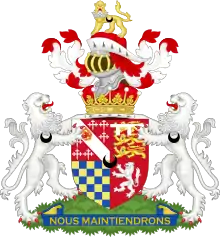 Quarterly, 1st: Gules, on a bend between six crosses-crosslet fitchée argent, an escutcheon or, charged with a demi-lion rampant pierced through the mouth by an arrow within a double tressure flory counterflory of the first (Howard); 2nd: Gules, three lions passant guardant in pale or, armed and langued azure, in chief a label of three points argent (Thomas of Brotherton); 3rd: Chequy or and azure (Warren); 4th: Gules, a lion rampant argent (Mowbray) in the center shield a crescent for difference[1] | |
| Creation date | before 1069 (first creation) 1337 (second creation) 1385 (forfeit 1388–89, 1399)(third creation) 21 July 1603 (fourth creation) |
| Monarch | William the Conqueror (first creation) Edward III (second creation) Richard II (third creation) Richard II (third creation, restoration) Henry IV (third creation, restoration) James VI and I (fourth creation) |
| Peerage | Peerage of England |
| First holder | Ralph the Staller, Earl of East Anglia |
| Present holder | Michael Howard, 21st Earl of Suffolk, 14th Earl of Berkshire |
| Heir apparent | Alexander Howard, Viscount Andover |
| Remainder to | Heirs male of the body, lawfully begotten |
| Subsidiary titles | Viscount Andover Baron Howard of Charlton |
| Extinction date | 1074 (first creation) 1382 (second creation) 1504 (third creation) |
| Seat(s) | Charlton Park, Wiltshire |
| Motto | Nous Maintiendrons ("We will maintain")[1] |
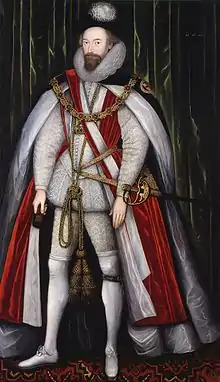
Lord Suffolk was succeeded by his eldest son, the second Earl. He had already in 1610 been summoned to the House of Lords through a writ of acceleration in his father's junior title of Baron Howard de Walden. He later served as Captain of the Honourable Band of Gentlemen Pensioners and as Lord Warden of the Cinque Ports. On his death the titles passed to his eldest son, the third Earl. He was Lord-Lieutenant of Suffolk and Cambridgeshire. Lord Suffolk had no sons and on his death in 1689 the barony of Howard de Walden fell into abeyance between his daughters (see the Baron Howard de Walden for later history of this title). He was succeeded in the earldom by his younger brother, the fourth Earl. He was childless and on his death the title passed to his younger brother, the fifth Earl. He was succeeded by his son, the sixth Earl. He was a politician and served as First Lord of Trade. In 1706, three years before he succeeded his father, he was raised to the Peerage of England in his own right as Baron Chesterford, in the County of Essex, and Earl of Bindon, in the County of Dorset. His son, the seventh Earl, was Lord-Lieutenant of Essex and is also remembered as the owner of the slave Scipio Africanus. The Earl was childless and on his early death in 1722, the barony of Chesterford and earldom of Bindon became extinct.[2]
He was succeeded in the earldom of Suffolk by his uncle, the eighth Earl. He died unmarried and was succeeded by his younger brother, the ninth Earl. His wife Henrietta Howard, Countess of Suffolk, was a mistress of King George II. On Lord Suffolk's death the titles passed to his son, the tenth Earl. He represented Bere Alston in the House of Commons. He was childless and on his death the line of the eldest son of the first Earl failed. The earldom was inherited by the late Earl's third cousin, the fourth Earl of Berkshire, who became the 11th Earl of Suffolk as well (see the Earl of Berkshire for earlier history of this branch of the family). He was succeeded by his grandson, the twelfth Earl (the son of William Howard, Viscount Andover). He was a politician and served as Lord Privy Seal and as Secretary of State for the Northern Department. On his death the titles passed to his posthumous son, the 13th Earl. He died as an infant and was succeeded by his great-uncle, the 14th Earl. He was the third son of the 11th Earl. He sat as Member of Parliament for Castle Rising, Malmesbury and St Michael's. On his death in 1783, the line of the fourth son of the first Earl of Berkshire failed.[2]
The late Earl was succeeded by his third cousin, the 15th Earl. He was the great-grandson of Colonel the Hon. Philip Howard, seventh son of the first Earl of Berkshire. Lord Suffolk and Berkshire was a General in the Army. On his death the titles passed to his son, the 16th Earl. He represented Arundel in the House of Commons. His son, the 17th Earl, sat as Whig Member of Parliament for Malmesbury. When he died the titles passed to his son, the 18th Earl. He represented Malmesbury in Parliament as a Liberal. He was succeeded by his son, the 19th Earl. He was killed in action in the First World War. His eldest son, the 20th Earl, was a bomb disposal expert. He was killed in 1941 while trying to defuse an unexploded bomb and was posthumously awarded the George Cross.[3] Since 1941, the titles are held by his eldest son, the 21st Earl, who as a young boy succeeded on his father's death.[1][2]
Several other members of this branch of the Howard family have also gained distinction. The Hon. Edward Howard, younger son of the first Earl of Suffolk, was created Baron Howard of Escrick in 1628.[1] The Hon. Henry Thomas Howard, second son of the 16th Earl, sat as Member of Parliament for Cricklade. The Hon. James Howard, fourth son of the 16th Earl, sat as Member of Parliament for Malmesbury. His grandson was the explorer and politician Charles Howard-Bury. The Hon. Greville Howard, younger son of the 19th Earl, sat as Member of Parliament for St Ives. The life peer, Greville Howard, Baron Howard of Rising, is the great-grandson of the Hon. Greville Howard, second son of the 17th Earl.[4]
The family seat is Charlton Park, near Malmesbury, Wiltshire.
Earls of (Norfolk and) Suffolk, first creation
- Ralph the Staller, 1st Earl of Norfolk and Suffolk (c. 1011 – 1068)
- Ralph de Guader, 2nd Earl of Norfolk and Suffolk (c. 1040 – c. 1096) (forfeit 1074)
Earls of Suffolk, second creation (1337)
- Robert de Ufford, 1st Earl of Suffolk (1298–1369)
- William de Ufford, 2nd Earl of Suffolk (1330–1382)
Earls of Suffolk, third creation (1385)
- see the Duke of Suffolk (1448 creation)
- forfeit 1504
Other Suffolk titles (16th century)
During the 16th century the title Duke of Suffolk was created twice: 1514 (3 dukes; extinct 1551) and 1551 (1 duke; forfeit 1554).
Earls of Suffolk, fourth creation (1603)
- Thomas Howard, 1st Earl of Suffolk (1561–1626)
- Theophilus Howard, 2nd Earl of Suffolk (1584–1640)
- James Howard, 3rd Earl of Suffolk (1620–1689)
- George Howard, 4th Earl of Suffolk (1624–1691)
- Henry Howard, 5th Earl of Suffolk (1627–1709)
- Henry Howard, 6th Earl of Suffolk, 1st Earl of Bindon (1670–1718)
- Charles William Howard, 7th Earl of Suffolk, 2nd Earl of Bindon (1693–1722)
- Edward Howard, 8th Earl of Suffolk (1672–1731)
- Charles Howard, 9th Earl of Suffolk (1675–1733)
- Henry Howard, 10th Earl of Suffolk (1706–1745)
- Henry Bowes Howard, 11th Earl of Suffolk, 4th Earl of Berkshire (1687–1757)
- William Howard, Viscount Andover (1714–1756)
- Henry Howard, 12th Earl of Suffolk, 5th Earl of Berkshire (1739–1779)
- Henry Howard, 13th Earl of Suffolk, 6th Earl of Berkshire (1779–1779)
- Thomas Howard, 14th Earl of Suffolk, 7th Earl of Berkshire (1721–1783)
- John Howard, 15th Earl of Suffolk, 8th Earl of Berkshire (1739–1820)
- Charles Nevinson Howard, Viscount Andover (1775–1800)
- Thomas Howard, 16th Earl of Suffolk, 9th Earl of Berkshire (1776–1851)
- Charles John Howard, 17th Earl of Suffolk, 10th Earl of Berkshire (1804–1876)
- Henry Charles Howard, 18th Earl of Suffolk, 11th Earl of Berkshire (1833–1898)
- Henry Molyneux Paget Howard, 19th Earl of Suffolk, 12th Earl of Berkshire (1877–1917)
- Charles Henry George Howard, 20th Earl of Suffolk, 13th Earl of Berkshire (1906–1941)
- Michael John James George Robert Howard, 21st Earl of Suffolk, 14th Earl of Berkshire (b. 1935)
The heir apparent is the present holder's only son, Alexander Charles Michael Winston Robsahm Howard, Viscount Andover (b. 1974).
The heir apparent's heir is his son, the Hon. Arthur Charles Alexander Howard (b. 2014)
Family tree
| EARL FIRST CREATION, before 1069 Earl of Norfolk and Suffolk, or of the East Angles | |||||||||||||||||||||||||||||||||||||
| Ralph the Staller (c. 1011–1068) 1st Earl of Norfolk and Suffolk, or of the East Angles ?–1068 | |||||||||||||||||||||||||||||||||||||
| Ralph de Gael (c. 1040 – c. 1096) 2nd Earl of Norfolk and Suffolk, or of the East Angles 1068–1074 | |||||||||||||||||||||||||||||||||||||
| EARL SECOND CREATION, 1337 | |||||||||||||||||||||||||||||||||||||
| Robert Ufford (1298–1369) 1st Earl of Suffolk 1337–1369 | |||||||||||||||||||||||||||||||||||||
| William Ufford (1330–1382) 2nd Earl of Suffolk 1369–1382 | |||||||||||||||||||||||||||||||||||||
| EARL THIRD CREATION, 1385 | |||||||||||||||||||||||||||||||||||||
| Michael de la Pole (1330–1389) 1st Earl of Suffolk 1385–1388 | |||||||||||||||||||||||||||||||||||||
| Michael de la Pole (1367–1415) 2nd Earl of Suffolk 1398–1399, 1399–1415 | Thomas de Mowbray 1st Duke of Norfolk | ||||||||||||||||||||||||||||||||||||
| DUKE FIRST CREATION, 1448 | |||||||||||||||||||||||||||||||||||||
| William de la Pole (1396–1450) 4th Earl of Suffolk 1415–1450 Marquess of Suffolk 1444–1448 Earl of Pembroke 1447–1450 1st Duke of Suffolk 1448–1450 | Michael de la Pole (1394–1415) 3rd Earl of Suffolk 1415 | Elizabeth Mowbray | Richard Plantagenet Duke of York | Cecily Neville | |||||||||||||||||||||||||||||||||
| John de la Pole (1442–1492) 5th Earl of Suffolk 2nd Duke of Suffolk 1463–1492 | Elizabeth Plantagenet | Edward IV King of England | Richard III Duke of Gloucester King of England | Thomas Howard 2nd Duke of Norfolk | |||||||||||||||||||||||||||||||||
| Edmund de la Pole (1472–1513) 6th Earl of Suffolk 1492–1504 3rd Duke of Suffolk 1492–1493 | Henry VII King of England | Elizabeth of York | Lord Edmund Howard | Thomas Howard 3rd Duke of Norfolk | |||||||||||||||||||||||||||||||||
| DUKE SECOND CREATION, 1514 | |||||||||||||||||||||||||||||||||||||
| Charles Brandon (1484–1545) 1st Duke of Suffolk 1514–1545 | Mary Tudor Queen of France | Henry VIII King of England | Catherine Howard | Henry Howard Earl of Surrey | |||||||||||||||||||||||||||||||||
| DUKE THIRD CREATION, 1551 | |||||||||||||||||||||||||||||||||||||
| Henry Brandon (1535–1551) 2nd Duke of Suffolk 1545–1551 | Charles Brandon (1537–1551) 3rd Duke of Suffolk 1551 | Frances Grey | Henry Grey (1517–1554) 1st Duke of Suffolk 1551–1554 | Thomas Howard 4th Duke of Norfolk | |||||||||||||||||||||||||||||||||
| EARL FOURTH CREATION, 1603 | |||||||||||||||||||||||||||||||||||||
| Lady Jane Grey Disputed Queen of England | Thomas Howard (1561–1626) 1st Earl of Suffolk 1603–1626 | ||||||||||||||||||||||||||||||||||||
| Theophilus Howard (1584–1640) 2nd Earl of Suffolk 1626–1640 | Thomas Howard 1st Earl of Berkshire | ||||||||||||||||||||||||||||||||||||
| James Howard (c. 1620–1689) 3rd Earl of Suffolk 1640–1689 | George Howard (1625–1691) 4th Earl of Suffolk 1689–1691 | Henry Howard (1627–1709) 5th Earl of Suffolk 1691–1709 | William Howard | Philip Howard | |||||||||||||||||||||||||||||||||
| Henry Howard (1670–1718) 6th Earl of Suffolk 1709–1718 1st Earl of Bindon | Edward Howard (1672–1731) 8th Earl of Suffolk 1722–1731 | Charles Howard (1685–1733) 9th Earl of Suffolk 1731–1733 | Craven Howard | Capt. Charles Howard | |||||||||||||||||||||||||||||||||
| Charles Howard (1693–1722) 7th Earl of Suffolk Earl of Bindon 1718–1722 2nd Earl of Bindon | Henry Howard (1706–1745) 10th Earl of Suffolk 1733–1745 | Henry Bowes Howard (1686–1757) 11th Earl of Suffolk 1733–1745 | Capt. Philip Howard | ||||||||||||||||||||||||||||||||||
| Henry Howard (1739–1779) 12th Earl of Suffolk Earl of Berkshire 1745–1779 | Thomas Howard (1721–1783) 14th Earl of Suffolk Earl of Berkshire 1779–1783 | John Howard (1739–1820) 15th Earl of Suffolk Earl of Berkshire 1783–1820 | |||||||||||||||||||||||||||||||||||
| Henry Howard (1779–1779) 13th Earl of Suffolk Earl of Berkshire 1779–1779 | Thomas Howard (1776–1851) 16th Earl of Suffolk Earl of Berkshire 1820-1851 | ||||||||||||||||||||||||||||||||||||
| Charles Howard (1804-1876) 17th Earl of Suffolk Earl of Berkshire 1851-1876 | |||||||||||||||||||||||||||||||||||||
| Henry Howard (1833–1898) 18th Earl of Suffolk Earl of Berkshire 1876–1898 | |||||||||||||||||||||||||||||||||||||
| Henry Howard (1877–1917) 19th Earl of Suffolk Earl of Berkshire 1898–1917 | |||||||||||||||||||||||||||||||||||||
| Charles Howard (1906–1941) 20th Earl of Suffolk Earl of Berkshire 1917–1941 | |||||||||||||||||||||||||||||||||||||
| Michael Howard (1935–present) 21st Earl of Suffolk Earl of Berkshire 1941–present | |||||||||||||||||||||||||||||||||||||
| Alexander Howard (1974–present) | |||||||||||||||||||||||||||||||||||||
| Arthur Howard (2014–present) | |||||||||||||||||||||||||||||||||||||
References
- Mosley, Charles, ed. (2003). Burke's Peerage, Baronetage & Knighthood (107 ed.). Burke's Peerage & Gentry. p. 3814. ISBN 0-9711966-2-1.
- Mosley 2003, p. 3815
- "No. 35220". The London Gazette (Supplement). 15 July 1941. p. 4105.
- Mosley 2003, p. 3816
External links
- . Encyclopædia Britannica (11th ed.). 1911.
England  |  | ||||||||||||||||||
|---|---|---|---|---|---|---|---|---|---|---|---|---|---|---|---|---|---|---|---|
Scotland  |
| ||||||||||||||||||
Great Britain .svg.png.webp) | |||||||||||||||||||
Ireland  |
| ||||||||||||||||||
United Kingdom  |
| ||||||||||||||||||
§ : Disclaimed. Italics: This title is held by a peer who holds another earldom of higher precedence. | |||||||||||||||||||