Fast of Behav
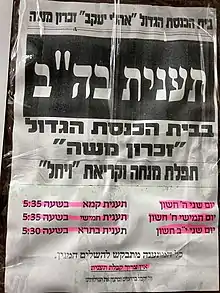
The Fast of Behav (תענית בה"ב) refers to a tradition of Ashkenazic Jews to fast on a Monday, Thursday and Monday after the holidays of Sukkot and Pesach. While today very few people fast, many Ashkenazic communities recite the Selichot for these days. Practically, the fasts are observed in the months of Cheshvan and Iyar, so as not to fast in the happy months of Tishrei and Nisan.
Source and practices
The Masekhet Soferim (Chapter 21) says that there were "students" who fasted on a Monday, Thursday and Monday in the month of Nisan. However, it is clear that this was a private practice which was not publicized.
The Tur (OC 492) cites the custom of Ashkenazic and French Jewry to fast in Cheshvan and Iyar. In later generations, this custom spread to some Sephardic communities (Keneset Hagedolah, 492).
Some explain that the reason for the fasts is in case one sinned over the long Sukkot or Pesach holidays, and other say that it should be for an atonement before the raining and harvest seasons. The days of Monday and Thursday were chosen because they are considered days of extra mercy from Heaven.
According to the Mishnah Berurah (492:3), the fasts should always be on the first Monday, Thursday and Monday, following the first Sabbath in Tishrei and Nisan. However, some communities have the custom to delays the fasts in Cheshvan until the end of the month.[1]
Traditionally, on the Sabbath proceeding these fasts, a special mi sheberech is recited for those who intend to fast. Most communities recite this mi sheberech before returning the Sefer Torah to the arc, but some (generally Western Euoropean communities) add it as an additional line to the mi sheberach recited for the community (after yekum purkan). One who respons "Amen" to this blessing does not need to accept the fast at the Mincha of the proceeding day.
References
- A number of reasons are given for this practice. See Maharil, Spitzer edition, page 400 and footnotes there.