Howard family
The House of Howard is an English noble house founded by John Howard, who was created Duke of Norfolk (third creation) by King Richard III of England in 1483. However, John was also the eldest grandson (although maternal) of the 1st Duke of the first creation. The Howards have been part of the peerage since the 15th century and remain both the Premier Dukes and Earls of the Realm in the Peerage of England, acting as Earl Marshal of England. After the English Reformation, many Howards remained steadfast in their Catholic faith as the most high-profile recusant family; two members, Philip Howard, 13th Earl of Arundel, and William Howard, 1st Viscount Stafford, are regarded as martyrs: a saint and a blessed respectively.
The senior line of the house, as well as holding the title of Duke of Norfolk, is also Earl of Arundel, Earl of Surrey and Earl of Norfolk, as well as holding six baronies. The Arundel title was inherited in 1580, when the Howards became the genealogical successors to the paternally extinct FitzAlans, ancient kin to the House of Stuart, dating back to when the family first arrived in Great Britain from Brittany (see Alan fitz Flaad).
Thomas Howard, 4th Duke of Norfolk, married as his first wife Mary FitzAlan, who, after the death of her brother Henry in 1556, became heiress to the Arundel estates of her father Henry FitzAlan, 19th Earl of Arundel. Her son was the above-mentioned Philip Howard, 13th Earl of Arundel. It is from this marriage that the present Duke of Norfolk takes his surname of FitzAlan-Howard and why his seat is Arundel Castle. There have also been several notable cadet branches; those existing to this day include the Howards of Effingham, Howards of Carlisle, Howards of Suffolk and Howards of Penrith. The former three are earldoms, and the latter a barony.
Throughout much of English and later British history, the Howards have played an important role. Claiming descent from Hereward the Wake, the resister of the Norman conquest who has been much celebrated in folklore, John Howard fought to the death at the Battle of Bosworth Field in defence of the cause for the House of York. They regained favour with the new Tudor dynasty after leading a defence of England from Scottish invasion at the Battle of Flodden, and Catherine Howard subsequently became the fifth wife and Queen consort to King Henry VIII. Her uncle, Thomas Howard, 3rd Duke of Norfolk, played a significant role in Henrician politics. Charles Howard, 1st Earl of Nottingham, served as Lord Admiral of the English fleet which defeated the invading Spanish Armada.
Arundel Castle has been in the family of the Duke of Norfolk for over 400 years, and it is still the principal seat of the Norfolk family. As cultural heritage, it is a Grade I listed building.[1]
Origins
.jpg.webp)
The later Howards would claim a fanciful descent from Hereward the Wake who was of Mercian background and resisted the Norman conquest of England from his base at the Isle of Ely. Hereward subsequently became a mainstay of English folklore.
A pedigree compiled and signed by Sir William Dugdale, Norroy King of Arms of the College of Arms, and dated 8 April 1665, stated that the Howard family are descended from the Howarth [sic, Howard] family of Great Howarth Hall, Rochdale. Also, "it is clear from above seventy deeds, without date, that the Howards, Dukes of Norfolk, do derive from the Howards Howarth of Great Howarth and that William Howard of Wigenhall… was a direct decedent of Osbert Howard de Howarth," and given lands in Rochdale on behalf of his service as Master of King Henry I's Buckhounds. Dugdale's account, however, has been disputed.[2]
Indisputable descent begins with Sir William Howard (William of Wiggenhall, died 1308), a judge who was in the House of Commons in the Model Parliament of 1295. Sir William's son, Sir John Howard, became Sheriff of Norfolk and Suffolk. Sir John was married to Joan de Cornwall, granddaughter of Richard of England, 1st Earl of Cornwall and King of the Romans by his illegitimate child, Sir Richard de Cornwall.[3]
History
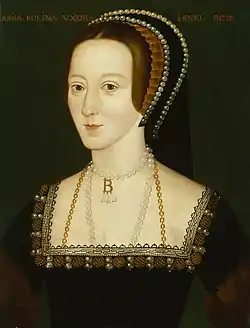
Sir William's great-great-great-grandson, Sir Robert Howard, married Lady Margaret Mowbray, elder daughter of Thomas Mowbray, 1st Duke of Norfolk (1366–1399). The Mowbray line of Dukes died out in 1476 and the heiress of the last Duke, Anne Mowbray, died at the age of nine in 1481; after declaring her widower King Edward IV's son Richard of Shrewsbury, 1st Duke of York, illegitimate, Richard III of England created the son of Sir Robert and Lady Margaret, John Howard, 1st Duke of Norfolk, of a new creation on 28 June 1483, the 200th anniversary of the Barony of Mowbray to which he was also senior co-heir. John had previously been summoned to Parliament as Lord Howard by Edward IV. He was also created hereditary Earl Marshal. John's son and heir, Thomas Howard, 2nd Duke of Norfolk, was the grandfather of two English queens, Anne Boleyn and Catherine Howard, both wives of Henry VIII.
The Howard family became one of the foremost recusant families due to their continued adherence to Roman Catholicism throughout the English Reformation and its aftermath. This meant that they often could not take their seats in the House of Lords. They are still known as the most prominent English Catholic family.
.JPG.webp)
Both the Dukedom and Earl Marshalship have been the subject of repeated attainders and restorations in the 15th to 17th centuries. Before Charles II restored the titles for good, the Howards had inherited the ancient title of Earl of Arundel through an heiress, and formed additional branches that have continued to this day.
A branch of the Howard family has been seated at Castle Howard, one of England's most magnificent country houses, for over 300 years.
In order of genealogical seniority:
- the Barons Howard of Penrith descend from a younger brother of the 12th Duke;
- the Earls of Suffolk and Berkshire descend from the 2nd son of the 4th Duke;
- the Earls of Carlisle descend from the third son of the 4th Duke;
- the Earls of Effingham descend from the fourth son of the 2nd Duke, who was Lord High Admiral and whose son was commander in chief against the Spanish Armada. (Curiously, this line was excluded from eligibility to inherit on the restoration of the Dukedom).
Howard Family Tree
The following chart is a family tree of the Dukes of Norfolk, who were members of the Plantagenet, Mowbray and Howard families.
Family tree
| Eleanor of Castile 1241–1290 | Edward I Longshanks King of England 1239–1307 r. 1272–1307 | Margaret of France 1279–1318 | |||||||||||||||||||||||||||||||||||||||||||||||||||||||||||||||||||
| Edward II King of England 1284–1327 r. 1307–1327 | Thomas of Brotherton Earl of Norfolk 1300–1338 r. 1312–1338 | Alice Hayles | |||||||||||||||||||||||||||||||||||||||||||||||||||||||||||||||||||
| Edward III King of England 1312–1377 r. 1327–1377 | John de Mowbray Baron Mowbray 1310–1361 | John Segrave Baron Segrave 1315–1353 | Margaret Countess of Norfolk c. 1320–1399 r. 1338–1399 | Walter Manny Baron Manny c. 1310–1372 | Edward of Norfolk c. 1320–1334 | Beatrice de Mortimer c. 1322–1383 | Alice of Norfolk c. 1324–c. 1352 | Edward Montagu Baron Montagu ?–1361 | |||||||||||||||||||||||||||||||||||||||||||||||||||||||||||||
| Edmund of Langley Duke of York 1341–1402 | Blanche Mowbray c. 1342–1409 | John de Segrave ?–bef. 1353 | Elizabeth Segrave 1338–1368 | John Mowbray Baron Mowbray 1340–1368 | Thomas Manny 1357–1362 | Anne Hastings Baroness Manny 1355–1384 | John Hastings Earl of Pembroke 1347 – 1375 | ||||||||||||||||||||||||||||||||||||||||||||||||||||||||||||||
| Richard of Conisburgh Earl of Cambridge c. 1375–1415 | Elizabeth le Strange c. 1373–1383 | Thomas de Mowbray 1st Duke of Norfolk 1366–1399 r. 1397–1399 | Elizabeth Fitzalan 1366–1425 | Eleanor de Mowbray bef. 1361 –bef. 1417 | John de Welles Baron Welles 1352–1421 | John de Mowbray Earl of Nottingham 1365–1383 | |||||||||||||||||||||||||||||||||||||||||||||||||||||||||||||||
| Richard Duke of York 1411–1460 | Thomas de Mowbray Earl of Norfolk 1385–1405 | John de Mowbray 2nd Duke of Norfolk 1392–1432 r. 1397–1399 | Katherine Neville c. 1400–aft. 1483 | Elizabeth de Mowbray | Michael de la Pole Earl of Suffolk 1394–1415 r. 1415 | Robert Howard of Tendring 1398–1436 | Margaret de Mowbray 1391–1459 | John Grey of Ruthin | |||||||||||||||||||||||||||||||||||||||||||||||||||||||||||||
| Eleanor Bourchier | John Mowbray 3rd Duke of Norfolk 1415–1461 r. 1432–1461 | Edward Neville Baron Bergavenny bef. 1414–1476 | Katherine Howard 1430–1480 | Catherine Moleyns ?–1465 | John Howard 1st Duke of Norfolk c. 1425–1485 r. 1483–1485 | Margaret Chedworth 1436–1494 | |||||||||||||||||||||||||||||||||||||||||||||||||||||||||||||||
| Edward IV King of England 1442–1483 r. 1461–1470 1471–1483 | Elizabeth Talbot c. 1442–c. 1506 | John de Mowbray 4th Duke of Norfolk 1444–1476 r. 1461–1476 | Robert Mortimer of Landmere ?–1485 | Elizabeth Howard | Anne Howard 1446–1474 | Edmund Gorges of Wraxall c. 1454–1512 | Katherine Howard ?–1536 | John Bourchier Baron Berners 1467–1533 | |||||||||||||||||||||||||||||||||||||||||||||||||||||||||||||
| Richard of Shrewsbury, Duke of York Duke of York 1473–? | Anne de Mowbray Countess of Norfolk 1472–c. 1481 | Elizabeth Tilney Countess of Surrey bef. 1445–1497 | Thomas Howard 2nd Duke of Norfolk 1443–1524 r. 1514–1524 | Agnes Tilney c. 1477–1545 | Margaret Howard 1445–1484 | John Wyndham of Crownthorpe and Felbrigg 1451–1503 | Jane Howard 1450–1508 | ||||||||||||||||||||||||||||||||||||||||||||||||||||||||||||||
| Edward Howard c. 1476–1513 | John Howard 1482–1502 | Henry c. 1480– bef. 1513 | Richard Howard 1487–1517 | Elizabeth Howard ?–1536 | Katherine Broughton | William Earl of Effingham 1510–1573 | Margaret Gamage 1515–1581 | ||||||||||||||||||||||||||||||||||||||||||||||||||||||||||||||
| John Grey Viscount Lisle ?–1504 | Muriel Howard ?–1512 | Charles Howard 1483–1512 | Thomas Howard 1511–1537 | Dorothy Howard c. 1511–1580 | Anne Howard c. 1518–1558 | John de Vere Earl of Oxford 1499–1526 | Earls of Effingham | ||||||||||||||||||||||||||||||||||||||||||||||||||||||||||||||
| Anne of York 1475–1511 | Thomas Howard 3rd Duke of Norfolk 1473–1554 | Elizabeth Stafford 1497–1558 | Edmund Howard 1478–1539 | Joyce Culpeper c. 1480–c. 1528 | Elizabeth Howard c. 1480–1538 | Thomas Boleyn Earl of Wiltshire 1477–1539 | |||||||||||||||||||||||||||||||||||||||||||||||||||||||||||||||
| Elizabeth Marney ?–1517 | Catherine Howard 1518/1524 –1542 | Henry VIII King of England 1491–1547 r. 1509–1547 | Anne Boleyn 1501/1507 –1536 | ||||||||||||||||||||||||||||||||||||||||||||||||||||||||||||||||||
| Gertrude Lyte | Thomas Viscount of Bindon 1520–1582 | Mabel Burton | Henry Howard Earl of Surrey 1516/1517–1547 | Frances de Vere 1517–1577 | Henry Duke of Richmond and Somerset 1519–1536 | Mary Howard 1519–1557 | |||||||||||||||||||||||||||||||||||||||||||||||||||||||||||||||
| Henry Howard Earl of Northampton 1540–1614 | Jane Howard 1533/37 –1593 | Charles Neville Earl of Westmorland 1542–1601 | Margaret Howard 1543–1591 | Henry Scrope Baron Scrope of Bolton 1534–1592 | Katherine Howard 1538–1596 | Henry Berkeley Baron Berkeley 1534–1613 | |||||||||||||||||||||||||||||||||||||||||||||||||||||||||||||||
| Robert Sackville Earl of Dorset 1561–1609 | Mary FitzAlan 1540–1557 | Thomas Howard 4th Duke of Norfolk 1536–1572 r. 1554–1572 | Margaret Audley 1540–1564 | Elizabeth Leyburne 1536–1567 | Thomas Dacre Baron Dacre 1527–1566 | ||||||||||||||||||||||||||||||||||||||||||||||||||||||||||||||||
| Margaret Sackville 1562–1591 | Elizabeth Howard 1559–1591 | Philip Howard Earl of Arundel 1557–1595 | Anne Dacre 1557–1630 | Mary Dacre 1563–1578 | Thomas Howard Earl of Suffolk 1561–1626 | Catherine Howard 1564–1638 | William Howard 1563–1640 | Elizabeth Dacre 1564–1639 | |||||||||||||||||||||||||||||||||||||||||||||||||||||||||||||
| Thomas Howard Earl of Arundel 1586–1646 | Alethea Talbot 1585–1654 | ||||||||||||||||||||||||||||||||||||||||||||||||||||||||||||||||||||
| James Howard Baron Maltravers 1607–1624 | Henry Howard Earl of Arundel 1608–1652 1646–1652 | Elizabeth Stuart 1610–1673 | Anne Howard 1612–1658 | William Howard Viscount Stafford 1614–1680 | Mary Stafford 1616–1692 | ||||||||||||||||||||||||||||||||||||||||||||||||||||||||||||||||
| Philip Howard 1629–1694 | Anne Howard 1632–? | Catherine Howard 1634–1655 | Talbot Howard 1636–? | Edward Howard 1637–1691 | Anne Wilbraham c. 1655–? | Francis Howard 1640–1683 | Elizabeth Howard 1651–1705 | ||||||||||||||||||||||||||||||||||||||||||||||||||||||||||||||
| Thomas Howard 5th Duke of Norfolk 1627–1677 r. 1660–1677 | Anne Somerset 1631–1662 | Henry Howard 6th Duke of Norfolk 1628–1684 r. 1677–1684 | Jane Bickerton 1643–1693 | Charles Howard of Greystoke 1630–1713 | Mary Tattershall ?–1695 | Bernard Howard of Glossop 1641–1717 | Catherine Tattershall ?–1727 | ||||||||||||||||||||||||||||||||||||||||||||||||||||||||||||||
| Mary Mordaunt 1659–1705 | Henry Howard 7th Duke of Norfolk 1655–1701 r. 1684–1701 | Thomas Howard of Worksop 1662–1689 | Mary Elizabeth Savile c. 1663–1732 | Henry Howard of Greystoke c. 1668–1720 | Mary Aylward c. 1670–1747 | Bernard Howard II of Glossop 1674–1735 | Anne Roper ?–1744 | ||||||||||||||||||||||||||||||||||||||||||||||||||||||||||||||
| Maria Shireburn c. 1693–1754 | Thomas Howard 8th Duke of Norfolk 1683–1732 r. 1701–1732 | Walter Aston Lord of Forfar 1660–1748 | Mary Howard ?–1723 | Charles Howard 10th Duke of Norfolk 1720–1786 r. 1777–1786 | Catherine Brockholes bef. 1724–1784 | Henry Howard of Glossop 1713–1787 | Juliana Molyneux ?–1808 | ||||||||||||||||||||||||||||||||||||||||||||||||||||||||||||||
| Mary Blount 1712–1773 | Edward Howard 9th Duke of Norfolk 1686–1777 r. 1732–1777 | Philip Howard c. 1687–1750 | Marion Coppinger ?–1768 | Charles Howard 11th Duke of Norfolk 1746–1815 r. 1786–1815 | Frances Scudamore c. 1750–1820 | Elizabeth Maycock ?–1811 | Edward Charles Howard 1774–1816 | ||||||||||||||||||||||||||||||||||||||||||||||||||||||||||||||
| Elizabeth Belasyse 1770–1819 | Bernard Howard 12th Duke of Norfolk 1765–1842 r. 1815–1842 | Anne Howard 1742–1787 | Robert Petre Baron Petre 1742–1801 | Juliana Barbara Howard 1769–1833 | Mary Bridget 1767–1843 | Henry Thomas 1766–1842 | Elizabeth Long | ||||||||||||||||||||||||||||||||||||||||||||||||||||||||||||||
| Henry Howard 13th Duke of Norfolk 1791–1856 r. 1842 – 1856 | Charlotte Leveson -Gower 1788–1870 | Robert Petre Baron Petre 1763–1809 | |||||||||||||||||||||||||||||||||||||||||||||||||||||||||||||||||||
| Bernard Thomas Fitzalan-Howard 1825–1846 | Mary Charlotte Howard 1822–1897 | Thomas Foley Baron Foley 1808–1869 | |||||||||||||||||||||||||||||||||||||||||||||||||||||||||||||||||||
| Winifred Mary De Lisle ?–1909 | Edward Fitzalan-Howard Baron of Glossop 1818–1883 | Augusta Talbot ?–1862 | George Manners 1820–1874 | Adeliza Fitzalan-Howard ?–1904 | Henry Fitzalan-Howard 14th Duke of Norfolk 1815–1860 r. 1856–1860 | Augusta Lyons 1821–1886 | |||||||||||||||||||||||||||||||||||||||||||||||||||||||||||||||
| Charles Rawdon-Howard Earl of Loudoun 1855–1920 | Alice Elizabeth Fitzalan-Howard 1856–1915 | Constance Mary Germana Fitzalan-Howard ?–1933 | Charles Lennox Tredcroft 1832–1917 | Charles Bernard Talbot Fitzalan-Howard 1852–1861 | Minna Charlotte Fitzalan-Howard 1843–1921 | Victoria Alexandrina Fitzalan-Howard 1840–1870 | James Hope -Scott 1812–1873 | Mary Adeliza Fitzalan-Howard 1845–1925 | |||||||||||||||||||||||||||||||||||||||||||||||||||||||||||||
| William Middleton | Winifrede Mary Fitzalan-Howard ?–1937 | Gwendolen Mary Anne Fitzalan-Howard 1854–1932 | John Crichton-Stuart Marquess of Bute 1847–1900 | Elizabeth Mary Fitzalan-Howard 1859–1859 | Etheldreda Fitzalan-Howard 1849–1926 | Philippa Fitzalan-Howard 1852–1946 | Edward Stewart 1857–1948 | Philip Thomas Fitzalan-Howard 1853–1855 | |||||||||||||||||||||||||||||||||||||||||||||||||||||||||||||
| Hyacinthe Scott-Kerr 1865–1930 | Francis Edward Fitzalan-Howard Baron of Glossop 1859–1924 | Clara Louisa Greenwood 1852–1887 | Angela Mary Charlotte Fitzalan-Howard ?–1919 | Marmaduke Constable-Maxwell Lord Herries of Terregles 1837–1908 | Anne Fitzalan-Howard 1857–1931 | Ralph Drury Kerr 1837–1916 | Margaret Fitzalan-Howard 1860–1899 | ||||||||||||||||||||||||||||||||||||||||||||||||||||||||||||||
| George Greaves 1889–1953 | Frances Alice Fitzalan-Howard 1892–? | Gwendolen Constable-Maxwell 1877–1945 | Henry Fitzalan-Howard 15th Duke of Norfolk 1847–1917 r. 1860–1917 | Flora Abney -Hastings 1854–1887 | Edmund Viscount FitzAlan of Derwent 1855–1947 | Mary Bertie 1859–1938 | |||||||||||||||||||||||||||||||||||||||||||||||||||||||||||||||
| Gladys Norton | Philip Granville James Fitzalan-Howard 1895–1918 | Bernard Fitzalan-Howard Baron of Glossop 1885–1972 | Mona Stapleton Baroness Beaumont 1894–1971 | Muriel Augusta Mary Fitzalan-Howard 1884–1962 | Colin Keppel Davidson 1895–1943 | Rachel Pepys 1905–1992 | Anthony Hilton Pepys | Philip Joseph Earl of Surrey 1879–1902 | |||||||||||||||||||||||||||||||||||||||||||||||||||||||||||||
| Michael Fitzalan-Howard 1916–2007 | Mariegold Magdalane Fitzalan-Howard 1919–2006 | Gerald James Jamieson ?–1992 | Martin Fitzalan-Howard 1922–2003 | Bridget Anne Keppel 1925–2011 | Winifred Alice Fitzalan-Howard 1914–2006 | John Edward Broke Freeman | Katherine Mary Fitzalan-Howard 1912–2000 | Joseph Anthony Moore Phillips 1914–1990 | |||||||||||||||||||||||||||||||||||||||||||||||||||||||||||||
| Theodore Bernard Peregrine Hubbard 1923–2012 | Miriam Fitzalan-Howard 1924–1996 | Miranda Fitzalan-Howard 1927–present | Christopher Anthony Emmett 1925–? | Bernard Fitzalan-Howard 16th Duke of Norfolk 1908–1975 r. 1917–1975 | Lavinia Strutt 1916–1995 | ||||||||||||||||||||||||||||||||||||||||||||||||||||||||||||||||
| Bernard Noel Kelly 1930–present | Mirabel Fitzalan-Howard 1931–2008 | Colin Cowdrey Baron of Tonbridge 1932–2000 | Anne Cowdrey Lady Herries of Terregles 1938–2014 | Mary Mumford Lady Herries of Terregles 1940–2017 | Anthony Mumford 1936–2006 | ||||||||||||||||||||||||||||||||||||||||||||||||||||||||||||||||
| Anne Constable -Maxwell 1927–2013 | Miles Fitzalan-Howard 17th Duke of Norfolk 1915–2002 r. 1975–2002 | Mark Fitzalan-Howard 1934–present | Jacynth Lindsay 1934–present | Nigel Clutton | Sarah Margaret Fitzalan-Howard 1941–2015 | Theresa Lady Herries of Terregles 1945–present r. 2017–present | Michael Ancram Marquess of Lothian 1945–present | ||||||||||||||||||||||||||||||||||||||||||||||||||||||||||||||
| Tessa Mary Isabel Fitzalan-Howard 1950–present | Roderick Balfour Earl of Balfour 1948–present r. 2003–present | Carina Mary Gabrielle Fitzalan-Howard 1952–present | David Frost 1939–2013 | Patrick Ryecart 1952–present | Marcia Mary Josephine Fitzalan-Howard 1953–present | Nick George | |||||||||||||||||||||||||||||||||||||||||||||||||||||||||||||||
| Edward Fitzalan-Howard 18th Duke of Norfolk 1956–present r. 2002–present | Georgina Susan Gore 1962–present | Gerald Bernard Fitzalan-Howard 1962–present | Emma Roberts | ||||||||||||||||||||||||||||||||||||||||||||||||||||||||||||||||||
| Henry Miles Fitzalan-Howard Earl of Arundel 1987–present | Rachel Fitzalan-Howard 1989–present | Thomas Fitzalan-Howard 1992–present | Isabel Fitzalan-Howard 1994–present | Philip Fitzalan-Howard 1996–present | |||||||||||||||||||||||||||||||||||||||||||||||||||||||||||||||||
Image
Errors :
- Edward II was the issue of Edward I's first marriage to Eleanor of Castile, (1241–1290), not of his second marriage to Marguerite of France.
- There is no hard evidence that Richard, Duke of York, who was married as a child to Ann Mowbray, died in 1483.
- Frances de Vere, Countess of Surrey, wife of Henry Howard, Earl of Surrey, was daughter of the 15th Earl of Oxford and Elizabeth Trussell, not the 14th Earl of Oxford and Anne Howard.
- Robert Petre, 10th Baron Petre's mother wasn't Juliana Howard (1769–1833), the daughter of Henry Howard of Glossop (1713–1787). His mother was Anne Howard (1742–1787), a daughter of Philip Howard (~1687–1750) of Buckenham Tofts in Norfolk and the great-granddaughter of Henry Howard, 6th Duke of Norfolk (1628–1684).
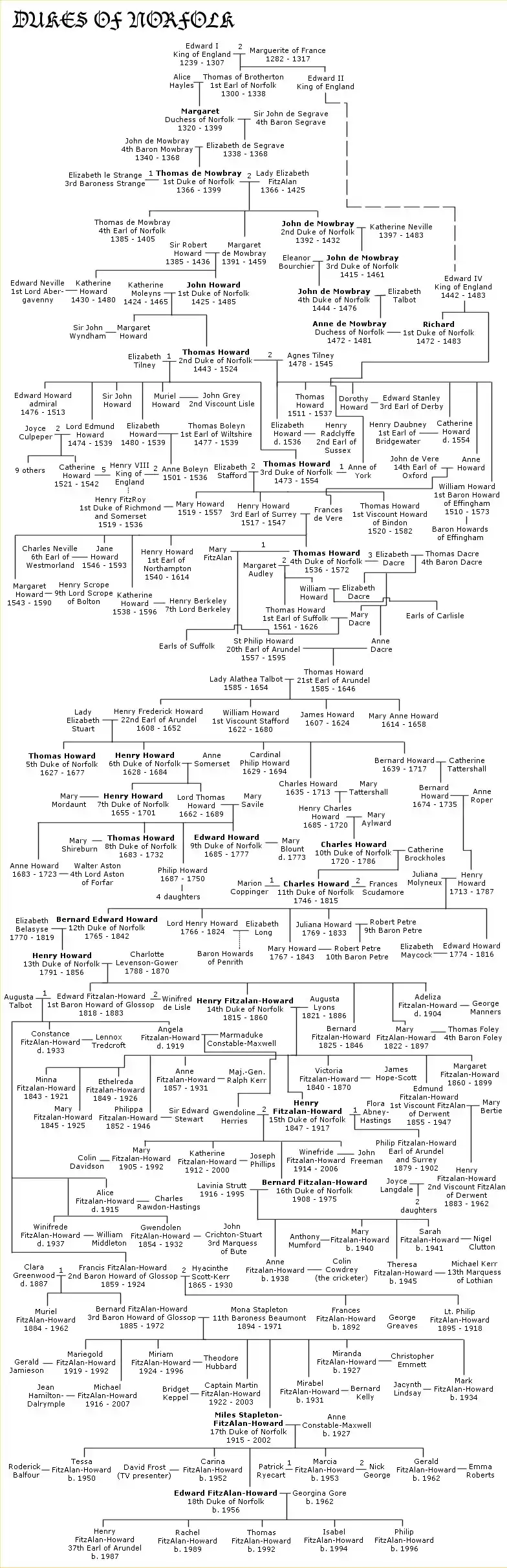
Below is a clickable family tree of the Howard family:
Arms of the Howard Family
The Howard family's original arms were the white bend on red with the crosslets. On marrying the heiress of the dukes of Norfolk, the first Howard duke of Norfolk quartered his arms with those of Thomas of Brotherton 1st Earl of Norfolk, son of King Edward I Longshanks as well as the Mowbray arms. Starting with the 2nd Duke of Norfolk, the Howards added in the 3rd quarter the checkered blue and gold of the Warren Earls of Surrey, whom they became heirs of. Philip Howard was deprived of the dukedom of Norfolk, which was under attainer, but inherited the earldom of Arundel. His descendants used the gold lion on red of the Fitzalan Earls of Arundel in the 4th quarter.
.svg.png.webp) Howard Arms unaugmented (pre-1513)
Howard Arms unaugmented (pre-1513) Arms of Thomas of Brotherton (1300 † 1338), Earl of Norfolk, son of Edward I Longshanks, from whom all the Dukes of Norfolk are descended.Gules, three lions passant guardant in pale or armed and langued azure a label of three points argent.
.svg.png.webp) Arms of John Howard, 1st Howard Duke of Norfolk, showing the unaugmented Howard Arms (I & IV), quartering the arms of Thomas of Brotherton (II) and the arms of Mowbray (III): Gules, a lion rampant argent.
Arms of John Howard, 1st Howard Duke of Norfolk, showing the unaugmented Howard Arms (I & IV), quartering the arms of Thomas of Brotherton (II) and the arms of Mowbray (III): Gules, a lion rampant argent.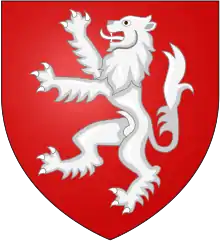 Arms of Mowbray
.svg.png.webp) The coat of arms used by the Howard Family. The Scots shield is an augmentation, see below.[4] Gules, on a bend between six cross-crosslets fitchy argent an escutcheon or charged with a demi-lion rampant pierced through the mouth by an arrow within a double tressure flory counterflory of the first.
The coat of arms used by the Howard Family. The Scots shield is an augmentation, see below.[4] Gules, on a bend between six cross-crosslets fitchy argent an escutcheon or charged with a demi-lion rampant pierced through the mouth by an arrow within a double tressure flory counterflory of the first.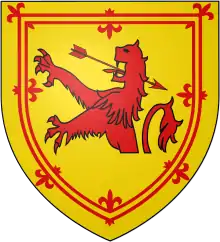 Augmentation to the arms of Thomas Howard, 2nd Duke of Norfolk for his services at the Battle of Flodden (1513).
.svg.png.webp) Arms of the Warrenne Family, Earls of Surrey.
Arms of the Warrenne Family, Earls of Surrey..svg.png.webp) Coat of arms of the Howard Dukes of Norfolk, starting with Thomas Howard, 2nd Duke of Norfolk.Quarterly of 4: 1: Howard, with augmentation of honour; 2: Plantagenet, arms of Thomas of Brotherton, 1st Earl of Norfolk; 3: Chequy or and azure (de Warenne, Earl of Surrey); 4: Mowbray
Coat of arms of the Howard Dukes of Norfolk, starting with Thomas Howard, 2nd Duke of Norfolk.Quarterly of 4: 1: Howard, with augmentation of honour; 2: Plantagenet, arms of Thomas of Brotherton, 1st Earl of Norfolk; 3: Chequy or and azure (de Warenne, Earl of Surrey); 4: Mowbray Confirmation of arms, crest and supporters, dated 28 May 1580, by Robert Cooke, Clarenceux to Philip Howard, 20th Earl of Arundel, omitting Howard arms and quarterings as the Dukedom of Norfolk was under attainder.
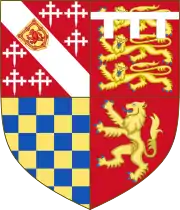 Coat of arms of the Howard Dukes of Norfolk Quarterly of 4: 1: Howard, with augmentation of honour; 2: Plantagenet, arms of Thomas of Brotherton; 3: de Warenne; 4: Gules a Lion rampant Or, Armed and Langued Azure (Fitzalan)
.svg.png.webp) FitzAlan, Earls of Arundel.
FitzAlan, Earls of Arundel. Arms of the arms of Henry Howard, Earle of Surrey, for which he was attainted. The main offense was bearing the undifferenced arms of England (2nd quarter), which only the monarch was allowed. Surrey was beheaded on 19 January 1547 on a charge of treasonably quartering the royal arms.
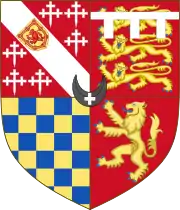 Coat of arms of Howard Earls of Suffolk.
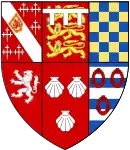 Coat of arms of Howard Earl of Carlisle
Earl Marshal is a hereditary royal officeholder and chivalric title under the sovereign of the United Kingdom used in England (then, following the Act of Union 1800, in the United Kingdom). It is the eighth of the Great Officers of State in the United Kingdom, ranking beneath the Lord High Constable and above the Lord High Admiral. The Earl Marshal has responsibility for the organisation of State funerals and the monarch's coronation in Westminster Abbey.[5] He is also a leading officer of arms. The office is hereditary in the Howard Family in their position as Dukes of Norfolk, the senior dukedom in the United Kingdom.
 |
|
Titles
.svg.png.webp)
Bibliography
- William Dugdale, Baronage of England (London, 1675–76);
- Collins, Peerage of England (fifth edition, London, 1779);
- Henry Howard, Memorials of the Howard Family (privately printed, 1834);
- Edmund Lodge, Portraits of Illustrious Personages (London, 1835); The Howard Papers, with a Biographical Pedigree and Criticism by Canston (London, 1862);
- Yeatman, The Early Genealogical History of the House of Arundel (London, 1882);
- Doyle, Official Baronage of England (London, 1886);
- Brenan and Statham, The House of Howard (London, 1907).
References
- Historic England. "Arundel Castle (1027926)". National Heritage List for England. Retrieved 2 December 2007.
- "Dugdale's 1665 Pedigree of the Howarths of Great Howarth". Archived from the original on 30 January 2015. Retrieved 21 October 2014.
- Douglas Richardson, Plantagenet Ancestry, pg 232–33.
- Rietstap, Johannes Baptist (2003). Armorial general. 2. Genealogical Publishing Co. ISBN 0806348119.
- "The history of the Royal heralds and the College of Arms". The College of Arms website. Retrieved 16 April 2009.
- Brooke-Little, J.P., FSA (1978) [1950]. Boutell's Heraldry (Revised ed.). London: Frederick Warne LTD. p. 125. ISBN 0-7232-2096-4.
External links
 |
Wikimedia Commons has media related to House of Howard. |
Authority control  | |
|---|---|
| General | |
| National libraries | |