Frank W. Wood
Frank Watson Wood (1862–1953) commenced his career as a Royal Navy officer, and was described in 1907 as "naval artist, Portsmouth". He went on to become an internationally regarded watercolorist.
The son of parents who resided in the High Street of Berwick-upon-Tweed, in August 1906 he sold King Edward VII a watercolour which he hung in the Royal Yacht. Queen Alexandra purchased at the same time a further three pictures, all associated with views taken during Cowes Regatta week. In November 1907 the Queen again purchased from him two large watercolours.[1]
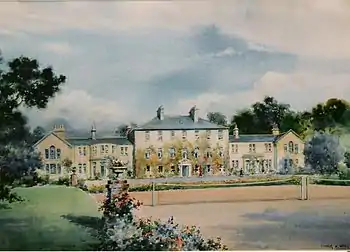
Wood was in Bermuda in 1929 and 1931, and painted Admiralty House (since demolished) and Admiralty Cove, in those days the Headquarters of the America & West Indies Squadron (established 1 July 1927).
Marine Paintings
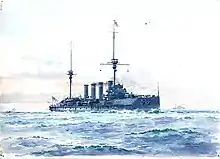
Frank Wood was a prolific and talented painter of British Royal Navy warships and, with the resurgence of interest in naval pictures in the 1990's, his paintings became and still are highly sought after at auction. His attention to detail and ability to capture the spirit of a ship at sea of in port make his paintings unique - this was no doubt partly due to his own naval service. During the 1930's Frank Wood had developed his craft so well that he was mostly painting to order from former naval officers. He was freely allowed to watch and paint some of the most well known and majestic ships in the British fleet at that time for example HMS Hood, HMS Barham and HMS Royal Oak. During World War Two, Wood created also paintings to commemorate some of the major events of the war that had a naval component for example The Epic of Dunkirk and The Battle of The River Plate.
Other works include:
- Cowes
- Edinburgh from The Braids
- Linlithgow Palace
- Springtime on the River Tweed
- Mordington House (1932)
- A View of Berwick-upon-Tweed
- Topography of Berwick
- Gullane (1933)
References
- The Berwickshire News November 29, 2007, "Looking Back", p.13
External links
- The Bermuda paintings at bermuda-online.org
Authority control  | |
|---|---|
| General | |
| National libraries | |
| Art galleries and museums | |
| Art research institutes | |