Gig-mill
A gig-mill (gigging machine, napping machine) was type of raising machine that used teasels to produce a nap on cloth.[1][2] Examples of the results of gigging are woolen fabrics such as chinchilla, beaver cloth, and melton.[3] The process involved gradual teasing of the surface to raise the nap.[4]
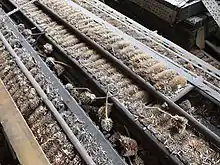
Teasels mounted on frames used to clothe gigging/carding cylinders
Gigging
Gigging was an old method of raising. As with flannelette, the fabric surface is treated with sharp teasels during Gigging to elevate the surface fibres, providing hairiness and lustrous nap. The fabric gets a soft feel. Teasels from a plant, a thistle species, were once used to make it. These were fixed to a cylinder. Later, teasels were replaced by metallic wires similar to those used in carding machines.[5]
Gallery
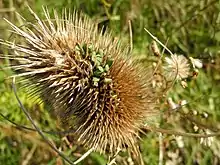 Seedhead of Dipsacus fullonum (common teasel) showing seeds germinating while still in seedhead (vivipary)
 Heads of fuller and wild teasel used in finishing wool fabrics
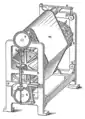 Gigging machine
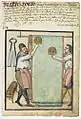 Manual process of raising pile in the textiles
References
- Elihu Root Collection of United States Documents Relating to the Philippine Islands. U.S. Government Printing Office. 1906. p. 369.
- Chisholm, Hugh, ed. (1911). . Encyclopædia Britannica. 12 (11th ed.). Cambridge University Press. p. 5.
- Baker, William Henry (1901). Clothes dictionary;. The Library of Congress. Chicago, Ill., U.S.A., Cahn, Wampold & co. p. 17.
- Dyestuffs. National Aniline Division, Allied Chemical & Dye Corporation. 1946. p. 77.
- Joseph, Marjory L. (1992). Joseph's introductory textile science. Internet Archive. Fort Worth : Harcourt Brace Jovanovich College Publishers. p. 338. ISBN 978-0-03-050723-6.
 |
Look up gig-mill in Wiktionary, the free dictionary. |
This article is issued from Wikipedia. The text is licensed under Creative Commons - Attribution - Sharealike. Additional terms may apply for the media files.