Hans Jörg Böhm
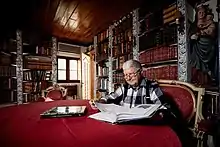
Hans Jörg Böhm, known in Portugal as Comendador Jorge Böhm, was born on 1 July 1938 in the German town of Neustadt an der Weinstraße. He began his career as a German entrepreneur in viticulture and the wine trade. He is best known for his decades-long work promoting innovation through technology transfer of new viticultural and vine improvement practices, particularly for Portuguese and Spanish grapevine varieties. He is also a coordinating author and has organized many technical and scientific symposiums on viticulture and oenology.
Life
Before Portugal
Böhm came from a family of wine merchants, and attended a natural sciences secondary school in Neustadt. He then studied business administration (1958–1963) with examinations at Ludwig Maximilian University (LMU Munich).
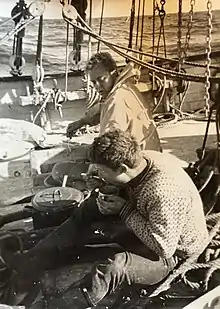
In 1961, he organized a voyage on the converted tuna sailing boat ‘Prosper d'Étel’ which ended unexpectedly when his boat was damaged in Cascais, Portugal. This marked the beginning of a love affair with what was to become his adopted country. After graduating, he did a marketing traineeship at the Unilever branch in Brazil, Gessy-Lever.
From 1964 to 1981, he was managing director of Carl Jos. Hoch KG, the family winery in Neustadt an der Weinstraße and its associated Dr. Deinhard and Herzogshof wine estates. He was a member of the management committee of the Association of German Wine Exporters and chairman of the board of the Neustadt Art Association. During that time, he acquired a collection of paintings by contemporary German painters (now on permanent exhibit at Montemor-o-Novo). Under Jorge Böhm’s management, Carl Jos. Hoch KG was considered the largest importer of Portuguese wines to Germany in 1969.
Böhm arrived in Portugal on the day of the ‘Carnation Revolution’ in 1974. Shortly afterwards, he made his first investment in Portugal under the then new Foreign Investment Code, and an export winery was founded with Baron Stefan von Breisky, who gave his name to the respective company.
In 1981, the family’s Neustadt winery business was dissolved. Jorge Böhm prepared himself for the 1981–82 planned investment in Portugal by enrolling as a visiting graduate student at the University of Applied Sciences in Geisenheim under the guidance of Professors Becker (vine improvement) and Schaller (soil science). Having emigrated to Portugal in 1982, he bought Quinta de São Jorge in Montemor-o-Novo. With the help of Raposo Palma of the Portuguese Ministry of Agriculture, he founded the company Viveiros PLANSEL, Lda. as part of the KfW project for the introduction of certified grafted vines into Portugal. The first plantations of certified rootstock cuttings were established.
Life in Portugal
In 1984, Jorge Böhm became one of the founding board members of the Portuguese Association of Viticultural Plant Breeders and Producers of Certified Material (VITICERT). He was also a delegate to the European organization originally founded in Switzerland, but now based in Austria, IRV-CIP – Internationaler Rebveredlerverband – Comité International des Pépiniéristes Viticoles, known in English as IAN – International Association of Grapevine Nurseries. The association called for private companies to be authorized to participate in the improvement and certification of viticultural material. Through VITICERT, Jorge Böhm was instrumental in lobbying for the necessary legislation in Portugal to make this so. Since 1991, certification of privately produced viticultural material has been possible under official supervision.
In 2001, Jorge Böhm retired from operational management of his nursery company, Viveiros Plansel, Lda., although he is still responsible for experimentation and grapevine improvement. Based on his research work, Jorge’s daughter, Dorina Lindemann, now runs the company Viveiros PLANSEL, Lda. and the winery at the Quinta da PLANSEL Lda. estate with around 80 hectares of vineyards in the Alentejo region.
In 2003, Jorge Böhm participated as a member of the Portuguese “Wine Cluster” (Michael Porter of The Monitor Group and Harvard Business School). That same year, he ensured the use of the wine cluster approach when the official introduction of certified clones of Portuguese vine varieties in the USA, Australia, New Zealand, Italy and Germany occurred, as a means to promote the international use of Portuguese grape varieties and to improve the image of Portuguese wine and its export volumes.
From 2017 to 2020, Jorge Böhm served as Vice-President for Viticulture at the Associação Portuguesa de Horticultura (Portuguese Horticultural Association).[1]
Work

In 1979, Prof. Dr. Helmuth Becker from the Institute for Grapevine Breeding issued a report on the need to set up a company for the multiplication and propagation of vine variety material. This report was submitted to the Secretary of State of the Portuguese Ministry of Agriculture, Professor José V. J. Carvalho Cardoso.
From 1981 to 1984, Jorge Böhm started to select Portuguese vine variety material on his own initiative. At the time, there was no sanitary selection of vine varieties and rootstocks in Portugal, and little was known about the wine quality of these autochthonous varieties. Co-operation agreements were signed with the University of Évora (Eng. Francisco Colaço de Rosario: oenology) and the Estação Agronomica Nacional (EAN) in Oeiras (Prof. O. A. De Sequeira: sanitary selection). An agricultural library was created at Montemor as a source of information on the selection of important autochthonous Portuguese grape varieties (given the vast diversity of more than 340 distinct, officially known genotypes).
Using the cold fermentation system, unusual in Portugal at the time, microvinifications were performed using important Alentejo grape varieties at the University of Évora between 1983 and 1995, following the Geisenheim technology. The wines were classified by the tasters’ chamber of the Junta Nacional de Vinhos (JNV). These classifications were validated by the Institute of Masters of Wine in England, the state institute of viticulture ANTAV in France, and the Geisenheim University of Applied Sciences in Germany. Genetic and sanitary selection was carried out using the Geisenheim methodology and confirmed by EAN Oeiras through virus testing.
After long administrative disputes on the principles of the monoclonal certification rules, the first plants and clones of grape varieties and rootstocks were presented by Viveiros PLANSEL Lda in 1992 to the National Commission for the Examination of Vine Varieties (CNEVV) at the Direção-Geral de Alimentação e Veterinária (DGAV) (Directorate General of Food and Veterinary Services). However, the delay in the certification process led Viveiros PLANSEL, Lda. to request an opinion from the European Parliament (Strasbourg) for this purpose, resulting in a change in the law which allowed 25 Portuguese grapevine rootstocks and varieties to be admitted for certification in 2006 (Despachos: 6225/2006 (2nd series),[2] 20603/1998, 24303/2001[3]).
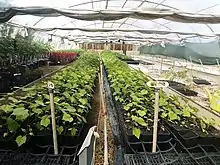
In parallel, in 1984, 38 new fungus-resistant grape varieties were obtained in Geisenheim and later installed in field trials in Portugal to test their cultural adaptation and ensure the ecological sustainability of wine production with low pesticide residues. One of the varieties obtained, Defensor, was registered in March 2020 in Portugal as the first fungus-resistant PIWI variety (Despacho nº 3040/2020[4]).
Between 2000 and 2018, it was possible to obtain joint research funding for Viveiros PLANSEL, Lda. with the University of Évora and the National Institute for Agrarian and Veterinary Research (INIAV). This enabled the putting in place of a contractual agreement with the Julius Kühn Institute to supply pollen from resistant varieties obtained in Germany, to carry out through controlled crossbreeding the introgression of various loci of fungus resistance in Portuguese reference varieties, such as Touriga Nacional, Alvarinho and Fernão Pires. The research aims to provide the professional sector over the next 20 years with resistant varieties of Portuguese pedigree, and thus respond to the extreme phenomena of climate change and the growing ecological demands of the consumer. Over the decades, in partnership with scientific organizations, more than 30 research projects applied to vine culture have been carried out with remarkably positive repercussions on the quality of the wines produced from Portuguese grape varieties.[5]
In the meantime, clones of Portuguese grape varieties have been officially introduced by PLANSEL/JBP nurseries to California, New Zealand and Australia.[6][7]
Publications
Jorge Böhm has published and co-authored the following books:
- O Grande Livro Das Castas. Chaves Ferreira –Publicaçoes, S.A., Lisbon, 2007; received an OIV Prize in 2010.[8]
- D. João, Marquês de Montemor-o-Novo; Uma vida entre duas épocas. Dinalivro, Lisbon, 2010.[9]
- O Atlas das Castas Ibericas. Dinalivro, Lisbon, 2011; received an OIV Prize 2013.[10]
- Vine to Wine Circle, 2013: http://www.vinetowinecircle.com/ – a trilingual portal in Portuguese, English and German containing the entire contents of Rebsortenatlas Spanien und Portugal, substantial material from O Grand Livro das Castas, and additional material on Portuguese wine regions and other vitivinicultural matters.[13]
- O Grande Livro Da Oliveira E Do Azeite. Dinalivro, Lisbon, 2013.[14]
- Glossário Ilustrado do Vinho. Dinalivro, Lisbon, 2017.[15]
More than 50 articles in specialized publications in Germany and Portugal.
Awards

- 2006: Bestowed the distinction of Comendador da Ordem de Mérito Agrícola (Commander of the Order of Merit for Agriculture) by the President of the Portuguese Republic
- 2008: Award for the best viticultural technician (Revista de Vinhos)
- 2013: Distinction for Merit from ICAAM, the Mediterranean Institute for Agriculture, Environment and Development, University of Évora[16]
- 2014: Medal of Honor from the Lisbon Academy of Sciences
- Two of his books have won awards from the International Organization of Vine and Wine (OIV).[17]
Events
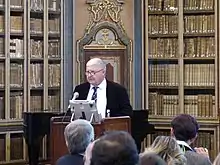
Jorge Böhm has organized with financial and technical responsibility strategic events for wine innovation with renowned international experts:
- 1980s: Organizer of five seminars with international speakers
- 1991: Organizer of the symposium at the Instituto de Investigação Agrícola in Oeiras on the creation of an interprofessional agency for the promotion of Portuguese wine
- 2003: ‘Conviner’ at the ISHS (International Society for Horticultural Science) Symposium on Viticulture, Production and Science at the Lisbon Congress Centre[18]
- 2009: Organizer of the Symposium on Viticulture and Marketing at the University of Évora
- 2015: Organizer of the Symposium on Sustainable Viticulture at the Academia das Ciências de Lisboa
References
- "APHorticultura".
- "Despacho 6225/2006 (2.ª série), 2006-03-16" (in Portuguese).
- "Despacho 24303/2001 (2.ª série), 2001-11-29" (in Portuguese).
- "Despacho 3040/2020, 2020-03-06" (in Portuguese).
- "Projectos e Acções de Inovação com Participação Estatal" (in Portuguese).
- "Foundation Plant Services".
- "Plansel Iberia".
- Böhm, Jorge (2007). O Grande Livro Das Castas (in Portuguese). Lisbon: Chaves Ferreira –Publicaçoes, S.A. ISBN 978-972-8987-10-7.
- Böhm, Jorge (2010). D. João, Marquês de Montemor-o-Novo; Uma vida entre duas épocas (in Portuguese). Lisbon: Dinalivro. ISBN 978-972-576-575-3.
- Böhm, Jorge (2010). O Atlas das Castas Ibericas (in Portuguese). Lisbon: Dinalivro. ISBN 978-972-576-591-3.
- Böhm, Hans Jörg (2011). Rebsortenatlas Spanien und Portugal (in German). Stuttgart: Eugen Ulmer KG. ISBN 978-3-8001-7682-3.
- Böhm, Jorge (2011). Vine Atlas of Spain and Portugal. Lisbon: Self-published.
- "About". Vine to Wine Circle. Retrieved 2021-10-27.
- Böhm, Jorge (2013). O Grande Livro Da Oliveira E Do Azeite (in Portuguese). Lisbon: Dinalivro. ISBN 978-972-576-620-0.
- Böhm, Jorge (2017). Glosario Ilustrado do Vinho (in Portuguese). Lisbon: Dinalivro. ISBN 978-972-576-668-2.
- ICAAM, Instituto de Ciências Agrárias e Ambientais Mediterrânicas Universidade de Évora. "ICAAM ACTIVITY REPORT 2013". ICAAM ACTIVITY REPORT. Retrieved Oct 27, 2021.
- "OIV Awards". oiv.int (in French). Retrieved 2021-10-27.
- International Symposium on Grapevine Growing, Commerce and Research, Sequeira, Oscar A. de; Sequeira, J. C; Böhm, H. J; International Society for Horticultural Science; Section Vine and Berry Fruits, eds. (2004). Proceedings of the 1st international symposium on grapevine growing, commerce and research: Lisbon, Portugal, 30 June - 2 July, 2003. Leuven, Belgium: International Society for Horticultural Science. ISBN 978-90-6605-717-3. OCLC 56726573.
External links
- Vine to Wine Circle
- Böhm‘s research work at PLANSEL
- Vine breeding of Böhm‘s plant nursery Viveiros PLANSEL
Authority control  |
|---|