International Forestry Students' Association
The International Forestry Students’ Association or IFSA is one of the largest international networks of students in forestry and related sciences. IFSA is a globally organized and locally operating students’ organization connecting forest and related science students to their peers and forest-related organizations and policy platforms.
 | |
| Abbreviation | IFSA |
|---|---|
| Formation | 1973 |
| Type | Non-profit |
| Legal status | Foundation |
| Headquarters | Freiburg im Brisgau, Germany |
| Alina Lehikoinen, Finland | |
| Simone Massaro, Italy | |
| Pedro Almeida, Portugal | |
| Barbara Ollerer, Austria | |
Key people | Council: Ivette Estrada, México, Konstantin Schwarz, Germany, Yu-Tung Hung, China-Taipei |
| Website | ifsa.net |
With more than 130 member associations also known as local committees (LC), spread across over 50 countries, IFSA unites thousands of students in their endeavor to learn about forests, cultures, and the environment. IFSA is a non-political, non-profit and non-religious organization that is entirely run by students.[1]
IFSA promotes global cooperation among students of forest sciences in order to broaden knowledge and understanding to achieve a sustainable future for forests and provides a voice for youth in international forest policy processes. For this, IFSA provides a platform for students to enrich their formal education, promote cultural understanding by encouraging collaboration with international partners organizations, and gain practical experiences with a wider and more global perspective. Through its social network, IFSA encourages student meetings, enables participation in scientific debates, and supports the involvement of youth in decision-making processes and international forest and environmental policy.
IFSA is officially registered as a charity organization, with its seat in Freiburg, Germany.
History
It all began in Great Britain in 1973 with an annual meeting of forestry students: The International Forestry Students Symposium (IFSS). The event was held there for thirteen years and the goal was to provide forestry students with a platform where they could meet their counterparts from other countries, discuss their ideas and views and create an atmosphere of solidarity and inspiration. During the following years, the symposium attracted more and more students. The first accomplishment of these meetings was the creation of INFOCENTER; an office established to coordinate the exchange of information among forestry students.
During the 18th IFSS in Lisbon, Portugal in 1990, the participants decided to expand the cooperation between forestry students beyond the annual symposium. At the constitutional assembly of IFSA, the founding member associations approved provisional statutes and elected the first representative organs. INFOCENTER was relocated and took on the official role as IFSA’s communicative and informational organ.
The following year, the 19th IFSS was organized in the Netherlands. This symposium turned out to be a great success with 112 participants from 38 countries; it was the first time that students from all continents were represented. The following symposium was organized in Italy (1992). Here the third General Assembly (GA) designated a central organ, the Secretariat, to be responsible for the association’s bureaucratic tasks, internal communications, and all INFOCENTER duties. The Secretariat, thus, fully assumed its role as IFSA headquarters.
IFSA became a truly world-wide organization when the new statutes were finally approved in 1994 at the fifth GA during the 22nd IFSS in Switzerland. The association was officially registered as a charity organization with its seat in Göttingen, Germany. Five years later, with the adoption of the revised Statutes, Decrees and By-laws, the general assembly moved the seat to Freiburg in Breisgau, Germany. [2]
Vision/Mision
IFSA’s vision of a world that appreciates forests describes the dream of having all the people and societies on the earth recognize the full worth of forests and fully understand forests, grasping their implications and being grateful for their multi-fold contributions to humanity.
To enrich our members' education through international events, networking and intercultural exchange.
Structure
IFSA Board
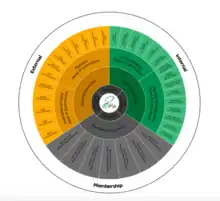
IFSA has 7 main people in charge of the whole organization, they are ultimately responsible for all aspects of the organization and works to ensure that IFSA is globally represented, inclusive, and growing in a way that is consistent with the organization's mission, vision and spirit. It's composed of the following positions:
- President
- Vice-President
- Treasurer
- Executive Secretary
- Internal councilor
- External councilor
- Membership councilor
IFSA Officials
IFSA has various working groups (commissions) which allow students the chance to develop new skills, contribute to the running of the organization, and work to achieve the aims of IFSA. [3]
Internal
Communication Commission: Seeks to communicate all of IFSA’s activities and opportunities to give the best experience for the audience through design and the website. It's composed of the following positions:
- Head of Design Sub-Commission
- Head of Social Media Sub-Commission
- Head of Publication Sub-Commission
- Head of Podcast Sub-Commission
- Head of Web Sub-Commission
- Head of Wikipedia Sub-Commission
Capacity Development Commission: Seeks opportunities to develop skills of IFSA officials and members by organizing training sessions and sharing other skill development opportunities, ideally alongside IFSA delegations and IFSA Partner events. It's composed of the following positions:
- Head of Carbon and Sustainability Sub-Commission
- Head of Cultural Competency Sub-Commission
- Head of Forestry Education Sub-Commission
- Head of Language Sub-Commission
- Head of Mentorship Sub-Commission
- Head of TreE-Learning Sub-Commission
- Head of Treehouse Sub-Commission
- IFSA-IUFRO Join Task Force Coordinator
- Deputy IFSA-IUFRO Join Task Force Coordinator
External
Partners Commission:Work with partnerships to find suitable arrangements for collaborative activities: conferences, seminars, workshops, awards, internships, online forums, networking opportunities, etc. Provides an adequate change-over with an overview of partner organization, history of cooperation, ongoing projects, ideas for the future, detailed contact information, important documents, etc. It's composed of the following positions:
- Head of CIFOR Sub-Commission
- Head of EFI Sub-Commission
- Head of FAO Sub-Commission
- Head of ITTO Sub-Commission
- Head of IUCN Sub-Commission
- Head of IUFRO Sub-Commission
- Head of RECOFTC Sub-Commission
- Head of TDF Sub-Commission
International Policy Commission: Coordination and preparation of IFSA’s contribution and delegations to forest related political processes and United Nations (UN) functions. The commission is also a forum for the discussion and exchange of opinions on forest policy and conduit for forest students to increase engagement with national policies. Each of the sub-commissions support a dedicated process or a UN Agency.
- Head of Forest Europe Sub-Commission
- Head of UNCBD Sub-Commission
- Head of UNEP Sub-Commission
- Head of UNFF Sub-Commission
- Head of UNFCCC Sub-Commission
Regional representatives
The Regional Representatives are the information links between the IFSA Board and the Local Committees (LC) in their region, and between the LCs to ensure good communication. The key duties of a Regional Representative are: keeping contact with LCs, cultivating and expanding the regional IFSA community, and collaborating with the other IFSA officials.
Members fall within one of seven regions, defined by geographical area. These regions are Asia-Pacific, Northern America, Latin America, Northern Europe, Southern Europe, Northern Africa and Southern Africa.[4]
- Latin America
- Northern America
- Southern Europe
- Northern Europe
- Southern Africa
- Northern Africa
- Asia-Pacific
Activities
Youth representative during international decision-making processes regarding environmental and forest policy
The organization promotes the involvement of professional foresters in decision making. In the organization's opinion, forest scientists are, as a matter of principle, better qualified to evaluate questions of sustainable forest management than specialists from other sciences.[5] For that reason, forestry students are offered the opportunity to understand and actively take part in these international forest policy processes.
As a Youth Non-Governmental Organization (YNGO), IFSA has the status of youth representative for the following events:
- EFI Annual Conference
- FAO´s European Forestry Week
- SAF National Convention
- United Nations Framework Convention on Climate Change (UNFCCC)
- IAAS-IFSA Meeting
- IUFRO Board Meeting
- FAO World Forestry Congress
- Convention on Biological Diversity (CBD) Youth Conference
- IUFRO World Congress
- Ministerial Conference on the Protection of Forests in Europe (previously Ministerial Conference for the Protection of Forest in Europe) ;[6] focal point organisation
- United Nations Forum on Forests (UNFF); focal point organization [7]
International Forestry Students’ Meetings
The International Forestry Students’ Association forms a wide network of forestry students throughout the world, on which the Association bases its main activities — meetings of students at the regional and international levels.[8] These meetings allow better communication between members and facilitate cultural exchange.
Hosted by a different country each year, the International Forestry Students’ Symposium (IFSS) is the venue for the IFSA General Assembly, during which work from the previous year is reported, decisions are made regarding IFSA activities and new officials for the next year are elected and appointed.[9]
During the IFSS, numerous activities are planned to showcase the host country's culture and natural environment, in particular the forests. Lectures from guest speakers and field trips attempt to make the IFSS educational as well as fun. IFSA also holds very important Regional Meetings gathering students from the different regions where it is active. These meetings are the opportunity to discuss the problems in a geographical area.
The Interim Meeting is attended by IFSA Officials and is held midway through the IFSA year. It allows officials to discuss their progress and whether they are meeting their aims set at the IFSS, discuss any problematic situations and work together to learn from each other and improve the work being carried out. IFSA 7 is attended by the Direction and Council, with the main aim of preparing for the General Assembly at the IFSS.
There is also the case of the IFSA Summer School, when 2 LCs develop cooperation agreements and at the same time share experiences in the forestry sector with their partners. There is an exchange of ideas, suggestions for activities and cultural visits, as well as talks by university professors and exchange of knowledge between the two countries.
Projects
Tree House
This idea came up as an answer for the need of having a platform for offering and receiving accommodation all across the world from and for people that have the same interests on forests and have the predisposition to exchange culture, experiences and knowledge.
EFI-IFSA-IUFRO Project
This project will investigate the transforming employment trends in the forest sector while putting special focus on the perspective of students and recent graduates from around the world. It will further explore ways to prepare future foresters for the expected changes.
Global student survey
The survey is a part of “Global Student Networking and Green Jobs in the Forest sector” a project coordinated by the European Forest Institute (EFI) in collaboration with the International Forestry Students’ Association (IFSA) and the International Union of Forest Research Organizations (IUFRO). The project aims at providing insight into the future labour market including changing professional skills through systematic analysis of the development of employment in the forest sector globally. Global student networking and capacity development of forest students and young scientists are also essential elements of the project.
The aim of the survey is to gain a better understanding of the employment-related ambitions, perception of necessary skills/competencies and satisfaction of forest-related students from around the globe. The results of the survey will inform and be disseminated among educational institutions, lecturers as well as policy makers.
Expert workshop on forest sector employment, green jobs, and forest education
The aim of the workshop is eliciting overall trends in forest sector employment in different world regions and focus countries, Identifying main changes in employment, Gaining insights into forest sector employment, including green jobs and identify employment trends. For the workshop IFSA invited a senior and junior expert from each of the following 6 selected focus countries: Brazil, Finland, Germany, Indonesia, South Africa and the United States of America.
Dare to Explore! – Traineeship Program
The Dare to Explore! Traineeship Program is an integral part of the EFI-IFSA-IUFRO Capacity Development Project, which offers four specified, 3-months traineeship opportunities each year for 2019, 2020, and 2021. The trainee positions are intended to familiarize students of forest(ry) programmes with work at the science-policy-interface at the international level, including research, communication, and policy-relevant activities.
IFSA-IUFRO Africa Book Project
The project’s overall goal is to motivate and inspire young people to pursue forest-related studies and careers in Africa by increasing the visibility of career options and young African role models working in forest-related fields. This will also help in offering visibility to the forestry profession in Africa.
Partnerships
The IFSA community begins with students of forest and related sciences but stretches to include youth associations (spanning agriculture, water, geography) and numerous professional organizations, named IFSA Partners. Effective communication, knowledge sharing, and member-led activities contribute to a growing community of practice.
- GLOBAL PEATLANDS INITIATIVE
- RECOFTC
- THE FORESTS DIALOGUE
- UN Convention of Biodiversity (UNCBD)
- UN ENVIRONMENT
- YOUTH IN LANDSCAPES INITIATIVE
See also
 Trees portal
References
- Amtsgericht Freiburg im Breisgau. Registriergericht. Vereinsregisternummer (VR) 3432. Statutes Section A Article 1
- "History". www.ifsa.net. Archived from the original on 2009-01-17. Retrieved 2008-11-28.
- Amtsgericht Freiburg im Breisgau. Registriergericht. Vereinsregisternummer (VR) 3432. Statutes Section C Article 15
- Amtsgericht Freiburg im Breisgau. Registriergericht. Vereinsregisternummer (VR) 3432. By-Laws Chapter 2
- MCPFE-5 Conference Proceedings
- Forest Europe. The MCPFE Newsletter of the Liaison Unit Warsaw. Issue 10,11 July/October 2005
- United Nations Forum on Forests Multi-Stakeholder Consultation Summary. Quebec City, Quebec. Canada. 24 September 2003. On http://www.un.org/
- ECOSOC: discussion paper for UNFF-5
- Amtsgericht Freiburg im Breisgau. Registriergericht. Vereinsregisternummer (VR) 3432. By-Laws Chapter 6
External links
- Official web site
- IFSA Virtual Community
- Discussion paper by the Major Group "Youth" for UNFF-7, main author IFSA
- Statement by the Major Group "Youth" on MCPFE-5, main author IFSA
- Forest Policy Education Network, a project run by IFSA alumni
- Website of the 44. International Forestry Students Symposium 2016 in Austria and Bavaria