Korarit massacre
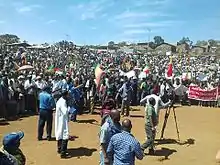
The Korarit massacre was a mass extrajudicial killing that took place in Korarit (Tigrinya: ቆራሪት) and Tsebri (Tigrinya: ጸብሪ) in the Tigray Region of Ethiopia during the Tigray War, on the days before 27 November 2020.[1] Korarit is a small town that belongs to the Welkait woreda in the Western zone of Tigray.
| Korarit massacre | |
|---|---|
| Part of Tigray War | |
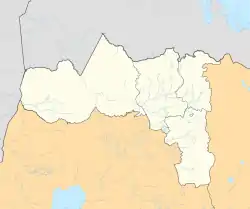  Korarit  Korarit Location of Korarit in Tigray (Ethiopia) | |
| Location | Korarit (Tigrinya: ቆራሪት), Tigray Region, Ethiopia |
| Date | days before 27 November 2020 |
| Target | Tigrayans |
Attack type | |
| Deaths | 98 civilians |
| Perpetrators |  Amhara Region Special Force Amhara Region Special Force  Eritrean Defence Forces Eritrean Defence Forces |
Massacre
The Amhara Region Special Force and the Eritrean Defence Forces killed 98 civilians in Korarit (western Tigray) on the days before 27 November 2020.[1]
Selam, a 26-year-old farmer, fled her home in the central town of Korarit with her husband and children and hundreds of others in mid-November “because the Amhara special forces were beating and killing people”. The family walked for a month to reach safety.
— Jason Burke, Ethiopia: 1,900 people killed in massacres in Tigray identified, The Guardian, 1 April 2021[2]
Typical massacres committed by Ethiopian and Eritrean soldiers in the Tigray war are (1) revenge when they lose a battle; (2) to terrorise and extract information about whereabouts of TPLF leaders; (3) murder of suspected family members of TDF fighters; and (4) terrorising the Tigray society as a whole such as in case of mass killings in churches.[3] The Korarit massacre includes killings in Tsebri, a place nearby the Wolkayt sugar plantation, where conflicts for land pre-existed.[4]
Perpetrators
Relatives and witnesses reported the perpetrators of this massacre and other war crimes in the area as being Eritrean and Amhara soldiers.[5]
Several refugees from different Tigray communities told the AP they watched or listened helplessly as women were taken away by Amhara or Eritrean fighters and raped. It was like taunting, said Adhanom Gebrehanis from Korarit village.“They do these things openly to make us ashamed,” he said.
He described watching Eritreans pull aside 20 women from a group of Tigrayans and rape them.
— Cara Anna, ’Leave no Tigrayan’: In Ethiopia, an ethnicity is erased, Associated Press, 7 April 2021[5]
Victims
The “Tigray: Atlas of the humanitarian situation” mentions 98 victims of this massacre.[1]
Reactions
The “Tigray: Atlas of the humanitarian situation”,[1] that documented this massacre received international media attention, particularly regarding its Annex A, that lists massacres in the Tigray War.[3][6][7][8]
After months of denial by the Ethiopian authorities that massacres occurred in Tigray, a joint investigation by OHCHR and the Ethiopian Human Rights Commission was announced in March 2021.[9]
While the Ethiopian government promised that Eritrean troops will be pulled out from Tigray, the Eritrean government denies any participation in warfare in Tigray, let alone in massacres.[10]
References
- Annys, S., Vanden Bempt, T., Negash, E., De Sloover, L., Nyssen, J., 2021. Tigray: Atlas of the humanitarian situation
- The Guardian, 1 April 2021: Ethiopia: 1,900 people killed in massacres in Tigray identified
- The World radio (2 April 2021): Counting the victims in Tigray
- Addis Fortune, 19 April 2016 : Sugar Project in Welkayit Delays Compensation Plan
- Associated Press, 7 April 2021: ’Leave no Tigrayan’: In Ethiopia, an ethnicity is erased
- EuroNews, 2 April 2021 – See film embedded in the news item: G7 'seriously concerned' about human rights violations in Ethiopia's Tigray region
- CBC, 2 April 2021: As It Happens: The Friday Edition (from 28:00 to 35:30) Tigray, Ethiopia Massacre
- The Guardian, 2 April 2021: Ethiopia: 1,900 people killed in massacres in Tigray identified
- France24, 18 March 2021: UN rights chief agrees to joint Tigray probe
- DW, 19 March 2021: Fact check: Are other nations involved in the war in Tigray?