Maggona Arachchi
Maggonage Silva/Fonseka | |
|---|---|
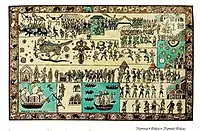 The Maggona Arachchi Kodiya of the Hewagam Community. | |
| Regions with significant populations | |
| Sri Lanka, | |
| Languages | |
| Sinhala, Tamil | |
| Religion | |
| Buddhism, Roman Catholicism | |
| Related ethnic groups | |
| Sinhalese, Kalinga (historical region), Khandayat_(caste), Yadava |
Maggona Arachchi (Sinhala: මග්ගොන ආරච්චි, romanized: maggona Arachchi) also Maggonage, Maggona ge is a Sinhalese speaking Khandayat ethnic group of Sri Lanka House of Kaikesi Irugal, migrated from Odisha of India Odisha in 13th Century, claiming lineage to the Yadava royalty in the old Kingdom of Kalinga in Eastern India probably related to Khandayat people.
History
Maggona Arachchis are former Yadava people lived in ancient Kalinga now in these days Odisha . They were warrior caste known as Khandayat. After the Empire Ashoka conquered Kalinga, Yadava's Khandayats embraced Buddhism.
They are known to have arrived in the time of the Kingdom of Gampola from Odisha with the Tamil Nadu Madurai - Kanchipuram Originated Alagakkonara Family - අලගක්කෝනාර පවුල for fight against Vijayanagara Empire & Jaffna as mentioned in Alakeshvara Yuddaya.
Once Minister Nissanka Alagakkonara got enough power at Gampola royal court, He influence the royal court to arrange the Southern Fort as a protective layer to the newly built Kotte Fort at Maggona and appointed Maggona Arachchi as commander in charge, He was responsible to train his house - people with Martial arts ( Angampora) and provide enough soldiers to the Kingdom of Kotte.
Around the local lords of the house of fellow Malala irugal came to power in Kalutara Area, Maggona Arachchi's sworn as protectors of house Malala Irugal for some kind of pre-Indian time help which Malala's did to Kaikesi's. As mentioned in Chronicles of Veediya Bandara. Maggona Arachchi General battled alongside Veediya Bandara and He was the Head of Personal guards of Commander in Chief Prince Veediya Bandara.
Fall of general Maggona Arachchi
When Veediya Bandara was at crushing a rebellion and knowing Veediya Bandara's absence, Mayadunne prepared to attack Kotte with the ruler of Kandy as his ally. When the words reached Veediya Bandara in Uva, he made haste and descended upon the army of Kandy before it joined forces with Mayadunne. Afterwards, his army invaded and captured Sithawaka again as Mayadunne fled without a fight.
This, however, was it was a ruse. Secretly deployed forces attacked Veediya Bandara's men and took them by complete surprise. Unprepared and outnumbered, they endured a heavy defeat for the misjudgment of their leader. Veediya Bandara himself, retreated with several of his guards only to be betrayed by them as there was a hefty price on his head. while Velayuda Arachchi fighting alone with enemies to make time to fall back his Master and Friends of Commanders. It is said that they were 50 men's of the Kotte Army fighting Veediya Bandara to win hefty price and Maggona Arachchi fought till his death to protect his Chief ( Veediya Bandara), when Tikiri Bandara Rajasinha, son of Mayadunne arrived there with a force.
Rather than facing certain death, Veediya Bandara ordered Vijayakoon Mudaliya, Bodhiraja Perumal of Hiti-Imbula, and Varusapperuma Arachchi to flee to Kotte and wait for his Orders but they refused and Veediya Bandara was angry, he reordered to fall back and carry the body of his loyal commander-general of Personal Bodyguard, Maggona Arachchi (he was the childhood friend to Veediya Bandara) and then decided to surrender to prince Rajasinha who in time, distinguished himself as a warrior king.
After the death of Veediya Bandara
After being betrayed by Empire Dharmapala of Kotte , Son of Veediya Bandara Maggona Arachchi - ,house of Kaikesi Irugal decided to stay back and gaurding the southern fort as they were instructed centuries ago and did not participated in any major battle or politics in Kingdom of Kotte while Portuguese rule kotte and colombo fort.
Battle of Mulleriyawa
At the Battle of Mulleriyawa Kaikesi Irugal House - Maggona Arachchi and his people joined with Prince Tikiri Bandara, later the King Rajasinha I of Sitawaka.
Maggona Angam fighters who were descendants of General Maggona Arachchi, received the king's forgiveness for fighting for the Kingdom of Kotte for hundred years, they received kings protection and relocated from Maggona to Ja - Ela (to guard the borders), and Few of them decoded to stay at Hewagam Korale to live peacefully. Maggona Arachchi's left their previous duty of protecting Maggona fort because of the Betrayal of Don Juan Dharmapala - A weak king. he gives the kingdom of Kotte to the protegees via deed, That's why they help and join forces with Tikiri Bandara.
Aftermath
During the rule of the British they killed So many of the Angam caste in Sri Lanka, Angam caste-like Koratota Arachchi, they change their names to Perera & Maggona Arachchi change to Silva, Fonseka But they always were Faithful Buddhist & Sinhalese.
FewMaggona Arachchi's Descendants Families
What they do now
They have in recent times given great importance to trade and commerce and Politics elite families are involved in the estate-owning sector, Law firms, IT sector and Sri Lanka Armed Forces.[4]
So now they make up a sheer minority among the Sinhalese speaking population group along with Hewagam and Salagama well one-third of Tamil speaking population of the island. They are mostly classified as a law-making, warrior caste native to the Western coasts of Sri Lanka than an ethnic group in Sri Lanka which is not the case with them having distinct origin stories compared with the majority Sinhalese ethnic groups.
Although these days they are considered a highly educated professional caste they were once fierce warriors due to their Kshatriya origin and have Royal ancestry due to them being descendants of the Yadava being defendants of the Royal lineages of Yadava people and Irugal people.
References
- PARANAVITĀNA, Senerat (1970). Inscriptions of Ceylon Vol. I (3rd century BC to 1st century CE in the Early Brāhmī Script). Department of Archaeology. pp. 7, 83 & 113. ISBN 9789559159308.
- Fernando, Mario (2007). Spiritual Leadership in the Entrepreneurial Business: A Multifaith Study. Edward Elgar Publishing. p. 55. ISBN 9781847208613.
- Cambridge South Asian Studies. Cambridge University Press. 1965. pp. 18, 51. ISBN 9780521232104.
- Jiggins, Janice (1979-06-07). Caste and Family Politics Sinhalese 1947-1976. Cambridge University Press. p. 27. ISBN 9780521220699.