Bridal theology
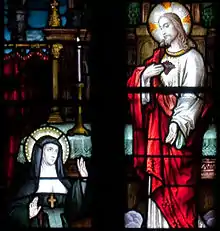
Within the Christian tradition, bridal theology, also referred to as mystical marriage, is the New Testament portrayal of communion with Jesus as a marriage, and God's reign as a wedding banquet.[1] This tradition in turn traces back to the Hebrew Bible, especially allegorical interpretations of the erotic Song of Songs (or Song of Solomon).[2] This theology has influenced the works of, among others, Henry Suso, Catherine of Siena, Teresa of Ávila, Gregory the Great and Bernard of Clairvaux.[1] A similar concept existed in Valentinian Gnosticism with the notion of the bridal chamber, which involved a marriage to one's heavenly counterpart.[3][4] Some mystics take this 'marriage' as a symbol of the union of the human soul with God. The concept may - or may not - carry a sexual connotation for believers.
_-_The_Mystic_Marriage_of_Saint_Catherine_(after_Correggio)_-_732135_-_National_Trust.jpg.webp)
References
 |
Wikimedia Commons has media related to Bridal theology. |
- Kenda, Creasy Dean (2004). Practicing passion: youth and the quest for a passionate church. Grand Rapids, Mich.: Eerdmans Pub. pp. 124–126. ISBN 0-8028-4712-9.
- Balthasar, Hans Urs von; Fessio, Joseph; Riches, John Kenneth (1983). The glory of the Lord: a theological aesthetics. San Francisco: Ignatius Press. ISBN 0-89870-249-6.
- "Valentinian Sacramental Practice - Valentinus and the Valentinian Tradition".
- Philip L. Tite, Valentinian Ethics and Paraenetic Discourse