Navagraha
Navagraha are nine heavenly bodies and deities that influence human life on Earth according to Hinduism and Hindu astrology. The term is derived from nava (Sanskrit: नव "nine") and graha (Sanskrit: ग्रह "planet, seizing, laying hold of, holding"). Note that the Earth, Uranus and Neptune are not included in the Navagraha.[2] However, Sun is part of the Navagraha. The seven days of the week in the Hindu calendar also correspond with the Navagraha, and are named accordingly in various languages of the Indian subcontinent. Most temples in India have a designated place dedicated for Navagraha worship.
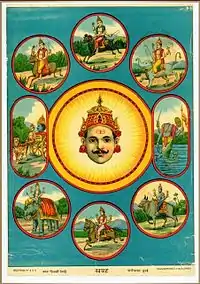
Planets, celestial bodies and lunar nodes
| No. | Image | Name (Vedic) | Western equivalent | Day |
|---|---|---|---|---|
| 1. | 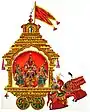 |
Surya, Ravi | Sun | Sunday, Ravivār |
| 2. | 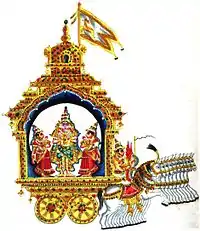 |
Chandra, Soma | Moon | Monday, Somavār |
| 3. | 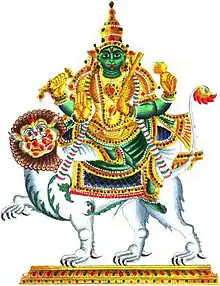 |
Budha, Soumya | Mercury | Wednesday, Budhavār |
| 4. | 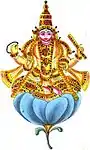 |
Shukra, Shukracharya | Venus | Friday, Shukravār |
| 5. | 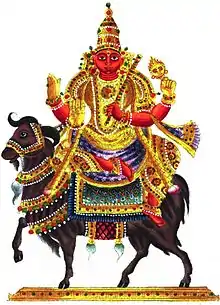 |
Mangala, Angaraka | Mars | Tuesday, Mangalavār |
| 6. |  |
Bṛhaspati, Guru | Jupiter | Thursday, Guruvār |
| 7. |  |
Shani, Sanaischara | Saturn | Saturday, Shanivār |
| 8. | 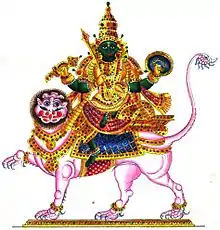 |
Rahu | Ascending node of the Moon | |
| 9. | 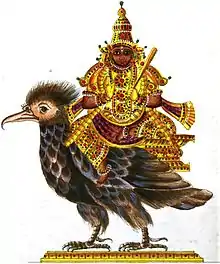 |
Ketu | Descending node of the Moon |
Carnatic Music
Muthuswami Dikshitar, a Carnatic music composer from southern India composed the Navagraha Kritis in praise of the nine grahas.[3] Each song is a prayer to one of the nine planets. The sahitya (lyrics) of the songs reflect a profound knowledge of the mantra and jyotisha sastras.
See also
Notes
 |
Wikimedia Commons has media related to Navagraha. |
- Sanskrit-English Dictionary by Monier-Williams, 1899
- "Dikshitar: Navagraha". www.medieval.org. Retrieved 2020-06-12.
 | ||
Hindu deities and texts | ||
|---|---|---|
| Gods |  | |
| Goddesses | ||
| Other deities | ||
| Texts | ||
Authority control  |
|---|