2023 Polish parliamentary election
The next parliamentary elections to the Sejm and Senate will be held in the autumn of 2023, although they can be held sooner if a snap election is called, which last occurred in 2007. The most recent election, in 2019, resulted in the re-election of a majority Law and Justice government, albeit without a majority in the Senate.
 | |||||||||||||||||||||||||||||||||||||||||||||||||||||||||||||||||||||||||||||||||||||||||||||||||||||
All 460 seats to the Sejm 231 seats are needed for a majority in the Sejm All 100 seats to the Senate of Poland | |||||||||||||||||||||||||||||||||||||||||||||||||||||||||||||||||||||||||||||||||||||||||||||||||||||
|---|---|---|---|---|---|---|---|---|---|---|---|---|---|---|---|---|---|---|---|---|---|---|---|---|---|---|---|---|---|---|---|---|---|---|---|---|---|---|---|---|---|---|---|---|---|---|---|---|---|---|---|---|---|---|---|---|---|---|---|---|---|---|---|---|---|---|---|---|---|---|---|---|---|---|---|---|---|---|---|---|---|---|---|---|---|---|---|---|---|---|---|---|---|---|---|---|---|---|---|---|---|
| |||||||||||||||||||||||||||||||||||||||||||||||||||||||||||||||||||||||||||||||||||||||||||||||||||||
| |||||||||||||||||||||||||||||||||||||||||||||||||||||||||||||||||||||||||||||||||||||||||||||||||||||
.png.webp)


.jpg.webp)




.jpg.webp)


Electoral system
The process of election for the Sejm is through party-list proportional representation via the D'hondt method in multi-seat constituencies,[1] with a 5% threshold for single parties and 8% threshold for coalitions (with the requirements waived for national minorities).
The date of the election will be set by the President of Poland (consistent with constitutional requirements, whereby the election may be held 30 days before the fourth anniversary of the beginning the current convocation of Parliament, on a non-working day, including public holidays).
Should the opposition parties win government, they would require a three-fifths majority of MPs, to overturn a presidential veto.[2]
Political parties
The table below lists party groups currently represented in the Sejm.
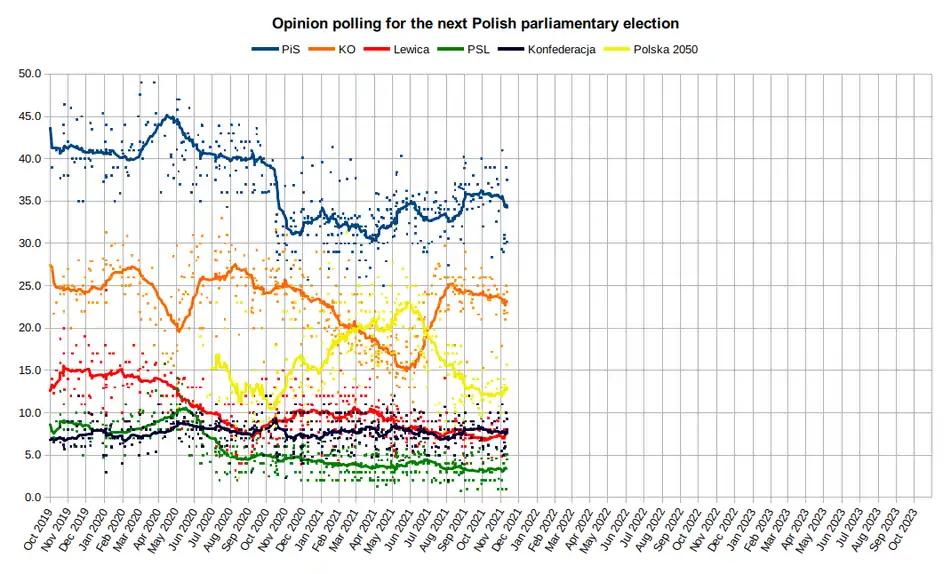
Opinion polls
References
- "Election Resources on the Internet: Elections to the Polish Sejm, Part I". electionresources.org. Retrieved 2014-08-03.
- "Konwencja PO. Budka proponuje Koalicję 276. "Tyle głosów potrzebnych do przejęcia władzy"". gazetapl (in Polish). Retrieved 2021-07-06.
- https://www.independent.co.uk/news/world/europe/poland-election-vote-latest-populist-government-pis-law-and-justice-a9152246.html
- https://www.bbc.com/news/world-europe-50037654
Notes
- 1 MP elected on The Left list, former member of the Spring party and 3 MPs from KO.
| Presidential elections | |
|---|---|
| Legislative elections | |
| Local elections | |
| European elections | |
| Referendums | |
| |