Aircraft flight manual
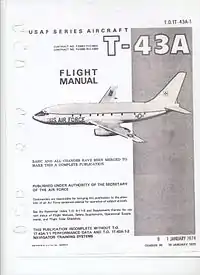
An aircraft flight manual (AFM) is a paper book or electronic information set containing information required to operate an aircraft of certain type or particular aircraft of that type (each AFM is tailored for a specific aircraft, though aircraft of the same type naturally have very similar AFMs}. The information within an AFM is also referred to a Technical Airworthiness Data (TAWD). A typical flight manual will contain the following: operating limitations, Normal/Abnormal/Emergency operating procedures, performance data and loading information.[1]
An AFM will often include:
- V speeds
- Aircraft gross weight
- Maximum ramp weight
- Maximum takeoff weight
- Manufacturer's empty weight
- Operating empty weight
- Centre of gravity limitations
- Zero-fuel weight
- Takeoff distance
- Landing distance
Originally, an AFM would follow whichever format and order the manufacturer felt appropriate. Eventually, the General Aviation Manufacturers Association came to an agreement to standardize the format of AFM's for general aviation airplanes and helicopters. This standardized AFM format is known as the Pilot's Operating Handbook (POH).
Unlike the manufacturer-determined order of an AFM, the chapters of a POH will always follow the format of:
- General
- Limitations
- Emergency Procedures
- Normal Procedures
- Performance
- Weight and Balance/Equipment List
- Systems Description
- Handling, Service, and Maintenance
- Supplements
Additional sections may be added at the end at the manufacturer's discretion.
The POH for most light aircraft built after 1975 is also designated as the FAA-approved flight manual.