The Plane Train
The Plane Train is an automated people mover (APM) at Hartsfield–Jackson Atlanta International Airport that transports passengers between the terminals and the airside concourses. The system is the world's most heavily traveled airport APM, with 64 million riders as of 2002.[2]
| The Plane Train | |||||||||||||||||||||||||||||||||||||||||||||||||||||||||||||||||||||||||||||||||||||||||||||||||||||||||||||||||||||||||||||||||||||||||||||||
|---|---|---|---|---|---|---|---|---|---|---|---|---|---|---|---|---|---|---|---|---|---|---|---|---|---|---|---|---|---|---|---|---|---|---|---|---|---|---|---|---|---|---|---|---|---|---|---|---|---|---|---|---|---|---|---|---|---|---|---|---|---|---|---|---|---|---|---|---|---|---|---|---|---|---|---|---|---|---|---|---|---|---|---|---|---|---|---|---|---|---|---|---|---|---|---|---|---|---|---|---|---|---|---|---|---|---|---|---|---|---|---|---|---|---|---|---|---|---|---|---|---|---|---|---|---|---|---|---|---|---|---|---|---|---|---|---|---|---|---|---|---|---|---|
 | |||||||||||||||||||||||||||||||||||||||||||||||||||||||||||||||||||||||||||||||||||||||||||||||||||||||||||||||||||||||||||||||||||||||||||||||
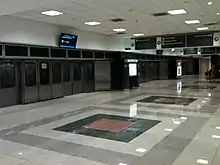
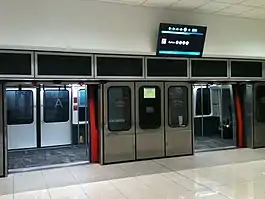 Concourse A eastbound platform in 2011 | |||||||||||||||||||||||||||||||||||||||||||||||||||||||||||||||||||||||||||||||||||||||||||||||||||||||||||||||||||||||||||||||||||||||||||||||
| Overview | |||||||||||||||||||||||||||||||||||||||||||||||||||||||||||||||||||||||||||||||||||||||||||||||||||||||||||||||||||||||||||||||||||||||||||||||
| Locale | Hartsfield–Jackson Atlanta International Airport | ||||||||||||||||||||||||||||||||||||||||||||||||||||||||||||||||||||||||||||||||||||||||||||||||||||||||||||||||||||||||||||||||||||||||||||||
| Termini | Domestic Terminal International Terminal | ||||||||||||||||||||||||||||||||||||||||||||||||||||||||||||||||||||||||||||||||||||||||||||||||||||||||||||||||||||||||||||||||||||||||||||||
| Stations | 8 | ||||||||||||||||||||||||||||||||||||||||||||||||||||||||||||||||||||||||||||||||||||||||||||||||||||||||||||||||||||||||||||||||||||||||||||||
| Service | |||||||||||||||||||||||||||||||||||||||||||||||||||||||||||||||||||||||||||||||||||||||||||||||||||||||||||||||||||||||||||||||||||||||||||||||
| Type | People mover | ||||||||||||||||||||||||||||||||||||||||||||||||||||||||||||||||||||||||||||||||||||||||||||||||||||||||||||||||||||||||||||||||||||||||||||||
| Rolling stock | 59 × Bombardier Innovia APM 100 | ||||||||||||||||||||||||||||||||||||||||||||||||||||||||||||||||||||||||||||||||||||||||||||||||||||||||||||||||||||||||||||||||||||||||||||||
| Daily ridership | 200,000[1] | ||||||||||||||||||||||||||||||||||||||||||||||||||||||||||||||||||||||||||||||||||||||||||||||||||||||||||||||||||||||||||||||||||||||||||||||
| History | |||||||||||||||||||||||||||||||||||||||||||||||||||||||||||||||||||||||||||||||||||||||||||||||||||||||||||||||||||||||||||||||||||||||||||||||
| Opened | September 21, 1980 | ||||||||||||||||||||||||||||||||||||||||||||||||||||||||||||||||||||||||||||||||||||||||||||||||||||||||||||||||||||||||||||||||||||||||||||||
| Technical | |||||||||||||||||||||||||||||||||||||||||||||||||||||||||||||||||||||||||||||||||||||||||||||||||||||||||||||||||||||||||||||||||||||||||||||||
| Line length | 2.8 mi (4.5 km) | ||||||||||||||||||||||||||||||||||||||||||||||||||||||||||||||||||||||||||||||||||||||||||||||||||||||||||||||||||||||||||||||||||||||||||||||
| Character | Underground | ||||||||||||||||||||||||||||||||||||||||||||||||||||||||||||||||||||||||||||||||||||||||||||||||||||||||||||||||||||||||||||||||||||||||||||||
| |||||||||||||||||||||||||||||||||||||||||||||||||||||||||||||||||||||||||||||||||||||||||||||||||||||||||||||||||||||||||||||||||||||||||||||||


System operation
The Plane Train operates underground in two tunnels bracketing a pedestrian walkway in the airport's Transportation Mall. The system has eight stations that are all within the secure area of the airport, one at each of Concourses A, B, C, D, E, and F (International Terminal), and two in the Domestic Terminal – one at Concourse T, which is also the station for passengers from the Domestic Terminal heading to Concourses A–F, and one at the domestic baggage claim and ground transportation. The system operates with 11 four-car trains during peak periods.[3]
The Domestic Baggage Claim and Concourses T, E, and F stations have island platforms shared between the two tunnels, while Concourses A, B, C and D stations have each separate platforms servicing each tunnel. The platforms have Platform screen doors, all of which have a set of red lights that flash alternately to warn that the doors are closing, a feature present since the 1980s.
Trains run in the tunnels in a pinched-loop configuration.[4] The east end of the line is Concourse F / International Terminal. During peak hours, the trains will stop at the eastbound side of the platform, unload, and then proceed further to a cross-over track to return to the westbound side of the platform. During off-peak hours, trains cross-over prior to reaching the platform and arrive/depart from the westbound Concourse F platform. At the west end, trains use a cross-over track between Domestic Terminal and Concourse T stations to switch tunnels.
Since the train operates inside the secure area of the airport, arriving passengers ending their journeys at the International terminal cannot use the train and must instead take a lengthy ground transportation detour around the perimeter of the airport to access facilities such as the car rental centre or MARTA station. (Departing international passengers entering the International Terminal may use the train to access Concourse E or the other concourses.)[5]
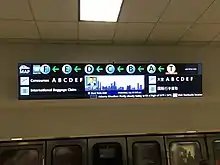
On the platforms and inside the trains, color video displays provide system information in eight languages (English, French, German, Spanish, Japanese, Chinese, Arabic, and Korean) as well as information about dining and shopping options in the concourses. Platform displays announce the time of arrival for the next train and its destination.
Audible announcements deliver station information and warn passengers of the train's movements. The messages use the NATO phonetic alphabet to identify each concourse station. For instance, the message announcing Concourse B says:
The next stop is for B Gates. B, as in Bravo.
The one exception to this is Concourse D, which uses the APCO radiotelephony spelling alphabet where "David" is used rather than "Delta" to avoid confusion with Delta Air Lines, which operates its main hub at ATL.
History
The airport began planning the current terminal facility in the late 1960s. A people mover system had always been in the plan to transport passengers over the facility's long distances, which included hubs for Delta Air Lines and the now-defunct Eastern Air Lines.[6][7]
An early design for the terminal included an elevated people mover system running parallel to an east-west roadway system through the center of the complex. Terminals with perpendicular linear concourses would have existed along the roadway with the people mover running in a loop through the terminals. This design was scrapped since it was more of a benefit to passengers originating in or terminating in Atlanta, and by then nearly 70% of traffic through the airport was connecting from one flight to another.[7]
By 1973, the terminal's design was revised to its current layout with a landside terminal and airside concourses, but with the people mover operating between the buildings in an exposed trench similar to the original AirTrans system at Dallas/Fort Worth International Airport. Taxiway bridges would have connected the aircraft ramps on either side. In 1975, a winter storm in the Dallas/Fort Worth area brought that system to a stand still. Since Atlanta was vulnerable to similar conditions, the design was changed to have the people mover system underground to protect it from the elements. This would also eliminate the need for taxiway bridges.[7]
Construction began on the current terminal facility in 1977. The terminal opened to the public on September 21, 1980 along with the Plane Train (which did not have an official name at the time). The system was built by the Westinghouse Electric Corporation, who supplied the system's initial fleet of C-100 vehicles. The initial system consisted of the six stations from the terminal (now the Domestic Terminal) up to Concourse D.[8]
.jpg.webp)
In 1994, the system was extended with a new station for Concourse E (which was constructed for international flights in preparation for the 1996 Summer Olympics, which were held in Atlanta) and trains lengthened from three cars to four.[9] At the same time, large LED displays capable of showing eastern Asian CJK characters were added inside the vehicles to complement the original English text-only dot-matrix red-LED displays in preparation for more international flights.
In 2001, Bombardier Transportation, who recently acquired the remains of Westinghouse's transportation division after buying out Adtranz, replaced the system's original C-100 vehicles with new CX-100 vehicles. Two of the system's original vehicles (cars #1 and #53) were then donated to the Southeastern Railway Museum in nearby Duluth, Georgia where they are currently on display.[10]
Having operated without an official name since its opening, the system was officially given its current name of "The Plane Train" on August 10, 2010. This follows the trend of other airports naming their people mover systems.[11]
In 2012, the Maynard Holbrook Jackson, Jr. International Terminal and Concourse F opened along with another extension of the Plane Train. Ten additional vehicles were added to the system to accommodate this expansion, bringing the total number of Innovia APM 100 vehicles in the system's fleet to 59.[12]
Audio announcements
The audio announcements on the Plane Train have been delivered by six different voices throughout its history. The first voice on the trains was the voice of local WSB-FM and WQXI radio personality Kelly McCoy. President Jimmy Carter was scheduled to tour the terminal before its opening and Westinghouse needed to get announcements recorded quickly to have the system ready for the tour. Westinghouse reached out to McCoy to quickly record the announcements. McCoy's voice remained on the train briefly after the airport opened, though airport officials felt his voice was too friendly and not getting people's attention.[13]
Shortly after opening, McCoy's voice was replaced by a monotone synthesized voice. Airport officials would nickname the voice "HAL" since it sounded like the similarly-named computer in the film 2001: A Space Odyssey.[14][13]
After the opening of Concourse E in 1994, the synthesized voice was replaced by recordings of local voice talent Bill Murray in 1996 (not to be confused with actor/comedian Bill Murray).[13] Airport officials felt a pre-recorded voice would be easier to understand for international travelers coming through Concourse E. Sound effects were also used to precede the messages.[15]
When the vehicles were replaced in 2001, a different male voice debuted inside the trains. The 2002 recordings did not include sound effects.[16]
In 2006, new recordings using a radiotelegraphy alphabet almost the same as the NATO one were provided using the voice of Susan Bennett, who is the voice of Delta Air Lines gate boarding announcements at the airport and who has since become famous for being the voice of Siri.[17][18]
The current announcements, which debuted in March 2012, are provided by voice actress Sharon Feingold,[19][20] who also provides those for the ATL SkyTrain. They are the first to no longer use the word "Concourse", instead referring to the concourse stations with the word "Gates", e.g. "A Gates". They also added the name of the train, returned sound effects, and added announcements for the International Terminal and Concourse F.
While the in-vehicle voice changed throughout the years, the voice of Bill Murray (the 1996-2002 voice) and an associated chime continued to be used in the stations (including the Concourse F station when it first opened) to alert passengers when the doors close, stating:
"Careful: Doors are closing and will not reopen. Please wait for the next train."
This message was updated in the mid 2010s with a new male voice and the same sound effect as the in-vehicle chime.
See also
References
- "ATL Fact Sheet". Hartsfield–Jackson Atlanta International Airport. Retrieved February 5, 2017.
- "Transportation Mall/People Mover". Hartsfield–Jackson Atlanta International Airport. Archived from the original on February 19, 2007. Retrieved July 6, 2007.
- "The Plane Train: Getting You There Since 1980". Hartsfield-Jackson Atlanta International Airport. Retrieved November 5, 2021.
- Elliott, Dennis M.; Norton, Jack. "An Introduction To Airport Apm Systems". Wiley Online Library. Retrieved November 23, 2021.
- "Terminal Maps". Hartsfield-Jackson Atlanta International Airport. Retrieved November 5, 2021.
- "ATL's Domestic Terminal turns 40!". Delta Flight Museum. Retrieved November 4, 2021.
- "How Atlanta's Midfield Terminal could have looked completely different". Blue Concourse: The Airport History Blog. Retrieved November 4, 2021.
- "ATLANTA'S MIDFIELD 1980-1981: THE FIRST FULL YEAR". Sunshine Skies. Retrieved November 5, 2021.
- "Airport History". Hartsfield–Jackson Atlanta International Airport. Archived from the original on February 21, 2003. Retrieved August 27, 2008.
- "Westinghouse C-100 Automated People Mover". Southeastern Railway Museum. Retrieved November 5, 2021.
- "Hartsfield people mover = The Plane Train". Atlanta Business Chronicle. August 10, 2010. Retrieved August 10, 2010.
- "INNOVIA Automated People Mover System - Hartsfield-Jackson Atlanta International Airport". Bombardier Transportation. Archived from the original on May 30, 2013. Retrieved February 5, 2017.
- "HAL, THE MYSTERIOUS ROBOT VOICE OF ATLANTA AIRPORT". Sunshine Skies. Retrieved December 2, 2021.
- Audio of 1980-1996 voice on the Plane Train (YouTube)
- Video of the Plane Train with 1996-2002 audio (YouTube)
- Video of the Plane Train with 2002-2006 audio (Flickr)
- Video of the Plane Train with 2006-2012 audio (YouTube)
- "SUSAN C. BENNETT - VOICES & VOCALS". Archived from the original on February 20, 2012. Retrieved April 9, 2012.
- "Sharon Feingold voiceovers". Voiceography. Retrieved April 28, 2015.
- Liza Lucas (February 18, 2020). "Meet the voice of the 'plane train' at Atlanta's airport". 11 Alive. Retrieved September 8, 2021.
But just who is behind that "B as in Bravo" voice you hear while riding The Plane Train? Atlanta's very own Sharon Feingold.
External links
 |
Wikimedia Commons has media related to The Plane Train. |