Potential sources of global catastrophic risk
This is an overview of potential sources of global catastrophic risk.
Some sources of catastrophic risk are anthropogenic (man-made), such as global warming,[1] environmental degradation, engineered pandemics and nuclear war.[2] On the other hand, some risks are non-anthropogenic or natural, such as meteor impacts or supervolcanoes.
Anthropogenic
Many experts—including those at the Future of Humanity Institute at the University of Oxford and the Centre for the Study of Existential Risk at the University of Cambridge—prioritize anthropogenic over natural risks due to their much greater estimated likelihood.[3][4][5][6] They are especially concerned by, and consequently focus on, risks posed by advanced technology, such as artificial intelligence and biotechnology.[7][8]
Artificial intelligence
It has been suggested that if AI systems rapidly become super-intelligent, they may take unforeseen actions or out-compete humanity.[9] According to philosopher Nick Bostrom, it is possible that the first super-intelligence to emerge would be able to bring about almost any possible outcome it valued, as well as to foil virtually any attempt to prevent it from achieving its objectives.[10] Thus, even a super-intelligence indifferent to humanity could be dangerous if it perceived humans as an obstacle to unrelated goals. In Bostrom's book Superintelligence, he defines this as the control problem.[11] Physicist Stephen Hawking, Microsoft founder Bill Gates, and SpaceX founder Elon Musk have echoed these concerns, with Hawking theorizing that such an AI could "spell the end of the human race".[12]
In 2009, the Association for the Advancement of Artificial Intelligence (AAAI) hosted a conference to discuss whether computers and robots might be able to acquire any sort of autonomy, and how much these abilities might pose a threat or hazard. They noted that some robots have acquired various forms of semi-autonomy, including being able to find power sources on their own and being able to independently choose targets to attack with weapons. They also noted that some computer viruses can evade elimination and have achieved "cockroach intelligence". They noted that self-awareness, as depicted in science-fiction, is probably unlikely, but there are other potential hazards and pitfalls.[13] Various media sources and scientific groups have noted separate trends in differing areas which might together result in greater robotic functionalities and autonomy, and which pose some inherent concerns.[14][15]
A survey of AI experts estimated that the chance of human-level machine learning having an "extremely bad (e.g., human extinction)" long-term effect on humanity is 5%.[16] A 2008 survey by the Future of Humanity Institute estimated a 5% probability of extinction by super-intelligence by 2100.[17] Eliezer Yudkowsky believes risks from artificial intelligence are harder to predict than any other known risks due to bias from anthropomorphism. Since people base their judgments of artificial intelligence on their own experience, he claims they underestimate the potential power of AI.[18]
Biotechnology
Biotechnology can pose a global catastrophic risk in the form of bioengineered organisms (viruses, bacteria, fungi, plants, or animals). In many cases the organism will be a pathogen of humans, livestock, crops, or other organisms we depend upon (e.g. pollinators or gut bacteria). However, any organism able to catastrophically disrupt ecosystem functions, e.g. highly competitive weeds, outcompeting essential crops, poses a biotechnology risk.
A biotechnology catastrophe may be caused by accidentally releasing a genetically engineered organism from controlled environments, by the planned release of such an organism which then turns out to have unforeseen and catastrophic interactions with essential natural or agro-ecosystems, or by intentional usage of biological agents in biological warfare or bioterrorism attacks.[19] Pathogens may be intentionally or unintentionally genetically modified to change virulence and other characteristics.[19] For example, a group of Australian researchers unintentionally changed characteristics of the mousepox virus while trying to develop a virus to sterilize rodents.[19] The modified virus became highly lethal even in vaccinated and naturally resistant mice.[20][21] The technological means to genetically modify virus characteristics are likely to become more widely available in the future if not properly regulated.[19]
Terrorist applications of biotechnology have historically been infrequent. To what extent this is due to a lack of capabilities or motivation is not resolved.[19] However, given current development, more risk from novel, engineered pathogens is to be expected in the future.[19] Exponential growth has been observed in the biotechnology sector, and Noun and Chyba predict that this will lead to major increases in biotechnological capabilities in the coming decades.[19] They argue that risks from biological warfare and bioterrorism are distinct from nuclear and chemical threats because biological pathogens are easier to mass-produce and their production is hard to control (especially as the technological capabilities are becoming available even to individual users).[19] In 2008, a survey by the Future of Humanity Institute estimated a 2% probability of extinction from engineered pandemics by 2100.[17]
Noun and Chyba propose three categories of measures to reduce risks from biotechnology and natural pandemics: Regulation or prevention of potentially dangerous research, improved recognition of outbreaks, and developing facilities to mitigate disease outbreaks (e.g. better and/or more widely distributed vaccines).[19]
Cyberattack
Cyberattacks have the potential to destroy everything from personal data to electric grids. Christine Peterson, co-founder and past president of the Foresight Institute, believes a cyberattack on electric grids has the potential to be a catastrophic risk. She notes that little has been done to mitigate such risks, and that mitigation could take several decades of readjustment.[22]
Environmental disaster
An environmental or ecological disaster, such as world crop failure and collapse of ecosystem services, could be induced by the present trends of overpopulation, economic development, and non-sustainable agriculture. Most environmental scenarios involve one or more of the following: Holocene extinction event,[23] scarcity of water that could lead to approximately half the Earth's population being without safe drinking water, pollinator decline, overfishing, massive deforestation, desertification, climate change, or massive water pollution episodes. Detected in the early 21st century, a threat in this direction is colony collapse disorder,[24] a phenomenon that might foreshadow the imminent extinction[25] of the Western honeybee. As the bee plays a vital role in pollination, its extinction would severely disrupt the food chain.
An October 2017 report published in The Lancet stated that toxic air, water, soils, and workplaces were collectively responsible for nine million deaths worldwide in 2015, particularly from air pollution which was linked to deaths by increasing susceptibility to non-infectious diseases, such as heart disease, stroke, and lung cancer.[26] The report warned that the pollution crisis was exceeding "the envelope on the amount of pollution the Earth can carry" and "threatens the continuing survival of human societies".[26]
A May 2020 analysis published in Scientific Reports found that if deforestation and resource consumption continue at current rates they could culminate in a "catastrophic collapse in human population" and possibly "an irreversible collapse of our civilization" within the next several decades. The study says humanity should pass from a civilization dominated by the economy to a "cultural society" that "privileges the interest of the ecosystem above the individual interest of its components, but eventually in accordance with the overall communal interest." The authors also note that "while violent events, such as global war or natural catastrophic events, are of immediate concern to everyone, a relatively slow consumption of the planetary resources may be not perceived as strongly as a mortal danger for the human civilization."[27][28]
Experimental technology accident
Nick Bostrom suggested that in the pursuit of knowledge, humanity might inadvertently create a device that could destroy Earth and the Solar System.[29] Investigations in nuclear and high-energy physics could create unusual conditions with catastrophic consequences. For example, scientists worried that the first nuclear test might ignite the atmosphere.[30][31] Others worried that the RHIC[32] or the Large Hadron Collider might start a chain-reaction global disaster involving black holes, strangelets, or false vacuum states. These particular concerns have been challenged,[33][34][35][36] but the general concern remains.
Biotechnology could lead to the creation of a pandemic, chemical warfare could be taken to an extreme, nanotechnology could lead to grey goo in which out-of-control self-replicating robots consume all living matter on earth while building more of themselves—in both cases, either deliberately or by accident.[37]
Global warming
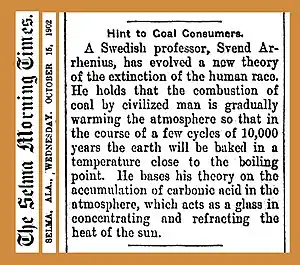
Global warming refers to the warming caused by human technology since the 19th century or earlier. Projections of future climate change suggest further global warming, sea level rise, and an increase in the frequency and severity of some extreme weather events and weather-related disasters. Effects of global warming include loss of biodiversity, stresses to existing food-producing systems, increased spread of known infectious diseases such as malaria, and rapid mutation of microorganisms. In November 2017, a statement by 15,364 scientists from 184 countries indicated that increasing levels of greenhouse gases from the use of fossil fuels, human population growth, deforestation, and overuse of land for agricultural production, particularly by farming ruminants for meat consumption, are trending in ways that forecast an increase in human misery over coming decades.[39]
Mineral resource exhaustion
Romanian American economist Nicholas Georgescu-Roegen, a progenitor in economics and the paradigm founder of ecological economics, has argued that the carrying capacity of Earth—that is, Earth's capacity to sustain human populations and consumption levels—is bound to decrease sometime in the future as Earth's finite stock of Mineral resources is presently being extracted and put to use; and consequently, that the world economy as a whole is heading towards an inevitable future collapse, leading to the demise of human civilization itself.[40]: 303f Ecological economist and steady-state theorist Herman Daly, a student of Georgescu-Roegen, has propounded the same argument by asserting that "... all we can do is to avoid wasting the limited capacity of creation to support present and future life [on Earth]."[41]: 370
Ever since Georgescu-Roegen and Daly published these views, various scholars in the field have been discussing the existential impossibility of allocating earth's finite stock of mineral resources evenly among an unknown number of present and future generations. This number of generations is likely to remain unknown to us, as there is no way—or only little way—of knowing in advance if or when mankind will ultimately face extinction. In effect, any conceivable intertemporal allocation of the stock will inevitably end up with universal economic decline at some future point.[42]: 253–256 [43]: 165 [44]: 168–171 [45]: 150–153 [46]: 106–109 [47]: 546–549 [48]: 142–145 [49]
Nanotechnology
Many nanoscale technologies are in development or currently in use.[50] The only one that appears to pose a significant global catastrophic risk is molecular manufacturing, a technique that would make it possible to build complex structures at atomic precision.[51] Molecular manufacturing requires significant advances in nanotechnology, but once achieved could produce highly advanced products at low costs and in large quantities in nanofactories of desktop proportions.[50][51] When nanofactories gain the ability to produce other nanofactories, production may only be limited by relatively abundant factors such as input materials, energy and software.[50]
Molecular manufacturing could be used to cheaply produce, among many other products, highly advanced, durable weapons.[50] Being equipped with compact computers and motors these could be increasingly autonomous and have a large range of capabilities.[50]
Chris Phoenix and Treder classify catastrophic risks posed by nanotechnology into three categories:
- From augmenting the development of other technologies such as AI and biotechnology.
- By enabling mass-production of potentially dangerous products that cause risk dynamics (such as arms races) depending on how they are used.
- From uncontrolled self-perpetuating processes with destructive effects.
Several researchers say the bulk of risk from nanotechnology comes from the potential to lead to war, arms races, and destructive global government.[20][50][52] Several reasons have been suggested why the availability of nanotech weaponry may with significant likelihood lead to unstable arms races (compared to e.g. nuclear arms races):
- A large number of players may be tempted to enter the race since the threshold for doing so is low;[50]
- The ability to make weapons with molecular manufacturing will be cheap and easy to hide;[50]
- Therefore, lack of insight into the other parties' capabilities can tempt players to arm out of caution or to launch preemptive strikes;[50][53]
- Molecular manufacturing may reduce dependency on international trade,[50] a potential peace-promoting factor;
- Wars of aggression may pose a smaller economic threat to the aggressor since manufacturing is cheap and humans may not be needed on the battlefield.[50]
Since self-regulation by all state and non-state actors seems hard to achieve,[54] measures to mitigate war-related risks have mainly been proposed in the area of international cooperation.[50][55] International infrastructure may be expanded giving more sovereignty to the international level. This could help coordinate efforts for arms control. International institutions dedicated specifically to nanotechnology (perhaps analogously to the International Atomic Energy Agency IAEA) or general arms control may also be designed.[55] One may also jointly make differential technological progress on defensive technologies, a policy that players should usually favour.[50] The Center for Responsible Nanotechnology also suggests some technical restrictions.[56] Improved transparency regarding technological capabilities may be another important facilitator for arms-control.
Grey goo is another catastrophic scenario, which was proposed by Eric Drexler in his 1986 book Engines of Creation[57] and has been a theme in mainstream media and fiction.[58][59] This scenario involves tiny self-replicating robots that consume the entire biosphere using it as a source of energy and building blocks. Nowadays, however, nanotech experts—including Drexler—discredit the scenario. According to Phoenix, a "so-called grey goo could only be the product of a deliberate and difficult engineering process, not an accident".[60]
Warfare and mass destruction

The scenarios that have been explored most frequently are nuclear warfare and doomsday devices. Mistakenly launching a nuclear attack in response to a false alarm is one possible scenario; this nearly happened during the 1983 Soviet nuclear false alarm incident. Although the probability of a nuclear war per year is slim, Professor Martin Hellman has described it as inevitable in the long run; unless the probability approaches zero, inevitably there will come a day when civilization's luck runs out.[61] During the Cuban Missile Crisis, U.S. president John F. Kennedy estimated the odds of nuclear war at "somewhere between one out of three and even".[62] The United States and Russia have a combined arsenal of 14,700 nuclear weapons,[63] and there is an estimated total of 15,700 nuclear weapons in existence worldwide.[63] Beyond nuclear, other military threats to humanity include biological warfare (BW). By contrast, chemical warfare, while able to create multiple local catastrophes, is unlikely to create a global one.
Nuclear war could yield unprecedented human death tolls and habitat destruction. Detonating large numbers of nuclear weapons would have an immediate, short term and long-term effects on the climate, causing cold weather and reduced sunlight and photosynthesis[64] that may generate significant upheaval in advanced civilizations.[65] However, while popular perception sometimes takes nuclear war as "the end of the world", experts assign low probability to human extinction from nuclear war.[66][67] In 1982, Brian Martin estimated that a US–Soviet nuclear exchange might kill 400–450 million directly, mostly in the United States, Europe and Russia, and maybe several hundred million more through follow-up consequences in those same areas.[66] In 2008, a survey by the Future of Humanity Institute estimated a 4% probability of extinction from warfare by 2100, with a 1% chance of extinction from nuclear warfare.[17]
World population and agricultural crisis
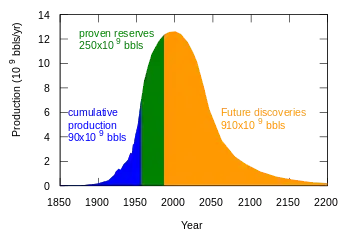
The 20th century saw a rapid increase in human population due to medical developments and massive increases in agricultural productivity[68] such as the Green Revolution.[69] Between 1950 and 1984, as the Green Revolution transformed agriculture around the globe, world grain production increased by 250%. The Green Revolution in agriculture helped food production to keep pace with worldwide population growth or actually enabled population growth. The energy for the Green Revolution was provided by fossil fuels in the form of fertilizers (natural gas), pesticides (oil), and hydrocarbon-fueled irrigation.[70] David Pimentel, professor of ecology and agriculture at Cornell University, and Mario Giampietro, senior researcher at the National Research Institute on Food and Nutrition (INRAN), place in their 1994 study Food, Land, Population and the U.S. Economy the maximum U.S. population for a sustainable economy at 200 million. To achieve a sustainable economy and avert disaster, the United States must reduce its population by at least one-third, and world population will have to be reduced by two-thirds, says the study.[71]
The authors of this study believe the mentioned agricultural crisis will begin to have an effect on the world after 2020 and will become critical after 2050. Geologist Dale Allen Pfeiffer claims that coming decades could see spiraling food prices without relief and massive starvation on a global level such as never experienced before.[72][73]
Since supplies of petroleum and natural gas are essential to modern agriculture techniques, a fall in global oil supplies (see peak oil for global concerns) could cause spiking food prices and unprecedented famine in the coming decades.[74][75]
Wheat is humanity's third-most-produced cereal. Extant fungal infections such as Ug99[76] (a kind of stem rust) can cause 100% crop losses in most modern varieties. Little or no treatment is possible and the infection spreads on the wind. Should the world's large grain-producing areas become infected, the ensuing crisis in wheat availability would lead to price spikes and shortages in other food products.[77]
Non-anthropogenic
Of all species that have ever lived, 99% have gone extinct.[78] Earth has experienced numerous mass extinction events, in which up to 96% of all species present at the time were eliminated.[78] A notable example is the K-T extinction event, which killed the dinosaurs. The types of threats posed by nature have been argued to be relatively constant, though this has been disputed.[79]
Asteroid impact
Several asteroids have collided with Earth in recent geological history. The Chicxulub asteroid, for example, was about six miles in diameter and is theorized to have caused the extinction of non-avian dinosaurs at the end of the Cretaceous. No sufficiently large asteroid currently exists in an Earth-crossing orbit; however, a comet of sufficient size to cause human extinction could impact the Earth, though the annual probability may be less than 10−8.[80] Geoscientist Brian Toon estimates that while a few people, such as "some fishermen in Costa Rica", could plausibly survive a six-mile meteorite, a sixty-mile meteorite would be large enough to "incinerate everybody".[81] Asteroids with around a 1 km diameter have impacted the Earth on average once every 500,000 years; these are probably too small to pose an extinction risk, but might kill billions of people.[80][82] Larger asteroids are less common. Small near-Earth asteroids are regularly observed and can impact anywhere on the Earth injuring local populations.[83] As of 2013, Spaceguard estimates it has identified 95% of all NEOs over 1 km in size.[84]
In April 2018, the B612 Foundation reported "It's a 100 per cent certain we'll be hit [by a devastating asteroid], but we're not 100 per cent sure when."[85] Also in 2018, physicist Stephen Hawking, in his final book Brief Answers to the Big Questions, considered an asteroid collision to be the biggest threat to the planet.[86][87][88] In June 2018, the US National Science and Technology Council warned that America is unprepared for an asteroid impact event, and has developed and released the "National Near-Earth Object Preparedness Strategy Action Plan" to better prepare.[89][90][91][92][93] According to expert testimony in the United States Congress in 2013, NASA would require at least five years of preparation before a mission to intercept an asteroid could be launched.[94]
Cosmic threats
A number of astronomical threats have been identified. Massive objects, e.g. a star, large planet, or black hole, could be catastrophic if a close encounter occurred in the Solar System. In April 2008, it was announced that two simulations of long-term planetary movement, one at the Paris Observatory and the other at the University of California, Santa Cruz, indicate a 1% chance that Mercury's orbit could be made unstable by Jupiter's gravitational pull sometime during the lifespan of the Sun. Were this to happen, the simulations suggest a collision with Earth could be one of four possible outcomes (the others being Mercury colliding with the Sun, colliding with Venus, or being ejected from the Solar System altogether). If Mercury were to collide with Earth, all life on Earth could be obliterated entirely: an asteroid 15 km wide is believed to have caused the extinction of the non-avian dinosaurs, whereas Mercury is 4,879 km in diameter.[95]
If our universe lies within a false vacuum, a bubble of lower-energy vacuum could come to exist by chance or otherwise in our universe, and catalyze the conversion of our universe to a lower energy state in a volume expanding at nearly the speed of light, destroying all that we know without forewarning. Such an occurrence is called vacuum decay.[97][98]
Another cosmic threat is a gamma-ray burst, typically produced by a supernova when a star collapses inward on itself and then "bounces" outward in a massive explosion. Under certain circumstances, these events are thought to produce massive bursts of gamma radiation emanating outward from the axis of rotation of the star. If such an event were to occur oriented towards the Earth, the massive amounts of gamma radiation could significantly affect the Earth's atmosphere and pose an existential threat to all life. Such a gamma-ray burst may have been the cause of the Ordovician–Silurian extinction events. Neither this scenario nor the destabilization of Mercury's orbit is likely in the foreseeable future.[99]
A powerful solar flare or solar superstorm, which is a drastic and unusual decrease or increase in the Sun's power output, could have severe consequences for life on Earth.[100][101]
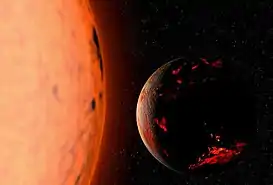
Astrophysicists currently calculate that in a few billion years the Earth will probably be swallowed by the expansion of the Sun into a red giant star.[102][103]
Extraterrestrial invasion
Intelligent extraterrestrial life, if existent, could invade Earth either to exterminate and supplant human life, enslave it under a colonial system, steal the planet's resources, or destroy the planet altogether.[104]
Although evidence of alien life has never been proven, scientists such as Carl Sagan have postulated that the existence of extraterrestrial life is very likely. In 1969, the "Extra-Terrestrial Exposure Law" was added to the United States Code of Federal Regulations (Title 14, Section 1211) in response to the possibility of biological contamination resulting from the U.S. Apollo Space Program. It was removed in 1991.[105] Scientists consider such a scenario technically possible, but unlikely.[106]
An article in The New York Times discussed the possible threats for humanity of intentionally sending messages aimed at extraterrestrial life into the cosmos in the context of the SETI efforts. Several public figures such as Stephen Hawking and Elon Musk have argued against sending such messages on the grounds that extraterrestrial civilizations with technology are probably far more advanced than humanity and could pose an existential threat to humanity.[107]
Natural pandemic
There are numerous historical examples of pandemics[108] that have had a devastating effect on a large number of people. The present, unprecedented scale and speed of human movement make it more difficult than ever to contain an epidemic through local quarantines, and other sources of uncertainty and the evolving nature of the risk mean natural pandemics may pose a realistic threat to human civilization.[79]
There are several classes of argument about the likelihood of pandemics. One stems from history, where the limited size of historical pandemics is evidence that larger pandemics are unlikely. This argument has been disputed on grounds including the changing risk due to changing population and behavioral patterns among humans, the limited historical record, and the existence of an anthropic bias.[79]
Another argument is based on an evolutionary model that predicts that naturally evolving pathogens will ultimately develop an upper limit to their virulence.[109] This is because pathogens with high enough virulence quickly kill their hosts and reduce their chances of spreading the infection to new hosts or carriers.[110] This model has limits, however, because the fitness advantage of limited virulence is primarily a function of a limited number of hosts. Any pathogen with a high virulence, high transmission rate and long incubation time may have already caused a catastrophic pandemic before ultimately virulence is limited through natural selection. Additionally, a pathogen that infects humans as a secondary host and primarily infects another species (a zoonosis) has no constraints on its virulence in people, since the accidental secondary infections do not affect its evolution.[111] Lastly, in models where virulence level and rate of transmission are related, high levels of virulence can evolve.[112] Virulence is instead limited by the existence of complex populations of hosts with different susceptibilities to infection, or by some hosts being geographically isolated.[109] The size of the host population and competition between different strains of pathogens can also alter virulence.[113]
Neither of these arguments is applicable to bioengineered pathogens, and this poses entirely different risks of pandemics. Experts have concluded that "Developments in science and technology could significantly ease the development and use of high consequence biological weapons," and these "highly virulent and highly transmissible [bio-engineered pathogens] represent new potential pandemic threats."[114]
Natural climate change
Climate change refers to a lasting change in the Earth's climate. The climate has ranged from ice ages to warmer periods when palm trees grew in Antarctica. It has been hypothesized that there was also a period called "snowball Earth" when all the oceans were covered in a layer of ice. These global climatic changes occurred slowly, near the end of the last Major Ice Age when the climate became more stable. However, abrupt climate change on the decade time scale has occurred regionally. A natural variation into a new climate regime (colder or hotter) could pose a threat to civilization.[115][116]
In the history of the Earth, many Ice Ages are known to have occurred. An ice age would have a serious impact on civilization because vast areas of land (mainly in North America, Europe, and Asia) could become uninhabitable. Currently, the world is in an Interglacial period within a much older glacial event. The last glacial expansion ended about 10,000 years ago, and all civilizations evolved later than this. Scientists do not predict that a natural ice age will occur anytime soon. The amount of heat-trapping gases emitted into Earth's oceans and atmosphere will prevent the next ice age, which otherwise would begin in around 50,000 years, and likely more glacial cycles.[117][118]
Volcanism
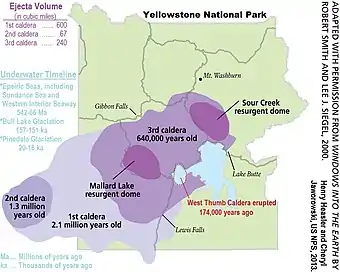
A geological event such as massive flood basalt, volcanism, or the eruption of a supervolcano[119] could lead to a so-called volcanic winter, similar to a nuclear winter. One such event, the Toba eruption,[120] occurred in Indonesia about 71,500 years ago. According to the Toba catastrophe theory,[121] the event may have reduced human populations to only a few tens of thousands of individuals. Yellowstone Caldera is another such supervolcano, having undergone 142 or more caldera-forming eruptions in the past 17 million years.[122] A massive volcano eruption would eject extraordinary volumes of volcanic dust, toxic and greenhouse gases into the atmosphere with serious effects on global climate (towards extreme global cooling: volcanic winter if short-term, and ice age if long-term) or global warming (if greenhouse gases were to prevail).
When the supervolcano at Yellowstone last erupted 640,000 years ago, the thinnest layers of the ash ejected from the caldera spread over most of the United States west of the Mississippi River and part of northeastern Mexico. The magma covered much of what is now Yellowstone National Park and extended beyond, covering much of the ground from Yellowstone River in the east to Idaho falls in the west, with some of the flows extending north beyond Mammoth Springs.[123]
According to a recent study, if the Yellowstone caldera erupted again as a supervolcano, an ash layer one to three millimeters thick could be deposited as far away as New York, enough to "reduce traction on roads and runways, short out electrical transformers and cause respiratory problems". There would be centimeters of thickness over much of the U.S. Midwest, enough to disrupt crops and livestock, especially if it happened at a critical time in the growing season. The worst-affected city would likely be Billings, Montana, population 109,000, which the model predicted would be covered with ash estimated as 1.03 to 1.8 meters thick.[124]
The main long-term effect is through global climate change, which reduces the temperature globally by about 5–15 °C for a decade, together with the direct effects of the deposits of ash on their crops. A large supervolcano like Toba would deposit one or two meters thickness of ash over an area of several million square kilometers. (1000 cubic kilometers is equivalent to a one-meter thickness of ash spread over a million square kilometers). If that happened in some densely populated agricultural area, such as India, it could destroy one or two seasons of crops for two billion people.[125]
However, Yellowstone shows no signs of a supereruption at present, and it is not certain that a future supereruption will occur there.[126][127]
Research published in 2011 finds evidence that massive volcanic eruptions caused massive coal combustion, supporting models for the significant generation of greenhouse gases. Researchers have suggested that massive volcanic eruptions through coal beds in Siberia would generate significant greenhouse gases and cause a runaway greenhouse effect.[128] Massive eruptions can also throw enough pyroclastic debris and other material into the atmosphere to partially block out the sun and cause a volcanic winter, as happened on a smaller scale in 1816 following the eruption of Mount Tambora, the so-called Year Without a Summer. Such an eruption might cause the immediate deaths of millions of people several hundred miles from the eruption, and perhaps billions of death worldwide, due to the failure of the monsoons,[129] resulting in major crop failures causing starvation on a profound scale.[129]
A much more speculative concept is the verneshot: a hypothetical volcanic eruption caused by the buildup of gas deep underneath a craton. Such an event may be forceful enough to launch an extreme amount of material from the crust and mantle into a sub-orbital trajectory.
References
- IPCC (November 11, 2013): D. "Understanding the Climate System and its Recent Changes", in: Summary for Policymakers (finalized version) Archived March 9, 2017, at the Wayback Machine, in: IPCC AR5 WG1 2013, p. 13
- "Global Catastrophic Risks: a summary". Centre for the Study of Existential Risk. August 11, 2019.
- "About FHI". Future of Humanity Institute. Retrieved August 12, 2021.
- "About us". Centre for the Study of Existential Risk. Retrieved August 12, 2021.
- Bostrom, Nick (2013). "Existential Risk Prevention as Global Priority" (PDF). Global Policy. 4 (1): 15–3. doi:10.1111/1758-5899.12002 – via Existential Risk.
- "Frequently Asked Questions". Existential Risk. Future of Humanity Institute. Retrieved July 26, 2013.
The great bulk of existential risk in the foreseeable future is anthropogenic; that is, arising from human activity.
- "Research Areas". Future of Humanity Institute. Retrieved August 12, 2021.
- "Research". Centre for the Study of Existential Risk. Retrieved August 12, 2021.
- Bill Joy, Why the future doesn't need us. Wired magazine.
- Nick Bostrom 2002 "Ethical Issues in Advanced Artificial Intelligence"
- Bostrom, Nick. Superintelligence: Paths, Dangers, Strategies.
- Rawlinson, Kevin (January 29, 2015). "Microsoft's Bill Gates insists AI is a threat". BBC News. Retrieved January 30, 2015.
- Scientists Worry Machines May Outsmart Man by John Markoff, The New York Times, July 26, 2009.
- Gaming the Robot Revolution: A military technology expert weighs in on Terminator: Salvation., By P. W. Singer, slate.com Thursday, May 21, 2009.
- robot page, engadget.com.
- Grace, Katja (2017). "When Will AI Exceed Human Performance? Evidence from AI Experts". Journal of Artificial Intelligence Research. arXiv:1705.08807. Bibcode:2017arXiv170508807G.
- Bostrom, Nick; Sandberg, Anders (2008). "Global Catastrophic Risks Survey" (PDF). FHI Technical Report #2008-1. Future of Humanity Institute.
- Yudkowsky, Eliezer (2008). Artificial Intelligence as a Positive and Negative Factor in Global Risk. Bibcode:2008gcr..book..303Y. Retrieved July 26, 2013.
- Ali Noun; Christopher F. Chyba (2008). "Chapter 20: Biotechnology and biosecurity". In Bostrom, Nick; Cirkovic, Milan M. (eds.). Global Catastrophic Risks. Oxford University Press.
- Sandberg, Anders. "The five biggest threats to human existence". theconversation.com. Retrieved July 13, 2014.
- Jackson, Ronald J.; Ramsay, Alistair J.; Christensen, Carina D.; Beaton, Sandra; Hall, Diana F.; Ramshaw, Ian A. (2001). "Expression of Mouse Interleukin-4 by a Recombinant Ectromelia Virus Suppresses Cytolytic Lymphocyte Responses and Overcomes Genetic Resistance to Mousepox". Journal of Virology. 75 (3): 1205–1210. doi:10.1128/jvi.75.3.1205-1210.2001. PMC 114026. PMID 11152493.
- UCLA Engineering (June 28, 2017). "Scholars assess threats to civilization, life on Earth". UCLA. Retrieved June 30, 2017.
- Graham, Chris (July 11, 2017). "Earth undergoing sixth 'mass extinction' as humans spur 'biological annihilation' of wildlife". The Telegraph. Retrieved October 20, 2017.
- Evans-Pritchard, Ambrose (February 6, 2011). "Einstein was right - honey bee collapse threatens global food security". The Daily Telegraph. London.
- Lovgren, Stefan. "Mystery Bee Disappearances Sweeping U.S." National Geographic News. URL accessed March 10, 2007.
- Carrington, Damian (October 20, 2017). "Global pollution kills 9m a year and threatens 'survival of human societies'". The Guardian. London, UK. Retrieved October 20, 2017.
- Nafeez, Ahmed. "Theoretical Physicists Say 90% Chance of Societal Collapse Within Several Decades". Vice. Retrieved August 2, 2021.
- Bologna, M.; Aquino, G. (2020). "Deforestation and world population sustainability: a quantitative analysis". Scientific Reports. 10 (7631): 7631. arXiv:2006.12202. Bibcode:2020NatSR..10.7631B. doi:10.1038/s41598-020-63657-6. PMC 7203172. PMID 32376879.
- Bostrom 2002, section 4.8
- Richard Hamming (1998). "Mathematics on a Distant Planet". The American Mathematical Monthly. 105 (7): 640–650. doi:10.1080/00029890.1998.12004938. JSTOR 2589247.
- "Report LA-602, Ignition of the Atmosphere With Nuclear Bombs" (PDF). Retrieved October 19, 2011.
- Matthews, Robert. "A black hole ate my planet". New Scientist.
- Konopinski, E. J; Marvin, C.; Teller, Edward (1946). "Ignition of the Atmosphere with Nuclear Bombs" (PDF) (Declassified February 1973) (LA–602). Los Alamos National Laboratory. Retrieved November 23, 2008. Cite journal requires
|journal=(help) - "Home - Unit - DPF" (PDF). engage.aps.org. Archived from the original on October 24, 2009.
- "Safety at the LHC". Archived from the original on May 13, 2008. Retrieved June 18, 2008.
- J. Blaizot et al., "Study of Potentially Dangerous Events During Heavy-Ion Collisions at the LHC", CERN library record CERN Yellow Reports Server (PDF)
- Eric Drexler, Engines of Creation, ISBN 0-385-19973-2, available online
- "Hint to Coal Consumers". The Selma Morning Times. Selma, Alabama, US. October 15, 1902. p. 4.
- Ripple WJ, Wolf C, Newsome TM, Galetti M, Alamgir M, Crist E, Mahmoud MI, Laurance WF (November 13, 2017). "World Scientists' Warning to Humanity: A Second Notice". BioScience. 67 (12): 1026–1028. doi:10.1093/biosci/bix125.
- Georgescu-Roegen, Nicholas (1971). The Entropy Law and the Economic Process (Full book accessible in three parts at Scribd). Cambridge, Massachusetts: Harvard University Press. ISBN 978-0674257801.
- Daly, Herman E., ed. (1980). Economics, Ecology, Ethics. Essays Towards a Steady-State Economy (PDF contains only the introductory chapter of the book) (2nd ed.). San Francisco: W.H. Freeman and Company. ISBN 978-0716711780.
- Rifkin, Jeremy (1980). Entropy: A New World View (PDF). New York: The Viking Press. ISBN 978-0670297177. Archived from the original (PDF contains only the title and contents pages of the book) on October 18, 2016.
- Boulding, Kenneth E. (1981). Evolutionary Economics. Beverly Hills: Sage Publications. ISBN 978-0803916487.
- Martínez-Alier, Juan (1987). Ecological Economics: Energy, Environment and Society. Oxford: Basil Blackwell. ISBN 978-0631171461.
- Gowdy, John M.; Mesner, Susan (1998). "The Evolution of Georgescu-Roegen's Bioeconomics" (PDF). Review of Social Economy. 56 (2): 136–156. doi:10.1080/00346769800000016.
- Schmitz, John E.J. (2007). The Second Law of Life: Energy, Technology, and the Future of Earth As We Know It (Author's science blog, based on his textbook). Norwich: William Andrew Publishing. ISBN 978-0815515371.
- Kerschner, Christian (2010). "Economic de-growth vs. steady-state economy" (PDF). Journal of Cleaner Production. 18 (6): 544–551. doi:10.1016/j.jclepro.2009.10.019.
- Perez-Carmona, Alexander (2013). "Growth: A Discussion of the Margins of Economic and Ecological Thought". In Meuleman, Louis (ed.). Transgovernance. Advancing Sustainability Governance. Heidelberg: Springer. pp. 83–161. doi:10.1007/978-3-642-28009-2_3. ISBN 9783642280085.
- Dirzo, Rodolfo; Hillary S. Young; Mauro Galetti; Gerardo Ceballos; Nick J. B. Isaac; Ben Collen (2014). "Defaunation in the Anthropocene" (PDF). Science. 345 (6195): 401–406. Bibcode:2014Sci...345..401D. doi:10.1126/science.1251817. PMID 25061202. S2CID 206555761.
- Chris Phoenix; Mike Treder (2008). "Chapter 21: Nanotechnology as global catastrophic risk". In Bostrom, Nick; Cirkovic, Milan M. (eds.). Global catastrophic risks. Oxford: Oxford University Press. ISBN 978-0-19-857050-9.
- "Frequently Asked Questions - Molecular Manufacturing". foresight.org. Archived from the original on April 26, 2014. Retrieved July 19, 2014.
- Drexler, Eric. "A Dialog on Dangers". foresight.org. Retrieved July 19, 2014.
- Drexler, Eric. "ENGINES OF DESTRUCTION (Chapter 11)". e-drexler.com. Retrieved July 19, 2014.
- "Dangers of Molecular Manufacturing". crnano.org. Retrieved July 19, 2014.
- "The Need for International Control". crnano.org. Retrieved July 19, 2014.
- "Technical Restrictions May Make Nanotechnology Safer". crnano.org. Retrieved July 19, 2014.
- Joseph, Lawrence E. (2007). Apocalypse 2012. New York: Broadway. p. 6. ISBN 978-0-7679-2448-1.
- Rincon, Paul (June 9, 2004). "Nanotech guru turns back on 'goo'". BBC News. Retrieved March 30, 2012.
- Hapgood, Fred (November 1986). "Nanotechnology: Molecular Machines that Mimic Life" (PDF). Omni. Archived from the original (PDF) on July 27, 2013. Retrieved July 19, 2014.
- "Leading nanotech experts put 'grey goo' in perspective". crnano.org. Retrieved July 19, 2014.
- Hellman, Martin (April 29, 1985). "On the Probability of Nuclear War". Houston Post. Houston, Texas: MediaNews Group.
- Cohen, Avner; Lee, Steven (1986). Nuclear Weapons and the Future of Humanity: The Fundamental Questions. Lanham, Maryland: Rowman & Littlefield. p. 237. ISBN 978-0847672585. gYmPp6lZqtMC.
- Federation of American Scientists (April 28, 2015). "Status of World Nuclear Forces". Federation of American Scientists. Archived from the original on June 18, 2015. Retrieved June 4, 2015.
- "Atmospheric effects and societal consequences of regional-scale nuclear conflicts and acts of individual nuclear terrorism", Atmospheric Chemistry and Physics
- Bostrom 2002, section 4.2.
- Martin, Brian (1982). "Critique of nuclear extinction". Journal of Peace Research. 19 (4): 287–300. doi:10.1177/002234338201900401. S2CID 110974484. Retrieved October 25, 2014.
- Shulman, Carl (November 5, 2012). "Nuclear winter and human extinction: Q&A with Luke Oman". Overcoming Bias. Retrieved October 25, 2014.
- "The end of India's green revolution?". BBC News. May 29, 2006. Retrieved January 31, 2012.
- admin (April 8, 2000). "Food First/Institute for Food and Development Policy". Foodfirst.org. Archived from the original on July 14, 2009. Retrieved January 31, 2012.
- "How peak oil could lead to starvation". May 27, 2009. Archived from the original on May 27, 2009. Retrieved January 31, 2012.
- "Eating Fossil Fuels". EnergyBulletin.net. October 2, 2003. Archived from the original on February 12, 2012. Retrieved January 31, 2012.
- The Oil Drum: Europe. "Agriculture Meets Peak Oil". Europe.theoildrum.com. Retrieved January 31, 2012.
- "Drawing Momentum from the Crash" by Dale Allen Pfeiffer
- Neff, R. A.; Parker, C. L.; Kirschenmann, F. L.; Tinch, J.; Lawrence, R. S. (September 2011). "Peak Oil, Food Systems, and Public Health". American Journal of Public Health. 101 (9): 1587–1597. doi:10.2105/AJPH.2011.300123. PMC 3154242. PMID 21778492.
- "Former BP geologist: peak oil is here and it will 'break economies'". The Guardian. December 23, 2013.
- "Cereal Disease Laboratory : Ug99 an emerging virulent stem rust race". Ars.usda.gov. Retrieved January 31, 2012.
- "Durable Rust Resistance in Wheat". Borlaug Global Rust Initiative. Retrieved January 31, 2012.
- Barnosky, Anthony D.; Matzke, Nicholas; Tomiya, Susumu; Wogan, Guinevere O. U.; Swartz, Brian; Quental, Tiago B.; Marshall, Charles; McGuire, Jenny L.; Lindsey, Emily L.; Maguire, Kaitlin C.; Mersey, Ben; Ferrer, Elizabeth A. (March 3, 2011). "Has the Earth's sixth mass extinction already arrived?". Nature. 471 (7336): 51–57. Bibcode:2011Natur.471...51B. doi:10.1038/nature09678. PMID 21368823. S2CID 4424650.
- Manheim, David (2018). "Questioning Estimates of Natural Pandemic Risk". Health Security. 16 (6): 381–390. doi:10.1089/hs.2018.0039. PMC 6306648. PMID 30489178.
- Gehrels, Tom; Matthews, Mildred Shapley; Schumann, A. M. (1994). Hazards Due to Comets and Asteroids. University of Arizona Press. p. 71. ISBN 9780816515059.
- "How Big Would A Meteorite Have To Be To Wipe Out All Human Life?". Popular Science. February 26, 2015. Retrieved February 13, 2018.
- Bostrom 2002, section 4.10
- Rumpf, Clemens (December 20, 2016). Asteroid Impact Risk (PhD thesis). University of Southampton.
- "Committee on Science, Space and Technology" (PDF). NASA. March 19, 2013. Retrieved February 13, 2018.
- Homer, Aaron (April 28, 2018). "Earth Will Be Hit by an Asteroid With 100 Percent Certainty, Says Space-Watching Group B612 - The group of scientists and former astronauts is devoted to defending the planet from a space apocalypse". Inquisitr. Retrieved June 23, 2018.
- Stanley-Becker, Isaac (October 15, 2018). "Stephen Hawking feared race of 'superhumans' able to manipulate their own DNA". The Washington Post. Retrieved November 26, 2018.
- Haldevang, Max de (October 14, 2018). "Stephen Hawking left us bold predictions on AI, superhumans, and aliens". Quartz. Retrieved November 26, 2018.
- Bogdan, Dennis (June 18, 2018). "Comment - Better Way To Avoid Devastating Asteroids Needed?". The New York Times. Retrieved November 26, 2018.
- Staff (June 21, 2018). "National Near-Earth Object Preparedness Strategy Action Plan" (PDF). White House. Retrieved June 23, 2018.
- Mandelbaum, Ryan F. (June 21, 2018). "America Isn't Ready to Handle a Catastrophic Asteroid Impact, New Report Warns". Gizmodo. Retrieved June 23, 2018.
- Myhrvold, Nathan (May 22, 2018). "An empirical examination of WISE/NEOWISE asteroid analysis and results". Icarus. 314: 64–97. Bibcode:2018Icar..314...64M. doi:10.1016/j.icarus.2018.05.004.
- Chang, Kenneth (June 14, 2018). "Asteroids and Adversaries: Challenging What NASA Knows About Space Rocks - Two years ago, NASA dismissed and mocked an amateur's criticisms of its asteroids database. Now Nathan Myhrvold is back, and his papers have passed peer review". The New York Times. Retrieved June 23, 2018.
- Chang, Kenneth (June 14, 2018). "Asteroids and Adversaries: Challenging What NASA Knows About Space Rocks - Relevant Comments". The New York Times. Retrieved June 23, 2018.
- U.S.Congress (March 19, 2013). "Threats From Space: a Review of U.S. Government Efforts to Track and mitigate Asteroids and Meteors (Part I and Part II) – Hearing Before the Committee on Science, Space, and Technology House of Representatives One Hundred Thirteenth Congress First Session" (PDF). United States Congress. p. 147. Retrieved November 26, 2018.
- Croswell, Ken (April 24, 2008). "Will Mercury Hit Earth Someday?". Sky & Telescope. Retrieved May 15, 2021.
- Sackmann, I.-Juliana; Boothroyd, Arnold I.; Kraemer, Kathleen E. (1993), "Our Sun. III. Present and Future", The Astrophysical Journal, 418 (7491): 457–68, Bibcode:1993ApJ...418..457S, doi:10.1086/173407
- M.S. Turner; F. Wilczek (1982). "Is our vacuum metastable?" (PDF). Nature. 298 (5875): 633–634. Bibcode:1982Natur.298..633T. doi:10.1038/298633a0. S2CID 4274444. Retrieved October 31, 2015.
- M. Tegmark; N. Bostrom (2005). "Is a doomsday catastrophe likely?" (PDF). Nature. 438 (5875): 754. Bibcode:2005Natur.438..754T. doi:10.1038/438754a. PMID 16341005. S2CID 4390013. Archived from the original (PDF) on April 9, 2014. Retrieved March 16, 2016.
- Bostrom 2002, section 4.7
- Lassen, B (2013). "Is livestock production prepared for an electrically paralysed world?". J Sci Food Agric. 93 (1): 2–4. doi:10.1002/jsfa.5939. PMID 23111940.
- Coleman, Sidney; De Luccia, Frank (June 15, 1980). "Gravitational effects on and of vacuum decay" (PDF). Physical Review D. D21 (12): 3305–3315. Bibcode:1980PhRvD..21.3305C. doi:10.1103/PhysRevD.21.3305. OSTI 1445512.
- Siegel, Ethan (2020). "Ask Ethan: Will The Earth Eventually Be Swallowed By The Sun?". Forbes/Starts with a Bang. Retrieved May 14, 2020.
- Schroeder, K.-P.; Connon Smith, Robert (May 1, 2008). "Distant future of the Sun and Earth revisited". Monthly Notices of the Royal Astronomical Society. 386 (1): 155–163. arXiv:0801.4031. Bibcode:2008MNRAS.386..155S. doi:10.1111/j.1365-2966.2008.13022.x.
- Twenty ways the world could end suddenly Archived September 24, 2004, at the Wayback Machine, Discover Magazine
- "FACT CHECK: Extraterrestrial Contact Law". Snopes.com.
- Bostrom 2002, section 7.2
- Johnson, Steven (June 28, 2017). "Greetings, E.T. (Please Don't Murder Us.)". The New York Times. ISSN 0362-4331. Retrieved June 29, 2017.
- "Near Apocalypse Causing Diseases, a Historical Look". postapocalypticsurvival.com. Retrieved May 5, 2012.
- Frank SA (March 1996). "Models of parasite virulence" (PDF). Q Rev Biol. 71 (1): 37–78. doi:10.1086/419267. PMID 8919665. S2CID 14829042. Archived from the original (PDF) on May 18, 2015.
- Brown NF, Wickham ME, Coombes BK, Finlay BB (May 2006). "Crossing the Line: Selection and Evolution of Virulence Traits". PLOS Pathogens. 2 (5): e42. doi:10.1371/journal.ppat.0020042. PMC 1464392. PMID 16733541.
- Gandon S (March 2004). "Evolution of multihost parasites". Evolution. 58 (3): 455–69. doi:10.1111/j.0014-3820.2004.tb01669.x. PMID 15119430. S2CID 221728959.
- Ebert D, Bull JJ (January 2003). "Challenging the trade-off model for the evolution of virulence: is virulence management feasible?". Trends Microbiol. 11 (1): 15–20. doi:10.1016/S0966-842X(02)00003-3. PMID 12526850.
- André JB, Hochberg ME (July 2005). "Virulence evolution in emerging infectious diseases". Evolution. 59 (7): 1406–12. doi:10.1554/05-111. PMID 16153027. S2CID 10315012.
- Janine Maer (November 30, 2018). "Powerful actor, high impact bio-threats – initial report" (PDF). Wilton Park. Retrieved November 28, 2021.
- Haines, A.; Kovats, R.S.; Campbell-Lendrum, D.; Corvalan, C. (July 2006). "Climate change and human health: Impacts, vulnerability and public health". Public Health. 120 (7): 585–596. doi:10.1016/j.puhe.2006.01.002. ISSN 0033-3506. PMID 16542689.
- Epstein, Paul R. (October 6, 2005). "Climate Change and Human Health". New England Journal of Medicine. 353 (14): 1433–1436. doi:10.1056/nejmp058079. ISSN 0028-4793. PMC 2636266. PMID 16207843.
- "Global Warming Good News: No More Ice Ages". LiveScience. 2007.
- "Human-made climate change suppresses the next ice age". Potsdam Institute for Climate Impact Research in Germany. 2016.
- Kate Ravilious (April 14, 2005). "What a way to go". The Guardian.
- 2012 Admin (February 4, 2008). "Toba Supervolcano". 2012 Final Fantasy. Archived from the original on August 22, 2010.
- Science Reference. "Toba Catastrophe Theory". Science Daily. Archived from the original on April 4, 2015. Retrieved February 28, 2018.
- Greg Breining (November 10, 2007). "The Next Big Blast". Super Volcano: The Ticking Time Bomb Beneath Yellowstone National Park. MBI Publishing Company. ISBN 978-1-61673-898-3.
- Greg Breining (November 10, 2007). "Distant Death". Super Volcano: The Ticking Time Bomb Beneath Yellowstone National Park. MBI Publishing Company. ISBN 978-1-61673-898-3.
- "Modeling the Ash Distribution of a Yellowstone Supereruption". USGS Volcanic Observatory.
- "Extreme Geohazards: Reducing the Disaster Risk and Increasing Resilience" (PDF). European Space Foundation. Archived from the original (PDF) on February 17, 2018. Retrieved February 16, 2018.
- "Questions About Future Volcanic Activity at Yellowstone". USGA Volcanic Observatory FAQ.
- "Steam Explosions, Earthquakes, and Volcanic Eruptions—What's in Yellowstone's Future?". USGS Yellowstone Volcanic Observatory.
The USGS puts it like this: "If another large caldera-forming eruption were to occur at Yellowstone, its effects would be worldwide. Thick ash deposits would bury vast areas of the United States, and an injection of huge volumes of volcanic gases into the atmosphere could drastically affect the global climate. Fortunately, the Yellowstone volcanic system shows no signs that it is headed toward such an eruption. The probability of a large caldera-forming eruption within the next few thousand years is exceedingly low."
- "World's biggest extinction event: Massive volcanic eruption, burning coal, and accelerated greenhouse gas choked out life -- ScienceDaily". Https. Retrieved September 28, 2016.
- Breining, Greg (2007). "The Next Big Blast". Super Volcano: The Ticking Time Bomb Beneath Yellowstone National Park. St. Paul, MN.: Voyageur Press. p. 256 pg. ISBN 978-0-7603-2925-2.