Barons in Scotland
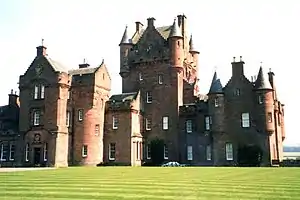
In Scotland, a baron is the head of a feudal barony, also known as a prescriptive barony. This used to be attached to a particular piece of land on which was situated the caput (Latin for "head") or essence of the barony, normally a building, such as a castle or manor house. Accordingly, the owner of the piece of land containing the caput was called a baron (or baroness). According to Grant, there were around 350 identifiable local baronies in Scotland by the early fifteenth century and these could mostly be mapped against local parish boundaries. The term baron was in general use from the thirteenth century to describe what would have been known in England as a knight of the shire.[1]
.svg.png.webp)
The Court of the Lord Lyon issued a ruling in April 2015 that recognises a person possessing the dignity of baron and other feudal titles (lordship/earl/marquis). The Lord Lyon King of Arms now prefers the approach of recognizing the particular feudal noble dignity as expressed in the Crown Charter that the petitioner presents.[2] These titles are recognised as the status of a minor baron but not a peer. Scottish feudal baronies may be passed to any person, of either sex, by inheritance or conveyance.[3]
Scotland has a distinct legal system within the United Kingdom. Historically, in the Kingdom of Scotland, the Lord Lyon King of Arms, as the Sovereign's minister in matters armorial, is at once herald and judge. The Scottish equivalent of an English baron is a Lord of Parliament.
History
A "Scottish Prescriptive Barony by Tenure" was, from 1660 until 2004, the feudal description of the only genuine degree of title of UK nobility capable of being bought and sold (along with the caput, or property), rather than passing strictly by blood inheritance.
Statutes of 1592 and the Baronetcy Warrants of King Charles I show the non-peerage Table of Precedence as: Baronets, Knights, Barons and Lairds, Esquire and Gentlemen.
A General Register of Sasines was set up by Statute in 1617, with entry in the Register giving the prescriptive right (right by normal or correct usage), after so many years, to the caput or essence of the barony. The individual who owned the said piece of land containing the caput was hence the baron or baroness. Uncertainty over armorial right was removed by the Lyon Register being set up by Statute in 1672, such that no arms were to be borne in Scotland unless validly entered in Lyon Register.
Up until 1874, each new baron was confirmed in his barony by the Crown by Charter of Confirmation. Up until 28 November 2004, a barony was an estate of land held directly of the Crown, or the Prince and Great Steward of Scotland. It was an essential element of a barony title that there existed a Crown Charter erecting the land into a barony, recorded in the Register of the Great Seal of Scotland. Often the original Charter was later lost, however an Official Extract has the same legal status as the original Charter.
From the Treaty of Union of 1707 - until 1999 - a unified Parliament of Great Britain (since January, 1801, known as the Parliament of the United Kingdom), at Westminster, was responsible for passing legislation affecting private law both north and south of the Scottish border. In 1999, the devolved Scottish Parliament was established, and private law measures can now be passed at Holyrood, the seat of the Scottish Parliament in Edinburgh.
Using a "prescriptive feudal grant" allowed developers to impose perpetual conditions affecting the land. The courts became willing to accept the validity of such obligations, which became known as "real burdens". In practical and commercial terms, these real burdens were like English leasehold tenure.
Abolition of feudal tenure
The first Scottish Executive was committed to abolishing the feudal system. On 28 November 2004, the Abolition of Feudal Tenure etc. (Scotland) Act 2000 came into full force and effect, putting an end to Scotland's feudal system. Under Scots law, a Scottish Prescriptive Barony by Tenure is now "incorporeal feudal heritage", not attached to the land and remains the only genuine, prescriptive, degree of title of UK nobility capable of being bought and sold – since under Section 63(1) of the Act, the dignity of baron is preserved after the abolition of the feudal system.[4][5] However, the Abolition Act did end the ability to get feudal land privileges by inheriting or acquiring the caput (land or castle) in Scotland. In common law jurisdictions, land may still be owned and inherited through a barony if the land is titled in "the Baron of X" as baron rather than in the individual's name. In America, it passes with the barony as a fee simple appurtenance to an otherwise incorporeal hereditament, the barony being treated like a landowning corporation.[6] In Scotland, the practice has not been tested in a Court of Session case since the Act.
What is possibly the oldest barony in Scotland, the Barony of the Bachuil, has not depended on land ownership for centuries; the barony passes along with the possession of a certain ancient stick, "The Bachuil Mór", which was once the bishop's staff of Saint Moluag in the year 562. Unlike all other barons in Scotland, the lawful possessor of the stick is the Baron of the Bachuil, regardless of landholdings.[7]
After 28 November 2004 under Scots law, a Scottish barony, which was previously Scottish heritable property (real property), became incorporeal heritable property (not attached to the land). Prior to the Act coming into effect, Scottish feudal baronies (including lordships and earldoms) were the only genuine title of UK nobility capable of being transferred following the sale of land containing a caput (or the sale of a feudal superiority).
Most baronies were created (erected) prior to 1745, but one was erected as late as 1824. Since the Abolition of Feudal Tenure etc. (Scotland) Act 2000 came into effect, the Lord Lyon, who is the Chief Herald of Scotland, has restored a more traditional form to the coat of arms of a baron. Barons are now identified by the helm befitting their degree. A new policy statement has been made by the Lord Lyon to this effect.
The holder of the dignity of a barony may petition the Lord Lyon for a grant of arms, as he falls under the jurisdiction of the Lyon's Court. A policy statement has been made to this effect by the Lord Lyon.[2] The Lyon Court has no jurisdiction in relation to the assignation, or legal transfer of, feudal titles.
Usage
An English barony is a peerage (yet the abolition act of 1660 allows for some remaining non-peer baronies not converted by writ to remain as feudal baronies of free socage "incorporeal hereditament"(Article X of that Act)), but whether Scottish barons rightfully rank as peers is disputable.[8] They are known as minor barons currently treated as noble titles of less than peerage rank. The Scottish equivalent of an English baron is "Lord of Parliament".
The feudal baronial title tends to be used when a landed family is not in possession of any United Kingdom peerage title of higher rank, subsequently granted, or has been created a knight of the realm. The name recorded by the Lord Lyon as part of any grant of arms or matriculation becomes the holder's name for all official purposes.
The holder of a Scottish barony (e.g., "Inverglen") may add the title to his existing name (e.g., "John Smith, Baron of Inverglen") or add the territorial designation to his surname if still in possession of the caput ("John Smith of Inverglen, Baron of Inverglen"); some of the oldest Scottish families prefer to be styled by the territorial designation alone ("Smith of Inverglen").[9][10][11] Formal and in writing, they are styled as The Much Honoured Baron of Inverglen. A baron may be addressed socially as "Inverglen" or "Baron," and introduced in the third person as "John Smith of Inverglen, Baron of Inverglen" or "The Baron of Inverglen". When referred to informally in the third person it is incorrect to refer to him as "Baron Inverglen" or "Lord Inverglen", as these would imply a peerage title (i.e. Lord of Parliament)[12] A married couple may be styled "The Baron and Baroness of Inverglen", "Inverglen and Madam Smith of Inverglen", "Inverglen and Lady of Inverglen", or "The Baron of Inverglen and Lady of Inverglen."[9] The oldest son of a feudal baron may be known by his father's territorial designation with the addition of "yr" (abbreviation for "younger"), as in "John Smith of Inverglen, yr" and the eldest daughter if heir apparent is entitled to use the courtesy title "Maid of [Barony]" at the end of her name.
The United Kingdom policy of using titles on passports requires that the applicant provides evidence that the Lord Lyon has recognised a feudal barony, or the title is included in Burke's Peerage. If accepted (and if the applicant wishes to include the title), the correct form is for the applicant to include the territorial designation as part of their surname (Surname of territorial designation e.g. Smith of Inverglen). The Observation would then show the holder's full name, followed by their feudal title e.g. The holder is John Smith, Baron of Inverglen.[13]
The possession of the courtesy title "The Laird of ..." does not entitle the holder to style himself "The Much Honoured".
Scottish heraldry
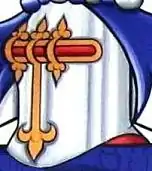
The former Lord Lyon declined to award the following baronial additaments to the arms of those feudal barons registering arms now that the Abolition of Feudal Tenure etc. (Scotland) Act 2000 is in force. However, the current Lord Lyon has confirmed in a recent policy statement that he will officially recognise feudal barons or those possessing the dignity of baron who meet certain conditions and will grant them arms with a helmet befitting their degree. Scottish Barons rank below Lords of Parliament; while noble, they are not conventionally considered peerage titles.
In showing that Scottish barons are titles of nobility, reference may be made, amongst others, to Lyon Court in the Petition of Maclean of Ardgour for a Birthbrieve by Interlocutor dated 26 February 1943 which "Finds and Declares that the Minor Barons of Scotland are, and have both in this Nobiliary Court, and in the Court of Session, been recognised as 'titled' nobility, and that the estait of the Baronage (The Barones Minores) is of the ancient Feudal Nobility of Scotland".
Sir Thomas Innes of Learney in his 'Scots Heraldry' (2nd Ed., p. 88, note 1) states that 'The Act 1672, cap 47, specially qualifies the degrees thus: Nobles (i.e. peers, the term being here used in a restricted seventeenth-century English sense), Barons (i.e. Lairds of baronial fiefs and their "heirs", who, even if fiefless, are equivalent to heads of Continental baronial houses) and Gentlemen (apparently all other armigers).' Baronets and knights are evidently classed as 'Gentlemen' here and are of a lower degree than Barons. The Scottish Head of Baronial Houses, includes all the various styles and titles which designate the territorial nobility i.e. baron of X.
Barons may also wear two eagle feathers when in traditional dress.[14][15] If the baron is a member of a clan, it is advisable to consult the clan chief on clan customs and traditions. The Lord Lyon only gives guidance and not governance on the wearing of feathers and recommends consulting with a clan chief.
Chapeau
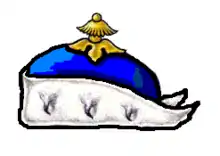
Previously, between the 1930s and 2004, when new arms were granted or a matriculation of existing arms took note of a barony, the owner was given a chapeau or cap of maintenance as part of his armorial achievement on petitioning for the same. This chapeau is described as "gules doubled ermine" for barons in possession of the caput of the barony. An azure chapeau is appropriate for the heirs of ancient baronial families who are no longer owners of the estates. This chapeau was a relatively recent armorial invention of the late Lord Lyon Thomas Innes of Learney. Accordingly, a number of ancient arms of feudal barons do not display the chapeau, and now it is no longer granted.
At the Treaty of Perth in 1266, Norway relinquished its claim to the Hebrides and Man, and they became part of Scotland. In 1292, Argyll was created a shire and "The Barons of all Argyll and the Foreigners' Isles", which had preceded the kingdom of Scotland, became eligible to attend the "Scots" Parliament – appearing in the record of the parliament at St. Andrews in 1309. Historically they have a chapeau, "gules doubled ermines", ermines being white tails on black.
There is a unique exception: the Barony of the Bachuil is not of feudal origin like other baronies but is allodial in that it predates (562 A.D.) Scotland itself and the feudal system, dating from the Gaelic Kingdom of Dál Riata. In recognition as allodial Barons par la grâce de Dieu not barons by a feudal crown grant, the Baron of the Bachuil has the only chapeau allowed to have a vair (squirrel fur) lining.[7]
A chapeau, if part of an armorial achievement, is placed into the space directly above the shield and below the helmet. It may otherwise be used on a visiting card, the flap of an envelope, or to ensign the circlet of a crest badge as used on a bonnet.
Feudo-baronial mantle
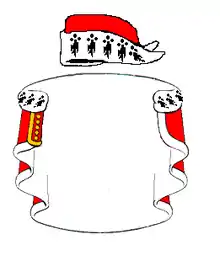
Particularly Scottish in character is the feudo-baronial mantle or robe of estate - described as gules doubled silk argent, fur-edged of miniver and collared in ermine, fastened on the right shoulder by five spherical buttons Or. This may be displayed in a pavilioned form, draped behind the complete achievement of arms - or the armorial shield alone - tied open with cords and tassels, and surmounted by the chapeau. Again, Lord Lyon is no longer granting these heraldic mantles.
Helmet
The helmet is now the chief mode of recognition of a Scottish baron. The Lord Lyon has adopted a steel helm with grille of three grilles, garnished in gold, as the current baronial additament. Alternatively, a feudal steel tilting helm garnished in gold, that may be shown affronté, may appear, or a helmet of some other degree if the baron holds a higher rank, such as a lordship of parliament.
Supporters
Supporters, are now usually reserved for the holders of the older baronies (chartered before 1587) and those that have been in continuous family ownership. In England, supporters are reserved for the peerage, and a Scottish baron who approaches the English College of Arms is not allowed supporters. A compartment has occasionally been granted to barons, representing their territories, even in cases where there are no supporters.
Badge
A badge – distinct from the crest – as a separate armorial device, is not necessarily a feature of the arms. The badge may be used by the "tail" or following of a landowner baron. The grant is linked to the baron's standard, a heraldic flag, in the livery colours that carries a large representation of the badge. The standard is blazoned in the grant or matriculation. The livery colours are usually the two most prominent colours of the arms themselves.
Flags
A Standard – an elongated shape, tapering from 1.2 m down to 60 cm, with the fly edge split and rounded (lanceolate). The length is according to rank, from 7.5 m for the Sovereign down to 3.5 m for a Knight, Baron or Chief. It bears the Arms as on the shield or the saltire in the hoist, with the tail parted per fess with the Crest, Badge and/or Supporter, plus the motto on one or more Ribands. The Standard is set before the Baron/Chief's tent (as it's a "Headquarters" flag and does not indicate that the Armiger is in residence) rather than carried like the banner. A Standard requires a separate grant by the Lord Lyon and is only made under certain conditions.
A Guidon – one-third shorter than a Standard and tapering to a round, unsplit end at the fly. These are assigned by Lord Lyon to individuals who have Supporters to their Arms, and to others who have a following – those in a position of leadership or some official position.
A Pennon – a smaller, elongated flag 4 ft long with a pointed, rounded or swallow-tailed end, designed to be displayed on a lance, assigned by Lord Lyon to an Armiger who applies for one. It is charged with the motto of the armiger as well as the arms as on the shield.
A Banner – a square or rectangular upright representation of the Arms designed for carrying in warfare or tournaments, but now flown as a "house flag" when the Armiger is in residence and is NOT the flag of the Clan or Family. Originally, conspicuous gallantry in battle was marked by cutting off the tail of the Standard or Pennon, turning it into a Banner. Strictly speaking, the sizes and shapes are:
Square banner – Sovereign, 1.5 m square; Dukes; 1.25 m sq; Earls, 1.1 m sq; Viscounts and Barons, 1 m sq; Baronets and feudal barons, 0.9 m sq; other Armigers, 70 cm wide x 85 cm high
Rectangular banner – typically in the ratio 3:2, or 5:4 when flown as the "house flag" of an Armiger.
Carrying flag – this should be sized as follows (width x height): Peers, 1.2 m x 1.5 m; Feudal Barons, 90 cm x 115 cm; Chiefs, 85 cm x 110 cm; Chieftains, 80 cm x 90 cm.
A Ensign may be occasionally granted and blazoned. This is a square flag, smaller than the flying banner, and carrying the full embroidered achievement (arms, crest, motto), again fringed in livery colours.
A Pipe banner – rather similar to a Banner, but of a size to fit on the longest drone of the pipes (usually 45 cm) and richly decorated with gold fringing, tassles and the like. The pipe banner for a Chief who is also a Peer or a Feudal Baron should have a rounded end extending beyond the length, and any other Chief a split rounded end. A feudal baron is authorised two pipers.
List of feudal baronies (created before 1707)
Below is a list of some Scottish feudal baronies created before 1707; this list does not include Scottish feudal baronies created between that year and 1838 (BGH), when the most recent creation of a Scottish feudal barony occurred. It is generally accepted that there were around 350 baronies in Scotland before 1707.[16]
- When updating this list, please create for each new entry a separate, wikified article titled "Scottish feudal barony of X", which records a brief biography of the previous incumbent and is wikilinked to this list. Please do not simply delete the name of the previous incumbent. Individual articles should be produced for the history of each barony, except that where few or no verifiable and detailed sources exist, histories should start with the current or previous holder and may take the form of sections within existing articles on the caput's village, town, or castle.
| Barony | County | Created | Baron | Succeeded | ||||||||||
|---|---|---|---|---|---|---|---|---|---|---|---|---|---|---|
| Abbotshall | Fife | Harold Peerenboom | ||||||||||||
| Abergeldie | Aberdeenshire | John Gordon | 1963 | |||||||||||
| Abernethy | Perthshire | Mahfouz Marei Mubarak bin Mahfouz | 2008 | |||||||||||
| Aboyne | Aberdeenshire | 1660 | Granville, 13th Marquess of Huntly | |||||||||||
| Aden | Aberdeenshire | 1333 | Alexander Russell of Aden | 2015 | ||||||||||
| Aiket | Ayrshire | |||||||||||||
| Alford | ||||||||||||||
| Alforshire | Charles A. Cogdill | |||||||||||||
| Anstruther & Balcaskie | Sir Ralph Anstruther | |||||||||||||
| Arbroath | Angus | Alan Bartlett of Arbroath | ||||||||||||
| Ardblair & Gask | Perthshire | Laurence Oliphant | 1979 | |||||||||||
| Ardgour | Argyllshire | Giancarlo Bonifazi | 1998 | |||||||||||
| Ardgowan | Renfrewshire | Professor Stephen Kerr | ||||||||||||
| Ardrossan | Ayrshire | 1357 | Hugh, 19th Earl of Eglinton, 7th Earl of Winton | 2018 | ||||||||||
| Ardgrain[17] | Aberdeenshire | Pepijn Oscar Hendriks | 2013 | |||||||||||
| Ardoch | Dumbarton | Professor Thomas Mackay | 1987 | |||||||||||
| Arndilly | Morayshire | David Menzies of Arndilly | ||||||||||||
| Arnisdale | Ross and Cromarty | William Paterson of Arnisdale | ||||||||||||
| Arnot | Fife | 1507 | Willem C. G. Blanken | 2016 | ||||||||||
| Arran | Ayrshire | Willi Ernst Sturzenegger | 1995 | |||||||||||
| Auchendarroch | Argyllshire | Keir Campbell of Auchendarroch | ||||||||||||
| Auchindoir | Aberdeenshire | Alisdair Barlas of Auchindoir | ||||||||||||
| Auchinleck | Ayrshire | Valentine Bennett of Auchinleck | ||||||||||||
| Auchmacoy | Aberdeenshire | David Buchan of Auchmacoy | ||||||||||||
| Auchtermunzie | Fife | 1437 | Fernando Gutierrez-Eddy of Auchtermunzie | 2002 | ||||||||||
| Auchterutherstruther | Fife | Abigail Busch Reisinger[18] | 2004 | |||||||||||
| Auchreoch | Perthshire | Martin Cruikshank | 1976 | |||||||||||
| Ayton | Berwickshire | Richard Syred[19] | 2011 | |||||||||||
| Badenscoth | Aberdeen | 1823 | Kevin Peng Xu | 2019 | ||||||||||
| Balcaskie | Fife | Major Timothy Strange | ||||||||||||
| Baldoon | Wigtownshire | Christopher Busch Reisinger | ||||||||||||
| Balfluig | Aberdeenshire | Mark Tennant of Balfluig | ||||||||||||
| Ballencrieff | East Lothian | Moray James Nairn | 2011 | |||||||||||
| Ballencrieff | West Lothian | Junaid Abbas Bhatti | ||||||||||||
| Ballindalloch | Banffshire | Clare Russell, Lady of Ballindalloch | ||||||||||||
| Ballumbie | Angus | Robert Williamson of Ballumbie | 1997 | Balmachreuchie Perthshire 14th Century Dr Timothy Spaulding 2011 | Perthshire | Balmore (also known as Dalmore) | Dunbartonshire | 1478 | Leo Adriano Silighini | 2015 | ||||
| Balquhain | Aberdeenshire | Nelson Lee Len Ying | 1995 | |||||||||||
| Balvaird | Perthshire | 1624 | Brady Brim-DeForest[20] | 2017 | ||||||||||
| Balvenie | Banffshire | Jeremy Nicholson of Balvenie | 2009 | |||||||||||
| Banchory | Kincardineshire | Kenneth Lumsden of Banchory | ||||||||||||
| Bannockburn | Stirlingshire | Early 14th century | Hope Vere Anderson of Bannockburn | 2016 | ||||||||||
| Barnbarroch | James Vans of Barnbarroch | |||||||||||||
| Barnis Forbes | Aberdeenshire | Daphne Romy, Lady of Barnis Forbes | ||||||||||||
| Barnton | Edinburgh | Professor Markus Frank | 2016 | |||||||||||
| Barra | Invernessshire | Roderick MacNeil of Barra | 2010 | |||||||||||
| Bathgate | ||||||||||||||
| Bearcrofts | Stirling | 1697 | Charles A. Cree | 2011 | ||||||||||
| Beauly | ||||||||||||||
| Belton | East Lothian | Before 1468 | Ian Graham Rennie | 2002 | ||||||||||
| Bedrule | Berwickshire | Wallace Turnbull of Bedrule | 2015 | |||||||||||
| Biggar | Lanarkshire | Charles Ross of Biggar | ||||||||||||
| Benholm | Kincardine | Roderick Strachan of Benholm | ||||||||||||
| Blackburn | Professor Ranjit Chandra | |||||||||||||
| Blackford | Perthshire | Richard Welkowitz | 1999 | |||||||||||
| Blackhall | Renfrewshire | 1395 | Robert Gillespie OBE | 2002 | ||||||||||
| Blair | Alfred Glenn of Blair | 1997 | ||||||||||||
| Blairbuis | Timothy Busch Reisinger | |||||||||||||
| Bognie, Mountblairy & Frendraught | Banffshire | Alexander Morison of Bognie | ||||||||||||
| Bombie | Kirkcudbrightshire | Professor Barrie Pettman | ||||||||||||
| Botile (Buittle) | Kirkcudbrightshire | 1315 | James de Balliol-Cavendish of Buittle | 2020 | ||||||||||
| Braemar | Royal Deeside | 10th Century | John Sullivan of Braemar | 2004 | ||||||||||
| Brigton | Angus | 1761 | Marion Douglas, Lady of Brigton | 1938 | ||||||||||
| Buchan Forest | Kirkcudbrightshire | Timothy Busch Reisinger | ||||||||||||
| Buncle and Preston | Berwickshire | Olivier Fuchs | ||||||||||||
| Buquhollie & Freswick | Caithness | Ivor John Spencer-Thomas of Buquhollie & Freswick | ||||||||||||
| Busbye | Wigtownshire | Early 16th century | ||||||||||||
| Byres | East Lothian | 1366 | Paul Kayley of Byres, Baron of Byres | 2003 | ||||||||||
| Calder | West Lothian | 14th century | James, 15th Lord Torphichen | 1975 | ||||||||||
| Cambusnethan | Lanarkshire | 1315 | Terence Alvis of Lee | 1988 | ||||||||||
| Carmichael | Lanarkshire | Richard Carmichael | ||||||||||||
| Carnoustie | Angus | James Langan of Carnoustie | ||||||||||||
| Carnysmul Carnysmule Carnymul Carnesmole Carnysmolle (Kirkinner) | Wigtownshire | 1372 | ||||||||||||
| Carstairs | Lanarkshire | Christopher Busch Reisinger | ||||||||||||
| Cartsburn | Renfrewshire | 1669 | Dr. Pier Felice degli Uberti | 2010 | ||||||||||
| Castlehill | Inverness | 1411 | Simon Frasier, Lord Lovat | 2018 | ||||||||||
| Castle Stewart | ||||||||||||||
| Cavers, Scotland | Roxburgh | 16th Century | Prof. Andre Douglas Nathaniel-Rock | 2004 | ||||||||||
| Chirnside | Berwickshire | |||||||||||||
| Clackmannan | Clackmannanshire | 1334 | ||||||||||||
| Clary | Hope Reisinger Cobera | |||||||||||||
| Cleghorn | Lanarkshire | Andrew Macmillan of Cleghorn | ||||||||||||
| Clerkington | Haddington | 1369-1406[21] | ||||||||||||
| Closeburn | Dumfriesshire | Luis Kirkpatrick | ||||||||||||
| Clugstoun Clugistoun | Wigtownshire | Before 1471 | ||||||||||||
| Cluny | Aberdeenshire | Cosmo Linzee Gordon of Cluny | 2010 | |||||||||||
| Cluny | Fife | Stuart Crane of Cluny | 1997 | |||||||||||
| Cockburn | Berwickshire | Olivier Fuchs | 2008 | |||||||||||
| Cockenzie | Robert Garrison of Cockenzie | |||||||||||||
| Coigach[22] | Wester Ross | 1511 | Christopher Devonshire-Ellis | 2011 | ||||||||||
| Coldingham[23] | Berwickshire | Dr Peter Leando | 2012 | |||||||||||
| Coldingknows (see Cowdenknowes) | Roxburgh | 1634 | Mark Harden of Coldingknows | |||||||||||
| Coll-Earn & Elphinstone | Stirlingshire | Bailey McCune | 1988 | |||||||||||
| Colstoun | East Lothian | Ludovic Broun-Lindsay | ||||||||||||
| Corrachree | Aberdeenshire | Alexander Barlas of Corrachree | ||||||||||||
| Corsewall | Timothy Busch Reisinger | |||||||||||||
| Cowdenknowes | Roxburgh | 1634 | Mark Harden of Cowdenknowes | 2002 | ||||||||||
| Cowie | Aberdeenshire | |||||||||||||
| Cowie | Stirlingshire | 12th Century | Professor Alan Dennis | 2020 | ||||||||||
| Coxton | Morayshire | 1618 | ||||||||||||
| Craichlaw Crachlew Crauchlew Crachlow Craichlew Craichlo | Wigtownshire | Before 1459 | ||||||||||||
| Craighall | Fife | Roger Alexander Lindsay | ||||||||||||
| Craigie | Angus (Forfar) | 1666 | Rabbi Robert Thomas | 2011 | ||||||||||
| Craigievar | Aberdeenshire | Sir John Alexander Forbes | ||||||||||||
| Craigmillar | Edinburgh | 1511 | Captain Brian Lawrence Williamson | |||||||||||
| Crawford | Fife | |||||||||||||
| Crichton | Midlothian | Henry Burn-Callander | ||||||||||||
| Crimond | Aberdeenshire | Raymond Carnegie of Crimond | ||||||||||||
| Cromar | Aberdeenshire | |||||||||||||
| Cromarty | Cromartyshire | John Nightingale of Cromarty | ||||||||||||
| Crommey | Banffshire | Michael Innes | 1978 | |||||||||||
| Cruggleton Crigitoun | Wigtownshire | Before 1325 | ||||||||||||
| Culbin | Morayshire | William Busch Reisinger | ||||||||||||
| Cumbernauld | Lanarkshire | 1314 | ||||||||||||
| Cushnie | Aberdeenshire | Alan Robertson of Cushnie | 2004 | |||||||||||
| Dairsie | Fife | Christopher Ruffle of Dairsie | ||||||||||||
| Danira and Comrie | ||||||||||||||
| Delvine | Perthshire | 15th century | Dr Lars J C Lindberg | 2008 | ||||||||||
| Denboig | Fife | 1657 | Kenneth MacLean of Denboig | |||||||||||
| Denny | Stirlingshire | 16th century | Alessandro Pompili | 2011 | ||||||||||
| Dinnet | Aberdeenshire | J. M. Marcus Humphrey | ||||||||||||
| Dirleton | East Lothian | 1220 | Camilo Agasim-Pereira of Fulwood & Dirleton | 2000 | ||||||||||
| Dolphinstoun | East Lothian | Before 1700 | Dr Julian Wills | 2000 | ||||||||||
| Drum | Kincardineshire | 1323 | Alexander Irvine of Drum[24][25] | 2019 | ||||||||||
| Drylaw | Edinburgh | |||||||||||||
| Duart & Morvern | Argyll | 1631 | Sir Lachlan MacLean | 1990 | ||||||||||
| Dudhope | Angus | 1542 | ||||||||||||
| Dunconnel | Argyll | 1400 | Sir Charles MacLean | |||||||||||
| Duncrub | Perthshire | Douglas Smith of Duncrub | ||||||||||||
| Dunure | Ayrshire | Brendan Clouston of Dunure | 1997 | |||||||||||
| Earlshall | Fife | Lt Col Paul Veenhuijzen | ||||||||||||
| Echlin | Edinburgh | Rainer Kensy | 2002 | |||||||||||
| Edingight | Banffshire | John Innes of Edingight | ||||||||||||
| Elie & St Monans | Fife | |||||||||||||
| Entwistle | Lshire | 1212 | Andrew Sharples | 2021 | ||||||||||
| Esslemont | Aberdeenshire | Charles Wolrige-Gordon | 1976 | |||||||||||
| Eyemouth | Berwickshire | John Churchill of Eyemouth | 1682 | |||||||||||
| Fairholm & Kirkton | Lanarkshire | James Stevenson-Hamilton | ||||||||||||
| Fetternear | Aberdeenshire | Martin Thacker of Fetternear | 2001 | |||||||||||
| Fingalton | Renfrewshire | 1663 | James Hawley of Fingalton | 2017 | ||||||||||
| Finlaystone Maxwell | Renfrewshire | Nicholas Frederic Papanicolaou | ||||||||||||
| Finzean | Kincardineshire | Donald Farquharson of Finzean | ||||||||||||
| Fordell | Fife | 1511 | ||||||||||||
| Freuch | Wigtownshire | 1559 | ||||||||||||
| Fulwood | Renfrewshire | 1314 | Camilo Agasim-Pereira of Fulwood & Dirleton | 1999 | ||||||||||
| Gala | Selkirkshire | John Scott of Gala | ||||||||||||
| Garioch | Aberdeenshire | 12th century | George David Menking | 2012 | ||||||||||
| Garlies | Kirkcudbrightshire | 1263 | Timothy Busch Reisinger | |||||||||||
| Garrallan | Ayrshire | John Boswell of Garrallan | ||||||||||||
| Garthland | Wigtownshire | Before 1637 | ||||||||||||
| Gartly | Aberdeenshire | David James of Gartley | ||||||||||||
| Gartmore | Stirling | William Graham of Gartmore | 1996 | |||||||||||
| Giffen | Ayrshire | 1371 | Ryan Montgomery | 1987 | ||||||||||
| Glasserton | Wigtownshire | 1542 | ||||||||||||
| Glencammon | Timothy Busch Reisinger | |||||||||||||
| Glencoe | Argyll | Forde | ||||||||||||
| Glendowachy(Glenquithle) | Aberdeenshire | |||||||||||||
| Glenfalloch | Perthshire | Richard Andrew Leslie | ||||||||||||
| Glengarnock | Ayrshire | Robert MacGregor of Glengarnock | ||||||||||||
| Glenluce | Wigtownshire | Before 1628 | ||||||||||||
| Gogar | Midlothian | Godfrey Devlin of Gogar | ||||||||||||
| Gourdie | Perthshire | George Cox of Gourdie | ||||||||||||
| Gourock | Renfrewshire | Claire Darroch-Thompson, Lady of Gourock | 2011 | |||||||||||
| Gordon Easter or Gordoun | Berwickshire | 1150 | Morange Michel | |||||||||||
| Grandhome | Aberdeenshire | David Paton of Grandholme | ||||||||||||
| Grantully | Perthshire | Henry Fothringham | ||||||||||||
| Greenan | Ayrshire | Hope Reisinger Cobera | ||||||||||||
| Greenock | Renfrewshire | Harry Sandberg of Greenock[26] | ||||||||||||
| Greenock and Blackhall | Renfrewshire | Sir Ludovic Houston Shaw Stewart, 12th Baronet [NB not Baron of G and B] | ||||||||||||
| Grougar | Ayrshire | 1321 | David McLean of Grougar | |||||||||||
| Hailes | East Lothian | 1343 | S.A. Malin of Hailes[27] | 2008 | ||||||||||
| Haliburton and Lambden | Berwickshire | Col (Rt'd) Lance Miller | 2016 | |||||||||||
| Hallrule | Roxburghshire | Olivier Fuchs | ||||||||||||
| Hallyards | Edinburgh | |||||||||||||
| Halydean | Roxburghshire | 1128 | Taylor Moffitt of Halydean | |||||||||||
| Holmains | Dumfriesshire | 1542 | ||||||||||||
| Horsbrugh | Peeblesshire | Michael Chenery of Horsbrugh | 1995 | |||||||||||
| Houston | Renfrewshire | Before 1296 | Johnny Sei Hoe Hon | 2016 | ||||||||||
| Inchdrewer | Banffshire | Olga Roh | 2014 | |||||||||||
| Inche | Wigtownshire | Before 1528 | ||||||||||||
| Innermessan or Invermessan | Wigtownshire | Before 1566 | ||||||||||||
| Innerwick | East Lothian | Victor Cowley of Innerwick | ||||||||||||
| Inneryne | Argyllshire | Ronald Busch Reisinger | 1998 | |||||||||||
| Innes | Morayshire | James Mitchell of Innes | 2004 | |||||||||||
| Jedburgh Forest | Roxburghshire | 1602 | Richard Miller of Jedburgh Forest | 2010 | ||||||||||
| Kelly | Aberdeenshire | Bruce Kneller, Baron of Kelly | 2004 | |||||||||||
| Kemnay | Aberdeenshire | Susan Burnett, Lady of Kemnay | 1978 | |||||||||||
| Kersland | ||||||||||||||
| Kilbernie | ||||||||||||||
| Kilcoy | Ross-shire | 16th Century | Mark David Menking | 2012 | ||||||||||
| Kilmarnock | Ayrshire | 1316 | David Ayre | |||||||||||
| Kilmichael | Argyll | 1541 | Brooke Owen-Thomas of Kilmichael | |||||||||||
| Kilmun | Argyll | Brooke Owen-Thomas of Kilmun | ||||||||||||
| Kilmaurs | ||||||||||||||
| Kilpunt | West Lothian | Morag Pauline Cadzow | ||||||||||||
| Kilravock | Morayshire | 1293 | David Rose, 26th Baron, Chief of Clan Rose | |||||||||||
| Kincaid | Heather Kincaid, Lady of Kincaid | |||||||||||||
| Kincraig | Fife | James Gourlay of Kincraig | ||||||||||||
| Kinedar(King Edward) | Aberdeenshire | |||||||||||||
| Kinghilt Kinhilt Kenhilt Kilhilt | Wigtownshire | Before 1632 | ||||||||||||
| Kinnairdy | Banffshire | Colin Innes of Kinnairdy | 1990 | |||||||||||
| Kinnear | Michael Pilette of Kinnear | |||||||||||||
| Kippenross | Stirlingshire | Susan Stirling-Aird, Lady of Kippenross | ||||||||||||
| Kirkbuddo | Angus | 1463 | Jean-Yves de Sainte-Croix de La Sabliere | 2011 | ||||||||||
| Kirkdale | Wigtownshire | Ramsey Hannay of Kirkdale | ||||||||||||
| Kirkintilloch | East Dunbartonshire | 1184 | ||||||||||||
| Kirkliston | West Lothian | 1618 | Andor László Oleg Vilmos v. Jaross | 2002 | ||||||||||
| Kirriemuir | Angus | 1390 | Gerhard Anderson | 2014 | ||||||||||
| Kirknewton | Midlothian | Diana Hargreaves, Lady of Kirknewton | 1992 | |||||||||||
| Krawfort | Lanarkshire | 1576 | ||||||||||||
| Lag | Dumfriesshire | 1685 | Margaret Hamilton, Lady of Lag | 2004 | ||||||||||
| Lambden (also known as Hassington) | Berwickshire | Col (Rt'd) Lance Miller | 2016 | |||||||||||
| Lamberton, Berwick | Berwickshire | Before 1236[28] | ||||||||||||
| Largo | Fife | Timothy Wood of Largo | 2011 | |||||||||||
| Lathallan | Fife | Jean Spens of Lathallan | 1995 | |||||||||||
| Lee | Lanarkshire | 1272 | Addison McElroy Fischer | 2004 | ||||||||||
| Lenzie | East Dunbartonshire | 1170 | ||||||||||||
| Lescure | Ross McPherson-Smith | |||||||||||||
| Leslie | Aberdeenshire | John Andrea | 2019 | |||||||||||
| Leswalt (now Lochnaw) | Wigtownshire | Before 1426 | Dr Gordon Prestoungrange | 2004 | ||||||||||
| Lethendy | Perthshire | Charles Gairdner of Lethendy | ||||||||||||
| Lethington | East Lothian | Before 1166 | ||||||||||||
| Leys | Aberdeenshire | James Burnett of Leys | ||||||||||||
| Liberton (or Over Liberton) | Midlothian | Olivier Fuchs | 2009 | |||||||||||
| Lochfergus | Albert Gazeley of Lochfergus | |||||||||||||
| The Superiority of the Lands of Lochlands | Aberdeenshire | |||||||||||||
| Loch Mullion | Perthshire | Before 1700 | William Anderson of Loch Mullion | 2000 | ||||||||||
| Lochnaw (see Leswalt) | Wigtownshire | 1699 | Dr Gordon Prestoungrange | 2004 | ||||||||||
| Lochrounell | Wigtownshire | Before 1630 | ||||||||||||
| Logany | Kincardineshire | Before 1576 | Hunter Prater | 2000 | ||||||||||
| Loncastell | Wigtownshire | Before 1551 | ||||||||||||
| Loudoun | Ayrshire | |||||||||||||
| Lundie | Angus | 1489 | Craig Ward | 2017 | ||||||||||
| Marchmont | Berwickshire | Roland Eugen Staehli | 1996 | |||||||||||
| MacDonald | Skye | |||||||||||||
| MacDougall | Arglye | 1660 | George Dougall of MacDougall | 2006 | ||||||||||
| MacDuff | Fife | 1039 | Eric Cotton Dexter of MacDuff | 2021 | ||||||||||
| Martyn-Kennedy alias Frethrid | Wigtownshire | Before 1541 | ||||||||||||
| Mearns | Renfrewshire | 12th century | David Thorpe of Mearns | 2002 | ||||||||||
| Melfort | Argyll | Hugh Campbell-Gibson | 1360s | |||||||||||
| Menie | Aberdeenshire | 1317 | Michael Woodley of Menie | 1995 | ||||||||||
| Mertoun | Wigtownshire | 1504 | ||||||||||||
| Midmar | Aberdeenshire | Richard Wharton of Midmar | ||||||||||||
| Miltonhaven (formerly Lauriston) | Kincardineshire | 1695 | Dorothy Newlands of Lauriston | 2017 | ||||||||||
| Mochrum | Wigtownshire | Before 1472 | ||||||||||||
| Montgomeriestoun | Wigtownshire | Before 1636 | ||||||||||||
| Mordington | Berwickshire | 1124-53 | Graham Senior-Milne | 1998 | ||||||||||
| Mouswald | Dumfriesshire | 1452 | ||||||||||||
| Moy | Argyll | Lorne MacLaine of Moy | ||||||||||||
| Muirton | Morayshire | 1532 | Dr Richard Culbert | 2019 | ||||||||||
| Mullion | Perthshire | 1446 | Faith Seale QC | 2019 | ||||||||||
| Mureth | Wigtownshire | Before 1514 | ||||||||||||
| Myrton | Wigtownshire | Before 1470 | Professor Mark Watson-Gandy | |||||||||||
| Newton | Stirlingshire | 1685 | Philip Pickering of Newton | |||||||||||
| Ochtercoull | ||||||||||||||
| Ormiston | East Lothian | 1637 | Brian Parsons of Ormiston | 2003 | ||||||||||
| Park | Aberdeenshire | 1563 | ||||||||||||
| Peaston (or Paistoun) | East Lothian | Robert Jackson of Paistoun | 2003 | |||||||||||
| Penicuik | Midlothian | Sir John Dutton Clerk | ||||||||||||
| Pentland | Midlothian | 1316 | Lt Cmdr Christopher Saint Victor de Pinho | 2018 | ||||||||||
| Phantelane | Argyll | 1436 | Capt. David N. B. McCorquodale | 2010 | ||||||||||
| Pitcaple | Aberdeenshire | Christopher Burges-Lumsden | ||||||||||||
| Pitcruivie | Fife | Douglas Wagland of Pitcruivie | 1996 | |||||||||||
| Pitmilly | Fife | Peter Gybbon-Monypenny | 1987 | |||||||||||
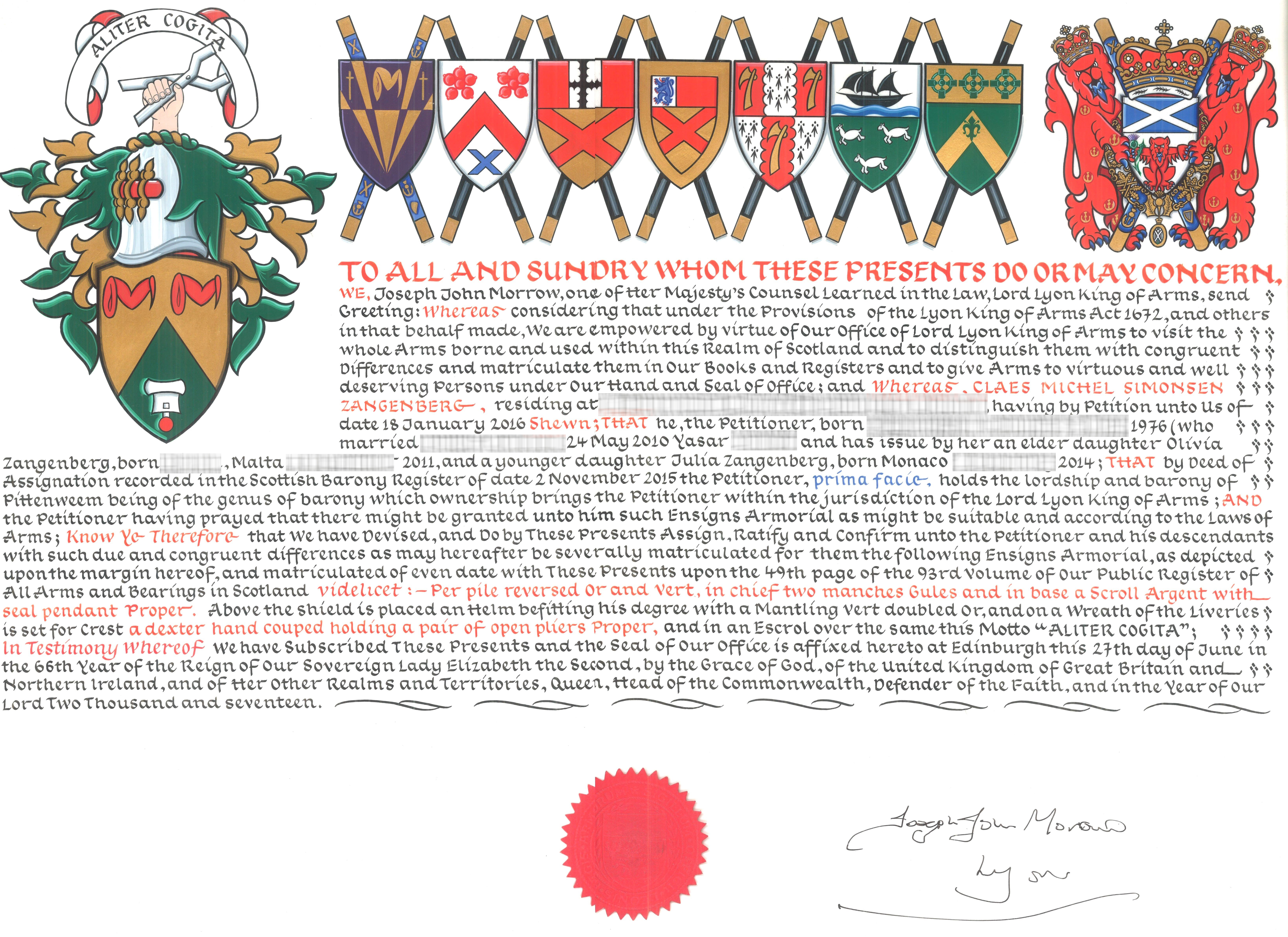
| Pittenweem | Fife | 1592[29] | Claes Zangenberg[30] | 2011 | ||||||||||
| Plean | Stirlingshire | George Way | 1985 | |||||||||||
| Plenderleith | Roxburghshire | 1306 | Clifford Dewey Michael Paul Harmon II | 2007 | ||||||||||
| Pluscarden | ||||||||||||||
| Porterfield | ||||||||||||||
| Portlethen | Kincardineshire | Maurice Taylor of Portlethen | ||||||||||||
| Portrie | Wigtownshire | Before 1636 | ||||||||||||
| Preston and Prestonpans | East Lothian | 1460 | Robert McLean of Preston & Prestonpans | |||||||||||
| Prestoungrange | East Lothian | 1189 | Mathew Wills of Prestongrange | 2004 | ||||||||||
| Primside and House Site | Roxburghshire | |||||||||||||
| Quhithorne or Whithorn | Wigtownshire | Before 1569 | ||||||||||||
| Rachane | Argyllshire | Michael Aquino | ||||||||||||
| Ramshead | Ayrshire | 1371 | Ryan Montgomery | 1987 | ||||||||||
| Rannoch | Perthshire | 1502 | ||||||||||||
| Rattray | Perthshire | Philip Cumyn of Rattray | ||||||||||||
| Ravenstone | Wigtownshire | Frank Renwick of Ravenstone | 1983 | |||||||||||
| Remistoun | Wigtownshire | Before 1540 | ||||||||||||
| Renfrew | Renfrewshire | 1398 | HRH The Duke of Rothesay | 1952 | ||||||||||
| Restalrig | Edinburgh | |||||||||||||
| Robertland | Ayrshire | 1539 | Brian Parsons of Robertland | 2005 | ||||||||||
| Rossie | Fife | John Elephant of Rossie | ||||||||||||
| Ruchlaw | East Lothian | |||||||||||||
| Rusco | Kirkcudbrightshire | Robert Carson of Rusco | ||||||||||||
| Saint Monance / Monans | Fife | 1596 | Dr Robert Parviz Pirooz of Saint Monance QC | 2014 | ||||||||||
| Sauchie | Stirlingshire | 1320 | Niklas Wallenberg | 2015[31] | ||||||||||
| Saulsait Saulset | Wigtownshire | Before 1629 | ||||||||||||
| Seybeggis or Seabegs | Stirlingshire | 15th century | Dr. George M. Burden | 2014 | ||||||||||
| Seggieden | Perthshire | Trond U. Hegle | ||||||||||||
| Smeaton Hepburn | East Lothian | George Gray of Smeaton Hepburn | ||||||||||||
| Stane | Ayrshire | 1371 | Ryan Montgomery | 1987 | ||||||||||
| Stobo | Peeblesshire | 1577 | The Much Hon. William Jolly | |||||||||||
| Stonehaven | Aberdeenshire | Fraser Angus Oliver Mearns of Stonehaven | ||||||||||||
| Stoneywood | Aberdeenshire | Charles Mack of Stoneywood | 2000 | |||||||||||
| Strathdee | Aberdeenshire | 1563 | ||||||||||||
| Strathlachlan | Argyll | Euan MacLachlan of Strathlachlan | ||||||||||||
| Strichen | Aberdeenshire | 1515 | Massimo Fraser of Strichen | 2000 | ||||||||||
| Struan | Perthshire | Alexander Robertson | 1983 | |||||||||||
| Swinton | Berwickshire | 1098 | James Swinton | |||||||||||
| Teallach | Dennistoun Teall of Teallach | |||||||||||||
| Thainstone | Aberdeenshire | 1488 | David Valentine | 2017 | ||||||||||
| Torboll | Highland | 1360 | ||||||||||||
| Tranent | East Lothian | Hugh, 19th Earl of Eglinton, 7th Earl of Winton | ||||||||||||
| Traquair | Peeblesshire | 1491 | Catherine Maxwell-Stuart, 21st Lady of Traquair | |||||||||||
| Trearne | Ayrshire | 1371 | Ryan Montgomery | 1987 | ||||||||||
| Trent | Charles A. Cogdill | 2002 | ||||||||||||
| Troup | Banffshire | |||||||||||||
| Tulloch | Ross and Cromarty | 1542 | David Willien | |||||||||||
| Twynehame | Kirkcudbrightshire | Delyse Sharpe of Twynehame | 1992 | |||||||||||
| Urquhart | Inverness-shire | 1230 | ||||||||||||
| Urquhart | Morayshire | 1587 | Robert A. Cromartie | 2004 | ||||||||||
| Wells | Roxburghshire | Bryce Lee West | 2009 | |||||||||||
| Westside | ||||||||||||||
| Wigtoun | Lanarkshire | 1606 | ||||||||||||
| Winchburgh | West Lothian | 1169[32] | Michael C. Lyons of Winchburgh [33] | |||||||||||
| Wormiston | Fife | Michael Spens | 1970 | |||||||||||
| Yair | Selkirk | 1806 | Li Li | 2019 | ||||||||||
| Yeochrie | Aberdeenshire | Richard Stuart of Yeochrie |
See also
External links
- Lord Lyon's Armorial Ruling[36]
- Law Reform Commission of Ireland
- Text of the Abolition of Feudal Tenure etc. (Scotland) Act 2000 as in force today (including any amendments) within the United Kingdom, from legislation.gov.uk.
- Report on Abolition of the Feudal System[37]
- The Register of Feudal Lords and Barons of The United Kingdom of Great Britain and Northern Ireland
- The Heraldry Society of Scotland
- The Court of the Lord Lyon
- College of Arms
- Registry of Scots Nobility – Baronage
- The Scottish Baronage Registry
- Burke's Peerage
References
- Alexander Grant, "Franchises North of the Border: Baronies and Regalities in Medieval Scotland", Chapter 9, Michael Prestwich. ed., Liberties and Identities in Medieval Britain and Ireland (Boydell Press: Woodbridge, 2008)
- "Archived copy" (PDF). Archived from the original (PDF) on 8 September 2015. Retrieved 13 December 2015.CS1 maint: archived copy as title (link)
- Reid, Professor Kenneth (2003). The Abolition of Feudal Tenure in Scotland. Edinburgh: Tottel.
- "Section 63". Abolition of Feudal Tenure, etc (Scotland) Act 2000.
- "Appendix A12: See Explanatory Notes on Clause 57 Subsection (2)". Report on Abolition of Feudal System. Archived from the original on 19 November 2004.
- Re Notarial Instrument of the Earl of Galloway; Disposition; Warrant for Letters Patent, No.s 103, 104, 105, Palmyra Island Land Recordation, United States District Court for the District of Hawaii (D.C. Hawaii-Palmyra I. 2017).
- Livingston of the Bachuil, yr., Niall (2006). The MacLeas or Livingstones and their Allodial Barony of the Bachuil (PDF). Baronage Press. Retrieved 21 May 2018.
- Graham Senior-Milne, 41st Baron of Mordington (27 June 2005). "Scottish feudal baronies (feudal barons, feudal baron) including the oath of a knight".
- "Titles and Usages". Scotsbarons.org. Archived from the original on 25 February 2015. Retrieved 17 March 2015.
- "Scottish Feudal Baronies, Scottish and Irish Titles, Titles, Forms Of Address | Debrett's". Debretts.com. Archived from the original on 25 July 2013. Retrieved 17 March 2015.
- "Scottish feudal baronies (feudal barons, feudal baron) including the oath of a knight". Peerage.org. Retrieved 17 March 2015.
- "Male Barons". Scotsbarons.org. Archived from the original on 25 February 2015. Retrieved 17 March 2015.
- "Titles included in passports" (PDF). UK government website. p. 3.
- "How to wear the kilt | Scottish Tartans Authority". Tartansauthority.com. Retrieved 17 March 2015.
- "Hereditary offices". Scotsbarons.org. Archived from the original on 26 February 2015. Retrieved 17 March 2015.
- Alexander Grant, "Franchises North of the Border: Baronies and Regalities in Medieval Scotland", Chapter 9, Michael Prestwich. ed., Liberties and Identities in Medieval Britain and Ireland (Boydell Press: Woodbridge, 2008)
- "Discover Ardgrain". 2010. Archived from the original on 23 July 2008. Retrieved 14 September 2008.
- "Decision of Lord Lyon King of Arms "Skye, 8 October 2009"" (PDF). Archived from the original (PDF) on 3 March 2016. Retrieved 9 November 2015.
- https://www.scottishlegal.com/article/outer-house-allows-proof-before-answer-in-berwickshire-castle-sale-dispute
- Brady Brim-DeForest of Balvaird Castle
- RSG.I.App.2.#1768
- "The Barony of Coigach". The Barony of Coigach. Retrieved 17 March 2015.
- "The Lordship and Barony of Coldingham". Coldingham.org. 14 March 2012. Retrieved 17 March 2015.
- "David Irvine of Drum". The Times. 21 March 2019. ISSN 0140-0460. Retrieved 28 August 2019.
- "Obituary: David Irvine of Drum, chief who helped end a centuries-old clan feud". www.scotsman.com. Retrieved 28 August 2019.
- Burke's Peerage, Baronetage & Knightage, 107th edition.
- Scottish Barony Register and Burke's Peerage
- People of Medieval Scotland, Document 3/350/24
- "Records of the Parliaments of Scotland".
- Scottish Barony Register and Letter Patent by the Lord Lyon, see http://baronyofpittenweem.com/reference/stories/full-grant.jpg
- "Ett nytt skottskt-svenskt vapen" (PDF). Societas Heraldica Scandinavia. Retrieved 1 September 2021.
- Linlithgow, Marquis. "The Barony of West Niddry".
- "Niddry Castle | Winchburgh | The Castles of Scotland, Coventry | Goblinshead". www.thecastlesofscotland.co.uk. Retrieved 20 November 2021.
- Burke's Peerage and Gentry. Accessed 29 July 2007.
- "Scottish feudal baronies (feudal barons, feudal baron) including the oath of a knight". Peerage.org. Retrieved 17 March 2015.
- Hamilton, Brian (May 2006). "A petition for Arms with Baronial Additaments" (PDF). The Amorial Register Newsletter (Special ed.). 1. Retrieved 17 March 2015.
- http://www.scotland.gov.uk/deleted/library/documents-w10/afs1-00.htm Archived 12 January 2005 at the Wayback Machine
Further reading
- Scottish Law Commission. "Report on Abolition of the Feudal System. Laid before Parliament by the Lord Advocate under section 3(2) of the Law Commissions Act 1965. Ordered by the House of Commons to be printed11 February 1999 (Scot Law Com No 168)". Retrieved 17 March 2015.
- Dickinson, Professor William Croft, The Court Book of the Barony of Carnwath 1523-1542, Introduction, published by Scottish History Society, 1937. "The standard scholarly work on the history of Scottish feudal baronies". In the opinion of the Lyon King of Arms
- Grant, Alexander, The Development of the Scottish Peerage, published in the Scottish Historical Review, 1978.