Dhulbahante
The Dhulbahante (Somali: Dhulbahante, Arabic: دلبةنتئ) is a Somali clan family, part of the Harti clan which itself belongs to the largest Somali clan-family — the Darod.[1][2][3] In Somaliland, the Dhulbahante primarily settle in the regions of Sool, Sanaag and Togdheer.[4] They also have a significant presence in Jubbaland, southern Somalia, particularly in the city of Kismayo.[5][6] In Ethiopia, they settle in the Dollo Zone specifically in the woredas of Boh, Danot and Werder.[7]
    | |
| Regions with significant populations | |
|---|---|
| Languages | |
| Somali and Arabic | |
| Religion | |
| Islam | |
| Related ethnic groups | |
| Majeerteen, Dishiishe, Warsangeli and other Harti and Darod groups |
The clan is known for its armed resistance against the British Empire and the historic role it assumed in support of the Dervish Movement which waged a bloody war against colonial powers from 1899 to 1920.[8] Due to this legacy, the name Darawiish (Dervishes) has almost become synonymous with the clan's name.[9]
The clan is divided into two major sub-clans: Mohamoud Garad and Farah Garad.[10] The other sub-clans amalgamate in a loose political and social clan confederation referred to as Baho Nugaaled.[11][12]
The supreme Garad of the Dhulbahante is Garad Jama Garad Ali.[13][14]
Overview
The extended formal name of Dhulbahante, the clan's forefather was Said Saleh Abdi Mohamed Abdirahman bin Isma'il al-Jabarti. According to Somali tradition, his mother hailed from the Isaaq sub-clan of Arap. This maternal connection has enticed a mutual affinity between the two clans.
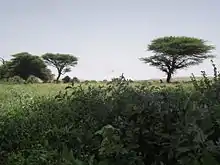
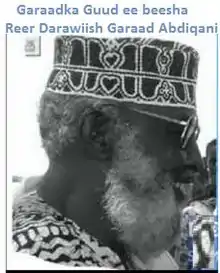
The primary homeland of the clan straddles the Haud region and the Nugaal Valley,[15] hence segments of the clan who settle in either plateau are colloquially referred to as the Reer Hawd and Reer Nugaaled. Currently, the clan has 13 active Garads.[16] The most senior Garaad of these traditional leaders is Garad Jama Garad Ali who succeeded his uncle Garad Abdiqani Garad Jama.[17][18] The use of the traditional hereditary title of Garad (which is most widespread among the Dhulbahante),[19] was first inaugurated by the great ancestor Garad Shirshore who previously served as a Ugaas.[20][21]
The clan boasts a heroic history of anti-colonial resistance. In a bloody war against the British Empire the Dhulbahante along with several other clans propelled the Dervish movement to defeat the empire in a series of military expeditions.[8] The rebellion caused the death of one-third (or 200,000) of the population of the Somaliland protectorate, most severely effecting the Dhulbahante clan with whom there was no treaty of protection.[22][23] John Drysdale and Ioan M. Lewis, who had conducted research in British Somaliland in the 1950s, noted that there was not that much of an attachment of the clan to Dervish history at that time.[9] Nevertheless, to honor the Dervish freedom fighters, the name Daraawiish is now given to almost all regional paramilitaries in Somalia.[24]
During Mohamed Siad Barre's regime, the clan was part of an alliance of Darod clans that was presumed to dominate state authority in Somalia. The acronym MOD was used to refer to the alliance which was composed of the Marehan, Ogaden and Dhulbahante.[25]
In early 1993, the Dhulbahante held a conference in Boocame while Somaliland's second national conference was underway in Borama.[26] The result of the conference was the establishment of a 33 member council (Khusuusi) which would administer the Sool, Sanaag, and Cayn regions in the absence of a central government in Somalia.[27]
Puntland and Somaliland

In 1998, the Dhulbahante established the State of Puntland with other Harti clans due to common kinship.[28][29][30] Hence, based on this ethnic composition and clan ties to Puntland, voters in Sanaag and especially Sool were decidedly less supportive of Somaliland’s 2001 referendum on the constitution and independence.[28][31][32] Although the Dhulbahante community was split over the 2007 conflict, with some aligning with Somaliland and its troops in the area of Las Anod, in the Bo'ame Declaration of 2007 all Dhulbahante clan chiefs rejected Somaliland's secessionist agenda and demanded the withdrawal of its militia from the clans traditional territory.[33][34]
In aftermath of Somaliland taking control of Las Anod in 2007, the clan became disillusioned with Puntland, consequently a new unionist movement which aimed to remove Somaliland from Dhulbahante territories emerged. The movement was called the Unity and Salvation Authority of the SSC Regions of Somalia (Somali: Hogaanka Badbaadada iyo midaynta SSC (HBM-SSC)), and it was spearheaded by Saleban Essa Ahmed and founded in 2009.[35] The most important traditional leaders who lent their support to the SSC Movement were Garad Jama Garad Ali, Garad Jama Garad Ismail, and Garad Ali Burale Hassan.[14]
In the Kalshale Conflict, Somaliland forces and SSC militia clashed in the Ayn region in 2011,[36] whilst more clashes were reported to have occurred in 2012.[36] In 2012, the SSC movement was replaced by Khatumo State after the Khaatumo II conference held at Taleh.[37][38] The conference was a development with up to 5,000 people from the Dhulbahante community gathering in the town.[39]
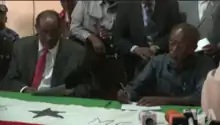
Under the leadership of Ali Khalif Galaydh, Khatumo State commenced peace talks with Somaliland and subsequently the two entities reached an agreement at the town of Aynabo in October 2017 with Khatumo joining Somaliland, ceasing to exist.[40] Nonetheless, the Dhulbahante still seek a united Somalia and overwhelming oppose Somaliland's independence aspirations.[41][34]
Distribution
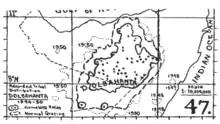
In Somaliland, the Dhulbahante almost exclusively inhabit the Sool region.[42][43][44][45] Michael Walls on the Dhulbahante and Sool says:
"The residents of Sool overwhelmingly hail from a single clan grouping in the form of the Dhulbahante [...]. Sool boasts a degree of kinship homogeneity that is rare even in the Somali Horn".[46]
The clan inhabits Taleh, most of Hudun and most of Las Anod districts.[47] In a survey conducted in 2011 of Las Anod District 92.5% of the respondents identified as Dhulbahante whilst 2.5%, 1.5% and 1.3% identified as Hawiye, Bantu and Isaaq respectively.[48] In the Sanaag region the clan is only present in the Erigavo district along with the Habr Yonis and Habr clan,[49] whilst well represented in the regional capital of Erigavo.[50] Similarly in Togdheer, the clan solely lives in the district of Buuhoodle.[51] The district of Buuhoodle was made a region by the state of Puntland and its name was changed to Cayn in 2004.[52] Hence, the popular abbreviation SSC which denotes the traditional Dhulbahante territories within Somalia.
In Somalia, they inhabit the Jubaland state, where there is a long settled Dhulbahante trading community in the port city of Kismayo and its surrounding district.[5][6]
In Ethiopia, the Dhulbahante clan settle in the Somali Regional State. They are present in the Dollo Zone, specifically in the woredas of Boh, Danot and Werder.[7] In Kenya, there is a small but notable Dhulbahante community in the North Eastern Province.[53]
The Dhulbahante exclusively settle in the northern Somali cities of Las Anod and Buuhoodle.[54] Moreover, they are well represented in the cities of Erigavo and Garowe.
History
19th century
19th-century explorer C.J Cruttenden on the Dhulbahante and their horse breed:
"The Dulbahanta are a nation who fight chiefly on horseback, their arms being two spears and a shield. Their horses are powerful and courageous; the breed descended, according to Somali tradition, from the stud of Suleiman, the son Of David, and consequently is highly valued. The Dulbahanta, as far as I have seen of them, are a fine martial race of men, second to none...either in conduct or appearance".[55]
Dervish Period
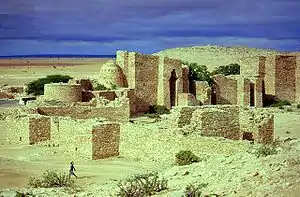
Dervish forces mostly hailed from the Dhulbahante.[24][8] The Dhulbahante in Buuhodle were particularly the first and most persistent supporters of the Dervish Movement.[56][57] Höhne on the Dhulbahante and the Dervish Movement states:
"The majority of them came from the Dhulbahante clan. Members of this clan were camel herders and renown warriors (Cruttenden 1849). The British had not concluded a ‘treaty of protection’ with them, as they had done with the inhabitants of the coast, who belonged to various Isaaq or Dir clans."[58]
Along with the Dhulbahante, the Ogaden, and segments of the Isaaq such as the Habr Je'lo and eastern sections of the Habr Yunis clan loyal to Sultan Nur were part of the Movement.[59][24][8] The Dervish Movement resisted colonial occupation, especially the British who were aided by Isaaq troops.[57]
The Achilles heel of the British empire in the Somaliland Protectorate was the un-administered east, inhabited by the Dhubahante, Warsangali and a few sections of the Isaaq.[60] In this light Douglas Jardine explains that British priority was to keep the former two clans neutral, as the British administration and its allied clans would not be able to resist them without outside aid.[61]
The British found it exceptionally difficult to administer the hinterland in the east, as Jess reports "in 1901 a joint Anglo-Ethiopian expedition of almost 17,000 men failed to accomplish anything other than to drive the Mullah temporarily across the border into the Mijertein".[62] In later years, the British increased their engagement with the hinterland to suppress the movement, yet the previously "insignificant corner of the Empire" proved to be exasperating and costly both financially and in human life.[63]
In July 1901, the British made attempts to expel the Dervish Movement out of the Dhulbahante territory, to achieve this they devised a plan to crush "the Dhulbahante who willingly and persistently assisted" the dervishes.[64] A British colonial Officer, Roy Irons believed the Dhulbahante joined the Dervish movement more out of fear rather than ideological devotion and in order to demonstrate British supremacy and power over these clans it was necessary to crush them. Roy Irons, the author of Churchill and the Mad Mullah of Somaliland notes:[65]
It is well known that the Dolbahanta tribe are adherents of the Mullah, more through fear of him than any attachment to his person, or fanatical religious spirit. They are tired of his cruelties and exactions, and the belief of those who best know the country, would speedily transfer their allegiance to us.
— Roy Irons, Churchill and the Mad Mullah of Somaliland
The British consistently intended the demise and destruction of the Dhulbahante who were avid Dervishes. In this Regard, British Commissioner Eric Swayne was delighted in their slaughter of the Dhulbahante clans. [66]
It is a fortunate thing that the Kayat tribe, which most strongly supported him, appears to have suffered the severest losses.
— Eric Swayne
Garad Ali's dissent
Despite this, the Chief of the Dhulbahante clan, Garad Ali Garad Mohamoud, did not want to be under British occupation nor under Dervish authority, instead he wanted to retain his autonomy as clan chief. The Garad and Sayyid Mohamed Abdullah Hassan had a heated altercation which concluded with Garad Ali supposedly saying:
"I am the Ruler of Nugaal and its people, their management is mine and I expect everybody to respect it".[67]
Subsequently, Hassan ordered the assassination of the Garad.[68] As Douglas Jardine reports, Hassan took this action after the Garad reassured the British that their relations remained unchanged, although owing to the influence of Hassan his clan no longer obeyed his orders.[69] Issa-Salwe says news of the assassination stunned the Somali clans, consequently Hassan was only left with his maternal clan, the Ali Geri of the Dhulbahante.[70]
According to John William Carnegie Kirk, most Dhulbahante clans sided with Sayyid Mohamed Abdullah Hassan, expect the three sub-clans of Rer Hagar, Rer Wais Adan and Ba Idris among others who were considered friendly by the British.[71]
British friendlies and Dervish raids
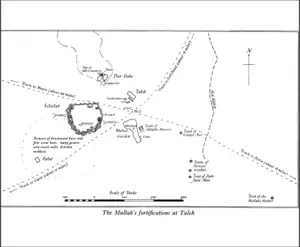
Sections of the Dhulbahante like the Reer Hagar of the Farah Garad and other sections inhabiting Buuhoodle fought alongside the British against the Dervishes after being raided by the Mullah's forces.[72] Dhulbahante friendlies would also sometimes raid the Dervishes, looting their livestock as well as weapons. The book A Fine Chest of Medals: The Life of Jack Archer reports:
Early in October the friendlies at Bohotle made a successful raid south to Gerlogubi, capturing a large number of camels and rifles and killing several more dervishes
— Colin Baker, A Fine Chest of Medals: The Life of Jack Archer, page 151
In 1904 the Dervishes attacked the Jama Siad sub-division of the Mohamoud Garad clan. The Dervishes looted 400 camels while killing two men.[73] The Parliamentary Debates (official Report).: House of Commons in 1913 notes:[74]
So far as I am aware there have been no recent developments of importance in the interior, with the exception of a dervish raid on the Dolbahanta Jama Siad in which the latter lost about 400 camels and had two men killed.
— House of Commons, The Parliamentary Debates (official Report).: House of Commons
The British War Office similarly notes that apart from the Farah Garad sub-division the rest of the Dhulbahante clan joined out of fear of the Mullah or by personal gain:[75]
It is, however, believed that, with the exception of the Ali Gheri and possibly other sections of the Gerad Farih, the majority of the people who joined the Mullah in the Dolbahanta have done so either through fear of him or personal gain, and that a large seceding from his following may be expected when our expedition takes the field
— Great Britain. War Office. General Staff, Official History of the Operations in Somaliland, 1901-04
In 1908 the Dhulbahante once again raided the Dervish and looted their camels. Hassan sent a letter to the British Commissioner Cordeaux, requesting his camels be returned and blood money be paid.
An excerpt from Hassan's letter to Cordeaux reads:
Your people, the Dolbahanta tribe, have killed fifteen of our men and looted eighty-four camels. I do not know if Abdulla Shahari reported this to you: if he did the fault lies with you; if not, I do hereby acquaint you of it. You are requested to restore to us our camels and the blood shed by your people [76]
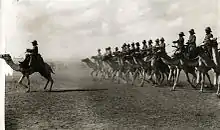
In 1912 the Dervish army compelled friendly segments of the Dhulbahante clan to retire to the British controlled territory to gain protection. This was after the Mullah had constantly launched raids that took a heavy toll on the clan. World War 1 at Sea - Contemporary Accounts reports:[77]
Finally, in 1912, the Mullah himself became active, and raided the Dolbahanta tribe so effectively that they were reduced to starvation, and came in large parties to the coast towns begging the Government to give them food. Then it was realised that the policy of non-intervention in the interior was not altogether satisfactory, and that something must be done to remedy the anarchic condition of the country.
— The Navy Everywhere, 1919
The Farah Garad subclan was also raided by the Dervishes, specifically the Ali Gheri subclan, who were set upon and attacked by Hassan and his Dervish army, forcing them to evacuate and seek refuge in Burao, Berbera and Haud among the Isaaq clans. British colonial governor Horace Byatt reported that 800 Dhulbahante refugees arrived in Berbera, but feared that they could not be protected nor fed properly, stating that only 300 native infantry and 200 King's African Rifles were in Berbera and insufficient to hold off a Dervish attack. Byatt also raised concerns for the Dhulbahante refugees en route to British controlled territory and the possibility of them being looted by hostile clans, particularly the Habr Yunis.[78] Baron Ismay in his intelligence report on the Dervish raids on the Ali Gheri and the Dolbahanta clan's of Bohotle notes:
No important move was made till November 1911, when he successfully attacked the Ali Gheri at Bohotleh. He followed this up in February 1912 with an attack on the Dolbahanta at Eildab, In this engagement our people lost all their stock and were reduced to starvation. They flocked to Berbera demanding to be supported. Yet another attack on Bohotleh in March resulted in the remaining Dolbahanta in that vicinity being looted and driven out. Bohotleh remained in Dervish hands.[79]
In June 1913 the Farah Garad subclan suffered yet another Dervish raid on their towns at Udaweina. General Richard Corfield had in response moved out to the area with his troops to support the shaken Farah Garad, who retreated westwards towards the lands of the Habr Yunis:[9]
In June Corfield, receiving reports that dervish raiders had attacked Dolbahanta Farah Gerad karias (mobile villages) at Udaweina, moved out to support them, but they were so shaken that they retired westward, which then caused trouble with the Habr Yunis
— Roy Irons, Churchill and the Mad Mullah of Somaliland: Betrayal and Redemption 1899–1921
However, the Dhulbahante were not trusted by some British generals.[80] For instance, the British general Eric Swayne at times regarded the clan as too untrustworthy to be enlisted as a levy:
In selecting men, only those vouched for by responsible Chiefs, and those belonging to trustworthy tribes were enlisted, no Dolbahanta being allowed to enter the ranks. Every man before marching out of Berbera was paid an allowance to purchase his own Somali shoes and also a piece of American cloth.
— Parliamentary Papers - Volume 69 - Page 25, 1902
British colonial administrator Sir Douglas Jardine describing the plight of the Dhulbahante noted:
The most pitiful lot of all fell to certain sections of the Dolbahanta. Ousted from their ancestral grazing grounds by the Mullah's advance and bereft of all their stock, the remnants wandered like veritable Ishmaelites in the Ishaak country, deprived of Asylum and almost all access to the coast.[81]
The battle of Dul Madoba
In 1913 at the battle of Dul Madoba the Dervishes defeated the British. The Dervish forces under the leadership of Dhulbahante military commander Ismail Mire were attacked by British expeditionary forces made up of members of the Dhulbahante clan under the command of Richard Corfield.[82] It is reported that the Dervishes previously looted herds from the Jama Siad, who subsequently agreed to assist the British in their attack.[83] Thus, 300 Jama Siad warriors along with the Somaliland Camel Corps commanded by Corfield pursued and attacked the Dervishes at Dul Madoba. The British sustained heavy casualties and Corfield was killed in battle, whilst the 300 Jama Siad warriors fled unscathed.[84][82]
Somaliland campaign
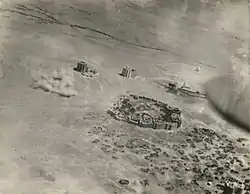
After the 1920 Bombing campaign of the Taleh fort and the Dervish retreat into Ethiopia. The Tribal Chief Haji Mohammad Bullaleh, who commanded a 3,000 strong army that was loyal to the British Empire and consisted of Isaaq and Dhulbahante horsemen pursued the Dervish army. They attacked Muhammad Abdallah Hassan and the Dervish army in the Ogaden region and defeated them, causing Hassan to retreat to the town of Imi. Haji and his army looted 60,000 livestock and 700 rifles from the dervishes.[85] The Dervishes did not recover from the bombing campaign. Following this defeat, the Dhulbahante who waged a bloody war against the British were effectively incorporated into the British Protectorate.[57]
Boocame declaration
An historic summit was convened in Boocame from November 15 – November 23 of 2007, by the traditional leaders of the Dulbahante (Dhulbahante) sub-clan of the clan. The Dulbahante traditional chiefs issued an official communiqué on October 15, 2007 regarding the secessionist Somaliland region's militias’ aggression and occupation of Laascaanood (LasAnod), the regional capital of Sool, Sanaag and Cayn regions of Somaliland.[33][86][87]
All 14 major traditional chiefs of the Dulbahante clan attended this summit. In addition to the traditional chiefs, there were many intellectuals (women & men), students and civic organizations from outside and inside of the country attending the summit. All chiefs unanimously signed declaration communiqué on November 22, 2007.
The communiqué states that the Dulbahante clan is not part of (and was never part of) and does not recognize the administration that calls itself "Somaliland" and that there are no agreements between Dulbahante clan and "Somaliland", in the past or the present. The communiqué also calls for an immediate end of hostility, return of customary peaceful co-existences among clans and an unconditional removal of the Somaliland militia from their territory. Finally, chiefs declared that the Dulbahante clan stands for the Somali unity.
In the anniversary of their historic summit in Boocame in November 2007, the Dulbahante Traditional Chiefs (SSC Traditional Leaders Council) reiterated their previous declaration (above) that they are not part of the Somaliland separatist movement. The council sent its pronouncement to the European Union, United Nations Agencies and all NGOs that operate within Somalia.
Clan tree
There is no clear agreement on the clan and sub-clan structures and many lineages are omitted. Within the Dhulbahante clan, according to the anthropologist I.M. Lewis, the Dhulbahante are divided into 50 groups which pay diyya (or blood money for their members). These are gathered into four lineages of unequal size: the Muuse Si'iid, who made up the majority of the clan circa 1960, and in turn is highly segmented into numerous lineages; the Ahmed Si'id also known as Hayaag, which Lewis estimated to number 1,000 male members at the time, and the Mohamed Si'iid, and the Yuunis Si'iid, which he described as "small, insignificant, and incapable of independent political action."[88] The following summarized clan tree presented below is taken from John Hunt's A general survey of the Somaliland Protectorate (1944-1950):[89]
- Abdirahman bin Isma'il al-Jabarti (Darod)
- Mohamed Abdirahman (Kabalalah)
- Abdi Mohamed (Kombe)
- Salah Abdi (Harti)
- Said Abdi (Dhulbahante)
- Ahmed Said (Turyar)
- Yonis Said
- Mohamed Said
- Hussein Said (Hayaag)
- Abokor Hussien
- Amaansame Hussien
- Aden Hussien
- Ibrahim Aden
- Gedi Aden
- Hassan Aden (Daljire)
- Muse Said
- Barre Muse
- Osman Muse (Ebirrar)
- Mohamed Muse
- Abokor Muse
- Abdale Muse
- Yahye Abdale
- Adan Abdale (Hinjile)
- Habarwa Abdale
- Khalid Habarwa
- Shirshore Habarwa
- Hamud 'Ugaas' Shirshore
- Hussein 'Ugaas' Shirshore
- Mahamoud 'Ugaas' Shirshore
- Hassan 'Ugaas' Shirshore
- Ali Hassan
- Farah Hassan
- Samakab Hassan
- Khair Hassan
- Saleh Hassan
- Samatar Hassan
- Gedi Hassan
- Harun Hassan
- Abdi 'Garad' Shirshore (Qayaad)
- Omar Abdi
- Khayr Abdi
- Ibrahim Khayr
- Ali Khayr
- Osman Khayr
- Wa'eys Khayr
- Mohamoud 'Garad' Shirshore
- Wa'eys Mohamoud (Omar Wa'eys)
- Siad Mohamoud
- Jama Siad
- Samakab Jama
- Ahmed Jama
- Mohamoud Jama
- Warfa Jama
- Mohamed Siad (Ugadhyahan)
- Adan Mohamed
- Mohamoud Mohamed
- Samakab Mohamed
- Abdulle Samakab
- Wa’eys Abdulle
- Abokor Abdulle
- Ahmed Abdulle
- Shirwa Ahmed
- Osman Ahmed
- Nur Ahmed
- Seed Nur
- Samatar Nur
- Yusuf Nur
- Musa Nur
- Samakab Nur (Bihina Ali)
- Ismail Nur (Bihina Ali)
- Hersi Nur
- Mohamed Nur
- Ali Nur
- Naleya Ahmed
- Adan Naleya
- Abdulle Naleya
- Samaad Naleya
- Shirwa Naleya (Bah ina Farah)
- Liban Naleya (Bah ina Farah)
- Yusuf Naleya (Bah ina Farah)
- Elmi Naleya
- Jibril Naleya
- Ali Naleya
- Farah Ali (Bah Rikhaaye)
- Mohamed Ali (Bah Rikhaaye)
- Samatar Ali (Bah Rikhaaye)
- Igal Ali (Bah ina Araale)
- Abdi Ali (Bah ina Araale)
- Fahiye Ali (Bah ina Araale)
- Ahmed Ali (Bah ina Araale)
- Hussein Ali (Bah Ina Samatar)
- Yaqub Ali (Bah Ina Samatar)
- Yusuf Ali (Bah Abdulle)
- Elmi Ali (Bah Abdulle)
- Omar Ali (Bah Idris)
- Mohamoud Ali (Bah Idris)
- Wa'eys Ali (Bah Idris)
- Abdulle Samakab
- Jama Siad
- Farah 'Garaad' Shirshore
- Yasin 'Garad' Farah
- Abdulleh Garad Farah
- Ali 'Garad' Abdulle
- Mohamed 'Garad' Abdulle (Bah'ararsame)
- Mohamoud 'Garad' Mohamed (Jabane)
- Mohamed Mohamoud
- Warsame Mohamoud
- Liban Mohamoud
- Sharmarke Mohamoud
- Mohamoud 'Garad' Mohamed (Jabane)
- Guleed 'Garaad' Abdulleh (Barkad)
- Ali Gulled
- Amir Gulled
- Mohamoud Gulled
- Ahmed 'Garaad' Abdulleh
- Samakab Ahmed (Odala)
- Egal Ahmed
- Warfa Ahmed
- Hassan Ahmed
- Naleye Ahmed (Egal Naleya)
- Ali'Geri Ahmed
- Ismail Ali’Geri
- Hersi Ali’Geri
- Shawe Ali’Geri
- Burale Ali’Geri
- Gulled Ali’Geri
- Subaan Ali’Geri
- Adan Ahmed
- Farah Adan
- Mahad Adan
- Wa'eys Adan
- Hagar Adan
- Gedi Hagar (Bah Ogaden)
- Addaad Hagar (Bah Ogaden)
- Warsame Hagar (Bah Ogaden)
- Elmi Hagar (Bah Ogaden)
- Amir Hagar (Bah Ogaden)
- Gulled Hagar (Bah Ogaden)
- Ayaar Hagar (Bah Warsengali)
- Fatah Hagar (Bah Warsengali)
- Adan Hagar (Bah Warsengali)
- Adan Hagar (Bah Warsengali)
- Farah Hagar (Bah Warsengali)
- Said Abdi (Dhulbahante)
- Salah Abdi (Harti)
- Abdi Mohamed (Kombe)
- Mohamed Abdirahman (Kabalalah)
Notable figures
- Ahmed Elmi Osman, Former President of Khaatumo and Incumbent Vice President of Puntland.
- Ali Khalif Galaydh, Ex-Prime minister of Somalia and Khaatumo President.
- Mohamed Yusuf Jama, former Khatumo president.
- Ismail Mire, Darwiish supreme commander, poet.
- Mohamed Abdi Hashi, President of Puntland.
- Garad Abdiqani Garad Jama, Former Garad of the Dhulbahante and the first delegate to table the case for Somaliland's secession at the Burao Grand Conference of 1991
- Garad Jama Garad Ali, Garad of the Dhulbahante Clan.[90]
- Abdinasir Ali Hassan, Chairman of Hass petroleum.
- Hodan Nalayeh, Somali-Canadian journalist.
- Abdi Holland, Somali artist.
- Aw Jama, Somali scholar, historian and collector of oral literature of Somalia. He wrote the first authoritative study of Dervishes.
- Saado Ali Warsame, singer-songwriter and former MP in the Federal Parliament of Somalia.
- Ali Dhuh, anti-darwiish poet.
- Mohamed Adam Ahmed, former Chief of Staff of the Somali Armed Forces.
- Abdi Hassan Mohamed, Incumbent Police Commissioner of the Somali Police Force.
- Amina Mohamed, former Chairman of the INM and the WTO's General Council, and the current Secretary for Foreign Affairs of Kenya.
- Bashe Mohamed Farah, Speaker of Somaliland House of Representative.
- Abdihakim Amey, former Puntland vice-president.
- Faisal Hassan, Canadian politician.
- Abdisamad Ali Shire, former Puntland vice-president.
- Ali Jangali Somalia's minister of foreign affairs.
- Saleban Essa Ahmed, SSC Leader.
- Ahmed Gacmayare, former Information Minister for Khaatumo State.
- Yasin Haji Mohamoud, Foreign Minister of Somaliland.
- Abdi Bile, Somalia's most decorated athlete with the most Somali national records.
- Mohamed Suleiman, first ethnic Somali to win an Olympic medal.
- Abdiqani Mohamoud Jidhe, Somaliland appointed Governor of Sool.
- Abdirahman Mohamed Abdi Hashi, Former Somali Minister of Fisheries.
- Mohamed Isse Lacle, Colonel in the Somali Navy and Former Deputy Minister of Ministry of Ports in Somaliland.
- Mohamoud Diriye Abdi Joof, former Khaatumo Minister.
References
- "Somalia: Minorities and indigenous peoples". Minority Rights Group International. Retrieved 18 September 2019.
- Lewis, Ioan M (1999). A Pastoral Democracy: A Study of Pastoralism and Politics Among the Northern Somali of the Horn of Africa. James Currey Publishers. p. 12. ISBN 9780852552803. Retrieved 18 September 2019.
- Lewis, Ioan M (July 1959). "Clanship and Contract in Northern Somaliland". Africa: Journal of the International African Institute. 29 (3): 274–293. doi:10.2307/1157617. JSTOR 1157617. Retrieved 18 September 2019.
- Hoehne, Markus V. (2015). Between Somaliland and Puntland: Marginalization, Militarization and Conflicting Political Vision. Rift Valley Institute. p. 57.
- Bradbury, M. "PART IV KISMAYO: PEACE-MAKING" (PDF). Oxfam Library. Retrieved 21 September 2019.
- Elder, Claire; Yusuf, Zakaria (2013-05-21). "Jubaland in Jeopardy: The Uneasy Path to State-Building in Somalia". International Crisis Group. Retrieved 21 September 2019.
- Bryden, Matt. "Report on Mission to Haud Area (REGION 5)". UNITED NATIONS DEVELOPMENT PROGRAMME. Retrieved 17 September 2019.
- De Vries, Lotje; Englebert, Pierre; Schomerus, Schomerus (21 September 2018). Secessionism in African Politics: Aspiration, Grievance, Performance, Disenchantment. Springer. p. 96.
- Hoehne, Markus V. (2015). Between Somaliland and Puntland: Marginalization, Militarization and Conflicting Political Vision (PDF). Rift Valley Institute. pp. 78–79.
- Hoehne, Markus (2009). "Mimesis and Mimicry in Dynamics of State and Identity Formation in Northern Somalia". Africa. 79 (2): 256. doi:10.3366/E0001972009000710. S2CID 145753382. Retrieved 28 May 2021.
- Mohamoud, Omar; Mohamed, Farah (13 October 2017). "High stakes for Somaliland's presidential elections" (PDF). Institute for Security Studies: 9. Retrieved 22 May 2021.
- "Somalia: Puntland's Punted Polls" (PDF). International Crisis Group (Policy Briefing): 19. 19 December 2013. Retrieved 24 May 2021.
- "Garaad Jaamac oo gooddiyay". BBC Somali. 15 October 2009. Retrieved 26 May 2021.
- Hoehne, Markus V. (2015). Between Somaliland and Puntland: Marginalization, Militarization and Conflicting Political Vision. Rift Valley Institute. p. 83. Retrieved 21 September 2019.
- Hoehne, Markus V. (2015). Between Somaliland and Puntland: Marginalization, Militarization and Conflicting Political Vision (PDF). Rift Valley Institute. p. 38.
- "Somalia: The Bo'ame Declaration of Dhulbahante Clan Elders". GaroweOnline.com. 2007-11-22. Archived from the original on 2011-12-19. Retrieved 2010-11-24.
- Connaughton, Stacey L.; Berns, Jessica (2019). Locally Led Peacebuilding: Global Case Studies. Rowman & Littlefield. p. 84. ISBN 9781538114117. Retrieved 20 September 2019.
- Ingiriis, Mohamed H. (2016). The Suicidal State in Somalia: The Rise and Fall of the Siad Barre Regime, 1969–1991. UPA. p. 238. ISBN 9780761867203. Retrieved 20 September 2019.
- Buur, L; Kyed, K (2007). State Recognition and Democratization in Sub-Saharan Africa: A New Dawn for Traditional Authorities?. Springer. p. 176. ISBN 9780230609716. Retrieved 21 September 2019.
- Hoehne, Markus V. (2015). Between Somaliland and Puntland - Contested Borderlands (PDF). p. 83. Retrieved 20 September 2019.
- Hoehne, Markus (2011). "No Easy Way Out: Traditional Authorities in Somaliland and the Limits of Hybrid Political Orders" (PDF). Danish Institute for International Studies: 8. Retrieved 28 May 2021.
- Sanderson, George (1985). The Cambridge History of Africa (PDF). Cambridge University Press. p. 670. Retrieved 1 June 2021.
- Said Samatar, Said Samatar (1982). Oral Poetry and Somali Nationalism. Cambridge University Press. pp. 199–200. ISBN 9780521104579. Retrieved 20 September 2019.
- Hoehne, Markus V. (2016). "Dervish State (Somali)". The Encyclopedia of Empire: 1–2.
- Renders, Marleen (2012-01-20). Consider Somaliland: State-Building with Traditional Leaders and Institutions. pp. 50–54. ISBN 9789004222540. Retrieved 28 November 2017.
- Hoehne, Markus. "Somaliland: the complicated formation of a de facto state" (PDF): 8. Retrieved 1 June 2021. Cite journal requires
|journal=(help) - Hoehne, Markus V. (2015). Between Somaliland and Puntland - Contested Borderlands (PDF). pp. 50–4. Retrieved 20 September 2019.
- Lund, Christian; Eilenberg, Michael (2017-05-04). Rule and Rupture: State Formation Through the Production of Property and Citizenship. John Wiley & Sons. ISBN 9781119384809.
- Höhne, Markus V. "Traditional Authorities in Northern Somalia: Transformation of positions and powers" (PDF). Max Planck Institute for Social Anthropology: 16.
- Mesfin, Berouk (September 2009). "The political development of Somaliland and its conflict with Puntland" (PDF). Institute for Security Studies: 10.
- Höhne, Markus V. "Traditional Authorities in Northern Somalia: Transformation of positions and powers" (PDF). Max Planck Institute for Social Anthropology: 16.
- Mesfin, Berouk (September 2009). "The political development of Somaliland and its conflict with Puntland" (PDF). Institute for Security Studies: 10.
- "The Declaration of Clan Elders from Sool, Sanaag and Cayn Regions (North Somalia)" (Press release). Declaration of Dulbahante Traditional clan chiefs. November 23, 2007. Archived from the original on November 28, 2007. Retrieved 2007-11-23.
- Hoehne, Markus V. (2009). "Mimesis and Mimicry in Dynamics of State and Identity Formation in Northern Somalia". Africa: Journal of the International African Institute. 79 (2): 270–271. doi:10.3366/E0001972009000710. JSTOR 29734403. S2CID 145753382.
- Hoehne, Markus V. (2015). Between Somaliland and Puntland - Contested Borderlands (PDF). pp. 81–2. Retrieved 20 September 2019.
- "SOMALIA: Somaliland clashes displace thousands". IRIN. 23 July 2010. Retrieved 31 August 2014.
- Muse, Abdirashid (2012). "New Mini-State Created in Somalia". Somali Report. Retrieved 20 September 2019.
- Lund, Christian; Eilenberg, Michael (2017-05-02). Rule and Rupture: State Formation Through the Production of Property and Citizenship. p. 197. ISBN 9781119384793. Retrieved 21 September 2019.
- Mahmood, Omar (2019). "Overlapping claims by Somaliland and Puntland: The case of Sool and Sanaag" (PDF). Institute for Security Studies: 7. Retrieved 29 May 2021.
- Stremalau, Nicole (2019). "Governance Without Government in the Somali Territories". Journal of International Affairs. Retrieved 21 September 2019.
- Walls, Michael (2017). "Democracy in Somaliland" (PDF). Education and Confict Review: 3. Retrieved 26 May 2021.
- "The political development of Somaliland and its conflict with Puntland" (PDF). Institute for Security Studies: 10.
- Hohne, Markus V. (2006). "Political identity, emerging state structures and conflict in northern Somalia". Journal of Modern African Studies. 44 (3): 405. doi:10.1017/S0022278X06001820. S2CID 54173895.
- "Somaliland vs. Puntland over the future of Somalia" (PDF). Horn of Africa Bulletin. Retrieved 20 September 2019.
- International Crisis Group. "Somaliland: The Strains of Success" (PDF): 4. Retrieved 20 September 2019. Cite journal requires
|journal=(help) - Walls, Michael. "Sool Region: sovereign ambiguity vs a geopolitical system of nation-states?". Africa Research Institute. Retrieved 20 September 2019.
- "EASO Country of Origin Information Report Somalia Security Situation" (PDF).
- Somali Observatory of Conflict and Violence Prevention (2011). "Safety and security District baseline report: Las Anod": 15–16. Retrieved 20 September 2019. Cite journal requires
|journal=(help) - Gebrewold, Belachew (2013-03-28). Anatomy of Violence: Understanding the systems of conflict and violence in Africa. Ashgate Publishing Ltd. p. 130. ISBN 9781409499213. Retrieved 14 November 2017.
- Hoehne, Markus Virgil (2011). "No Easy Way Out: Traditional Authorities in Somaliland and the Limits of Hybrid Political Orders". DIIS Working Paper: 12. S2CID 67793832.
- Hoehne, Markus V. (2010). Borders & Borderlands as resources in the Horn of Africa. p. 113. ISBN 9781847010186. Retrieved 14 November 2017.
- Feyissa, Dereje; Hoehne, Markus V. (2010). Borders & Borderlands as Resources in the Horn of Africa. Boydell & Brewer. p. 113. ISBN 9781847010186.
- Raeymaekers, Timothy (27 Aug 2013). Violence on the Margins: States, Conflict, and Borderlands. Springer. p. 69. ISBN 9781137333995. Retrieved 20 September 2019.
- Hoehne, Markus Virgil. "Diasporic engagement in the educational sector in post-conflict Somaliland: A contribution to peacebuilding?" (PDF). Diaspeace: 42. Retrieved 20 September 2019.
- "The Journal of the Royal Geographical Society Volume 19 p.67". 1849.
- Feyissa, Dereje; Höhne, Markus V. (2010). Borders & Borderlands as Resources in the Horn of Africa. Boydell and Brewer. p. 114.
- Hoehne, Markus V. (2006). "Political identity, emerging state structures and conflict in northern Somalia". Journal of Modern African Studies. 44 (4): 405.
- Hoehne, Markus (2015). "An appraisal of the 'Dervish state' in northern Somalia (1899-1920)" (PDF). University of Leipzig: 3. Retrieved 8 June 2021.
- Official History of the Operation Volume 1, p. 49
- Jardine, Douglas J. (1923). The Mad Mullah of Somaliland. H. Jenkins. p. 160. Retrieved 22 September 2019.
- Jardine, Douglas J. (1923). The Mad Mullah of Somaliland. H. Jenkins. p. 161. Retrieved 22 September 2019.
- Jess, Robert (1964). "The 'Mad Mullah' and Northern Somalia". Journal of African History. 5 (3): 416. Retrieved 1 June 2021.
- Slight, John (2010). "British and Somali Views of Muhammad Abdullah Hassan's Jihad, 1899–1920" (PDF). Bildhaan International Journal of Somali Studies: 17. Retrieved 1 June 2021.
- Irons, Roy (2013-11-04). Churchill and the Mad Mullah of Somaliland: Betrayal and Redemption 1899-1921 p.77. ISBN 9781783463800.
- Irons, Roy (2013-11-04). Churchill and the Mad Mullah of Somaliland: Betrayal and Redemption 1899-1921 p.147. ISBN 9781783463800.
- Sessional Papers - Volume 69 - Page 7
- Issa-Salwe, Abdisalam M. (1996). The Collapse of The Somali State: The Impact of the Colonial Legacy (PDF) (2nd ed.). Haan Publishing. pp. 29–30. Retrieved 22 September 2019.
- War Office, UK Government (1907). Official History of the Operations in Somaliland, 1901-04 (Volume 1). H. M. Stationery office. p. 50. Retrieved 22 September 2019.
- Jardine, Douglas J. (1923). The Mad Mullah of Somaliland. H. Jenkins. p. 44. Retrieved 22 September 2019.
- Issa-Salwe, Abdisalam M. (1996). The Collapse of The Somali State: The Impact of the Colonial Legacy (PDF) (2nd ed.). Haan Publishing. pp. 29–30. Retrieved 22 September 2019.
- Kirk, J. W. C. (2010-10-31). A Grammar of the Somali Language: With Examples in Prose and Verse, by J. W. C. Kirk, p.142. ISBN 9781108013260.
- Baker, Colin (2003). A Fine Chest of Medals: The Life of Jack Archer. Mpemba Books. ISBN 978-0-9542020-1-9.
- The London Gazette, September 2, 1904.
- The Parliamentary Debates (official Report).: House of Commons. H.M. Stationery Office. 1913.
- Official History of the Operations in Somaliland, 1901-04. (1907). United Kingdom: H. M. Stationery office.
- The Mad mullah of Somaliland, p.162
- "Bushire, Rumania, Red Sea, Royal Navy in World War 1". www.naval-history.net. Retrieved 2021-06-07.
- Irons, Roy (4 November 2013). Churchill and the Mad Mullah of Somaliland: Betrayal and Redemption 1899-1921 p.147. ISBN 9781783463800.
- "King's College London, King's collection : Ismay's summary as Intelligence Officer (1916-1918) of Mohammed Abdullah Hassan".
- The Cambrian, 1903
- The Mad mullah of Somaliland, p.158
- Adjaye, Joseph K.; Andrews, Adrianne R. (1997). Language, Rhythm, & Sound: Black Popular Cultures Into the Twenty-first Century. University of Pittsburgh Press. pp. 47–48. ISBN 9780822971771. Retrieved 21 September 2019.
- Irons, Roy (2013-11-04). Churchill and the Mad Mullah of Somaliland: Betrayal and Redemption 1899-1921 p.156. ISBN 9781783463800.
- Irons, Roy (2013-11-04). Churchill and the Mad Mullah of Somaliland: Betrayal and Redemption 1899-1921 p.156. ISBN 9781783463800.
- Irons, Roy (4 November 2013). Churchill and the Mad Mullah of Somaliland, p. 209. ISBN 9781783463800.
- "SSC TRADITIONAL LEADERS COUNCIL (Sool, Sanaag and Cayn Regions of Northern Somalia Tribal chiefs)" (PDF) (Press release). Declaration of Dulbahante Traditional clan chiefs. November 28, 2008. Retrieved 2008-11-28.
- "Declaration of the Consultative Conference of the Dhulbahante in the Diaspora -- Guiding Principles" (Press release). Declaration of the Consultative Conference of the Dhulbahante in the Diaspora. April 24, 2011. Archived from the original on May 3, 2012. Retrieved 2011-04-24.
- Lewis, "Force and Fission in Northern Somali Lineage Structure", American Anthropologist, New Series, 63 (1961), p. 100
- Hunt, John. A general survey of the Somaliland Protectorate-1944-1950 (PDF). Hargeisa. pp. 141–145. Retrieved 20 September 2019.
- "WAR DEG DEG AH Golihii wasiirada ee dowlad goboleedka Puntland oo Caawa la Ansixiyay laguna dhawaaqay". 2009-01-17.