Radoniq lake
Radoniq Lake or Radonjić Lake (Albanian: Liqeni i Radoniqit; Serbian: Радоњићко језеро / Radonjićko jezero) is a lake in Kosovo[a]. After only Gazivoda Lake, it is the second largest in the territory of Kosovo,[1][2] at 5.62 km2.
| Radoniq/Radonjić Lake | |
|---|---|
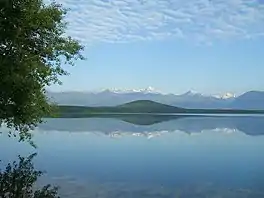 Radoniq/Radonjić Lake and the Prokletije in the background | |
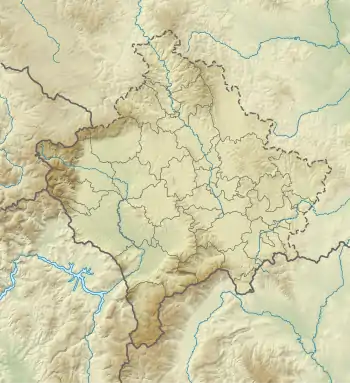  Radoniq/Radonjić Lake 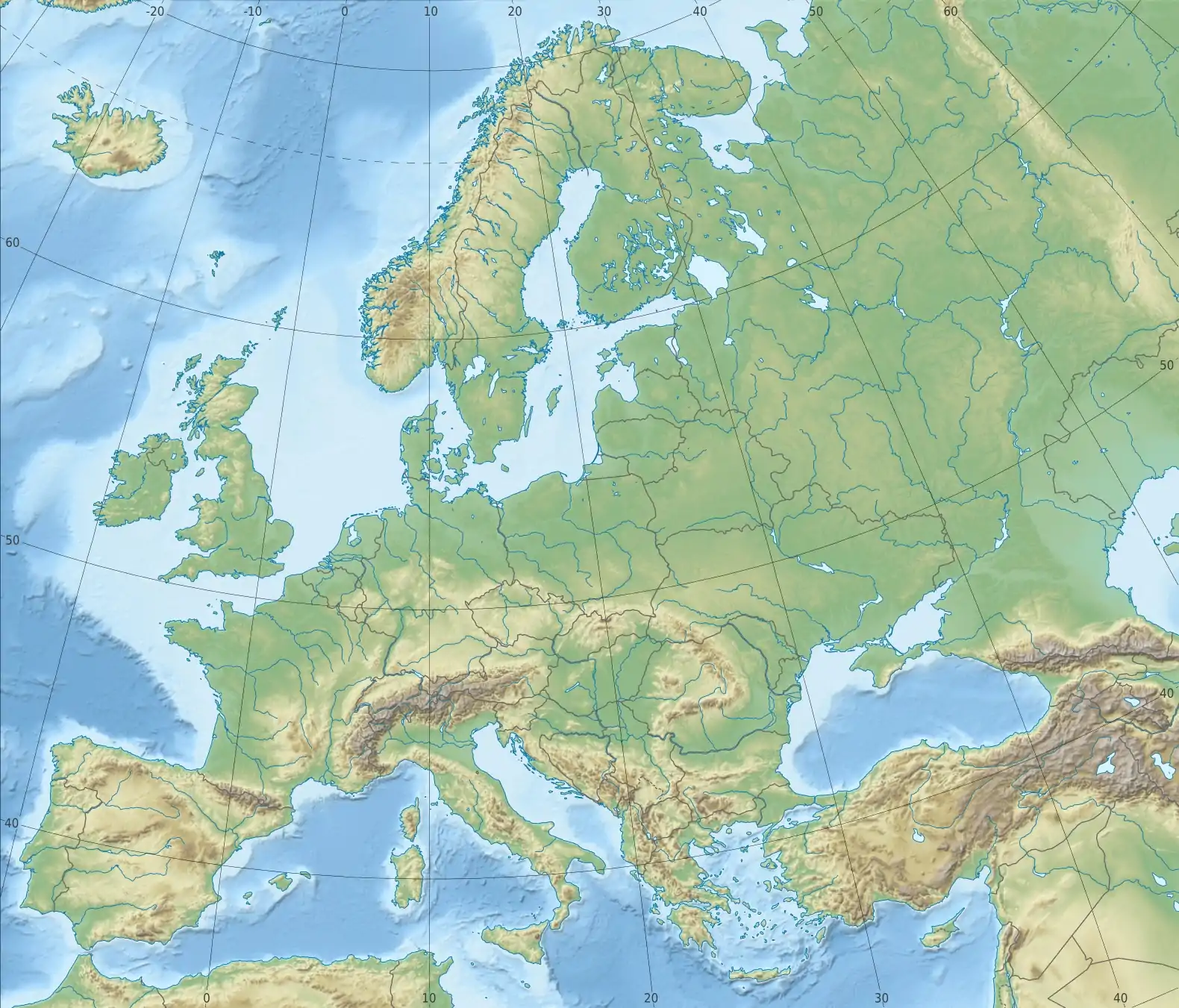 Radoniq/Radonjić Lake | |
| Location | Republic of Kosovo |
| Coordinates | 42°29′15″N 20°25′05″E |
| Primary outflows | Bistrica |
| Max. length | 4.7 km (2.9 mi) |
| Max. width | 2.2 km (1.4 mi) |
| Surface area | 5.06 km2 (1.95 sq mi) |
| Average depth | 15 m (49 ft) |
| Max. depth | 30 m (98 ft) |
| Residence time | 30 years |
| Surface elevation | 455 m (1,493 ft) |
| Islands | 0 |
In 1998, the lake was the site of the Lake Radonjić massacre.
Back in the 80‘s, there used to be a town under this lake. However during the process of making this artificial lake, the town had to be sunk under it. The residents had, of course, moved from the town once this happened. During different times of the year, once the tide is low, the very top of a church can be seen, as it remains still intact. It is a widely known fact to the people around the lake. However not many visitors know the whole story of this lake.
Notes
| a. | ^ Kosovo is the subject of a territorial dispute between the Republic of Kosovo and the Republic of Serbia. The Republic of Kosovo unilaterally declared independence on 17 February 2008. Serbia continues to claim it as part of its own sovereign territory. The two governments began to normalise relations in 2013, as part of the 2013 Brussels Agreement. Kosovo is currently recognised as an independent state by 97 out of the 193 United Nations member states. In total, 112 UN member states have recognised Kosovo at some point, of which 15 later withdrew their recognition. |
References
- Pars pro toto
- Kosovo is the subject of a territorial dispute between the Republic of Kosovo and the Republic of Serbia. The Republic of Kosovo unilaterally declared independence on 17 February 2008. Serbia continues to claim it as part of its own sovereign territory. The two governments began to normalise relations in 2013, as part of the 2013 Brussels Agreement. Kosovo is currently recognised as an independent state by 97 out of the 193 United Nations member states. In total, 112 UN member states have recognised Kosovo at some point, of which 15 later withdrew their recognition.
 |
Wikimedia Commons has media related to Lake Radonjićko. |