Redondo Junction, California
Redondo Junction, California is the site of the current Amtrak maintenance facility. It is located 3.5 miles (5.6 km) south of the Union Station (Los Angeles) passenger Terminal, Southwest of Boyle Heights near Washington Boulevard and the Los Angeles River.
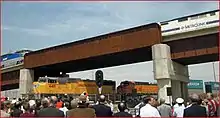
Redondo Junction services Amtrak's long distance trains: Southwest Chief, Coast Starlight, Desert Wind and Sunset Limited. Also the regional train the Pacific Surfliner.
History

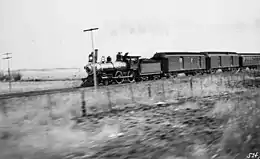
The California Central Railway built and ran a line from Port Ballona (what is now Playa del Rey, Los Angeles) to Redondo Junction, the line opened in September 1887. The line ran 13 miles (21 km). Redondo Junction became a major maintenance facility for trains. California Central Railway also ran a line from Redondo Junction to Los Angeles-La Grande Station. The Redondo Beach Railway also connected to Redondo Junction. The Redondo Beach Railway was incorporated in April 1888, Henry E. Huntington controlled and owned much of the Redondo Beach Railway. Redondo Beach Railway line started operation on September 1, 1888. California Central Railway operated on, but did not own, the 11 miles (18 km) of the Redondo Beach Railway. This line ran from Redondo Beach to Inglewood, California.
In 1890, the Hotel Redondo opened, the rail line help make Redondo "The Place" for Tourists. First train ran on April 16, 1888, from Inglewood to downtown LA on California Central Railway tracks through the Redondo Junction. California Central Railway completed a line started by the San Bernardino and San Diego Railway the line ran from Redondo Junction to Orange and continued to Anaheim, San Juan Capistrano and then to Oceanside then to San Diego. The Pacific Surfliner still runs on this line from San Diego to Santa Ana.
On November 7, 1889, California Central Railway was consolidated into Southern California Railway Company. On June 30, 1888, it started operation as a subsidiary of the Atchison, Topeka and Santa Fe Railway. In 1914 Santa Fe built in Redondo Junction a 25-track roundhouse to service trains. The railway turntable was a 120-foot (37 m) through plate girder design.[1]
The Redondo Junction train wreck on January 22, 1956, was a deadly wreck involving the Santa Fe RDCs. It was the first major disaster in the LA area covered on live television, and the worst train wreck in the city's history.[2] The train comprised two RDCs (Budd Rail Diesel Cars) which ran two return trips daily on the San Diegan (train numbers 80-83) between the more conventional streamliners. The RDCs overturned on a sharp curve near the tower killing 30 and injuring 117.[3]
The Redondo Junction was sold to Amtrak in January 1977. In May 1999, Amtrak built new train service facility just north of the original 1914 roundhouse. The 1914 roundhouse was demolished in August 2000 to make space for a future servicing area. The railway turntable is still on the site.[4]
Redondo Junction project
Redondo Junction | ||||||||||||||||||||||||||||||||||||||||||||||||||||||||
|---|---|---|---|---|---|---|---|---|---|---|---|---|---|---|---|---|---|---|---|---|---|---|---|---|---|---|---|---|---|---|---|---|---|---|---|---|---|---|---|---|---|---|---|---|---|---|---|---|---|---|---|---|---|---|---|---|
| ||||||||||||||||||||||||||||||||||||||||||||||||||||||||


In 2002 the Redondo Junction project was completed. The project separates passenger rail from freight rail by elevating Amtrak and Metrolink railroad lines over the Alameda Corridor in Los Angeles at Redondo Junction.[5]
See also
- Junction (rail)
- List of California railroads
- History of rail transportation in California
- Southern Transcon
- Pacific Electric's Red Cars that connected with the rail lines.
- Santa Fe 3751
- David B. Jones Special
References
- Yarger, Bob. "Big Plans at Fullerton - No Plans at Redondo". www.rypn.org. Retrieved 2021-05-07.
- "The Santa Fe Train Wreck". lafdmuseum.org. Archived from the original on 2013-07-25.
- Joplin, Loren B. (2001-11-26). "Bad Night at Redondo Junction". lafire.com. Archived from the original on 2001-11-26. Retrieved 2021-05-07.
- Werkema, Evan (21 July 2002). "Some Santa Fe Roundhouses". atsf.railfan.net. Retrieved 2021-05-07.
- "Strategies to Enhance North American Freight Productivity and Security". ops.fhwa.dot.gov. 23 March 2020. Retrieved 2021-05-07.