San Luis Potosí City
San Luis Potosí, commonly called SLP or simply San Luis, is the capital and the most populous city of the Mexican state of San Luis Potosí. It is the municipal seat of the surrounding municipality of San Luis Potosí. The city lies at an elevation of 1,864 metres (6,115 feet). It has an estimated population of 824,229 in the city proper and a population of approximately 1,221,526 in its metropolitan area, formed with the neighbour city of Soledad de Graciano Sánchez and other surrounding municipalities, which makes the metropolitan area of Greater San Luis Potosí the eleventh largest in Mexico.
San Luis Potosí | |
|---|---|
City | |
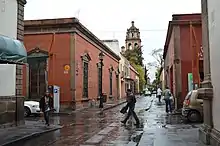
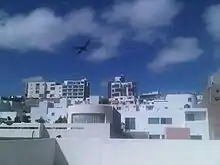
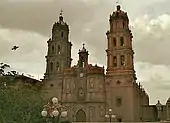
 From left to right and from top to the bottom: Buildings at Avenida Carranza, Secretariat of Foreign Affairs tower, St. Louis Cathedral, National Institute of Statistics and Geography tower, Plaza de San Francisco, Museo Nacional de la Máscara, Calle Universidad, San Luis Potosí historical centre, panorama of San Luis Potosí. | |
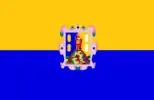 Flag | |
| Nickname(s): La Ciudad de los Jardínes (City of Gardens) | |
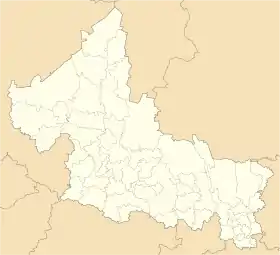  San Luis Potosí Location of San Luis Potosí in Mexico 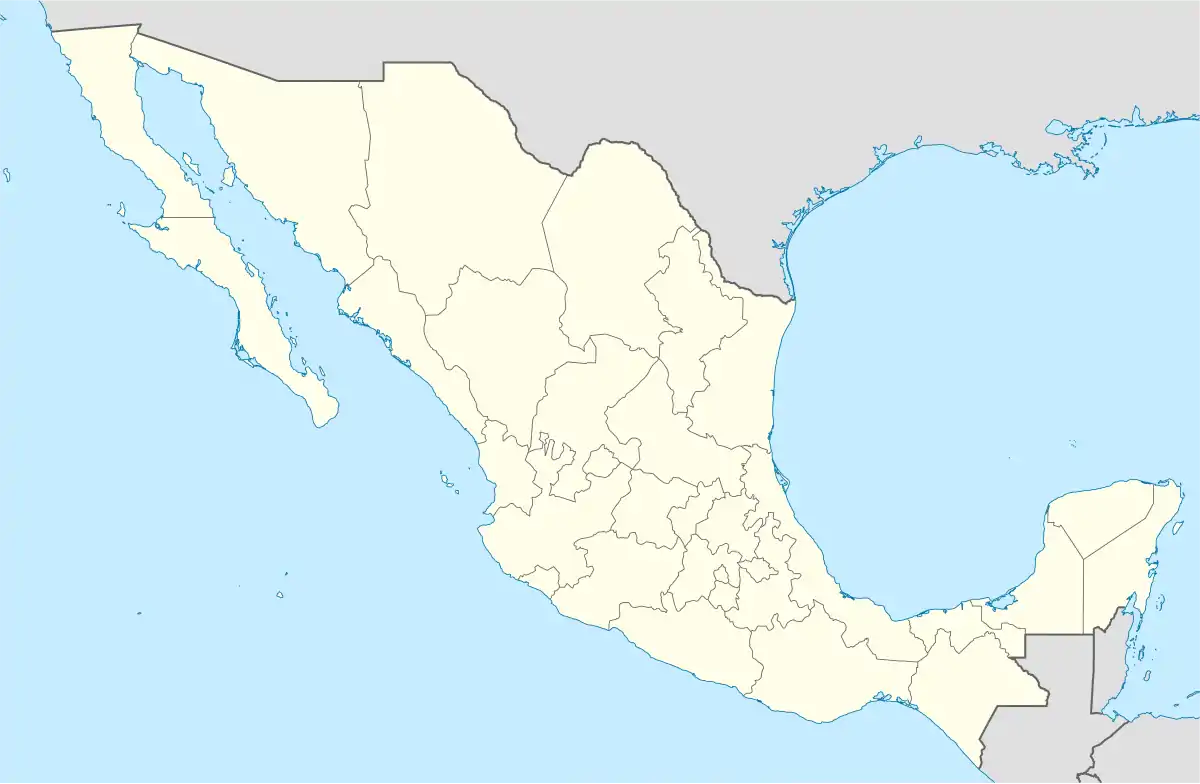 San Luis Potosí San Luis Potosí (Mexico) | |
| Coordinates: 22°9′4″N 100°58′34″W | |
| Country |  Mexico Mexico |
| State |  San Luis Potosí San Luis Potosí |
| Founded | November 3, 1592 |
| Founded as | Pueblo de San Luis Mesquitique |
| Government | |
| • Mayor | Xavier Nava |
| Area | |
| • Municipality | 385 km2 (149 sq mi) |
| Elevation | 1,864 m (6,115 ft) |
| Population (2015) | |
| • Municipality | 824,229 [1] |
| • Metro | 1,221,526 [1] |
| • Demonym | Potosino (a) |
| Time zone | UTC−6 (CST) |
| • Summer (DST) | UTC−5 (CDT) |
| Website | ayuntamientoslp.gob.mx |
The city is in the west-central part of the state of San Luis Potosí, at 22.16°N, 100.98°W. The municipality has an area of 1,443.14 square kilometres (557.20 square miles). It is part of the macroregion of Bajío.[2][3][4]
The city is named after Louis IX of France (also known in Mexico as San Luis Rey de Francia, Saint Louis, King of France), who is the city's patron saint. Potosí was added in reference to the fabulously rich mines of Potosí, Bolivia, discovered some forty years before the city was founded, as the exploitation of silver and gold mines in Cerro de San Pedro, near San Luis, was the main reason for the founding of the city in 1592.[5]
Now, the city is one of the main industrial centres in central Mexico with a prolific manufacturing industry. A number of foreign industries have chosen to invest in San Luis Potosí in the last decades thanks to its strategic location for trade, as the city is located halfway between Mexico City and the United States border, as well as in the middle of the triangle formed by the three largest cities in Mexico: Mexico City, Guadalajara, and Monterrey.[6]
Besides its industry-based economy, recently the city has been promoted as a touristic destination in central Mexico by state and federal programs. San Luis Potosí's historic center displays a great mixture of different artistic styles in many buildings and is a major example of colonial architecture in Mexico. In 2010, the historic center was listed as a UNESCO World Heritage Site within Camino Real de Tierra Adentro.[7]
History
Pre-colonial period
In pre-Hispanic times the territory now occupied by the state of San Luis Potosí included two cultural areas: Mesoamerica and Aridoamerica. While the southern and eastern regions of the state were occupied by Otomi and Huastec kingdoms, its northern and central-west regions, where the city of San Luis now is located, were inhabited by Chichimeca. Chichimeca is a generic term given to various nomadic ethnicities which inhabited the northern fringes of the Aztec Empire, which is now northern Mexico. As they were nomadic peoples, they did not build large cities nor have permanent settlements like most Mesoamerican civilizations. They are described by historians as very warlike peoples, living in continual wars among themselves. These tribes spoke different languages but their customs were similar.[8]
After the arrival of Spanish conquistadores and their indigenous allies into the territory now formed by the Mexican nation, it still took them about a century to colonize the northern territories in Aridoamerica. When the settlers founded the first settlements in the region in late 16th century, they had to struggle against constant attacks from Guachichil tribes. Extremely belligerent, these tribes attacked traders who traveled to Zacatecas in newly created routes. Conquistadores and religious missionaries called the place where San Luis now is located "El Gran Tunal" (Grand Place of Tuna fruit). Finally, in 1589, peace between Chichimeca peoples and Spanish settlers was reached thanks to efforts made by Miguel Caldera and Brother Diego de la Magdalena, which marked the end of the Chichimeca War.[8][9]
Colonial period
A Franciscan mission was established in the zone in 1583, nine years before the city's founding. In early 1592 the mines of Cerro de San Pedro were discovered. The lack of water in Cerro de San Pedro made impossible a new settlement in that specific area, as well as the proper exploitation of the minerals. A short distance away there was a valley where water was abundant. This originated the creation of a new township to facilitate the labors of mining extraction. The legal foundation of the town of San Luis Potosí was made in November 3, 1592, according to a charter commission raised by Viceroy Luís de Velasco and given to Miguel Caldera (considered the historic founder of the city) and Juan de Oñate.[10]
Independence
For a time in 1863, during the French invasion of Mexico, San Luis Potosí served as the capital of the republican government, under President Benito Juárez.
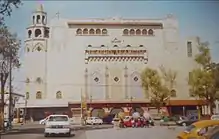
The Plan of San Luis Potosí, issued November 20, 1910, was the opening shot of Mexico's revolution against the dictator Porfirio Díaz. The 1910 presidential election was stolen when Díaz had his opponent Francisco I. Madero arrested and imprisoned. Madero fled and issued the Plan of San Luis Potosí, declaring the election void and calling upon Mexicans to take up arms against the government.
Today, the downtown is one of plazas and colonial architecture. The "Plaza de Armas" is the site of a cathedral and governor's palace (1770). The nearby "Templo de Nuestra Señora del Carmen," with its colorful tiled domes and famous altars, is considered among Mexico's finest churches. In addition, San Luis is home to the bullring Plaza de Toros Fermin Rivera.
Outside the center, a modern industrial city has begun to grow.
The Universidad Autónoma de San Luis Potosí (UASLP) is in the city. Based on a Jesuit College founded in 1624, the Instituto Científico y Literario was raised to the category of a university in 1923, and is recognized as one of Latin America's best universities.
Today
With a population of approximately one million inhabitants, it is now the twelfth largest metropolitan area in Mexico. The city is a major commercial and industrial center. It lies in an economically advantageous area at the heart of the "triangle" formed by the three largest cities in Mexico: Mexico City, Guadalajara and Monterrey.
In recent years, the city has attracted the attention of European and American investors; its political, social, and economic stability has convinced large multinational companies to assume a presence there and to buy land, on the outskirts of the city.
Recently, according to a survey conducted by the magazine The Investor, San Luis Potosí and its metropolitan area was the third-best place to live in Mexico.

| UNESCO World Heritage Site | |
|---|---|
| Part of | Camino Real de Tierra Adentro |
| Criteria | Cultural: II, IV |
| Reference | 1351-039 |
| Inscription | 2010 (34th Session) |
| Area | 70.34 ha |
| Buffer zone | 133.49 ha |
Geography
Climate
San Luis Potosí features a cold semi-arid climate (BSk) under the Köppen climate classification. Its high altitude means that the city experiences only a handful of hot days each year. While the climate exhibits noticeably cooler (January and February) and warmer periods (April and May) of the year, temperatures are relatively consistent throughout the course of the year. San Luis Potosí receives, on average, 392.1 mm (15.44 in) of precipitation annually, mostly seen from May through October. Snowfall is a rare occurrence in the city downtown, even though it is not uncommon in the city outskirts and in the highest parts of the greater San Luis Potosí area to get reports of frost and some snow during the winter.
The last recorded snowfalls occurred in January 1967, December 13, 1997, December 2011, March 2016, and December 8, 2017.
| Climate data for San Luis Potosí (1951–2010, extremes 1949–2017) | |||||||||||||
|---|---|---|---|---|---|---|---|---|---|---|---|---|---|
| Month | Jan | Feb | Mar | Apr | May | Jun | Jul | Aug | Sep | Oct | Nov | Dec | Year |
| Record high °C (°F) | 35.0 (95.0) |
32.0 (89.6) |
34.0 (93.2) |
35.0 (95.0) |
37.0 (98.6) |
37.0 (98.6) |
34.5 (94.1) |
32.5 (90.5) |
32.5 (90.5) |
32.0 (89.6) |
31.0 (87.8) |
29.5 (85.1) |
37.0 (98.6) |
| Average high °C (°F) | 20.6 (69.1) |
22.5 (72.5) |
25.4 (77.7) |
27.7 (81.9) |
28.4 (83.1) |
26.7 (80.1) |
24.8 (76.6) |
25.0 (77.0) |
23.8 (74.8) |
23.2 (73.8) |
22.4 (72.3) |
20.7 (69.3) |
24.3 (75.7) |
| Daily mean °C (°F) | 13.0 (55.4) |
14.7 (58.5) |
17.4 (63.3) |
19.8 (67.6) |
21.0 (69.8) |
20.4 (68.7) |
19.1 (66.4) |
19.2 (66.6) |
18.3 (64.9) |
17.0 (62.6) |
15.3 (59.5) |
13.6 (56.5) |
17.4 (63.3) |
| Average low °C (°F) | 5.5 (41.9) |
6.8 (44.2) |
9.3 (48.7) |
11.9 (53.4) |
13.7 (56.7) |
14.1 (57.4) |
13.4 (56.1) |
13.4 (56.1) |
12.9 (55.2) |
10.8 (51.4) |
8.2 (46.8) |
6.4 (43.5) |
10.5 (50.9) |
| Record low °C (°F) | −7.0 (19.4) |
−6.5 (20.3) |
−3.0 (26.6) |
−1.0 (30.2) |
1.0 (33.8) |
6.0 (42.8) |
1.5 (34.7) |
7.0 (44.6) |
1.0 (33.8) |
0.7 (33.3) |
−3.0 (26.6) |
−6.0 (21.2) |
−7.0 (19.4) |
| Average precipitation mm (inches) | 13.6 (0.54) |
7.9 (0.31) |
6.4 (0.25) |
19.6 (0.77) |
38.2 (1.50) |
64.3 (2.53) |
66.6 (2.62) |
58.6 (2.31) |
65.2 (2.57) |
30.7 (1.21) |
11.2 (0.44) |
9.8 (0.39) |
392.1 (15.44) |
| Average precipitation days (≥ 0.1 mm) | 2.2 | 1.6 | 1.5 | 2.9 | 5.6 | 7.4 | 7.9 | 7.0 | 8.4 | 5.0 | 1.8 | 1.9 | 53.2 |
| Average relative humidity (%) | 58.6 | 53.2 | 45.6 | 46.9 | 53.2 | 62.0 | 67.9 | 66.9 | 70.2 | 66.7 | 61.5 | 59.7 | 59.4 |
| Mean monthly sunshine hours | 215.7 | 229.0 | 268.8 | 258.6 | 284.2 | 260.3 | 244.4 | 251.6 | 193.5 | 219.8 | 227.3 | 218.5 | 2,871.7 |
| Source 1: Servicio Meteorológico Nacional[11][12] | |||||||||||||
| Source 2: World Meteorological Organization (relative humidity and sun 1981–2010)[13] | |||||||||||||
Local cuisine
Potosinos (as residents of the city are referred to) are proud of their bright orange enchiladas potosinas, often served with refried beans and guacamole.
The nearby town of Santa María del Río provides the state with its sparkling mineral water, Agua de Lourdes. The water fills both store shelves and the cocktails of Potosinos, who claim the water can cure a hangover.
Important buildings
Besides having hundreds of classically designed buildings, the city is also home to some of the most modern and interesting buildings in Mexico.

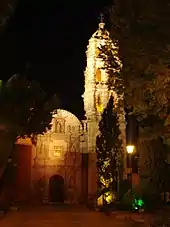
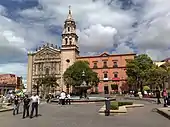
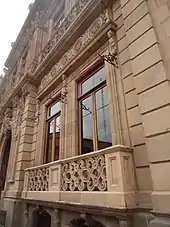
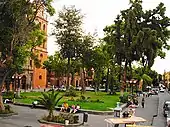
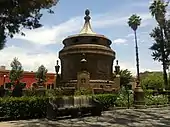

In recent years the city has faced a boom in the construction of buildings and museums. Among the most prominent are the Laberinto Museum of Science and Arts, which was an investment of more than $200 million pesos, in 9000 m2 of land in the Tangamanga I Park. The project was designed by architect Ricardo Legorreta and promoted by the governor of San Luis Potosí, Marcelo de los Santos Fraga. It is a museum of aesthetic proportions similar to that of the Papalote Museum of Children in Mexico City, with the addition that the materials used in its construction, especially the quarry, make it a real Potosino manufacturing building. The floor of the museum occupies a total of 6.5 ha, which have gardens with species endemic to the region and a central source. Its interior is divided into a total of six rooms arranged in galleries. Their proportions will allow visitors to make an interactive tour that will switch themes of the art museum with samples of science and technology.
Currently, the two tallest buildings in the city are the EME Building and the Muniz Werger Building. The EME Building was built in 1988 and measures 64 m to the top floor, with the spiral 75 m, with the antenna 98 meters. It has 17 floors, with 10 levels of parking at the street for a capacity of 1500 cars, and it houses mixed offices. The Muniz Werger Building, which measures 58 m for the top floor, 65 m with the spiral, and 80 m with the antenna, has 15 storeys and 2 elevators. Its construction began in 1991 and finished in 1993 and it is considered the most modern building in the city.
There are currently two buildings under construction and five buildings in the project. Corporate Tangamanga, which measured 41 m, will have 14 floors; its construction began in 2005 and will end in 2008. This building houses offices and mixed Star Medical Tower, 40 m and will have 8 floors.
Commerce and transportation
Various supermarket chains operate in the city, such as, H-E-B, Commercial Mexicana, Costco, Walmex (Wal-mart, Sam's Club, Superama, Vips, Bodega Aurrera and Suburbia), Chedraui, and Home Depot.
The principal commercial centers of the city are Plaza Tangamanga, Plaza el Dorado, Plaza Sendero, Plaza Citadella and Plaza San Luis.
In the city, various banks also operate, such as, BBVA Bancomer, Banamex, HSBC, Banorte, Santander-Serfin, Actinver, Scotiabank-Inverlat, and BanRegio.
The city's transportation consists of a public system, based on urban buses that move throughout the metropolitan area. Besides, the city contains one of the highest concentrations of taxis.
Ponciano Arriaga International Airport is the city's main airway point. It is around 17 km (11 mi) from the city's downtown and it is the state's most important airway terminal.
Higher education and scientific research
These places offer degrees at the bachelor level:
- El Colegio de San Luis
- Instituto Potosino de Investigación Científica y Tecnológica, A.C. (IPICYT)
- Instituto Tecnologico de San Luis Potosí (ITSLP)
- Instituto Tecnologico y de Estudios Superiores de Monterrey - Campus San Luis (ITESM)
- Universidad Autonoma de San Luis Potosí (UASLP)
- Universidad del Centro de Mexico (UCEM)
- Universidad Cuauhtemoc - Campus San Luis Potosí
- Universidad Interamericana del Norte - Campus San Luis
- Universidad Interamericana para el Desarrollo - Campus San Luis
- Universidad Marista - Campus San Luis Potosí
- Universidad Pedagogica Nacional - Campus San Luis Potosí
- Universidad Politécnica de San Luis Potosí (UPSLP)
- Universidad Potosina
- Universidad Tangamanga
- Universidad Tec Milenio
- Universidad Tecnológica de San Luis Potosí
IPICYT, UASLP and El Colegio de San Luis are also world class research institutions that offer doctoral degrees.
Government
Mayors and municipal presidents of San Luis Potosí City
Citizens who have served as mayors or municipal presidents of San Luis Potosí City
| Term | Officer | Office | Notes |
|---|---|---|---|
| 1592[14] | Miguel Caldera | Senior judge | |
| 1592 | Juan de Oñate | Mayor | |
| 1593 | Juan de Oñate | Mayor | Until 25 October |
| 1593 | Juan López del Riego | Mayor | Appointed 13 October |
| 1594 | Juan López del Riego | Mayor | |
| 1595 | Juan López del Riego | Mayor | |
| 1596 | Juan López del Riego | Mayor | Ceased at the beginning of the year |
| 1596 | Luis de Valderrama Saavedra | Mayor | |
| 1597 | Luis de Valderrama Saavedra | Mayor | |
| 1598 | Luis de Valderrama Saavedra | Mayor | |
| 1599 | Luis de Valderrama Saavedra | Mayor | |
| 1599 | Leonel de Cervantes | Mayor | At the end of the year |
| 1600 | Leonel Cervantes | Mayor | |
| 1601 | Leonel Cervantes | Mayor | |
| 1602 | Leonel Cervantes | Mayor | |
| 1603 | Joan de Frías Salazar | Mayor | |
| 1604 | Joan de Frías Salazar | Mayor | |
| 1605 | Joan de Frías Salazar | Mayor | Ceased in June |
| 1606 | Juan de Marmolejo | Mayor | |
| 1607 | Juan de Marmolejo | Mayor | Ceased in April |
| 1607 | Alonso de Oñate | Mayor | |
| 1608 | Alonso de Oñate | Mayor | |
| 1609 | Alonso de Oñate | Mayor | |
| 1609 | Francisco Mejía de Carvajal | Mayor | In November |
| 1610 | Francisco Mejía de Carvajal | Mayor | |
| 1611 | Francisco Mejía de Carvajal | Mayor | He ceased in November, and died |
| 1612 | Juan Zaldívar Mendoza | Mayor | |
| 1613 | Juan Zaldívar Mendoza | Mayor | Ceased |
| 1613 | Pedro Salazar | Mayor | He was already in office in August |
| 1614 | Pedro de Salazar | Mayor | |
| 1615 | Pedro Salazar | Mayor | |
| 1616 | Pedro Salazar | Mayor | |
| 1617 | Pedro Salazar | Mayor | |
| 1618 | Pedro Salazar | Mayor | |
| 1619 | Alonso Guajardo Mejía | Mayor | |
| 1620 | Alonso Guajardo Mejía | Mayor | |
| 1621 | Alonso Guajardo Mejía | Mayor | Ceased in the middle of the year |
| 1621 | Alonso Tello Guzmán | Mayor | |
| 1622 | Alonso Tello Guzmán | Mayor | |
| 1623 | Alonso Tello Guzmán | Mayor | He died on 27 January |
| 1623 | Juan Cerezo de Salamanca | Mayor | Since March |
| 1624 | Juan de Cerezo de Salamanca | Mayor | |
| 1625 | Juan de Cerezo de Salamanca | Mayor | |
| 1626 | Juan de Cerezo de Salamanca | Mayor | Ceased in July |
| 1626 | Diego de Astudillo Carrillo | Mayor | At the end of the year; days later he left office |
| 1627 | Martín del Pozo y Aguilar | Mayor | |
| 1628 | Martín del Pozo y Aguilar | Mayor | |
| 1629 | Martín del Pozo y Aguilar | Mayor | |
| 1630 | Martín del Pozo y Aguilar | Mayor | |
| 1631 | Martín del Pozo y Aguilar | Mayor | Ceased in June |
| 1631 | Pedro de Vértiz | Mayor | |
| 1632 | Pedro de Vértiz | Mayor | |
| 1633 | Pedro de Vértiz | Mayor | |
| 1634 | Pedro de Vértiz | Mayor | |
| 1635 | Pedro de Vértiz | Mayor | |
| 1636 | Pedro de Vértiz | Mayor | |
| 1637 | Lope de Mozalve y Almendáriz | Mayor | |
| 1638 | Lope de Mozalve y Almendáriz | Mayor | |
| 1639 | Lope de Mozalve y Almendáriz | Mayor | |
| 1640 | Lope de Mozalve y Almendáriz | Mayor | |
| 1640 | Álvaro Ramírez de Arellano | Mayor | February |
| 1641 | Lope de Mozalve y Almendáriz | Mayor | |
| 1641 | León de Alza | Mayor | Appointed 20 September 1640 |
| 1642 | León de Alza | Mayor | |
| 1643 | León de Alza | Mayor | |
| 1644 | León de Alza | Mayor | |
| 1645 | León de Alza | Mayor | |
| 1646 | León de Alza | Mayor | |
| 1647 | León de Alza | Mayor | Ceased by the end of the year |
| 1647 | Nicolás de Bonilla y Bastida | Mayor | At the end of the year |
| 1648 | Nicolás de Bonilla y Bastida | Mayor | |
| 1649 | Nicolás de Bonilla y Bastida | Mayor | |
| 1650 | Nicolás de Bonilla y Bastida | Mayor | Ceased in March |
| 1650 | Alonso de Guzmán | Mayor | |
| 1651 | Alonso de Guzmán | Mayor | |
| 1652 | Alonso de Guzmán | Mayor | Ceased |
| 1652 | Diego de Ulloa Pereira | Mayor | Since March |
| 1653 | Diego de Ulloa Pereira | Mayor | Ceased in November |
| 1653 | Juan Antonio de Irurzun | Mayor | |
| 1654 | Juan Antonio de Irurzun | Mayor | Took office in July |
| 1655 | Juan Antonio de Irurzun | Mayor | |
| 1656 | Juan Antonio de Irurzun | Mayor | September |
| 1657 | Juan Antonio de Irurzun | Mayor | |
| 1658 | Bernardo Pérez de Azpilicueta | Mayor | |
| 1659 | Bernardo Pérez de Azpilicueta | Mayor | He ceased on 21 April, but continued until January 1660 |
| (1659) | Tristán Luna y Arellano | Mayor | Appointed by real provision on 9 May |
| 1660 | Bernardo Pérez de Azpilicueta | Mayor | |
| 1660 | Tristán Luna y Arellano | Mayor | |
| 1661 | Tristán Luna y Arellano | Mayor | Ceased |
| 1661 | Juan Ruiz de Zavala y Lois | Mayor | March |
| 1661 | Fernando de Torres y Ávila | Mayor | June |
| 1662 | Fernando de Torres y Ávila | Mayor | |
| 1663 | Fernando de Torres y Ávila | Mayor | |
| 1664 | Fernando de Torres y Ávila | Mayor | |
| 1664 | Pedro Sáenz Izquierdo | Mayor | Appointed on 11 November |
| 1665 | Pedro Sáenz Izquierdo | Mayor | |
| 1666 | Pedro Sáenz Izquierdo | Mayor | |
| 1666 | Bartolomé de Estrada y Valdés | Mayor | Appointed on 17 December |
| 1666 | Diego de Valdés | Mayor | Appointed on 20 December |
| 1667 | Bartolomé de Estrada y Valdés | Mayor | |
| 1668 | Bartolomé de Estrada y Valdés | Mayor | Ceased in December |
| 1668 | Alfonso Flores y Valdés | Mayor | Appointed on 14 October |
| 1669 | Alfonso Flores y Valdés | Mayor | |
| 1670 | Alfonso Flores y Valdés | Mayor | Ceased |
| 1670 | Juan Ruiz de Zavala y Lois | Mayor | Appointed on 16 November |
| 1671 | Juan Ruiz de Zavala y Lois | Mayor | |
| 1672 | Juan Ruiz de Zavala y Lois | Mayor | |
| 1673 | Juan Ruiz de Zavala y Lois | Mayor | |
| 1674 | Feliciano Hurtado de Amézaga Salazar | Mayor | January to June |
| 1674 | Martín de Mendalde | Mayor | Appointed on 8 February; arrived in July |
| 1675 | Martín de Mendalde | Mayor | |
| 1676 | Martín de Mendalde | Mayor | |
| 1677 | Martín de Mendalde | Mayor | |
| 1677 | Francisco de Gatica | Mayor | |
| 1677 | Pedro de Ullate Ordóñez | Mayor | December |
| 1678 | Pedro de Ullate Ordóñez | Mayor | |
| 1679 | Pedro de Ullate Ordóñez | Mayor | |
| 1680 | Pedro de Ullate Ordóñez | Mayor | |
| 1680 | Luis Francisco de Ullate y Escobedo | Mayor | June to December |
| 1680 | Juan de Camacho Xayna | Mayor | 1 December |
| 1681 | Juan de Camacho Xayna | Mayor | |
| 1682 | Juan de Camacho Xayna | Mayor | |
| 1683 | Juan de Camacho Xayna | Mayor | |
| 1684 | Juan de Camacho Xayna | Mayor | |
| 1685 | Juan de Camacho Xayna | Mayor | Until mid June |
| 1685 | Juan Bautista Ansaldo de Peralta | Mayor | |
| 1686 | Juan Bautista Ansaldo de Peralta | Mayor | |
| 1687 | Juan Bautista Ansaldo de Peralta | Mayor | |
| 1687 | Bernardo de Iñiguez de Vayo | Mayor | Late July |
| 1688 | Bernardo de Iñiguez de Vayo | Mayor | |
| 1689 | Bernardo de Iñiguez de Vayo | Mayor | |
| 1690 | Bernardo de Iñiguez de Vayo | Mayor | |
| 1690 | Alonso Muñoz de Castiblanque | Mayor | In June |
| 1691 | Alonso Muñoz de Castiblanque | Mayor | |
| 1692 | Alonso Muñoz de Castiblanque | Mayor | Ceased |
| 1692 | Domingo Terán de los Ríos | Mayor | 25 August |
| 1693 | Domingo Terán de los Ríos | Mayor | |
| 1693 | Pascual Álvarez Serrano | Mayor | February |
| 1694 | Domingo Terán de los Ríos | Mayor | Ceased |
| 1694 | Francisco Eusebio del Castillo y Saavedra | Mayor | Entered around the month of March |
| 1695 | Francisco Eusebio del Castillo y Saavedra | Mayor | |
| 1696 | Francisco Eusebio del Castillo y Saavedra | Mayor | |
| 1697 | Francisco Eusebio del Castillo y Saavedra | Mayor | |
| 1698 | Francisco Eusebio del Castillo y Saavedra | Mayor | |
| 1698 | Antonio Fernández del Rivero | Mayor | |
| 1699 | Antonio Fernández del Rivero | Mayor | |
| 1700 | Antonio Fernández del Rivero | Mayor | |
| 1701 | Antonio Fernández del Rivero | Mayor | |
| 1701 | Juan Orejón de la Lama y Medrano | Mayor | |
| 1702 | Juan Orejón de la Lama y Medrano | Mayor | |
| 1703 | Juan Orejón de la Lama y Medrano | Mayor | |
| 1704 | Juan Orejón de la Lama y Medrano | Mayor | |
| 1705 | Juan Orejón de la Lama y Medrano | Mayor | |
| 1706 | Manuel Diez Llanos | Mayor | |
| 1706 | Andrés Álvarez Maldonado | Mayor | |
| 1707 | Andrés Álvarez Maldonado | Mayor | |
| 1708 | Andrés Álvarez Maldonado | Mayor | |
| 1709 | Andrés Álvarez Maldonado | Mayor | Ceased on 23 February |
| 1709 | Coronel Sebastián de Oloris | Mayor | |
| 1710 | Coronel Sebastián de Oloris | Mayor | |
| 1711 | Coronel Sebastián de Oloris | Mayor | |
| 1712 | Coronel Sebastián de Oloris | Mayor | |
| 1713 | Coronel Sebastián de Oloris | Mayor | |
| 1714 | Francisco José Vélez Escalante | Mayor | |
| 1715 | Francisco José Vélez Escalante | Mayor | |
| 1716 | Francisco José Vélez Escalante | Mayor | |
| 1716 | Ventura de Zavala y Balanza | Mayor | |
| 1717 | Ventura de Zavala y Balanza | Mayor | |
| 1718 | Leonardo de la Mora y Torres | Mayor | |
| 1719 | Leonardo de la Mora y Torres | Mayor | |
| 1719 | Juan Ángel Roldán | Mayor | |
| 1720 | Leonardo de la Mora y Torres | Mayor | |
| 1721 | Leonardo de la Mora y Torres | Mayor | |
| 1719 | Juan Leandro Pérez Serrano | Mayor | 30 May |
| 1722 | Juan Leandro Pérez Serrano | Mayor | |
| 1723 | Juan Leandro Pérez Serrano | Mayor | |
| 1723 | Antonio Ruiz de Huidobro y Sarabia | Mayor | 13 October 1722 |
| 1724 | Antonio Ruiz de Huidobro y Sarabia | Mayor | |
| 1725 | Antonio Ruiz de Huidobro y Sarabia | Mayor | |
| 1726 | Antonio Ruiz de Huidobro y Sarabia | Mayor | |
| 1727 | Antonio Ruiz de Huidobro y Sarabia | Mayor | |
| 1728 | Antonio Ruiz de Huidobro y Sarabia | Mayor | |
| 1729 | Antonio Ruiz de Huidobro y Sarabia | Mayor | Passed away |
| 1729 | Fernando Manuel Monroy y Carrillo | Mayor | 17 March |
| 1730 | Fernando Manuel Monroy y Carrillo | Mayor | |
| 1731 | Fernando Manuel Monroy y Carrillo | Mayor | Ceased in June |
| 1731 | Victoriano de Oliván | Mayor | |
| 1732 | Victoriano de Oliván | Mayor | |
| 1733 | Victoriano de Oliván | Mayor | |
| 1734 | Victoriano de Oliván | Mayor | |
| 1734 | Antonio Francisco de Medina y Calderón | Mayor | September |
| 1735 | Antonio Francisco de Medina y Calderón | Mayor | |
| 1736 | Victoriano de Oliván | Mayor | |
| 1737 | Victoriano de Oliván | Mayor | |
| 1738 | Victoriano de Oliván | Mayor | |
| 1739 | Victoriano de Oliván | Mayor | |
| 1740 | Victoriano de Oliván | Mayor | |
| 1740 | Luis Vélez de las Cuevas Cabeza de Vaca | Mayor | December |
| 1741 | Luis Vélez de las Cuevas Cabeza de Vaca | Mayor | |
| 1742 | Miguel Yánez | Mayor | 26 January |
| 1743 | Miguel Yánez | Mayor | |
| 1744 | Miguel Yánez | Mayor | |
| 1745 | Miguel Yánez | Mayor | |
| 1745 | Julián de Corzánigo | Mayor | April |
| 1746 | Julián de Corzánigo | Mayor | |
| 1747 | Julián de Corzánigo | Mayor | |
| 1748 | Juan Coutiño de los Ríos | Mayor | August |
| 1749 | Juan Coutiño de los Ríos | Mayor | |
| 1749 | Luis Lasso de la Vega y Ponce de León | Mayor | |
| 1750 | Luis Lasso de la Vega y Ponce de León | Mayor | |
| 1751 | Luis Lasso de la Vega y Ponce de León | Mayor | |
| 1752 | Luis Lasso de la Vega y Ponce de León | Mayor | |
| 1753 | Luis Lasso de la Vega y Ponce de León | Mayor | |
| 1753 | Joseph Xavier Gatuno y Lemos | Mayor | |
| 1754 | Joseph Xavier Gatuno y Lemos | Mayor | |
| 1755 | Joseph Xavier Gatuno y Lemos | Mayor | |
| 1756 | Joseph Xavier Gatuno y Lemos | Mayor | |
| 1757 | Joseph Xavier Gatuno y Lemos | Mayor | |
| 1758 | Joseph Xavier Gatuno y Lemos | Mayor | |
| 1759 | Joseph Xavier Gatuno y Lemos | Mayor | |
| 1759 | Tomás de Costa y Uribe | Mayor | |
| 1760 | Tomás de Costa y Uribe | Mayor | |
| 1761 | Tomás de Costa y Uribe | Mayor | |
| 1762 | Tomás de Costa y Uribe | Mayor | |
| 1763 | Tomás de Costa y Uribe | Mayor | |
| 1764 | Tomás de Costa y Uribe | Mayor | |
| 1765 | Tomás de Costa y Uribe | Mayor | Ceased on 27 January |
| 1765 | Andrés de Urbina Gaviria y Eguíluz | Mayor | |
| 1766 | Andrés de Urbina Gaviria y Eguíluz | Mayor | |
| 1767 | Andrés de Urbina Gaviria y Eguíluz | Mayor | |
| 1768 | Andrés de Urbina Gaviria y Eguíluz | Mayor | |
| 1769 | Andrés de Urbina Gaviria y Eguíluz | Mayor | |
| 1770 | Andrés de Urbina Gaviria y Eguíluz | Mayor | Ceased on 2 September |
| 1771 | Fernando Rubín de Celis Pariente y Noriega | Mayor | |
| 1772 | Fernando Rubín de Celis Pariente y Noriega | Mayor | |
| 1773 | Fernando Rubín de Celis Pariente y Noriega | Mayor | |
| 1774 | Antonio Joaquín de Llano y Villaurrutia | Mayor | |
| 1775 | Antonio Joaquín de Llano y Villaurrutia | Mayor | |
| 1776 | Antonio Joaquín de Llano y Villaurrutia | Mayor | Ceased in July |
| 1776 | Jacinto Pérez de arroyo | Mayor | |
| 1777 | Jacinto Pérez de arroyo | Mayor | |
| 1778 | Jacinto Pérez de arroyo | Mayor | |
| 1779 | Jacinto Pérez de arroyo | Mayor | Died on 29 December |
| 1779 | Manuel Días Fernández | Mayor | 29 December |
| 1780 | Manuel Días Fernández | Mayor | |
| 1781 | Manuel Días Fernández | Mayor | |
| 1782 | Manuel Días Fernández | Mayor | Ceased in March |
| 1782 | Juan Antonio Flores | Mayor | |
| 1782 | Joseph de Castillo y Loaeza | Mayor | |
| 1783 | Joseph de Castillo y Loaeza | Mayor | |
| 1784 | Joseph de Castillo y Loaeza | Mayor | |
| 1785 | Joseph de Castillo y Loaeza | Mayor | |
| 1786 | Joseph de Castillo y Loaeza | Mayor | |
| 1787 | Joseph de Castillo y Loaeza | Mayor | Ceased |
| 1787 | Bruno Díaz de Salcedo | Intendant | 25 October |
| 1788 | Bruno Díaz de Salcedo | Intendant | |
| 1789 | Bruno Díaz de Salcedo | Intendant | |
| 1790 | Bruno Díaz de Salcedo | Intendant | |
| 1791 | Bruno Díaz de Salcedo | Intendant | |
| 1792 | Bruno Díaz de Salcedo | Intendant | |
| 1793 | Bruno Díaz de Salcedo | Intendant | |
| 1794 | Bruno Díaz de Salcedo | Intendant | |
| 1795 | Bruno Díaz de Salcedo | Intendant | |
| 1796 | Bruno Díaz de Salcedo | Intendant | |
| 1797 | Bruno Díaz de Salcedo | Intendant | |
| 1798 | Bruno Díaz de Salcedo | Intendant | |
| 1799 | Bruno Díaz de Salcedo | Intendant | Died on 2 November |
| 1799 | Vicente Bernabéu | Acting intendant | |
| 1800 | Vicente Bernabéu | Acting intendant | |
| 1800 | Cristóbal de Corbalán | Acting intendant | |
| 1801 | Cristóbal de Corbalán | Acting intendant | |
| 1801 | Onésimo Antonio Durán | Intendant | |
| 1802 | Onésimo Antonio Durán | Intendant | |
| 1803 | Onésimo Antonio Durán | Intendant | Ceased on 22 November |
| 1803 | Manuel Ampudia | Intendant | |
| 1804 | Manuel Ampudia | Intendant | Left on 30 November |
| 1805 | Joseph Ignacio Vélez | Acting intendant | Ceased in February |
| 1805 | Joseph Manuel Ruiz de Aguirre | Acting intendant | |
| 1806 | Joseph Manuel Ruiz de Aguirre | Acting intendant | |
| 1807 | Joseph Manuel Ruiz de Aguirre | Acting intendant | |
| 1808 | Joseph Manuel Ruiz de Aguirre | Acting intendant | |
| 1809 | Joseph Manuel Ruiz de Aguirre | Acting intendant | |
| 1810 | Joseph Manuel Ruiz de Aguirre | Acting intendant | |
| 1810 | Manuel Jacinto de Acevedo | Intendant | |
| 1811 | Manuel Jacinto de Acevedo | Intendant | |
| 1812 | Manuel Jacinto de Acevedo | Intendant | |
| 1813 | Manuel Jacinto de Acevedo | Intendant and corregidor | |
| 1813 | Manuel Jacinto de Acevedo | Intendant and political chief | 4 July |
| 1814 | Manuel Jacinto de Acevedo | Intendant | |
| 1815 | Manuel Jacinto de Acevedo | Intendant | |
| 1816 | Manuel Jacinto de Acevedo | Intendant | |
| 1817 | Manuel Jacinto de Acevedo | Intendant | |
| 1818 | Manuel Jacinto de Acevedo | Intendant | |
| 1819 | Manuel Jacinto de Acevedo | Intendant | |
| 1820 | Manuel Jacinto de Acevedo | Intendant | |
| 1821 | Manuel Jacinto de Acevedo | Intendant and political chief | |
| 1821 | Manuel Jacinto de Acevedo | Intendant and chief of the Army | |
| 1822 | Manuel Jacinto de Acevedo | Intendant | He retired on 20 March |
| 1823 | José Ildefonso Díaz de León | Political chief | |
| 1824 | José Ildefonso Díaz de León | Acting governor | |
| 1825 | Pantaleón de Ipiña | Mayor | |
| 1826 | Eulogio Esnaurrízar | Mayor | |
| 1827 | Ignacio de Aztegui | Prefect | |
| 1828 | Ignacio de Aztegui | Prefect | |
| 1829 | Ignacio de Aztegui | Prefect | Resigned |
| 1829 | José Gregorio Sousa | Prefect | Since 1 February |
| 1830 | Jesús Valdés | Prefect | Ceased |
| 1830 | Manuel Othón | Prefect | |
| 1830 | Teniente Coronel Manuel Sánchez | Prefect | 21 July |
| 1831 | Andrés de la Gándara | Mayor | |
| 1832 | Andrés de la Gándara | Mayor | |
| 1833 | José Vicente Liñán | Prefect | |
| 1834 | Pedro Hernández | Prefect | |
| 1835 | Andrés de la Gándara | Prefect | |
| 1836 | Andrés de la Gándara | Mayor | |
| 1837 | Francisco de P. Cabrera y Alderete | Prefect | |
| 1838 | José María Otaegui | Mayor | |
| 1839 | Francisco de P. Cabrera y Alderete | Prefect | |
| 1840 | José María Faz y Cardona | Prefect | |
| 1841 | José Mateo Terán | Prefect | |
| 1842 | José Mateo Terán | Prefect | |
| 1843 | José Eulogio Esnaurrízar | Prefect | Resigned in May |
| 1844 | Pablo de la Barrera | Prefect | |
| 1845 | Francisco Escalante | Prefect | |
| 1845 | Luzardo Lechón | Prefect | |
| 1846 | Juan Nepomuceno González | Prefect | |
| 1847 | Francisco Fregoso | Prefect | |
| 1848 | Mariano Martínez | Prefect | |
| 1849 | Silvestre López Portillo | Prefect | |
| 1850 | Silvestre López Portillo | Prefect | |
| 1851 | Silvestre López Portillo | Prefect | |
| 1851 | José Álvarez y Sagástegui | Prefect | |
| 1852 | Nicolás Mascorro | Prefect | |
| 1853 | José Álvarez y Sagastegui | Prefect | |
| 1853 | Nicolás Mascorro | Acting prefect | |
| 1853 | Eulalio Degollado | Prefect | |
| 1854 | General Pánfilo Barasroda | Prefect | |
| 1855 | General Pánfilo Barasroda | Prefect | |
| 1855 | Eulalio Degollado | Prefect | |
| 1855 | Manuel Vejo | President of the City Council | |
| 1855 | Camilo Bros | Prefect | |
| 1855 | Juan Othón | Prefect | |
| 1855 | Nicolás Mascorro | Mayor | |
| 1856 | Carlos María Escobar | Prefect | |
| 1857 | José María Aranda | Prefect | |
| 1857 | Francisco López de Nava | Acting prefect | |
| 1858 | Mariano Gordoa | Prefect | |
| 1858 | Nicolás Mascorro | Prefect | |
| 1859 | Pedro Diez Gutiérrez | Prefect | |
| 1859 | Ramón Calvillo | Mayor | |
| 1860 | Juan Othón | Prefect | |
| 1860 | Ambrosio Espinoza | Prefect | |
| 1861 | ?? | Prefect | |
| 1862 | ?? | Prefect | |
| 1863 | José Castillo | Acting prefect | |
| 1864 | José Castillo | Acting prefect | |
| 1864 | Nicolás Mascorro | Municipal prefect | Until August |
| 1864 | Pedro Diez Gutiérrez | Municipal prefect | |
| 1865 | Pedro Diez Gutiérrez | Municipal prefect | Ceased in June |
| 1865 | Nicolás Mascorro | Municipal prefect | Ceased in November |
| 1865 | Francisco Estrada | Municipal prefect | |
| 1866 | Francisco Estrada | Prefect municipal mayor | |
| 1866 | Octaviano Cabrera Lacavex | Prefec municipal mayor | 16 March |
| 1866 | Juan Othón | Prefect municipal mayor | 27 October |
| 1866 | Isidro Bustamante | Acting political chief | |
| 1867 | Toribio Saldaña | Political chief | |
| 1867 | Hilario Delgado | Political chief | |
| 1868 | José Trinidad Domínguez | Political chief | |
| 1869 | Rafael Montante | Political chief | |
| 1870 | Francisco de P. Palomo | Political chief | |
| 1871 | Lino Maldonado | Acting political chief | In May |
| 1871 | Florencio Cabrera Lacavex | President of the City Council | |
| 1872 | Manuel Muro | Political chief | |
| 1872 | Lino Maldonado | Political chief | |
| 1873 | Tomás Ortiz de Parada | President of the City Council | |
| 1874 | José Encarnación Ipiña | Political chief president | |
| 1875 | Agustín Álvarez | Proprietary political chief | |
| 1876 | Agustín Álvarez | Proprietary political chief | |
| 1877 | Antonio Espinoza y Cervantes | Proprietary political chief | |
| 1877 | Manuel Muro | Proprietary political chief | 22 June |
| 1878 | Mónico Rubalcaba | Proprietary political chief | |
| 1879 | Nabor Macías | Proprietary political chief | |
| 1880 | Francisco Limón | Proprietary political chief | |
| 1881 | Indalecio Rodríguez | Proprietary political chief | |
| 1882 | Ladislao Tovar | Proprietary political chief | |
| 1883 | Matías Hernández Soberón | Proprietary political chief | |
| 1884 | Antonio Montero | Proprietary political chief | |
| 1885 | Macedonio Gómez | Proprietary political chief | |
| 1886 | Antonio Espinoza y Cervantes | Proprietary political chief | |
| 1887 | Antonio Espinoza y Cervantes | Proprietary political chief | |
| 1888 | Antonio Espinoza y Cervantes | Proprietary political chief | |
| 1889 | Antonio Espinoza y Cervantes | Proprietary political chief | |
| 1890 | Antonio Espinoza y Cervantes | Proprietary political chief | |
| 1891 | Francisco Bustamante | Proprietary political chief | |
| 1892 | Francisco Bustamante | Proprietary political chief | |
| 1893 | Francisco Bustamante | Proprietary political chief | |
| 1894 | Francisco Bustamante | Proprietary political chief | |
| 1895 | Francisco Bustamante | Proprietary political chief | |
| 1896 | Francisco Bustamante | Proprietary political chief | |
| 1897 | Blas Escontría Bustamante | Proprietary political chief | |
| 1898 | Blas Escontría Bustamante | Proprietary political chief | |
| 1899 | Pedro Barrenechea | Proprietary political chief | |
| 1900 | Pedro Barrenechea | Proprietary political chief |
| Term | Municipal president | Political party | Notes |
|---|---|---|---|
| 1901-1916 | NA | ||
| 1917 | Severino Martínez Gómez | ||
| 1919 | Refugio T. Yáñez | ||
| 1921 | Antonio Humara Acebo | ||
| 1922 | Pedro Hernández | ||
| 1923 | Pedro Hernández | ||
| 1925 | Pedro Hernández | President of the Municipal Council | |
| 1926 | Eugenio B. Jiménez | ||
| 1928-1929 | Marcelino Zúñiga | ||
| 1931 | Efrén González | PNR  | |
| 1932 | Rutilio Alamilla | PNR | |
| 1933 | Vicente Segura | PNR | |
| 1934-1935 | Hipólito Cedillo | PNR | |
| 1936-1937 | José García Zamora | PNR | |
| 1938 | Ernesto Higuera | PNR | |
| 1938 | Alberto Z. Araujo | President of the Municipal Council | |
| 1939-1940 | Manuel Parra López | PRM  | |
| 1940-1941 | José L. Cerda | PRM | |
| 1941-1943 | Alfonso Viramontes | PRM | President of the Municipal Council |
| 1943-1946 | Ignacio Gómez del Campo | PRM | |
| 1946 | Antonio Garfias | PRI .svg.png.webp) | Acting municipal president |
| 1946-1949 | Arturo Medina | PRI | |
| 1949-1952 | Agustín Olivo Monsiváis | PRI | |
| 1952 | Antonio Hernández Guerra | PRI | Acting municipal president |
| 1952-1955 | Nicólas Pérez Cerrillo | PRI | |
| 1955 | Socorro Blanc Ruiz | PRI | Acting municipal president |
| 1955-1958 | Alfonso Viramontes, Jr. | PRI | |
| 1959-1960 | Salvador Nava Martínez | Independent | |
| 1960 | Antonio Benavente Zarzosa | Acting municipal president | |
| 1961 | Leonardo Hopper | President of the Municipal Council | |
| 1961-1964[15][16] | Javier Silva Staines | PRI | |
| 1964-1967 | Manuel Hernández Muro | PRI | |
| 1967-1970 | Guillermo Fonseca Álvarez | PRI | |
| 1970 | Gabriel Echenique Portillo | PRI | Acting municipal president |
| 1970-1973 | Antonio Acebo Delgado | PRI | |
| 1973-1976 | Félix Dahuajare Torres | PRI | |
| 1976-1979 | Juan Antonio Ledezma Zavala | PRI | |
| 1979-1982 | Miguel Valladares García | PRI | |
| 1982-1984 | Salvador Nava Martínez | Frente Cívico Potosino (FCP) PAN .svg.png.webp) PDM .svg.png.webp) | |
| 1984-1985 | María Guadalupe Rodríguez Cabrera | Frente Cívico Potosino (FCP) PAN PDM | Acting municipal president |
| 1985-1988 | Guillermo Medina de los Santos | PRI | |
| 1988-1991 | Guillermo Pizzutto Zamanillo | Frente Cívico Potosino (FCP) | |
| 1991-1994 | Mario Leal Campos | PRI | |
| 1994 | Rafael del Blanco Garrido | PRI | President of the Municipal Council |
| 1995-1997 | Luis García Julián | PRI | |
| 1997-2000 | Alejandro Zapata Perogordo | PRI | |
| 2000 | Gloria Rosillo Izquierdo | PRI | Acting municipal president |
| 2000-2002 | Marcelo de los Santos | PRI | |
| 2002-2003 | Homero González Reyes | PRI | Acting municipal president |
| 2003 | Jacobo Payán Latuff | President of the Municipal Council | |
| 2003-2006 | Octavio Pedroza Gaitán | PAN | |
| 2006-2009 | Jorge Lozano Armengol | PAN | |
| 2009-2012 | Victoria Labastida Aguirre | PRI PVEM .svg.png.webp) PSD .svg.png.webp) | |
| 2012 | Emigdio Ilizaliturri Guzmán | PRI PVEM PSD | Acting municipal president |
| 2012 | Luis Miguel Ávalos Oyervides | PRI PVEM PSD | Acting municipal president |
| 2012 | Victoria Labastida Aguirre | PRI PVEM PSD | Resumed |
| 2012-2015 | Mario García Valdez | PRI PVEM | |
| 2015-2018 | Ricardo Gallardo Juárez | PRD .svg.png.webp) PT .svg.png.webp) | |
| 2018 | Juan Carlos Torres Cedillo | PRD PT | Acting municipal president |
| 2018 | Ricardo Gallardo Juárez | PRD PT | Resumed |
| 2018-14/11/2020[17] | Xavier Nava Palacios | PAN | Applied for a temporary leave to run for reelection |
| 15/11/2020-30/09/2021 | Alfredo Lujambio Cataño | PAN | Acting municipal president |
| 2021- | Xavier Nava Palacios | Morena .svg.png.webp) | He was reelected on 06/06/2021 |
Local news media
Newspapers include El Sol de San Luis, Pulso, El Heraldo de San Luis, La Prensa, San Luis Hoy, La Jornada San Luis, and Tribuna.
Twin towns – sister cities
San Luis Potosí has the following sister cities in Mexico and abroad:[18]
 Spokane, Washington, United States
- Tulsa, Oklahoma, United States
- Pico Rivera, California, United States
- St. Louis, Missouri, United States
- Pharr, Texas, United States
 Almadén, Spain
- Santander, Cantabria, Spain
- Sant Joan de les Abadesses, Spain
.svg.png.webp) Potosí, Bolivia
Potosí, Bolivia- Guadalajara, Jalisco, Mexico
- Aguascalientes, Aguascalientes, Mexico
- Guadalupe, Mexico
- Zacatecas, Mexico
- Zapotlán el Grande, Jalisco, Mexico
 Idrija, Slovenia
Festivals
Procession of Silence
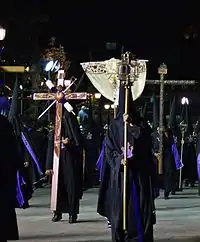

This is an annual event commemorating the passion and death of Christ. It occurs on the night of Good Friday, starting at the Templo del Carmen, from where it originates and proceeding through the streets of the historic center of the city of San Luis Potosí. Drums and bugles are played as a part of the procession, but participants and spectators do not speak, meriting its name. It is one of the most important celebrations of Easter in Mexico and was declared part of the cultural heritage of the state of San Luis Potosí in 2013. [19]
Notes
References
- http://cuentame.inegi.org.mx/monografias/informacion/slp/poblacion/
- "Entrada Group: at the heart of Mexico's thriving manufacturing industry".
- Méndez, Karla Ruiz. "Se afianza en el Bajío clúster de autopartes". Periódico am.
- "Archived copy". Archived from the original on 2014-01-16. Retrieved 2015-09-19.CS1 maint: archived copy as title (link)
- "Historia de la Ciudad". Archived from the original on 23 November 2010. Retrieved 15 March 2011.
- "San Luis Potosí polo de desarrollo industrial en el centro del país". Archived from the original on 30 August 2007. Retrieved 15 March 2011.
- "Camino Real de Tierra Adentro". Retrieved 15 March 2011.
- "Época prehispánica". Archived from the original on 22 July 2011. Retrieved 15 March 2011.
- Peralta Merino, Atilio Alberto. "La guerra Chichimeca". Archived from the original on 3 May 2011. Retrieved 15 March 2011.
- "Fundación del pueblo de San Luis Potosí". Retrieved 15 March 2011.
- {"Estado de San Luis Potosi-Estacion: San Luis Potosi (DGE)". Normales Climatologicas 1951–2010 (in Spanish). Servicio Meteorológico Nacional. Retrieved 10 November 2021.
- "Extreme Temperatures and Precipitation for San Luis Potosi (DGE)" (in Spanish). Servicio Meteorológico Nacional. Retrieved 10 November 2021.
- "World Meteorological Organization Climate Normals for 1981–2010". World Meteorological Organization. Archived from the original on 15 October 2021. Retrieved 10 November 2021.
- Joaquín Meade (1971). "Nómina de alcaldes mayores de San Luis Potosí. Tomado de El Nobilísimo y Muy Ilustre Ayuntamiento de San Luis Potosí y Consejos que lo presidieron de 1592 a 1900" (in Spanish). Sociedad Potosina de Estudios Históricos, A.C. Retrieved 28 July 2021.
- "Enciclopedia de los Municipios y Delegaciones de México. Estado de San Luis Potosí. Municipio de San Luis Potosí" (in Spanish). Retrieved 28 July 2021.
- José de Jesús Gama Ramírez (1995). "San Luis Potosí: una alternancia política conflictiva" (PDF) (in Spanish). Centro de Estudios Históricos de San Luis Potosí. Retrieved 28 July 2021.
- "Alfredo Lujambio es el nuevo presidente interino". Potosí Noticias (in Spanish). 14 November 2020. Retrieved 1 August 2021.
- "Ciudades Hermanas de San Luis Potosí". Archived from the original on 23 November 2007. Retrieved 15 March 2011.
- "Semana Santa en San Luis Potosi". www.visitmexico.com. Archived from the original on 2013-05-24.
Sources
- Link to tables of population data from Census of 2005 INEGI: Instituto Nacional de Estadística, Geografía e Informática
- San Luis Potosí Enciclopedia de los Municipios de México
External links
 |
Wikimedia Commons has media related to San Luis Potosí City. |
 |
Wikivoyage has a travel guide for San Luis Potosi. |
- City of San Luis Potosí Spanish
- Plan of San Luis Potosí English
- Churches of San Luis Potosí Spanish

Authority control  | |
|---|---|
| General | |
| National libraries | |
| Other | |