Teodor Boldur-Lățescu
Teodor Boldur-Lățescu (sometimes rendered as Teodor Boldour-Lățăscu, Boldour-Latzesko, Toderiță Lățescu, or T. B. Lățescu; 1837–1891)[1] was a Romanian politician, essayist and newspaper publisher, best known for his violent advocacy of Moldavian separatism. Born into an ancient clan of Moldavian boyars, and claiming Montenegrin Balšić descent on his maternal side, he was unable to maintain his economic status, and eventually had to work as a lawyer. In his late teens, he debuted in politics as an affiliate of the National Party, which sought to establish political ties between the Romanian populations of Moldavia and Wallachia. However, Boldur-Lățescu was disenchanted with the single Romanian state formed in 1859, emerging as an outspoken adversary of its Domnitor, Alexandru Ioan Cuza. His embrace of political separatism took a radical and controversial form, which included stereotyping Wallachians as Gypsies and circulating a historical forgery, the Chronicle of Huru. During the interregnum which followed Cuza's toppling by the "monstrous coalition" in February 1866, he joined a separatist caucus in Iași, convincing Nicolae Rosetti-Rosnovanu to claim the Moldavian throne.
Teodor Boldur-Lățescu | |
|---|---|
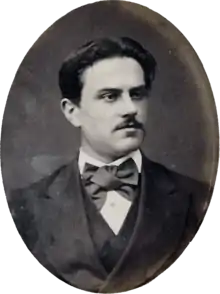 Photograph of Boldur-Lățescu, by Jean Bielig | |
| Prefect of Bolgrad County | |
| In office 1872–1876 | |
| In office February 7 – June 1877 | |
| Prefect of Botoșani County | |
| In office March 1887 – April 1888 | |
| Personal details | |
| Born | 1837 |
| Died | 1891 (aged 53 or 54) Botoșani County? |
| Nationality | Moldavian (to 1859) Romanian (1859–1891) |
| Political party | National Party (1856) Free and Independent Faction (ca. 1870) National Liberal Party (1881–1891) Conservative Party (1891) |
| Spouse(s) | Tereza Exarhu (div.) Ana Albu (div.) |
| Occupation | Lawyer, journalist, essayist, publisher, printer, satirist |
On April 3, 1866, Boldur-Lățescu helped instigate the Iași separatist revolt, personally commanding armed citizens in resisting the Princely Lieutenancy and a Romanian Army-led backlash. These events, which resulted in many casualties on both sides, were widely believed to have been stoked by the Russian Empire and the Lipovan colony, though, in his later pronouncements, Lățescu stated his Russophobia. Arrested, then released, he continued to champion separatism even as his co-conspirators made their peace with the status quo. His anti-Wallachian propaganda and his unrestrained critique of Domnitor Carol I were regular features of the gazettes Moldova and Boldul, which he published in the latter 1860s. In September 1867, Lățescu was assaulted and left for dead by two Wallachian officers. Earning much public sympathy for his status as a victim, he was able to prolong the lifespan of separatism into the 1870s. He was again assaulted by police in 1870, after allegedly engaging in cruelty to animals at the Iași menagerie.
Shortly before and during the Romanian War of Independence, Boldur-Lățescu had relaunched his political career in southern Bessarabia, establishing his profile as an adversary of the Bessarabian Bulgarians. He also became a local ally of the National Liberal Party, which he eventually joined in the early 1880s. He also gained the reputation of a habitual embezzler and vote-rigger, losing his position as Prefect for Bolgrad County and his seat in the Deputies' Assembly. The Russian annexation of southern Bessarabia forced him out of Bolgrad and into Neamț County, which returned him as deputy and also awarded him a seat in the Senate. Within the newly proclaimed Kingdom of Romania, he became noted as a skeptic of Moldavian regionalism, and expressed his loyalism toward Carol and his court. He moved to Botoșani County, where he served as Prefect in 1887–1888. Though Lățescu also served as the National Liberals' branch leader, his rejection of any alliances with his old adversaries at Junimea pushed him into a conflict with this party. By the time of his death at age 53 or 54, he had joined the Conservative Party.
Biography
Origins and youth
Teodor Boldur-Lățescu was born a time when Moldavia and Wallachia, the "Danubian Principalities", were ruled under Regulamentul Organic (a constitutional document which shared suzerainty of the countries between the Ottoman Empire and Russia). He belonged to the high-ranking boyar aristocracy, the first-born son of Gheorghe (or Iordachi) Costachi-Boldur-Lățescu (1798–1857), who in 1839 rose to the rank of Hatman in the Moldavian militia. He had an older daughter, Esmeralda (or Didița), from his marriage to the Rosettești boyaress Eufrosina; Teodor's mother, Anica Balș (1820–1875), also gave Gheorghe two other sons, Iorgu and Iancu, and daughters Olga and Evghenia.[2]
A hypothesis put forth in the 1930s by Turkologist László Rásonyi identifies "Boldur", originally "Buldur", as a name of Cuman origins, which, according to historian Neagu Djuvara, could link the Moldavian family to the 13th-century nomadic confederation and its tribal aristocracy.[3] However, the genealogical connection between the Boldur-Lățescus and the original Boldurs is not fully understood. In the 1840s, the scribe Iordache Mălinescu-Văleni endorsed a family tradition and circulated a genealogical tree which showed that the Costachis were descendants of Boldur, Vornic to 15th-century prince Stephen the Great. This is largely based on the observation that Boldur and the Costachis were both landowners in Epureni, and was received with enthusiasm by Costachi branches who added "Boldur" as their surname.[4] The claim was revised in later scholarship, which only credits the family's attested lineage to the 17th-century Gavriliță Costache, also a Vornic, rendered notable by his partnership with Moldavian Prince Constantin Cantemir.[5] More specifically, the Lățescus descended from Gavriliță's grandson, Clucer Gavril.[6] The nickname "Lățescu" originated with his paternal great-grandfather, Spatharios Mihalache, evoking his ties with Lățești village, the sole estate he still owned at his retirement in 1816.[7]
Through Anica, Teodor was the grandson of Hatman Teodor Balș, who viewed himself as descending from the Occitan House of Baux, through the Balšić dynasty, which had ruled in medieval Zeta.[8] The claim of descent from the Balšićes was reviewed in 1844 by the Russian Office of Heraldry, who found it not entirely reliable.[9] Genealogist Elena Monu argues that, whereas his father the Hatman was an avid agriculturist and social activist, who "helped the peasants on his estates in various ways", Teodor more closely resembled his Balș mother, who squandered a fortune in her lifetime.[10] Memoirist Rudolf Șuțu argues that Anica was in fact also a careful entrepreneur, but attributes her misfortunes to her bad temper. He notes that she once pursued and physically threatened a judge who had ruled against her in a property dispute, and as a result had to spend time in prison.[11] The story is backed by another raconteur, Dimitrie Hogea, who places it in 1864–1865.[12]
During the Regulamentul years, the Hatman answered to Russian governor Pavel Kiselyov. In April 1831, he rode with the Cossacks to quell a peasant revolt in Deleni.[13] In the mid 1850s, the Crimean War took Moldavia and Wallachia out of the Russian sphere of influence, and briefly into that of the Austrian Empire. Esmeralda Boldur, by then married to General Nicolae Mavrocordat, opened her home in Iași to serve as an Austrian hospital.[14] Moldavia was steered through the post-Regulamentul period by a modernizing Prince, Grigore Alexandru Ghica. It was at this stage that the family became involved, whether wittingly or unwittingly, with promoting a historical forgery, the so-called Chronicle of Huru—generally seen as produced, in whole or in part, by Paharnic Constantin Sion. It was printed in 1856 by Gheorghe Asachi with funds from Lățescu's father the Hatman, whom philologist Demostene Russo identifies as a likely contributor to the forgery process itself.[15] The text was flattering for the Boldur family, depicting its ancestors as directly engaged in the foundation of Moldavia, which the Chronicle pushed back to the early medieval period; it also induced the political goal of Moldavian particularism, at a time when the two Principalities already seemed to be heading toward union.[16]
Hatman Costachi-Lățescu retired from the militia due to ill health in April 1856; his last activities included sending the outgoing Prince Ghica a letter of appreciation.[17] A Romanian nationalist, he endorsed the idea of Moldavian–Wallachian union, and signed his name to letters of protest against the Caimacam (Regent) Toderiță Balș, who opposed it.[18] At that stage, Teodor was adhering to similar goals. On May 25, 1856, he attended the unionist gathering of Socola and signed up to Petre Mavrogheni's National Party platform.[19] Following protracted political battles, in 1859 the United Principalities were formed, with Alexandru Ioan Cuza as their first monarch, or Domnitor. In keeping with Cuza's program of educational reforms, as well as with their father's dying wish, young Boldur-Lățescu and his two brothers founded the Costăcească School of Hudești, which they paid for with agricultural revenue from their nearby estate.[20] However, Teodor soon came to resent the regime, and was satisfied when a "monstrous coalition" of left-liberal "Reds" and conservative "Whites" engineered Cuza's abdication in February 1866. Appearing in public shortly after the coup had succeeded, he "thought it wise to demean himself"[21] by entering the Iași tribunal hall, where he tore down a Cuza portrait, "took it with him on his sleigh, and went over to Saint Nicholas Church, where he buried it with pomp and circumstance."[22]
April 3 riot
Boldur-Lățescu made a publicized return as an anti-unionist in March–April 1866. The Principalities maintained unity under a Princely Lieutenancy made up of Nicolae Haralambie, Lascăr Catargiu, and Nicolae Golescu, but the political format was under stress. The subsequent riots were sparked by outrage over the Lieutenancy's search for a foreign prince to replace Cuza, and their eventual selection of Carol of Hohenzollern; in Moldavia, they turned to open separatism and the proposal to revive a Moldavian monarchy under Nicolae Rosetti-Rosnovanu.[23] On the same day as Cuza's overthrow, a petition calling for a loose confederation to be restored between the two principalities was circulated among Moldavian boyars, and then sent to the European great powers. Commenting on this document on February 26, Russian diplomat Andrey von Budberg concluded that "the overwhelming majority of Moldavians want disengagement [from Wallachia]."[24] Historian Gheorghe Cristea contrarily sees the movement as "without echo within the large mass of the Moldavian population, yet strongly supported by Russia."[25]
Cristea also notes that Rosetti-Rosnovanu was an "absolute non-entity, but very rich", while all his more prominent supporters, including Boldur-Lățescu and Nicu Ceaur-Aslan, were "people of no importance".[26] According to Șuțu, the plot for a takeover of Moldavia was hatched during suppers at Rosnovanu's home, which also involved Andrei Panuș, the parson at Annunciation Church.[27] Iași monographer N. A. Bogdan claims that Lățescu and the others could persuade the more junior Rosonovanu that "one bold move on their part could spark a revolt in Iași—and even in Moldavia as a whole".[28] On March 21–23, the separatist cause was popularized by leaflets calling for the expulsion of Wallachian soldiers from Moldavia, as well as by a petition, signed by Asachi and others, which called for Europe to guarantee les droits du peuple moldave ("the rights of the Moldavian people").[29]
The signal for an open rebellion was the move to appoint as Prefect Ștefan Golescu, the regent's brother, who was a Wallachian and entirely unfamiliar with the political scene of Iași; he was seconded by a third Golescu brother, Alexandru "Arăpilă", who was tasked with negotiating deals with the separatists.[30] During such panel discussions, held at the Pogor House on March 27–28, Rosnovanu and Boldur-Lățescu accepted the notion of a foreign prince, but noted that, if none was found in time, the union would need to be reexamined. Building on the argument that union risked turning Moldavians into Wallachian vassals, Boldur-Lățescu turned to slurs directed at the Wallachians and at the disgraced Cuza—as Cristea notes, his speech "lacked all sense of decorum."[31] On March 29, an incident sparked by Ceaur-Aslan and Nicolae Ionescu cut short the negotiations. Consequently, the Committee formed for supervising the upcoming legislative election was boycotted by the non-separatists, including by Vasile Pogor; Rosnovanu, Ceaur-Aslan and Boldur-Lățescu, running unopposed, became its organizers.[32]
On the morning of April 3, coinciding with Thomas Sunday, Boldur-Lățescu joined a delegation that also included Ceaur-Aslan, Orthodox Metropolitan Calinic Miclescu, and Constantin Moruzi Pecheanu, who visited Rosnovanu's home in Iași. They saluted the claimant's mother, to whom they communicated the "burning wish of Moldavia", namely that her son take the restored Moldavian crown.[33] One account by Iacob Negruzzi places Boldur-Lățescu at the Metropolitan Cathedral, where he stood up on a table and delivered his "violent speech".[34] His group, joined by men armed with clubs, firearms, and makeshift weapons, attempted to march on the Administrative Palace, which housed Catargiu and Prefect Golescu. They were pushed back by a unit of the Romanian Army, which, according to Negruzzi, took its orders from the poet-solder Nicolai Skelitti—whose father, also a soldier, had joined the rebel camp as one of Rosonovanu's would-be ministers.[35] Their attempted use of bayonets was fended off by the armed populace, with new separatist arrivals joining in the scuffle. They included Boldur-Lățescu's sister Evghenia, who arrived with her then-husband, Costică Aslan. Wearing a red rose in her hair, she "urged the people to advance on the soldiers, who would not dare [...] to take aim at their Moldavian brethren".[36]
The eventual standoff took place in front of the Rosnovanu residence. Once here, government troops reportedly found themselves shot at by snipers inside the house, and withdrew.[37] As reported by oral historian Radu Rosetti, the rebels followed them, "headed by Toderiță Lățescu, who killed or wounded several soldiers."[38] The assault only ended when Captains Costiescu and Pillat ordered their troops to fire into the crowd, dispersing it without need for a second volley.[39] The approval for this was reportedly arranged by two "Whites", Petre P. Carp and Carol Davila, after securing Catargiu's approval. Boldur-Lățescu reportedly managed to reorganize his men, "his head bandaged as if wounded, pistol in hand".[40] A cavalry charge was planned by Carp, but stalled because of a Colonel Cornescu, who could not find his saddle. Major Pandraf was appointed commander, but the attack itself had little effectiveness, since Boldur-Lățescu and his followers had erected a barricade, which served them in engaging the horsemen in hand-to-hand combat. Resistance only subsided after the cavalry shot their pistols into the crowd.[41]
Karl Goering, the Prussian Consul in Iași, estimated 150 fatalities of the events. His Russian counterpart, I. M. Leks, settled on 50 killed and 150 wounded, but later argued that this may be a gross underestimate.[42] The precise number of victims was never communicated by the embarrassed authorities.[43] This allowed Boldur-Lățescu himself to narrate the events as a Romanian St. Bartholomew's, in which he also included 400 arrests among the separatists.[44] Negruzzi acknowledges that the scene was "lugubrious. Even an hour later we could still see blood flowing and brains scattered on the cobblestones."[45] All leaders of the revolt (except Moruzi Pecheanu, who escaped) were arrested and transported to a prison, while the surviving rebel crowd was held at a makeshift camp outside the Administrative Palace.[46] Boldur-Lățescu soon earned infamy as "one of the artisans of the Iași separatist movement"[47] or person with the "most significant role in the Revolution of April 3, 1866",[48] his "band" allegedly "composed mostly of foreigners".[49] The latter claim is qualified by Cristea, who notes that the mob must have comprised "various honest people who were misled, mostly by their political perspective, narrowed down by a rigid local patriotism".[50] Șuțu contends that over 1,000 people were involved on the Rosnovanu side, but that many of them were from the (Russian-speaking) Lipovan minority.[51]
Moldova, Boldul, and near-lynching
After his release from custody, Boldur-Lățescu maintained his views on the subject of Moldavian secession. In October 1866, his separatist agenda was publicized through a bi-weekly political newspaper, Moldova ("Moldavia"), which he published alongside Iacobachi Stoianovici (replaced by various others, including V. Brănișteanu in 1868).[52] Citing the verdicts of Russian diplomatic sources, historian Vladislav Grosul concludes that Lățescu's paper was the "main organ of Moldavophiles at that time."[53] Throughout its existence, it extolled Moldavian virtues and Moldavian heroes—beginning with Stephen the Great—, while serializing works of literature by Asachi and Costache Negruzzi. It also sought to "increase its public's antipathy toward Wallachians" by depicting these as "mountebanks" (saltimbanci) or as nomadic Gypsies (lăieși).[54] Another topic of interest for Boldur-Lățescu was in inventorying supposed differences in folkloric traditions between the two groups of Romanians: in one instance, he claimed that Wallachians were still celebrating each summer their 1653 defeat of the Moldavians, and also that they were imposing that celebration on the Moldavians themselves. Boldur-Lățescu argued that this was especially insulting, since it overlapped with the Saturday of Souls, a solemn religious festival, concluding that the two populations were "natural enemies".[55]
Boldur-Lățescu's radicalism contrasted the political stances of other former rebels. In the snap elections in November, Rosnovanu was already running as a moderate, leaving Boldur-Lățescu as the only public partisan of Moldavia's secession—a position he reiterated when he publicly rejected the new constitution.[56] His new brochure, Adivărul adivărat ("Truth and Nothing But"), published at Czernowitz in the Duchy of Bukovina,[57] outlined his views of the 1866 riots. The document is also known for its "horrible expletives" against intellectuals who had gone public with their anti-separatism, including Titu Maiorescu.[58] Its extraordinary claims against the authorities resulted in his being prosecuted. He faced a sympathetic jury at the Iași Court, and used the opportunity to present his case against government through his lawyer C. Cazimir. He was ultimately acquitted on December 14, 1866.[59] From April of the next year, Moldova moderated some of its goals: its nameplate featured mottoes calling for personal union under a foreign prince, with "legislative, administrative, judicial an financial separation" between the Principalities.[60]
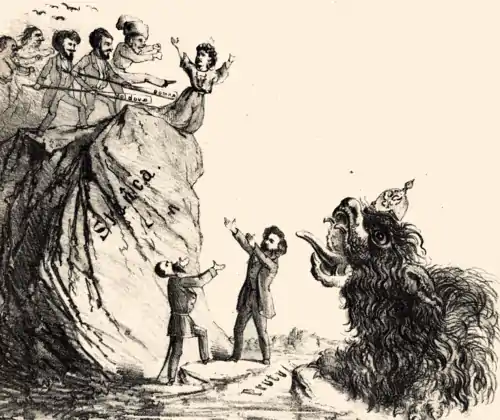
At the time, the United Principalities had a "Red" cabinet headed by Constantin A. Crețulescu, who was able to caucus among the Moldavian autonomists. One of the latter, Alecu D. Holban, canvassed for additional support at Iași. Boldur-Lățescu intervened to announce Moldavians that they were being "cheated" out of their remaining local rights, but found himself heckled.[61] During summer 1867, Boldur-Lățescu experimented with satirical writing, putting out the short-lived humorous paper, Boldul ("The Pin"). This made use of provocative cartoons and lithographs, such as depicting the aurochs of Moldavia and a female figure representing the principality, both being nibbled at by crows; to these were added drawings which personally attacked Carol. They earned Lățescu much negative attention from Wallachian and monarchist soldiers stationed in Iași.[62] Moldova, meanwhile, entered a polemic with the Wallachian leftist C. A. Rosetti and his Românul gazette. In June, Moldova claimed that Rosetti had pocketed 20,000 ducats from funds meant to ensure Cuza's toppling. Românul responded that the claim was pure libel, and that the 1866 conspirators had only ever had 5,000 ducats between them.[63] It then returned with allegations of its own, namely that Moldova was a front for Rosnovanu's interests.[55]
Also that summer, Domnitor Carol visited the Moldavian capital. Though he was well received in the house owned by Esmeralda and the Mavrocordats,[64] Boldur-Lățescu and Moldova were again tangled in national controversy tied to this affair. The newspaper amplified an incident from the military parade, which saw Moldavian Lieutenant Dimitrie Donici snubbing Colonel Cornescu, a Wallachian. During the aftermath, Lățescu provoked Cornescu to a duel, but, when the latter accepted, simply failed to turn up.[65] A more serious incident occurred on September 3, when Boldur-Lățescu was severely injured and left for dead at Iași's Hüttemann Circus. Reports in Dreptatea newspaper suggest that two Wallachian officers, Paris and Slătineanu, shouted fire in order to stage a panic, then pounced on Lățescu, pummeling and possibly stabbing him as no one was looking.[66] The matter generated a national controversy when it became suspected that the new Prefect, Ștefan Sihleanu, had encouraged the attack, and especially when Crown Prosecutor Ioan Manu asked the Court of Cassation not to try Paris and Slătineanu at Iași. The Court agreed and picked Focșani, which, the public noticed, was Sihleanu's hometown and political fief.[67] Many Iași citizens felt obliged to take Lățescu's side, and a deputation, comprising landowner Grigore Sturdza alongside lawyer George Țigara, pleaded with Carol that he intervene to ensure due process.[68]
Lățescu himself reported his absence from the country between September 27 and October 19, 1867, with Moldova only putting out three issues in that interval.[69] According to Românul, he was in a hospital until returning with a proclamation about the coming victory of separatism, in which he also scolded Sihleanu.[70] For a few weeks, separatism appeared to be back in fashion due to the perceived injustice against Lățescu as a Moldavian. As reported on September 10 in Pogor's newspaper Gazeta de Iassi: "The regrettable act which took place on the evening of September 3 has not failed at widening the field of action for the evil-minded, and separatists, newspapers and all, are quick to exploit the situation with all strength at their disposal. They claim that it was Wallachians who carried out that brutal act against Mr Lățescu, hence: down with the Wallachians etc. etc."[71] While discouraging this politicization of the attack, Gazeta's unsigned columnist declared himself indignant that police was still not in a rush to investigate the Hüttemann affair.[72] Before the end of the month, Le Mémorial Diplomatique reported that the scandal was "used as a pretext by various ringleaders, who wished to spark a revolt. Their project was aborted, and an inquiry was ordered into this guilty maneuver."[73]
Leaving Iași
Bogdan reports that, despite the sonorous opposition, the officers' trial was eventually moved to Focșani, "and got buried there, simply for ever, as had been intended". The only form of punishment received by the suspects was their discharge to more remote garrisons.[74] On April 3, 1868, Moldova appeared with red lettering and an etching of human tears, in order to mark the two-year anniversary of the riots. The issue explicitly accused Catargiu and Davila of being mass murderers.[75] Later that month, Carol visited the Moldavian city a second time, and stayed at the Rosnovanu house. According to Bogdan, Lățescu retorted with an unsigned piece in the gazette Convențiunea, which claimed that Carol had cheated his Moldavian subjects, exposing the region and its capital to more severe exploitation.[76] During August, Moldova featured its publisher's definitive attack on C. A. Rosetti, as well as a promise (never fulfilled) that Moldova would also feature a French-language weekly edition, which was meant to publicize Romania's decay to an international audience.[77] Also that year, Boldur-Lățescu published a translated edition of Dimitrie Cantemir's 1710s tract, Descriptio Moldaviae, as Scrisoarea Moldovei. He wrote the preface, which included his musings about the Moldavians being unfamiliar with their "ancient splendor", in which he identified the source of their political apathy.[78] As noted by historian Andrei Pippidi, his preface has similarities with Sion's writings, including libelous claims about the genealogy of various boyar houses—for instance his Pillat adversaries.[79]
In 1867, Anica Boldur settled outstanding gambling debts by selling Mărăței mahala, a part of Piatra city that she had owned to her name.[80] Several authors have described Teodor himself as a "ne'er-do-well" (pierde-vară) and a dowry chaser.[81] He trained as a lawyer and registered with the bar association in Iași, marrying and divorced a boyar lady, Tereza Exarhu.[82] In 1871, he married the heiress of a timber trade merchant, Serdar Nicolae Albu, whose family controlled the politics of Piatra.[83] This unhappy marriage ended in divorce, after the groom was found to be squandering Albu's assets.[84]
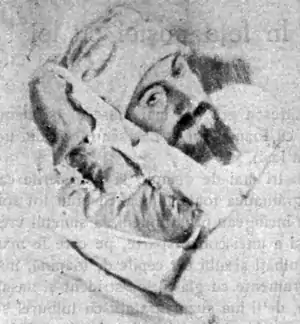
Beset by financial troubles, Boldur-Lățescu finally took Moldova out of print in 1869.[85] At the time, he had leased Elena Berman's printing press, originally owned by Mihail Kogălniceanu, and was using it to put out Vasile Botez's newspaper, Secolul.[86] Șuțu reports that Lățescu was mostly abroad, in Russia and in Istanbul, before deciding to return "to live among his own kind, at Iași."[87] His younger brother Iorgu was fully reconciled with the political regime, and served as a perennial Prefect of Police in Iași, where a street was named after him.[88] He may have been Prefect during an 1870 episode in which his brother fought with law enforcement. As reported by Șuțu, this came when Toader visited a menagerie and proceeded to pester, then prod at, the lions on display. Due to his "herculean strength", it took 50 police agents to physically subdue him. Bruised and bloodied, he asked for his photograph to be taken and kept by the Boldurs as a memento of the day.[89]
According to literary historian Augustin Z. N. Pop, Lățescu should be counted as an affiliate of the Free and Independent Faction,[90] the political party which still coalesced Moldavian separatists and federalists. He returned in March–November 1871 as owner and editor of Ecoul Munților ("Mountain Echoes"). Switching offices between Piatra and Iași,[91] it may be considered the last of Moldavia's separatist gazettes.[92] He was at the time based in Neamț County, which he successfully represented in the Deputies' Assembly after elections in May 1871. Like the Factionalist Holban, he then moved his law practice to southern Bessarabia, joining the bar association shared between Bolgrad and Ismail.[93] From July 1872 to May 1873, the former city housed his printing press, Ecoul Bolgradului,[94] which put out a newspaper of the same name.[95]
At some point before December 1872, Lățescu was assigned Prefect of Bolgrad County, which was largely peopled by Bessarabian Bulgarians. He owed his appointment to a government headed by his former enemy Catargiu, which caught the eye of satirists at Ghimpele. They noted that Lățescu had turned into a "fiery defender of the dynasty", alleging that his political support for Catargiu had resulted in his being publicly slapped by an unnamed person. According to Ghimpele, he was the seventh "White" officeholder to suffer that indignity.[95] In his letters to Christian Tell, the Minister for Religious and Educational Affairs, Lățescu noted his resentment for the Bulgarian community, which he saw as won over by pan-Slavism and Russophilia. He was especially adverse to the Inspection Committee of Bulgarian Schools, alleging that its members were habitual embezzlers and traffickers of influence, and expressing his dismay that two board members could not speak either Romanian or proper Bulgarian.[96] In December 1874, he leased 10 desyatinas (1.9 hectares or 4.7 acres) of state agricultural land in the village of Caracurt.[97]
National Liberal politico
In the June 1876 election, Boldur-Lățescu ran for the Assembly as an ally of the National Liberal Party, which coalesced the opposition to Catargiu's "Whites". Emerging as Prime Minister from this National Liberal sweep, Ion C. Brătianu applauded Lățescu's "staunch opposition to the past regime".[98] He took the 3rd College of Bolgrad by 124 votes to Aristid Pascal's 100.[99] He resigned shortly after, on February 7, 1877,[100] to return as Bolgrad's Prefect upon Brătianu's recommendation. He then presided over the 3rd College seat snap election, in which he was the winning candidate. He engaged in massive electoral fraud, for which he was reprimanded by the Assembly on June 9, 1877; the election itself was annulled by a majority vote in chamber.[98] He complained about this in a letter to the Assembly, which outlined his defense. He contended that, as a "man of no financial means", he could not be credibly accused of buying off voters; he also noted that the only violence in Bolgrad had been that of "my and my nation's most unrelenting enemies". Lățescu also mentioned that, as proof of his genuine popularity, he had since also been elected to Bolgrad's administrative council.[101]
The 1870s saw the emergence and success of Iași's anti-separatist conservative club, Junimea, which grouped some of Lățescu's known adversaries, including Maiorescu, Pogor, Skelitti and Carp. At the time, Moldavians were rallying with the cause of Romanian nationalism, which led to them supporting the Romanian War of Independence (1877–1878): Rosnovanu enrolled as a volunteer, while Evghenia Boldur, married Conduratu, was a decorated nurse.[102] Also in June 1877, at the height of the war, Boldur-Lățescu was sacked from the Bolgrad Prefecture. An unsigned letter in the "White" daily România Liberă claimed that this was to the "general satisfaction" of Bolgrad citizens. The letter alleged that the outgoing Prefect had taken bribes to facilitate the naturalization and public employment of foreigners.[103] He was successful in his bid for the 3rd College of Neamț in the May 1879 election.[104] While at Piatra, he put out another short-lived newspaper, Mișcarea Liberală ("The Liberal Movement", 1879–1880), "which created much scandal and discord within the liberal party"; he also replaced Theodor Dornescu as commander of the Neamț Civic Guard.[105] During the by-elections of August, Lățescu moved again to the 3rd College seat of Bolgrad, though, as România Liberă reported, his election had widespread irregularities that should have invited a recount.[106] Some records suggest that he was still committed to the project of Moldavian sovereignty: Pippidi notes that a reprint of the Huru forgery, which appeared in 1879 at Focșani, was probably financed by him or, alternatively, by Alexandru Asachi.[107]
The representation of Bolgrad in the Assembly was abruptly ended when Romania agreed to cede all of southern Bessarabia to the Russian Empire. By March 1880, Boldur-Lățescu had retaken his Neamț seat. România Liberă's Bolgrad correspondent, commenting on these developments, suggested that Lățescu would still continue his trading in Romanian passports, by catering to the mass of Bessarabian Jews who stood ready to emigrate to Romania.[108] Before January 1881, he had joined Brătianu's National Liberals. During this interval, his party had been pushed into the opposition. As reported by România Liberă, "the Reds' irritation" with this arrangement could be measured in Lățescu's claim that "intelligence itself was insulted" by the assignment of a cabinet position to Alexandru Teriachiu.[109] He was reconfirmed as Neamț deputy for the 4th College in the April 1883 elections, part of a National Liberal sweep; he himself took 287 votes out of 300.[110] He switched to the Neamț Senate seat, 2nd College, during the race of November 1884.[111]
This final period of Boldur-Lățescu's career saw the country being created a Kingdom of Romania, still under Carol of Hohenzollern (who was crowned King). He resumed his participation in the disputes between liberal factions, attacking Mihail Kogălniceanu for his "Catonism" and criticizing the National Liberal government for errors in defining liquor licenses.[112] In January 1882, an irate Kogălniceanu asked others to refrain from ever mentioning his and Lățescu's names together.[113] Kogălniceanu was again upset when Lățescu advocated budgetary restraint, and sought to reduce the pension of General Mihail Cerchez during an Assembly vote in 1882. During the debates, Lățescu complained that Kogălniceanu's speech had made oblique references, which he qualified as "correct expressions, but terrible allusions", to his own political stances.[114] During April–May, the two Moldavian politicians clashed again, when Lățescu tried to raise awareness of the new civil list set aside for the newly founded State Railways Company. He publicized the manager's 36,000-francs salary, which he found exorbitant. Lățescu proposed a reduction of 34,000 francs, equivalent to salaries paid by the private-run Lemberg–Czernowitzer Eisenbahn.[115] In June 1884 he co-sponsored legislation which set aside a Crown Estate for the monarch and his family.[116] At that stage, Lățescu's split from Moldavian autonomists such as Nicolae Ionescu was manifest when he refused to support tax rebates for Iași, which had been a point of policy since the 1860s. He argued that the debate had grown stale, and that Iași was already more privileged than other Moldavian communes.[117] Ionescu declared his astonishment that Lățescu, the "O'Connell of Iași's outskirts", had not only "moved camp to the unionist side", but was also turning his back on the Moldavian capital city.[118]
Some of Boldur-Lățescu's final years were spent in Botoșani County, where he served as Prefect from March 1887. His first act of office was to examine all fire weapons held by police agents, and make sure that they were functional.[119] In April 1887, he was a noted guest at Carol's banquet in Iași.[120] He simultaneously served as leader of the National Liberal chapter, which led to accusation that he was abusing his power as Prefect, especially ahead of elections in January 1888. The "White" press had it that Boldur-Lățescu had embezzled public funds, extorted peasants, and taken bribes, as well as avoiding taxes or prosecution by having his revenues invested in a farm in Northern Dobruja.[121] Lățescu was criticized when, on April 1, 1888, he vetoed Cassian Lecca's proposal to grant Junimea poet Mihai Eminescu a public pension. Aware that Eminescu was having a hard time making ends meet, he proposed granting him a one-time payment from the county council.[122]
Other voices praised Lățescu's philanthropy after he donated 151 bound volumes in French, previously in his own collection, to A. T. Laurian National College.[123] Carol also recognized his contributions. Also in January, he made Lățescu an Officer of the Order of the Crown.[124] In mid April 1888, shortly after peasant revolts and the arrival in power of a Conservative–Junimea cabinet, under Theodor Rosetti, Boldur-Lățescu wrote Carol an open letter to complain about alleged administrative abuses. He contended that the new and "reactionary" Botoșani Prefect, Gheorghe Hermeziu, was oppressing the locals with the full support of Jews ("sworn enemies of the liberal party"), "proletarian" Romanians, and Gypsies. The letter ended with words of praise for Carol, congratulating him for his role in obtaining national self-determination and his styling as King.[125]
The 1890s came with a rearrangement of the political landscape: Catargiu governed the country at the helm of a Conservative Party, which lost Junimist backing; Maiorescu and his men shifted instead toward a pragmatic alliance with the National Liberals. Lățescu was still politically active during the April 1891 legislative election, but earned derision for his proposal of an alliance with Catargiu against Junimea.[126] In May, he was stripped of his party membership, alongside fellow dissenters Lecca and Panait Gheorghiade; all three joined the Conservatives.[127] The former Prefect, who had begun putting out another local newspaper, Țara de Sus ("The Upper Land"),[128] died later that year.[129] The Boldur-Lățescu branch of the Costachis was continued by Teodor's daughters, who lived a comfortable existence after being awarded property in the trial over Elena Bașotă's estate;[130] and by, among others, Teodor's grandnephew, Romanian Army Major Ion Boldur (1899–1985), distinguished for his participation in both world wars. Ion's own son, Gheorghe Boldur-Lățescu, a former political prisoner in Communist Romania, is the family's last male descendant.[131]
Notes
- Stoian, p. 107
- Monu, pp. 221–222; Pippidi, pp. 87, 101. See also Ghenghea, p. 66; Stoian, pp. 107–109; Șuțu, pp. 6, 38, 79, 96, 448, 451
- Neagu Djuvara, Thocomerius–Negru Vodă. Un voivod de origine cumană la începuturile Țării Românești, pp. 63–66. Bucharest: Humanitas, 2007. ISBN 978-973-50-1787-3
- Monu, pp. 5–6
- Monu, pp. 5–7
- Monu, pp. 49, 187–191, 213
- Monu, pp. 216–217
- Hogea, p. 221; Șuțu, pp. 81–82
- Olga Garusova, "Filantropii Chișinăului. Gheorghe Balș", in Sergiu Musteață (ed.), Identitățile Chișinăului. Ediția a patra, p. 188. Chișinău: Editura ARC, 2018. ISBN 978-9975-0-0224-0
- Monu, p. 220
- Șuțu, pp. 79–81
- Hogea, p. 219–220
- Gheorghe Duzinchievici, "Răscoalele din Moldova în anul 1831 împotriva Regulamentului Organic", in Revista Arhivelor, 1943, pp. 357–358
- Șuțu, p. 8
- Pippidi, pp. 87, 90, 92–93
- Pippidi, pp. 92–94, 97, 100, 107
- Monu, pp. 219–220
- Monu, p. 220
- Dumitru Vitcu, "Repere ale emergenței naționale: 'Societatea Unirii' din Iași (1856)", in Dacia Literară, Vol. XXV, Issues 3–4, 2014, p. 9
- Ion Istrati, "Hudeștii de ieri și de azi", in Albina. Revistă Săptămînală a Așezămintelor Culturale, Issue 43/1968, p. 4
- Mănucă, p. 122
- Negruzzi, p. 66
- Cristea, pp. 1079–1081; Ghenghea, p. 67
- Grosul, p. 86
- Cristea, p. 1079
- Cristea, p. 1080
- Șuțu, pp. 213–214
- Bogdan, p. 14
- Grosul, p. 87
- Cristea, pp. 1080–1081
- Cristea, p. 1081
- Cristea, p. 1081
- Pînișoară, p. 162
- Negruzzi, p. 71
- Negruzzi, pp. 71–72
- Negruzzi, p. 73
- Pînișoară, pp. 162–163. See also Cristea, p. 1082
- Pînișoară, p. 162
- Pînișoară, p. 162. See also Cristea, p. 1082
- Negruzzi, p. 73
- Negruzzi, pp. 73–74
- Grosul, p. 87
- Bogdan, p. 15; Cristea, p. 1083
- Cristea, p. 1083
- Negruzzi, p. 75
- Negruzzi, pp. 74–75
- Monu, p. 222
- Bogdan, p. 103
- Pînișoară, p. 162
- Cristea, p. 1083
- Șuțu, pp. 213–214
- Ghenghea, pp. 67–71
- Grosul, p. 87
- Ghengea, p. 72
- "Gazetta Moldova séŭ Sibila depe stenca d-luĭ Rosnovanu", in Romanulu, June 16, 1867, pp. 497–498
- Cristea, p. 1085
- With title as rendered in Mănucă, pp. 123, 124. See also Bogdan, p. 641; Cristea, p. 1083
- Mănucă, p. 123
- Cristea, p. 1083. See also Ghengea, p. 72
- Ghengea, p. 68
- "Bucurescĭ 13/15 Florarŭ", in Romanulu, May 14, 1867, p. 393
- Bogdan, pp. 103–105
- "Bucurescĭ 3/15 Cireșiarŭ", in Romanulu, June 4, 1867, p. 461
- Șuțu, pp. 6–7, 12–13
- Monu, p. 222; Stoian, p. 109
- Bogdan, pp. 103, 105–108, 114–115
- Bogdan, p. 106
- Bogdan, pp. 107–113
- Ghengea, p. 69
- "Bucurescĭ 13/25 Răpciune", in Romanulu, September 14, 1867, p. 779
- Bogdan, p. 113
- Bogdan, pp. 113–114
- P. Boutet, "Dépêches télégraphiques. Service particulier du Mémorial Diplomatique", in Le Mémorial Diplomatique, Issue 64/1867, p. 1082
- Bogdan, p. 115
- Ghengea, p. 70. See also Cristea, p. 1083
- Bogdan, pp. 126–127
- Ghengea, p. 71
- Pippidi, p. 101
- Pippidi, pp. 101–102
- Hogea, pp. 23–27, 221–223
- Ghenghea, p. 66; Monu, pp. 220–221; Stoian, p. 109; Sturdza, pp. 51, 652
- Stoian, pp. 109–110
- Sturdza, p. 51. See also Hogea, p. 222; Stoian, pp. 109–110
- Sturdza, pp. 51, 652
- Ghengea, pp. 67, 72–73
- Pop, pp. 307–308
- Șuțu, p. 451. See also Hogea, p. 222
- Șuțu, pp. 81, 176, 357–358, 448, 451, 470. See also Hogea, p. 223
- Șuțu, pp. 451–452
- Pop, p. 308
- Sanda Beatrice Bitere, Publicații periodice ieșene, 1892–1906, p. 20. Iași: Asachiana, 2020. ISBN 978-606-9047-13-2
- Ghengea, pp. 72–73
- Stoian, p. 109
- I. Antonovici, Gr. Crețu, Tipografiile, xilografiile, librăriile și legătoriile de cărți din Bârlad. Cu o privire asupra tipografiilor din România de la 1801 până astăzi în Prefață și 7 ilustrații, p. 32b. Bucharest: Imprimeria Statului, 1909
- "Revista politicoasa", in Ghimpele, Issue 44/1872, pp. 1–2
- Ștefan Petrescu, "Administrație publică și școli in sudul Basarabiei sub administrația românească între 1857 și 1878", in Gheorghe Cliveti (ed.), Conferința "Centenar Sfatul Țării: 1917–2017". Materialele conferinței științifice internaționale, Chișinău, Moldova, 21 noiembrie 2017, pp. 217–218. Chișinău: Academy of Sciences of Moldova & Editura Lexon PRIM, 2017. ISBN 978-9975-139-54-0
- Ivan Duminică, "Câteva documente inedite din perioada aflării Bolgradului în componența Principatelor Unite ale Moldovei și Țării Românești", in Revista de Etnologie și Culturologie, Issue 28/2020, pp. 59, 62
- "Adunarea Deputațilorŭ. Ședința de Juoĭ, 9 Iuniŭ 1877", in Telegraphulŭ, June 11, 1877, p. 2
- "Resultatulŭ alegerilorŭ colegiuluĭ III", in Telegraphulŭ, June 9, 1876, p. 2
- "Adunarea Deputațilorŭ. Ședința de Lunĭ, 7 Februariŭ 1877", in Telegraphulŭ, February 9, 1877, p. 2
- "Adunarea Deputaților. Sesiunea ordinară. Ședința de 6 Februare 1878", in Monitorul Oficial, Issue 29/1878, p. 702
- Șuțu, pp. 96–98, 447
- "Corespondența particulară a României Libere. Bolgrad, 26 Iuniŭ", in România Liberă, July 2, 1877, p. 2
- "Cronica zilei. Resultatul alegerilor Coleg. III-lea", in România Liberă, May 10, 1879, p. 1
- Hogea, pp. 222–223
- "Cronica zilei", in România Liberă, August 21, 1879, pp. 1–2
- Pippidi, p. 90
- "Din afară. Corespondența particulară a României Libere. Bolgrad, Basarabia Rusă, 18 Marte 1880", in România Liberă, March 29, 1880, p. 2
- "Bucureștĭ, 27 Ianuarie", in România Liberă, January 28, 1881, p. 1
- Hogea, pp. 95, 105
- Hogea, pp. 108–109. See also Stoian, p. 109
- Kogălniceanu & Simonescu, pp. 109, 116
- Kogălniceanu & Simonescu, p. 109
- Kogălniceanu & Simonescu, pp. 201–202
- (in Romanian) Mihai Eminescu, Din periodice. Din Timpul, mai 1882. 6 mai 1882, at Wikisource. See also Kogălniceanu & Simonescu, pp. 277–278
- "Domeniulŭ Corónei României. Proiectŭ de lege depusŭ în cameră", in Gazeta Transilvaniei, Issue 90/1884, p. 3
- Chiper, pp. 147–148
- Chiper, p. 148
- "Din districte. Botoșani", in Epoca, March 10 (22), 1887, p. 3
- Bogdan, p. 350
- "Din districte. Botoșani. Tipuri colectiviste", in Epoca, June 17 (29), 1888, pp. 2–3
- Omagiu lui Mihail Eminescu cu prilejul a 20 ani dela moarte (1909), pp. 96–98. Galați: Editura Centrului Cultural Dunărea de Jos, 2008. ISBN 978-973-87650-6-1
- "Informațiuni", in Telegraphul, May 3, 1888, p. 3
- "Distinctions honorifiques. Roumanie", in La Revue Diplomatique, Issue 4/1888, p. 4
- "Regimul împăciureĭ", in Telegraphul, April 13, 1888, pp. 1–2
- "Alegerile din Botoșanĭ. Coresp. specială a ziarului Lupta", in Lupta, April 28, 1891, p. 2
- "Ultime informații", in Lupta, May 12, 1891, p. 3
- Ion Maximiuc, "Publicații și publiciști din nordul Moldovei (I)", in Hierasus, Vol. V, 1983, p. 418
- Stoian, p. 107
- Sturdza, p. 398
- Monu, pp. 222–223
References
- N. A. Bogdan, Regele Carol I și a doua sa capitală. Relații istorico-politice scrise din inițiativa primarului Iașului G. G. Mârzescu. Bucharest: Institutul de Arte Grafice C. Sfetea, 1916.
- Mihai Chiper, "'Valahii ne-au înșelat'. Chestiunea compensațiilor Iașului în acțiunea politică moldovenească după unire (1874–1902) (II)", in Archiva Moldaviæ, Vol. XI, 2019, pp. 143–184.
- Gheorghe Cristea, "Manifestări antidinastice în perioada venirii lui Carol I în Romania (aprilie—mai 1866)", in Studii. Revistă de Istorie, Vol. 20, Issue 6, 1967, pp. 1073–1091.
- Mircea-Cristian Ghengea, "Din istoria separatismului moldovenesc: Teodor Boldur-Lățescu și gazeta Moldova (1866–1869)", in Anuarul Muzeului Național al Literaturii Române Iași, Vol. VIII, 2015, pp. 66–75.
- Vladislav Grosul, "Промолдавские выступления в Румынии в конце ХIX столетия", in Moldovo–Pridnestrovskii Region, Issues 5–6, July–September 2019, pp. 86–90.
- Dimitrie Hogea, Din trecutul orașului Piatra-Neamț. Amintiri. Piatra-Neamț: Institutul de Arte Grafice Record, 1936.
- Mihail Kogălniceanu (editor: Dan Simonescu), Opere. Oratorie, III. Bucharest: Editura Academiei, 1986.
- Dan Mănucă, Argumente de istorie literară. Iași: Editura Junimea, 1978.
- Elena Monu, Familia Costache. Istorie și genealogie. Bârlad: Editura Sfera, 2011. ISBN 978-606-573-162-2
- Iacob Negruzzi, Amintiri din Junimea. Bucharest: Humanitas, 2011. ISBN 978-973-50-3750-5
- Iulian Pînișoară, "Some Considerations about the End of the 'Separatism' in Moldova. The Events from April the 3rd 1866" [sic], in Annals of the Costantin Brâncuși University of Târgu Jiu. Letters and Social Science Series, Supplement 2/2015, pp. 161–165.
- Andrei Pippidi, Andrei Pippidi, mai puțin cunoscut. Studii adunate de foștii săi elevi cu prilejul împlinirii vârstei de 70 de ani. Iași: Alexandru Ioan Cuza University, 2018. ISBN 978-606-714-449-9
- Augustin Z. N. Pop, Contribuții documentare la biografia lui Mihai Eminescu. Bucharest: Editura Academiei, 1962.
- Ion-Ciprian Stoian, "Câteva considerații referitoare la tabloul ordinului avocaților districtului Ismail‐Bolgrad, 1878–1879", in Analele Științifice ale Universității Alexandru Ioan Cuza din Iași. Istorie, Vols. LIV–LV, 2008–2009, pp. 97–114.
- Rudolf Șuțu, Iașii de odinioară, Volumul II. Iași: Viața Romînească, 1928.
- Mihail Dim. Sturdza, Familiile boierești din Moldova și Țara Românească. Vol. I: Abaza–Bogdan. Bucharest: Simetria, 2004. ISBN 973-85821-7-2