United States military beret flash
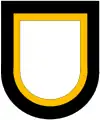
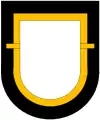
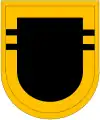
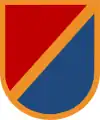
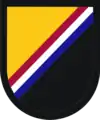
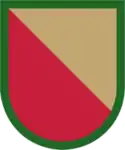
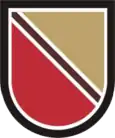
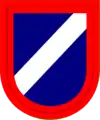
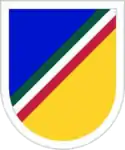
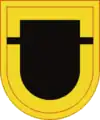
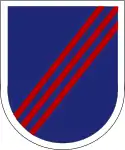
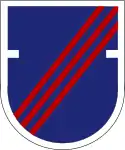
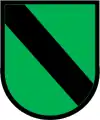
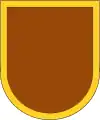
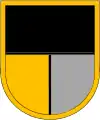
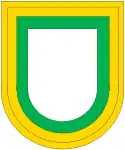
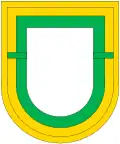
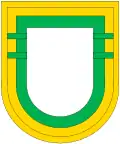
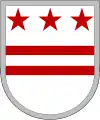
In the United States (US) Department of Defense, a beret flash is a shield-shaped embroidered cloth that is 2.25 in (5.72 cm) tall and 1.875 in (4.76 cm) wide with a semi-circular base that is attached to a stiffener backing of a military beret.[1][2][3][4] These flashes—a British word for colorful embroidered patches worn on military berets—are worn over the left eye with the excess cloth of the beret shaped, folded, and pulled over the right ear giving it a distinctive appearance.[1][2][3] The embroidered designs of the Army's beret flashes represent the heraldic colors and patterns of a unit with a unique mission or represent the Army overall.[5] The Air Force's beret flashes represent their Air Force Specialty Code (AFSC) or their assignment to a unit with a unique mission.[2] Joint beret flashes—such as those worn by the Joint Communications Support Element (JCSE) and the Multinational Force and Observers—are worn by all who are assigned to the joint unit, given their uniform regulation allow.[6][7]
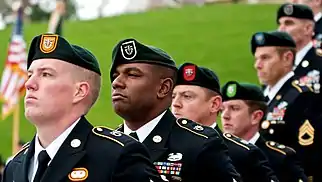
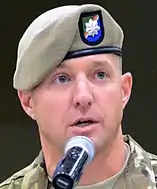


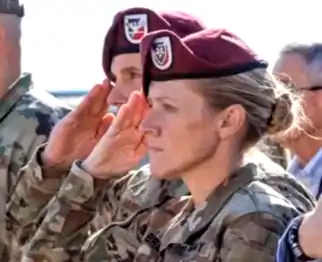

With the exception of some joint beret flashes, Army soldiers and Non-Commissioned Officers (NCOs) affix their Distinctive Unit Insignia (DUI) to the center of their beret flash unless assigned to a unit not authorized a DUI, then their regimental distinctive insignia is worn.[1] Army warrant officers and commissioned officers affix their polished metal rank insignia to their beret flash while chaplains affix their polished metal branch insignia.[1] Air Force commissioned officers in the Security Forces or assigned to a Combat Aviation Advisor (CAA) squadron (SQN) wear their beret flash in the same manner as the Army.[2][8] while Tactical Air Control Party (TACP) officers attach a miniature version of their polished metal rank insignia below the TACP Crest both fitting within the borders of the TACP Beret Flash.[2] Air Force airman and NCOs only wear their beret flash or beret flash with crest.[2][8]
US Department of Defense beret flash history
US Army
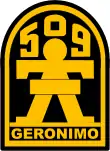
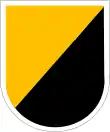
Throughout its history, Army units have adopted different headgear and headgear devices—such as various color accoutrements and insignias—to identify specific units, the unique mission of a unit, and/or the unique roles of soldiers.[4][9][10] According to some historians, the first US military use of a beret flash was created and worn by the 509th Parachute Infantry Regiment (RGT).[3][11][12] The 509th trained with the British 1st Airborne Division (Div) during World War II and was made honorary members of the British airborne forces in 1943, entitling them to wear the maroon beret worn by British paratroopers.[12][13] Some 509th paratroopers had a small hand-embroidered version of their RGT's gold and black pocket–patch created for use as their beret flash on their honorary maroon berets.[3][11][12][14] The design of the 509th's pocket–patch depicts a stylized figure of a paratrooper standing at the exit–door of an aircraft wearing a reserve parachute with an artistic rendering of the number "509" surrounding the paratrooper's head and the word "GERONIMO" displayed at the base of the door.[3][11][12][14]
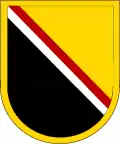
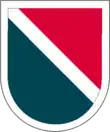 11th Special Forces Group Beret Flash—note design similarities with the unit's recognition bar  11th Special Forces Group Recognition Bar |
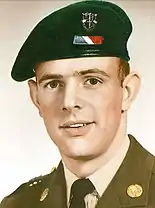 A medical corps paratrooper with the 11th Special Forces Group wearing rifle–green beret with 1st Special Forces DUI above his unit's recognition bar, c. 1967[15] |
The official start of the Army's beret flashes began in 1961 with Department of the Army Message 578636 authorizing the establishment of organizational beret flashes for wear on the special forces' rifle–green beret.[3][16] In this message, the beret flash is described as shield-shaped with a semi-circular base made of felt 2 in (51 mm) tall and 1.625 in (41 mm) wide using solid colors to represent each of the special forces groups of the era.[3][16] The message also described who was authorized to wear the organizational beret flash stating that only special operations qualified paratroopers would be permitted to wear their special forces unit's organizational beret flash with 1st Special Force—later designated 1st Special Forces Command (CMD)—DUI or polished metal officer rank insignia affixed while non-qualified paratroopers were to wear their Parachutist Badge with officers affixing their polished metal rank isignia below it.[16] Later, non-qualified soldiers assigned to a special forces unit wore a cloth recognition bar, 1.875 in (4.76 cm) long and 0.5 in (1.27 cm) wide color and pattern matched to their unit's organizational beret flash below the 1st Special Forcs DUI or polished metal officer rank insignia.[4][17][18]


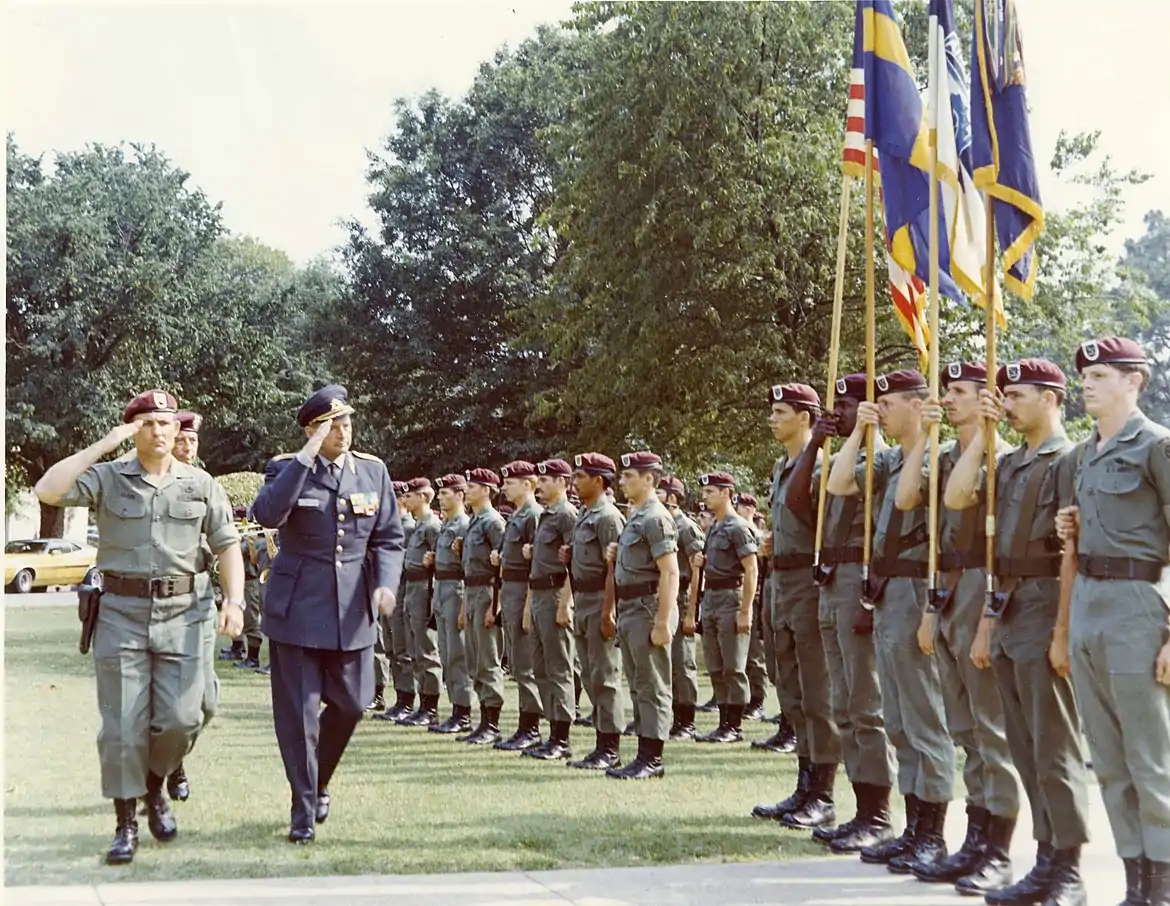
Other beret accouterments began to appear in the 1960s and 70s, particularly between 1973 and 1979 when the Department of the Army had its morale-enhancing order in effect and various colored berets began to be worn by numerous units and branches of the Army.[20][21][22][23] Historical photographs from the 1960s through the 1970s show soldiers assigned to Long-Range Reconnaissance and Patrol units wearing black berets with a wide variety of custom-made beret flashes that were worn over the left eye (see Example 1).[23] In 1973, Army leaders authorized the wear of the maroon beret by airborne units.[20][23] Within a year or so, paratroopers of the 82nd Airborne Div began incorporating organizational beret flashes onto their maroon berets pattered after their unit's background trimming—which made their debut in World War II[24]—behind their DUI or polished metal officer rank insignia and worn over the left eye.[1][19][25] Similarly, in 1974 Army leaders authorized the 101st Airborne Div at Fort Campbell to wear the dark-blue beret when it was reorganized into an air assault unit.[9][21][23][26][27][28] Army articles and historical photographs of 101st soldiers show them wearing traditional organizational beret flashes patterned after their unit's background trimming—just like the 82nd Airborne's—but with enlisted affixing their DUI and NCOs and officers affixing their polished metal rank insignia.[9][23][26][28] Between 1976 and 1977, 101st soldiers would add their Airmobile Badge—renamed Air Assault Badge in 1978—to their berets and wore them to the left of their beret flash (see Example 2).[9][23][28][29] Some other Fort Campbell units of the era also wore the dark-blue beret as well as red for headquarters command and kelly-green for military police, all with traditional organizational beret flashes.[21][23] In 1975, the Army authorized its ranger units to wear the black beret and if earned these rangers affix their Ranger Tab to the top edge of their organizational beret flash and wore it over their left eye (see Example 3).[23][30] Also during the 1970s, arctic-qualified soldiers of the 172nd Infantry Brigade (BDE) began to wear locally authorized olive-drab berets with traditionally styled organizational beret flashes that were hand-made, unique to each battalion (BN), and were worn in the same manner as they are today (see Example 4).[1][22][23][31] Additionally, versions armor and cavalry units began wearing black berets with some adopting organizational beret flashes of various shapes and colors and wore them differently than other Army units of the era.[21][22][23] For example, armored cavalry RGTs stationed in West Germany began wearing black berets in the 1970s with a maroon and white oval as their beret flash.[21][22][23] These armored cavalry soldiers wore the oval vertically behind their DUI, to the left of their metal rank insignia, and positioned over their left temple (see Example 5).[21][22][23][32] During this same time period, the 1st Cavalry Div was converted into a triple capability division and began wearing different color berets representing the unique capability of each formation: black for armor, light-blue for infantry, red for artillery, and kelly-green for support.[33] Affixed to each triple capability beret was a BN or SQN specific organizational beret flash; some were similar in design to what you see worn today while others were unique in their shape.[3][23] Some historical photographs show soldiers in these triple capability formations wearing their unit's beret in the same manner as the Army's armored cavalry RGTs of the era.[23][32] By 1979, the Army put a stop to the use of berets by conventional forces, leaving only special forces and ranger units the authority to wear berets.[21][22][23]




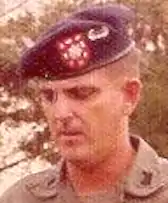
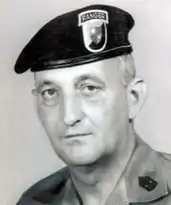


In 1980, the Army reversed part of its decision allowing airborne units to wear maroon berets, ranger units black berets—which switched to tan berets in 2001[22]—and special forces units rifle–green berets.[21][22][35] The Army's 1981 uniform regulation describes the wear of these newly approved berets with the only authorized accoutrements being officer rank insignias, DUIs, organizational beret flashes, and recognition bars.[4][36] The organizational beret flash did not become the norm until 1984 when the recognition bar was discontinued after the Special Forces Tab became authorized for wear by special forces qualified paratroopers and all soldiers assigned to a special forces unit, regardless of qualification, now wear their unit's organizational beret flash on either the rifle-green beret—for special forces qualified paratroopers—or maroon beret—for support paratroopers.[1][17]
In 2000, General Eric Shinseki, Chief of Staff of the Army, decided to make the black beret the standard headgear of the Army.[1][22][37] General Shinseki also decided that a new Department of the Army Beret Flash be worn on the black beret.[22][37][38] This Army flash is worn in the same manner as all beret flashes in the modern Army, centered over the left eye with a unit's DUI or polished metal officer rank insignia affixed to its center.[1] According to Department of the Army Pamphlet 670–1, the Department of the Army Beret Flash is to be worn by all units "unless authorization for another flash was granted before implementing the black beret as a standard Army headgear".[1] Army units can request an organizational beret flash for their formation given it is not for wear on the black beret, as was authorized for the Security Force Assistance CMD and its BDEs for wear on their brown berets.[1][39][40][41][42][43][44][45][46][47] In the 21st century, Army organizational beret flashes are worn to signify a specific formation of a specialized unit, such as an active airborne, ranger, special forces, or combat advisor unit.[1][5][10][20] Additionally, there is a unique organizational beret flash worn by special forces soldiers on their rifle-green beret when assigned to a unit not authorized an organizational beret flash.[1]
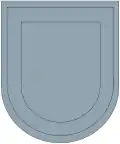
 The Department of the Army Beret Flash is designed to resemble the flag of the Commander-in-Chief of the Continental Army at the time of its victory at Yorktown in 1781.[22][48] |
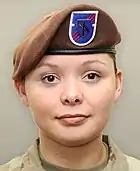 A soldier from 1st Security Force Assistance BDE wearing brown beret with unit beret flash and DUI affixed, 2018[51] |
 Beret flash for special forces personnel assigned to non-special forces units |


The design of all Department of Defense beret flashes are created and/or approved by The US Army Institute of Heraldry.[37] It appears the institute based many of its original Army organizational beret flash designs after an airborne unit's existing background trimming.[5][24] For newer formations authorized an organizational beret flash, the institute will conduct research into the requesting unit's heraldry, as well as design suggestions from the unit, in the creation of a new unit-specific beret flash.[39][53] Leveraging geometrical divisions, shapes, and colors, a heraldic artist will create a design that will represent the history and mission of the requesting unit.[39][53] Once the unit agrees upon a design, the institute will create manufacturing instructions and monitor their creation by companies authorized to produce the organizational beret flash.[53][54][55]
US Air Force

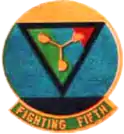

In the mid 1960s, Air Force commando weathermen,[57] formally known as weather parachutists, with Detachment 26 of the 30th Weather SQN and Detachment 32 of the 5th Weather SQN informally wore black berets.[56] The beret flash worn on these berets was a black cloth rectangle with a depiction of a yellow embroidered anemometer surmounted by a fleur-de-lis with the words “Combat Weather” split by the anemometer.[56] From 1970 through the 1980s, weather parachutists with the 5th Weather SQN wore maroon berets with an Army style beret flash that incorporated the SQN's design and colors from their emblem's alchemical symbol for water and wore their Parachutist Badge affixed to the flash.[39][56] In 1979, weather parachutists, now called Special Operations Weather Teams (SOWTs), were authorized to wear navy-blue berets with an Army style beret flash consisting of a blue and black field surrounded by yellow piping.[39][56] Enlisted and NCOs wore their Parachutist Badge affixed to the flash while officers wore their polished metal rank insignia.[56] In 1986, the gray beret was authorized for wear by all SOWTs who continued to wear the aforementioned cloth beret flash until a new large color metallic SOWT Crest was authorized.[56] In 1992, the Air Force approved the return of the SOWT's blue, black, and yellow beret flash from the 70s and affixed their large color metallic SOWT Crest to it.[56] In 1996, the SOWTs assigned to the US Air Force Special Operations CMD (AFSOC) wore a new Army style beret flash while those assigned to Air Combat CMD, known as Combat Weather Teams (CWTs), continued to wear the blue, black and yellow beret flash.[39][56][58] The AFSOC SOWT Beret Flash consisted of a red border representing the blood shed by their predecessors, a black background represented special operations, and three diagonal lines of various colors representing the services they supported (green=Army, purple=joint forces, and blue=Air Force).[56] Enlisted and NCOs wore their Parachutist Badge on top of the AFSOC SOWT Beret Flash while officers wore their polished metal rank insignia until 2002 when the Combat Weather Team Crest was created.[56] The Combat Weather Team Crest was worn affixed on both SOWT and CWT beret flashes by enlisted and NCOs while officers continued to affix their polished metal rank insignia.[56][59][60] In 2007/2008, the AFSOC SOWT Beret Flash stopped being worn and in 2009—when the Special Operations Weather AFSC was established—a new large polished metallic Special Operations Weather Crest was approved for wear by all SOWTs and CWTs (enlisted, NCOs, and officers alike) on their gray berets.[2][56][59][61][62]
 CWT Beret Flash |
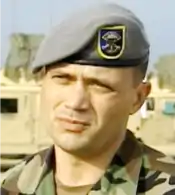 A weather parachutist NCO with the 82nd Airborne Div wearing gray beret with CWT Beret Flash and Combat Weather Team Crest, 2007[63] |
 SOWT Beret Flash |
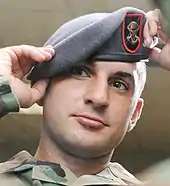 A weather parachutist with the 107th Weather Flight wearing gray beret with SOWT Beret Flash and Combat Weather Team Crest, 2008[59] |
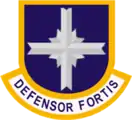
In 1966/67, the newly formed 1041st Security Police SQN was authorized to wear a dark-blue beret and were the first to create and wear an organizational beret flash.[64][65][66] The 1041st's beret flash had a depiction of a falcon carrying a pair of lightning bolts on a somewhat pointed oval-shaped light-blue patch that was worn over the left temple.[64][65][66] In 1976, the Air Force approved the navy-blue beret, worn by Strategic Air CMD's Elite Guard and Air Force Combat Control Teams, as the official uniform item for all Air Force police and security forces.[64][67] In 1997, the Air Force stood up the security forces AFSC and honored the heraldry of the 1041st Security Police SQN by creating a new organizational beret flash for all security forces airman and NCOs that depict the 1041st's falcon over an airfield with the motto "Defensor Fortis" (defenders of the force) embroidered on a scroll at its base.[2][64] Security forces officers wear the same basic beret flash minus the embroidered falcon and airfield and in its place affix their polished metal rank insignia.[2]
 1041st Security Police SQN Beret Flash |
 A security policeman with the 1041st Security Police SQN wearing their distinctive dark-blue beret and beret flash, c. 1968[65] |
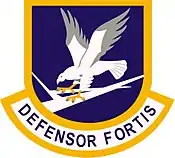 Security Forces Beret Flash |
 A security forces airman with the 55th Security Forces SQN wearing navy-blue beret with Security Forces Beret Flash, 1998[68] |
In 1979, TACP airman and NCOs were given authorization to wear the black beret. In 1984, two TACP's submitted a design for a unique beret flash and crest for wear on their berets which the Air Force approved one year later.[21] The TACP Beret Flash—which followed the basic design language of Army beret flashes[39]—incorporates red borders that represent the firepower TACP's bring to bear with two dovetailed fields of blue and green represent the close working relationship between the Air Force and the Army that is enabled by the TACP.[69] Later, Air Liaison Officers (ALOs) were given authorization to wear the black beret and the TACP Beret Flash.[21][70][71] In 2019 the Air Force uniform instruction changed directing ALOs, now called TACP Officers, to wear the TACP Beret Flash and Crest with miniature polished metal rank insignia below the crest and just above the inner-border of the beret flash.[2][72][73] Similarly, Air Mobility Liaison Officers (AMLOs) also wore the black beret.[21] Although worn informally before then, in 2015 The US Army Institute of Heraldry authorized a slight modification of the TACP Beret Flash for wear by AMLOs, incorporating an embroidered compass rose in the upper-left corner of the beret flash, and was worn in the same manner as Army beret flashes.[1][2][74][75] Despite this, the Air Force Uniform Board and uniform regulations do not address the wear of the AMLO Beret Flash by these liaisons.[2]
 TACP Beret Flash |
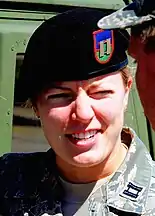 An ALO with the 682nd Air Support Operations SQN wearing black beret with TACP Beret Flash and rank insignia (Captain), 2011[76] |
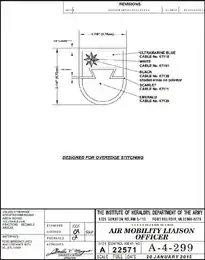 The US Army Institute of Heraldry manufacturing instructions for the AMLO Beret Flash, 2015[75] |
 An AMLO with the 8th Air Support Operations SQN wearing black beret with AMLO Beret Flash and rank insignia (Captain)—note the white compass rose at the upper-left corner—2011[74] |
In 2018, AFSOC authorized the wear of the brown beret for airman, NCOs, and officers assigned to a CAA SQN, specifically the 6th and 711th Special Operations SQNs. The brown beret—similar in appearance to the Army's brown beret—is worn with an Army style organizational beret flash consisting of a dark-blue field with olive-green diagonal stripes and border.[39][77] The CAA Beret Flash is worn centered over the left eye with polished metal officer rank insignia or an AFSC metallic beret crest affixed to the flash while all other advisors wear the cloth CAA Beret Flash without accoutrements.[77]
US Navy
In the 1960s, select Navy riverine patrol units operating in South Vietnam adopted the black beret to be part of their daily uniform and wore various accouterments on their berets.[79] In 1967, the Commander of the Riverine Patrol Force sent an official message to the Commander of River Patrol Flotilla Five authorizing the wear of the black beret.[79] In this message, the wear and appearance of the beret was also defined stating, "Beret will be worn with river patrol force insignia centered on right side." and "Only standard size river patrol force insignia will be worn on beret. ... No other emblem or rank insignia will be displayed on beret."[79][80] Today, these Navy small boat units honor their heritage by wearing the black beret during special occasions—such as induction ceremonies into the Gamewardens Association[81]—and will affix historically relevant riverine task force insignia for use as their beret flash.[84]
 River Patrol Force, Task Force 116 Insignia |
.jpg.webp) Chief of Naval Operations (L) and Commander, Riverine Patrol Force (R) wearing black berets with Task Force 116 Insignia, 1969[86] 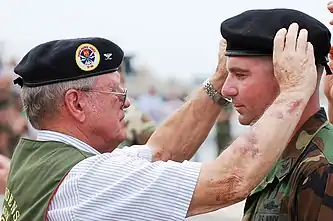 A Navy NCO from Riverine SQN 1 receives the historical black beret with Task Force 116 Insignia at a special ceremony making him an honorary "Gamewarden," 2011 |
Beret flashes of the US military
Joint
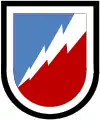
 Joint Enabling Capabilities CMD, JCSE, 1st SQN
 Joint Enabling Capabilities CMD, JCSE, 2nd SQN
 Joint Enabling Capabilities CMD, JCSE, 3rd SQN
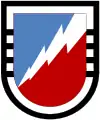 Joint Enabling Capabilities CMD, JCSE, 4th SQN
 Joint Enabling Capabilities CMD, JCSE, Communications Support Detachment
 Multinational Force and Observers
Air Force
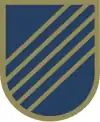 CAA
CAA- Security Forces
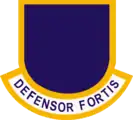 Security Forces Officer
 TACP and TACP Officer
- Obsolete
- ALO
 AMLO
AMLO- 1st Weather Group, 5th Weather SQN
- 1979–1986/1992–1996 SOWT and 1996–2010 CWT
- 1996–2008 AFSOC, SOWT
Army
- Department of the Army
Adjutant general
- Obsolete
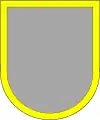 US Army Alaska, Fort Wainwright, Finance Element
 1st Cavalry Div, 15th Adjutant General Co
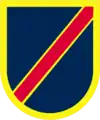 XVIII Airborne Corps, 18th Personnel Group
 82nd Airborne Div, 82nd Finance BN
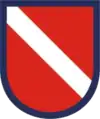 82nd Airborne Div, 82nd Personnel Services BN
Air defense artillery
 XVIII Airborne Corps, 108th Air Defense Artillery BDE, 4th Air Defense Artillery RGT, 3rd Bn, Battery E
- Obsolete
 US Army Alaska, 172nd Infantry BDE, 43rd Air Defense Artillery RGT, 1st BN
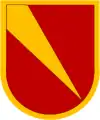 101st Airborne Div, 3rd Air Defense Artillery RGT, 1st BN
Armor and cavalry
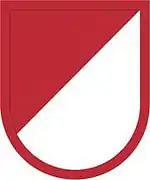
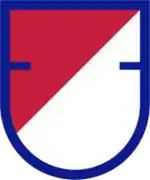 25th Infantry Div, 4th BCT, 40th Cavalry RGT, 1st SQN
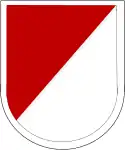 82nd Airborne Div, Combat Aviation BDE (CAB), 17th Cavalry RGT, 1st SQN—formerly
–III Corps, 3rd Armored Cavalry RGT
–Tennessee Army National Guard, 278th Armored Cavalry RGT
–Puerto Rico Army National Guard, 92nd Infantry BDE, 192nd Cavalry RGT, Troop E
–US Army Reserve Officers' Training Corps (ROTC), Temple University 82nd Airborne Div, 1st BCT, 73rd Cavalry RGT, 3rd SQN
 82nd Airborne Div, 2nd BCT, 73rd Cavalry RGT, 1st SQN
 82nd Airborne Div, 3rd BCT, 73rd Cavalry RGT, 5th SQN
- Obsolete
 –US Army Europe, 2nd Armored Cavalry RGT (West Germany) (original version)
–US Army Europe, 11th Armored Cavalry RGT, Reconnaissance Platoon (West Germany) –US Army Europe, 2nd Armored Cavalry RGT (West Germany)
–US Army Europe, 11th Armored Cavalry RGT (West Germany)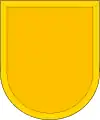 –1st Cavalry Div
–US Army Alaska, 172nd Infantry BDE, 1st Cavalry RGT, Troop E 1st Cavalry Div, 9th Cavalry RGT, 1st SQN
 1st Cavalry Div, 10th Cavalry RGT, 3rd BN
 1st Cavalry Div, 1st BDE, 8th Cavalry, 1st BN
 1st Cavalry Div, 1st BDE, 8th Cavalry, 2nd BN
 1st Cavalry Div, 1st BDE, 12th Cavalry RGT, 1st BN
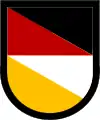 1st Cavalry Div, 2nd BDE, 5th Cavalry, 1st BN
 1st Cavalry Div, 2nd BDE, 5th Cavalry, 2nd BN
 1st Cavalry Div, 3rd BDE
 1st Cavalry Div, 3rd BDE, 7th Cavalry, 2nd BN
 1st Cavalry Div, 3rd BDE 7th Cavalry, 5th BN
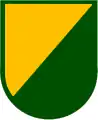 –82nd Airborne Div, 1st BCT, 68th Armor RGT, 4th BN, Company (Co) A
–82nd Airborne Div, 73rd Armor RGT, 3rd BN
–US Army Europe, 173rd Airborne BDE, 16th Armor RGT, Co D 82nd Airborne Div, 4th BCT, 73rd Cavalry RGT, 4th SQN
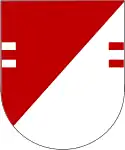 101st Airborne Div, 17th Cavalry RGT, 2nd SQN
Aviation
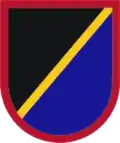 US Army Special Operations Aviation CMD (USASOAC)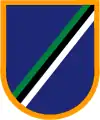
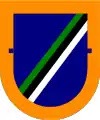 USASOAC, 160th Special Operations Aviation RGT, 1st BN
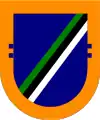 USASOAC, 160th Special Operations Aviation RGT, 2nd BN
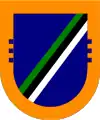 USASOAC, 160th Special Operations Aviation RGT, 3rd BN
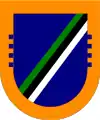 USASOAC, 160th Special Operations Aviation RGT, 4th BN
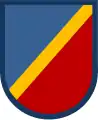 82nd Airborne Div, CAB—formerly 82nd Combat Aviation BN and 82nd Aviation BDE
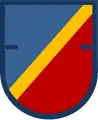 82nd Airborne Div, CAB, 82nd Aviation RGT, 1st BN
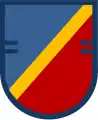 82nd Airborne Div, CAB, 82nd Aviation RGT, 2nd BN
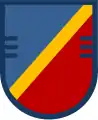 82nd Airborne Div, CAB, 82nd Aviation RGT, 3rd BN
- Obsolete
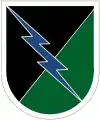 Special Operations CMD South, 617th Special Operations Aviation Detachment
 US Army Alaska, 172nd Infantry BDE, 222nd Aviation BN
 US Army Europe, 11th Aviation BDE, Pathfinder Platoon
 US Army Special Operations CMD, 160th Special Operations Aviation Group
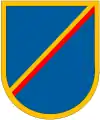 US Army Special Operations CMD, 245th Special Operations Aviation RGT, 1st BN
 Washington National Guard, 81st Infantry BDE, Aviation Section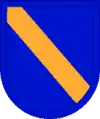
 Eighth US Army, 17th Aviation BDE, Pathfinder Platoon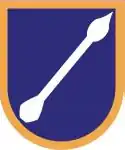
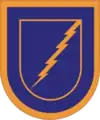 XVIII Airborne Corps, 58th Aviation RGT, 1st BN
 XVIII Airborne Corps, 229th Aviation Group
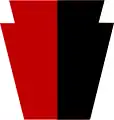 28th Infantry Div, 28th Infantry Detachment (Pathfinder) (original version)
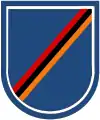 28th Infantry Div, 28th Infantry Detachment (Pathfinder)
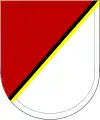 29th Infantry Div, 129th Infantry Detachment (Pathfinder)
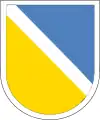 38th Infantry Div, 77th Infantry Detachment (Pathfinder)
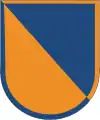 40th Infantry Div, 76th Infantry Detachment (Pathfinder)
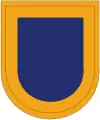 82nd Airborne Div, 82nd Aviation BDE
 82nd Airborne Div, 82nd Aviation RGT, 1st BN (original version)
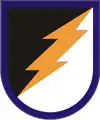 82nd Airborne Div, 82nd Aviation RGT, 1st BN (second version)
 82nd Airborne Div, 82nd Aviation RGT, 2nd BN (original version)
 82nd Airborne Div, 82nd Combat Aviation BN
 89th Army Reserve CMD, 26th Infantry Platoon (Pathfinder)
 96th Army Reserve CMD, 79th Infantry Platoon (Pathfinder)
 97th Army Reserve CMD, 5th Infantry Platoon (Pathfinder)
 –101st Airborne Div, 101st Aviation RGT
–1st Special Forces, 44th Chemical Detachment
Chemical
- Obsolete
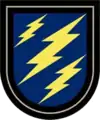 1st Special Forces, 5th Special Forces Group, 56th Chemical Reconnaissance Detachment
- –1st Special Forces, 44th Chemical Detachment
–101st Airborne Div, 101st Aviation RGT
Civil affairs
 US Army Civil Affairs and Psychological Operations CMD (USACAPOC), 350th Civil Affairs CMD, 1st Training BDE, 478th Civil Affairs BN
 USACAPOC, 351st Civil Affairs CMD, 358th Civil Affairs BDE, 416th Civil Affairs BN
 USACAPOC, 351st Civil Affairs CMD, 358th Civil Affairs BDE, 426th Civil Affairs BN
 USACAPOC, 352nd Civil Affairs CMD, 360th Civil Affairs BDE
 USACAPOC, 352nd Civil Affairs CMD, 360th Civil Affairs BDE, 404th Civil Affairs BN
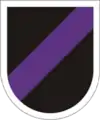 USACAPOC, 352nd Civil Affairs CMD, 360th Civil Affairs BDE, 412th Civil Affairs BN
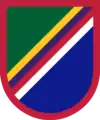 USACAPOC, 352nd Civil Affairs CMD, 360th Civil Affairs BDE, 450th Civil Affairs BN
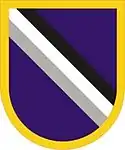 1st Special Forces CMD, 95th Civil Affairs BDE
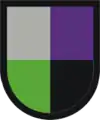 1st Special Forces CMD, 95th Civil Affairs BDE, 91st Civil Affairs BN
 1st Special Forces CMD, 95th Civil Affairs BDE, 92nd Civil Affairs BN
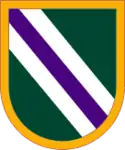 1st Special Forces CMD, 95th Civil Affairs BDE, 96th Civil Affairs BN
 1st Special Forces CMD, 95th Civil Affairs BDE, 97th Civil Affairs BN
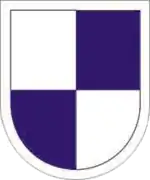 1st Special Forces CMD, 95th Civil Affairs BDE, 98th Civil Affairs BN
- Obsolete
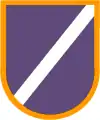 1st Special Forces CMD, 95th Civil Affairs BDE, 96th Civil Affairs BN, Co A
Engineer
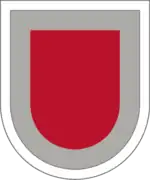 USAREUR-AF, 173rd Airborne BDE, 54th BDE Engineer BN
 XVIII Airborne Corps, 20th Engineer BDE, 27th Engineer BN
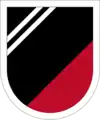 XVIII Airborne Corps, 20th Engineer BDE, 27th Engineer BN, 57th Engineer Co
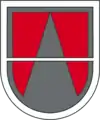 XVIII Airborne Corps, 20th Engineer BDE, 27th Engineer BN, 161st Engineer Co
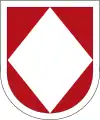 XVIII Airborne Corps, 20th Engineer BDE, 27th Engineer BN, 618th Engineer Co
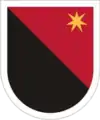 25th Infantry Div, 4th BCT, 6th BDE Engineer BN
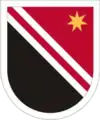 25th Infantry Div, 4th BCT, 6th BDE Engineer BN, 84th Engineer Co
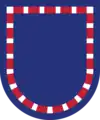 82nd Airborne Div, 1st BCT, 127th BDE Engineer BN
 82nd Airborne Div, 2nd BCT, 37th BDE Engineer BN
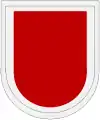 82nd Airborne Div, 3rd BCT, 307th BDE Engineer BN
- Obsolete
 US Army Alaska, Fort Wainwright, 47th Engineer Co
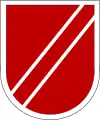 US Army Alaska, 172nd Infantry BDE, 562nd Engineer Co
 US Army Forces CMD, 20th Engineer BN
 XVIII Airborne Corps' 20th Engineer BDE (original version)
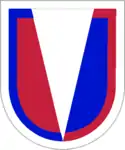 XVIII Airborne Corps' 20th Engineer BDE
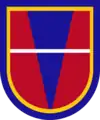 XVIII Airborne Corps, 20th Engineer BDE, 738th Engineer Co
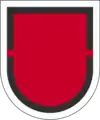 XVIII Airborne Corps, 20th Engineer BDE, 919th Engineer Co
 XVIII Airborne Corps, 20th Engineer BDE, 30th Engineer BN
 82nd Airborne Div, 127th Engineer BN (original version)
- 101st Airborne Div, 326th Engineer BN
Field artillery


 82nd Airborne Div, 82nd Airborne Div Artillery—formerly 101st Airborne Div, 101st Div Artillery and 1st Cavalry Div, 1st Cavalry Div Artillery
 82nd Airborne Div, 1st BCT, 319th Field Artillery RGT, 3rd BN
 82nd Airborne Div, 2nd BCT, 319th Field Artillery RGT, 2nd BN
 82nd Airborne Div, 3rd BCT, 319th Field Artillery RGT, 1st BN
- Obsolete
 US Army Alaska, 172nd Infantry BDE, 11th Field Artillery RGT, 4th BN, Battery C
 –US Army Alaska, 172nd Infantry BDE, 37th Field Artillery RGT, 1st BN, Battery C
–1st Cavalry Div, 1st Cavalry Div Artillery XVIII Airborne Corps Artillery, Headquarters and Headquarters Battery
 XVIII Airborne Corps' 18th Field Artillery BDE
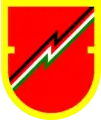 XVIII Airborne Corps, 18th Field Artillery BDE, 1st Field Artillery Detachment
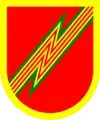 XVIII Airborne Corps, 18th Field Artillery BDE, 234th Field Artillery Detachment
 XVIII Airborne Corps, 18th Field Artillery BDE, 321st Field Artillery RGT, 1st Bn
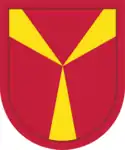 XVIII Airborne Corps, 18th Field Artillery BDE, 377th Field Artillery RGT, 1st Bn
 82nd Airborne Division, 4th BCT, 321st Field Artillery RGT, 2nd Bn
Infantry
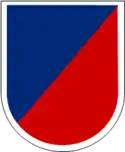 USAREUR-AF, 173rd Airborne BDE
 USAREUR-AF, 173rd Airborne BDE, 143rd Infantry RGT, 1st BN
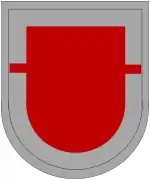 USAREUR-AF, 173rd Airborne BDE, 503rd Infantry RGT, 1st BN—formerly 101st Airborne Div, 3rd BDE
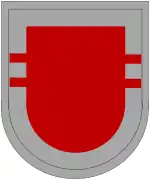 USAREUR-AF, 173rd Airborne BDE, 503rd Infantry RGT, 2nd BN—formerly 101st Airborne Div, 3rd BDE
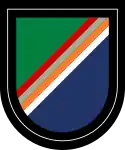 US Army Special Operations CMD, 75th Ranger RGT
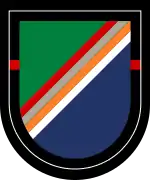 US Army Special Operations CMD, 75th Ranger RGT, 1st BN
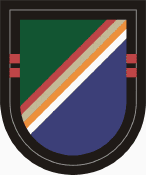 US Army Special Operations CMD, 75th Ranger RGT, 2nd BN
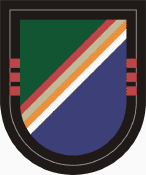 US Army Special Operations CMD, 75th Ranger RGT, 3rd BN
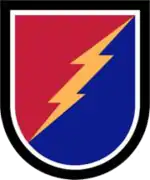 25th Infantry Div, 4th BCT
 25th Infantry Div, 4th BCT, 501st Infantry RGT, 1st BN—formerly 101st Airborne Div, 2nd BDE
 25th Infantry Div, 4th BCT, 509th Infantry RGT, 3rd BN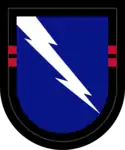
 82nd Airborne Div
 82nd Airborne Div, 1st BCT
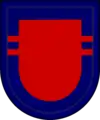 82nd Airborne Div, 1st BCT, 501st Infantry RGT, 2nd BN
 82nd Airborne Div, 1st BCT, 504th Infantry RGT, 1st BN
 82nd Airborne Div, 1st BCT, 504th Infantry RGT, 2nd BN
 82nd Airborne Div, 2nd BCT
 82nd Aiirborne Div, 2nd BCT, 325th Infantry RGT, 1st BN
 82nd Airborne Div, 2nd BCT, 325th Infantry RGT, 2nd BN
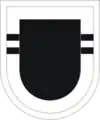 82nd Airborne Div, 2nd BCT, 508th Infantry RGT, 2nd BN—formerly 4th BCT
 82nd Airborne Div, 3rd BCT
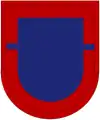 82nd Airborne Div, 505th Infantry RGT, 1st BN
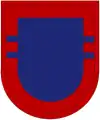 82nd Airborne Div, 3rd BCT, 505th Infantry RGT, 2nd BN
- 82nd Airborne Div, 3rd BCT, 508th Infantry RGT, 1st BN—formerly 4th BCT
- Obsolete
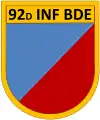 Puerto Rico Army National Guard, 92nd Infantry BDE
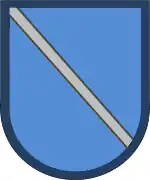 Texas Army National Guard, 36th Airborne Brigade, 143rd Infantry RGT, 1st BN
 Texas Army National Guard, 36th Airborne Brigade, 143rd Infantry RGT, 2nd BN
 –US Army Alaska, 172nd Infantry BDE (original version)
–101st Airborne Div, Screaming Eagle Replacement Training School US Army Alaska, 172nd Infantry BDE
 US Army Alaska, 172nd Infantry BDE, 9th Infantry RGT, 4th BN
 US Army Alaska, 172nd Infantry BDE, 23rd Infantry RGT, 4th BN—redesignated 327th Infantry RGT, 5th BN, Co C (original version)
 US Army Alaska, 172nd Infantry BDE, 60th Infantry RGT, 1st BN
 US Army Alaska, 172nd Infantry BDE, 327th Infantry RGT, 4th BN, Co C
 US Army Alaska, 172nd Infantry BDE, 327th Infantry RGT, 5th BN, Co C
 US Army Alaska, 172nd Infantry BDE, 327th Infantry RGT, 6th BN, Co C
 US Army Southern European Task Force, 509th Infantry RGT, 1st BN (original version)
 US Army Special Operations CMD, 75th Ranger RGT (original version)
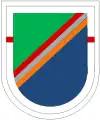 US Army Special Operations CMD, 75th Ranger RGT, 1st BN (original version)
 US Army Special Operations CMD, 75th Ranger RGT, 2nd BN (original version)
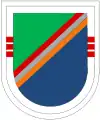 US Army Special Operations CMD, 75th Ranger RGT, 3rd BN (original version)
 82nd Airborne Div, 1st BCT (original version)
 82nd Airborne Div, 1st BCT, 504th Infantry RGT, 3rd BN
 82nd Airborne Div, 2nd BCT (original version)
 82nd Airborne Div, 2nd BCT and US Army Southern European Task Force, 325th Infantry RGT, 3rd BN
 82nd Airborne Div, 2nd BCT, 325th Infantry RGT, 4th BN
 82nd Airborne Div, 3rd BCT (original version)
 82nd Airborne Div, 3rd BCT, 505th Infantry RGT, 3rd BN
 82nd Airborne Div, 3rd BCT, 505th Infantry RGT, 4th BN
 82nd Airborne Div, 4th BCT
 101st Airborne Div
 101st Airborne Div, 1st BDE
 101st Airborne Div, 1st BDE, 327th Infantry RGT, 1st BN
 101st Airborne Div, 1st BDE, 327th Infantry RGT, 2nd BN
 101st Airborne Div, 1st BDE, 502nd Infantry RGT, 2nd BN
 101st Airborne Div, 2nd BDE
 101st Airborne Div, 2nd BDE, 502nd Infantry RGT, 1st BN
 101st Airborne Div, 2nd BDE, 506th Infantry RGT, 1st BN
 101st Airborne Div, 3rd BDE
 101st Airborne Div, 3rd BDE, 187th Infantry RGT, 3rd BN
Logistics
 Arctic Support CMD, 17th Combat Sustainment Support BN, 4th Quartermaster Detachment
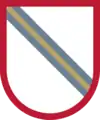 Defense Logistics Agency, Defense Distribution Depot-Army Element
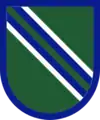 General Lucius D. Clay National Guard Center, 165th Quartermaster Co
 Program Executive Office, Airborne Procurement Team
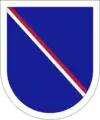 US Army Test and Evaluation CMD, Yuma Proving Ground, Airborne Test Force
 US Army Test and Evaluation CMD, Airborne and Special Operations Test Directorate—formerly US Army Airborne Board
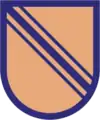 3rd Expeditionary Sustainment CMD, 264th Combat Sustainment Support BN, 647th Quartermaster Co
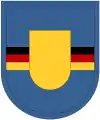 21st Theater Sustainment CMD, 16th Sustainment BDE, 16th Special Troops BN, 5th Quartermaster Theater Aerial Delivery Co
 36th Infantry Div, 36th Infantry Div Sustainment BDE, 294th Quartermaster Co
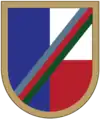 36th Infantry Div, 36th Infantry Div Sustainment BDE, 294th Quartermaster Co, 36th Quartermaster Detachment
 56th Troop CMD, 56th Quartermaster Detachment
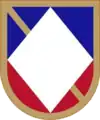 82nd Airborne Div, 82nd Airborne Div Sustainment BDE, 189th Combat Support Sustainment BN, 11th Quartermaster Co
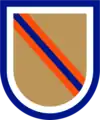 143rd Sustainment CMD, 518th Sustainment BDE, 275th Combat Sustainment Support BN, 470th Quartermaster Co
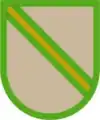 143rd Sustainment CMD, 518th Sustainment BDE, 275th Combat Sustainment Support BN, 824th Quartermaster Co
 143rd Sustainment CMD, 518th Sustainment BDE, 352nd Combat Sustainment Support BN, 346th Quartermaster Co
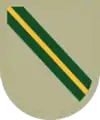 143rd Sustainment CMD, 518th Sustainment BDE, 352nd Combat Sustainment Support BN, 421st Quartermaster Co
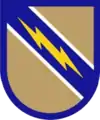 316th Sustainment CMD, 77th Sustainment BDE, 861st Quartermaster Co
- Obsolete
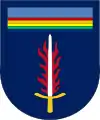 US Army Europe, 29th Transportation BN
 US Army Forces CMD, 561st Maintenance BN
 US Army Japan, 10th Regional Support Group, 35th Combat Sustainment Support BN, 87th Quartermaster Detachment
 1st Cavalry Div Support CMD, 15th Support and Transport Bn (original version)
 1st Cavalry Div Support CMD, 15th Support and Transport Bn
 1st Cavalry Div Support CMD, 15th Support and Transport Bn, Co A
 1st Cavalry Div Support CMD, 15th Support and Transport Bn, Co B
 1st Cavalry Div Support CMD, 27th Maintenance Bn
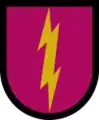 1st Cavalry Div, 1st Cavalry Div Sustainment BDE, 527th Quartermaster Detachment
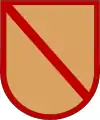 1st Corps Support CMD, 600th Quartermaster Co
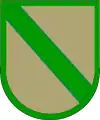 1st Corps Support CMD, 612th Quartermaster Co
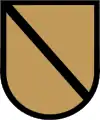 1st Corps Support CMD, 623rd Quartermaster Co
 21st Theater Sustainment CMD, 16th Sustainment BDE, 16th Special Troops BN, 5th Quartermaster Theater Aerial Delivery Co (original version)
 82nd Airborne Div, 33rd Aviation Maintenance Co
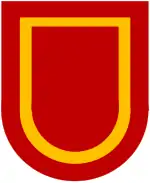 82nd Airborne Div, 407th Supply and Transportation BN—currently 82nd Airborne Div, 2nd BCT, 407th BDE Support BN
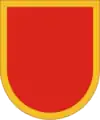 82nd Airborne Div, 4th BCT, 782nd Maintenance BN—redesignated 782nd BDE Support BN
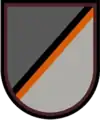 451st Expeditionary Sustainment CMD, 89th Sustainment BDE, 620th Combat Sustainment Support BN, 383rd Quartermaster Co
Medical
 USAREUR-AF, 30th Medical BDE, 212th Combat Support Hospital, 67th Forward Resuscitative and Surgical Detachment
 XVIII Airborne Corps, 44th Medical BDE, 28th Combat Support Hospital, 240th Forward Resuscitative and Surgical Detachment
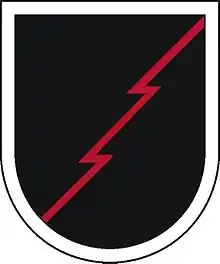 XVIII Airborne Corps, 44th Medical BDE, 28th Combat Support Hospital, 274th Forward Resuscitative and Surgical Detachment
 XVIII Airborne Corps, 44th Medical BDE, 28th Combat Support Hospital, 541st Forward Resuscitative and Surgical Detachment
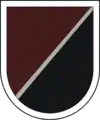 XVIII Airborne Corps, 44th Medical BDE, 28th Combat Support Hospital, 759th Forward Resuscitative and Surgical Detachment
 18th Medical CMD, 8th Forward Resuscitative and Surgical Detachment
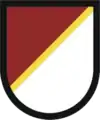 593rd Expeditionary Sustainment CMD, 62nd Medical BDE, 47th Combat Support Hospital, 250th Forward Resuscitative and Surgical Detachment
- Obsolete
 US Army Forces CMD, 86th Combat Support Hospital
 1st Cavalry Div Support CMD, 15th Medical BN (original version)
 1st Cavalry Div Support CMD, 15th Medical BN
 4th Infantry Div, 4th Medical BN, Co C
 XVIII Airborne Corps, 44th Medical BDE
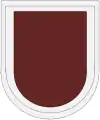 82nd Airborne Div, 307th Medical BN—currently 82nd Airborne Div, 1st BCT, 307th BDE Support BN
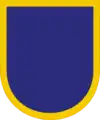 593rd Expeditionary Sustainment CMD, 62nd Medical BDE, 47th Combat Support Hospital, 250th Medical Detachment
Military intelligence
 1st Special Forces CMD, 528th Sustainment BDE, 389th Military Intelligence BN
- Obsolete
 Alabama Army National Guard, 142nd Battlefield Surveillance BDE (BfSB), 131st Cavalry RGT, 1st SQN, Troop C (Long-Range Surveillance)
 Indiana Army National Guard, 219th BfSB, 152nd Cavalry RGT, 2nd SQN, Troop C (Long-Range Surveillance)—redesignated 38th Infantry Div, 151st Infantry RGT, Co D (Long-Range Surveillance)
 Maryland Army National Guard, 58th BfSB, 158th Cavalry RGT, 1st SQN, Troop C (Long-Range Surveillance)
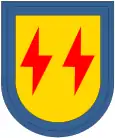 Michigan Army National Guard, 425th Infantry RGT, Co F (Long-Range Surveillance)
 Texas Army National Guard, 1136th Infantry Detachment (Long-Range Surveillance)
 US Army Alaska, 207th Infantry Group, Long-Range Surveillance Detachment
 US Army Europe, 66th Military Intelligence BDE, 105th Military Intelligence BN, Long-Range Surveillance Detachment
 USAREUR-AF, 173rd Airborne BDE, 74th Infantry Detachment (Long-Range Surveillance)
 US Army Forces CMD and 82nd Airborne Div, 313th Military Intelligence BN
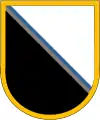 US Army South, 470th Military Intelligence BDE, 14th Military Intelligence BN, Co C (Long-Range Surveillance)
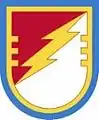 I Corps, 201st BfSB, 38th Cavalry RGT, 3rd SQN, Troop C (Long-Range Surveillance)
 I Corps, 201st BfSB, 109th Military Intelligence BN, 52nd Infantry RGT, Co C (Long-Range Surveillance)
 1st Cavalry Div, 312th Military Intelligence BN, Long-Range Surveillance Detachment
 1st Infantry Div, 101st Military Intelligence BN, Co D, Long-Range Surveillance Detachment
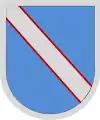 –1st Special Forces, 297th Military Intelligence Detachment
–XVIII Airborne Corps, 525th Military Intelligence BDE, 337th Military Intelligence BN
 2nd Infantry Div, 2nd Div Support Group, 102nd Military Intelligence BN, Long-Range Surveillance Detachment
 III Corps, 504th BfSB, 38th Cavalry RGT, 2nd SQN, Troop C (Long-Range Surveillance) (original version)
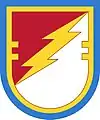 III Corps, 504th BfSB, 38th Cavalry RGT, 2nd SQN, Troop C (Long-Range Surveillance)
 III Corps, 504th Military Intelligence BDE, 163rd Military Intelligence BN, Long-Range Surveillance Detachment (original version)
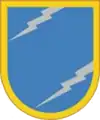 III Corps, 504th Military Intelligence BDE, 163rd Military Intelligence BN, Long-Range Surveillance Detachment
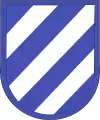 3rd Infantry Div, 103rd Military Intelligence BN, Long-Range Surveillance Detachment
 4th Infantry Div, 104th Military Intelligence BN, Long-Range Surveillance Detachment
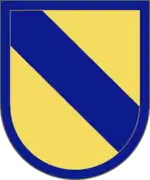 –V Corps, 205th BfSB, 51st Infantry RGT, Co E (Long-Range Surveillance)
–XVIII Airborne Corps, 525th BfSB, 51st Infantry RGT, Co F (Long-Range Surveillance) 6th Infantry Div, 106th Military Intelligence BN, Co C, Long-Range Surveillance Detachment
 7th Infantry Div, 107th Military Intelligence BN, Long-Range Surveillance Detachment
 8th Infantry Div, 108th Military Intelligence BN, Long-Range Surveillance Detachment
 9th Infantry Div, 109th Military Intelligence BN, Co E, Long-Range Surveillance Detachment
 10th Mountain Div, 110th Military Intelligence BN, Long-Range Surveillance Detachment
 XVIII Airborne Corps, 525th Military Intelligence BDE—formerly 525th BfSB
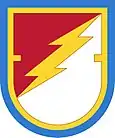 XVIII Airborne Corps, 525th BfSB, 38th Cavalry RGT, 1st SQN, Troop C (Long-Range Surveillance)
 24th Infantry Div, 124th Military Intelligence BN, Long-Range Surveillance Detachment
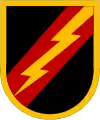 25th Infantry Div, 125th Military Intelligence BN, Long-Range Surveillance Detachment
 26th Infantry Div, 173rd Infantry Detachment (Long-Range Surveillance)
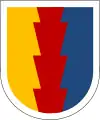 28th Infantry Div, 104th Infantry Detachment (Long-Range Surveillance) (original version)
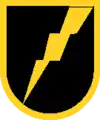 28th Infantry Div, 104th Infantry Detachment (Long-Range Surveillance)
 –47th Infantry Div, 194th Infantry Detachment (Long-Range Surveillance)
–34th Infantry Div, 194th Infantry Detachment (Long-Range Surveillance) 35th Infantry Div, 167th Cavalry RGT, 1st SQN, Long-Range Surveillance Detachment

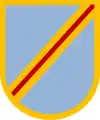 42nd Infantry Div, 117th Cavalry RGT, 5th SQN, Long-Range Surveillance Detachment
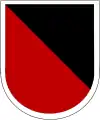 101st Airborne Div, 311th Military Intelligence BN, Long-Range Surveillance Detachment
Military police
 US Army Criminal Investigation CMD, 3rd Military Police Group, 10th Military Police BN
 XVIII Airborne Corps, 16th Military Police BDE
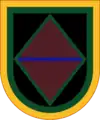 XVIII Airborne Corps, 16th Military Police BDE, 503rd Military Police BN, 21st Military Police Co
 XVIII Airborne Corps, 16th Military Police BDE, 503rd Military Police BN, 65th Military Police Co
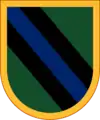 XVIII Airborne Corps, 16th Military Police BDE, 503rd Military Police BN, 108th Military Police Co
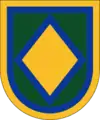 XVIII Airborne Corps, 16th Military Police BDE, 503rd Military Police BN, 118th Military Police Co
- Obsolete
 US Army Alaska, Fort Wainwright, 472nd Military Police Co
 –US Army Forces CMD, 553rd Military Police Co
–101st Airborne Div, 101st Military Police Co XVIII Airborne Corps, 16th Military Police Group
Multidisciplinary units
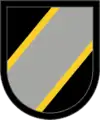 Joint Special Operations CMD–Army Element
 Special Operations CMD Africa-Army Element
 Special Operations CMD Central-Army Element
 Special Operations CMD Europe-Army Element
 Special Operations CMD Korea-Army Element
 Special Operations CMD North-Army Element
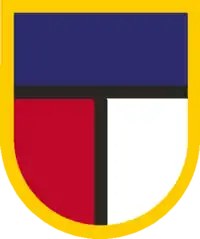 Special Operations CMD Pacific-Army Element
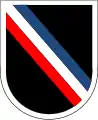 Special Operations CMD South-Army Element
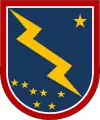 US Army Alaska, Early-Entry CMD Post
_beret_flash.png.webp) USACAPOC
USACAPOC USAREUR-AF, 173rd Airborne BDE, 173rd BDE Support BN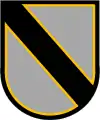
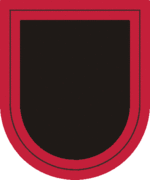 US Army Special Operations CMD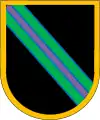
 US Special Operations CMD-Army Element
 1st Special Forces CMD—formerly 1st Special Forces
 1st Special Forces CMD, 528th Sustainment BDE
 1st Special Forces CMD, 528th Sustainment BDE, Special Troops BN, 197th Special Troops Support Co
 XVIII Airborne Corps
 25th Infantry Div, 4th BCT, 725th BDE Support BN
 82nd Airborne Div, 82nd Airborne Div Sustainment BDE
- 82nd Airborne Div, 1st BCT, 307th BDE Support BN—formerly 82nd Airborne Div, 307th Medical BN
- 82nd Airborne Div, 2nd BCT, 407th BDE Support BN—formerly 82nd Airborne Div, 407th Supply and Transportation BN
 82nd Airborne Div, 3rd BCT, 82nd BDE Support BN
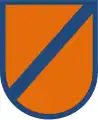 82nd Airborne Div, CAB, 122nd Aviation Support BN
- Obsolete
 Puerto Rico Army National Guard Headquarters, CMD and Control
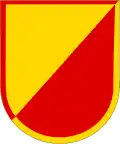 Puerto Rico National Guard Headquarters—currently Puerto Rico State Guard
 Puerto Rico Army National Guard, 292nd Area CMD
 Special Operations CMD Joint Forces–Army Element
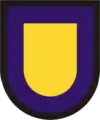 Special Operations Task Force Europe–Army Element
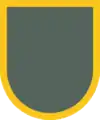 Supreme Headquarters Allied Powers Europe, Special Projects Branch–Army Element
 US Army Europe, 173rd Airborne BDE, Combat Support BN
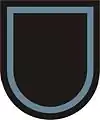 US Army Europe, 173rd Airborne BDE, Special Troops BN
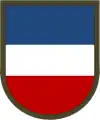 US Army Forces CMD
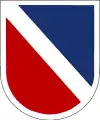 US Army Forces CMD, Joint Task Force Deployable
 US Army Garrison, Fort Bragg
 US Army Reserve Special Operations CMD
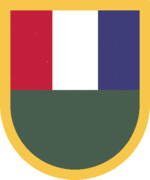 US Army Southern European Task Force
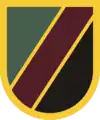 US Army Special Operations Support CMD
 1st Special Operations CMD
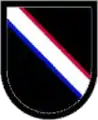 3rd Special Operations Support CMD
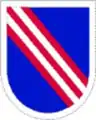 4th Special Operations Support CMD
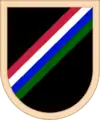 5th Special Operations Support CMD
 6th Special Operations Support CMD
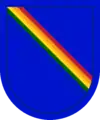 7th Special Operations Support CMD
 25th Infantry Div, 4th BCT, Special Troops BN
 25th Infantry Div, 4th BCT, 167th BDE Support BN
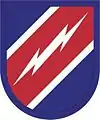 82nd Airborne Div, Special Troops BN
 82nd Airborne Div, 1st BCT, Special Troops BN
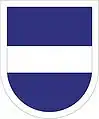 82nd Airborne Div, 2nd BCT, Special Troops BN
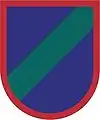 82nd Airborne Div, 3rd BCT, Special Troops BN
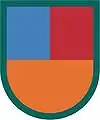 82nd Airborne Div, 4th BCT, Special Troops BN
- 82nd Airborne Div, 4th BCT, 782nd BDE Support BN—formerly 782nd Maintenance BN
 101st Div Support CMD—also worn by units at Fort Campbell that lacked an organizational beret flash
Ordnance
 20th Chemical, Biological, Radiological, Nuclear, and Explosives (CBRNE) CMD, 52nd Ordnance Group, 192nd Ordnance BN, 28th Ordnance Co
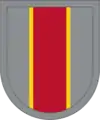 20th CBRNE CMD, 52nd Ordnance Group, 192nd Ordnance BN, 722nd Ordnance Co
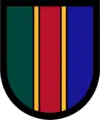 20th CBRNE CMD, 52nd Ordnance Group, 192nd Ordnance BN, 767th Ordnance Co
Psychological operations
 USACAPOC, 2nd Psychological Operations (PSYOP) Group, 15th PSYOP BN, 310th, 325th, and 346th Tactical PSYOP Cos
 USACAPOC, 7th PSYOP Group, 14th PSYOP BN, 301st Tactical PSYOP Co
 USACAPOC, 7th PSYOP Group, 17th PSYOP BN, 344th Tactical PSYOP Co
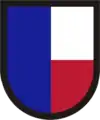 USACAPOC, 7th PSYOP Group, 17th PSYOP BN, 345th Tactical PSYOP Co
 1st Special Forces CMD, 4th PSYOP Group
 1st Special Forces CMD, 4th PSYOP Group, 3rd PSYOP BN
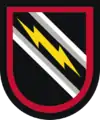 1st Special Forces CMD, 4th PSYOP Group, 7th PSYOP BN
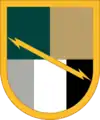 1st Special Forces CMD, 4th PSYOP Group, 8th PSYOP BN
 1st Special Forces CMD, 8th PSYOP Group
- Obsolete
 USACAPOC, 2nd PSYOP Group, 15th PSYOP BN, 310th Tactical PSYOP Co (original version)
 USACAPOC, 2nd PSYOP Group, 15th PSYOP BN, 325th Tactical PSYOP Co (original version)
 USACAPOC, 2nd PSYOP Group, 15th PSYOP BN, 346th Tactical PSYOP Co (original version)
Public affairs
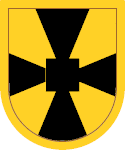 US Army Recruiting CMD, Marketing and Engagement BDE, US Army Parachute Team
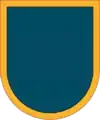 82nd Airborne Div, 49th Public Affairs Detachment
Signal
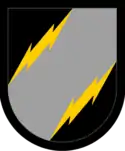 Joint Special Operations CMD, Joint Communications Unit–Army element
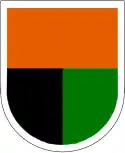 1st Special Forces CMD, 528th Sustainment BDE, 112th Special Operations Signal BN
 7th Signal CMD, 21st Signal BDE, 55th Signal Co, Airborne Combat Camera Documentation Team
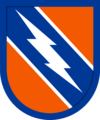 335th Theater Signal CMD, 359th Signal BDE, 982nd Signal Co, Airborne Platoons
- Obsolete
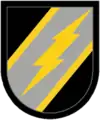 Joint Special Operations CMD, Joint Communications Unit–Army element (original version)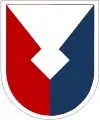
 1st Cavalry Div Support CMD, 13th Signal Bn
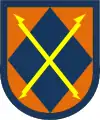 XVIII Airborne Corps, 35th Signal BDE
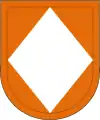 XVIII Airborne Corps, 35th Signal BDE, 50th Signal BN
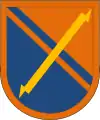 XVIII Airborne Corps, 35th Signal BDE, 51st Signal BN
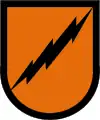 XVIII Airborne Corps, 35th Signal BDE, 327th Signal BN (original version)
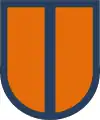 XVIII Airborne Corps, 35th Signal BDE, 327th Signal BN
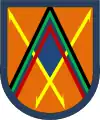 XVIII Airborne Corps, 35th Signal BDE, 426th Signal BN
 82nd Airborne Div, 82nd Signal BN
 101st Airborne Div, 501st Signal BN
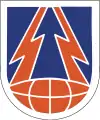 335th Theater Signal CMD, 359th Signal BDE, 982nd Signal Co (original version)
Special forces
- Special Forces personnel in non-special forces units
 1st Special Forces CMD, 1st Special Forces Group
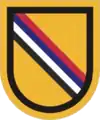 1st Special Forces CMD, 1st Special Forces Group, 39th Special Forces Detachment
 1st Special Forces CMD, 3rd Special Forces Group
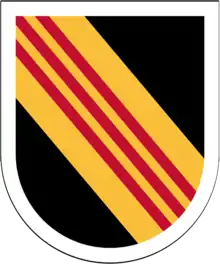 1st Special Forces CMD, 5th Special Forces Group—formerly 5th Special Forces Group–Vietnam
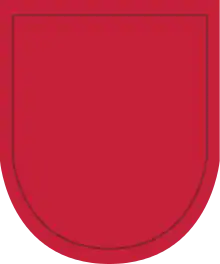 1st Special Forces CMD, 7th Special Forces Group
 1st Special Forces CMD, 10th Special Forces Group
 1st Special Forces CMD, 19th Special Forces Group
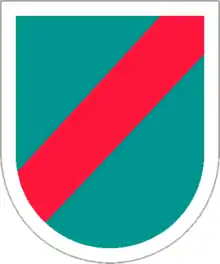 1st Special Forces CMD, 20th Special Forces Group
- Obsolete
 Special Forces personnel assigned to the Joint Chiefs of Staff
 1st Special Forces, Special Forces Reserve
 1st Special Forces, Special Forces Reserve Recognition Bar
 1st Special Forces, 1st Special Forces Group Recognition Bar
 1st Special Forces, 3rd Special Forces Group Recognition Bar
 1st Special Forces, 5th Special Forces Group (original version)
 1st Special Forces, 5th Special Forces Group Recognition Bar
 1st Special Forces, 5th Special Forces Group–Vietnam Recognition Bar
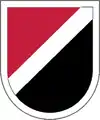 1st Special Forces, 6th Special Forces Group
 1st Special Forces, 6th Special Forces Group Recognition Bar
 1st Special Forces, 7th Special Forces Group Recognition Bar
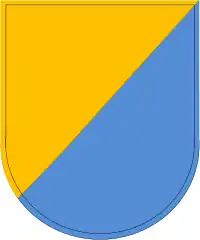 1st Special Forces, 8th Special Forces Group
 1st Special Forces, 8th Special Forces Group Recognition Bar
 1st Special Forces, 10th Special Forces Group Recognition Bar
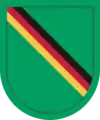 1st Special Forces, 10th Special Forces Group, Special Forces Detachment-Europe
 1st Special Forces, 10th Special Forces Group, Special Forces Detachment-Europe Recognition Bar
- 1st Special Forces, 11th Special Forces Group
- 1st Special Forces, 11th Special Forces Group Recognition Bar
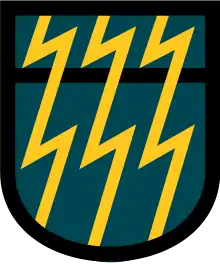 1st Special Forces, 12th Special Forces Group
 1st Special Forces, 12th Special Forces Group Recognition Bar
 1st Special Forces, 19th Special Forces Group Recognition Bar
 1st Special Forces, 20th Special Forces Group Recognition Bar
Training
 Joint Readiness Operations Group, 509th Infantry RGT, 1st BN
 Security Force Assistance CMD
 Security Force Assistance CMD, 1st Security Force Assistance BDE
 Security Force Assistance CMD, 2nd Security Force Assistance BDE
 Security Force Assistance CMD, 3rd Security Force Assistance BDE
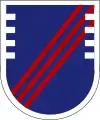 Security Force Assistance CMD, 4th Security Force Assistance BDE
 Security Force Assistance CMD, 5th Security Force Assistance BDE
 Security Force Assistance CMD, 54th Security Force Assistance BDE
 US Army Infantry School, Airborne and Ranger Training BDE
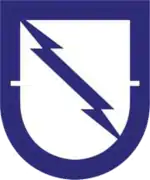 US Army Infantry School, Airborne and Ranger Training BDE, 507th Infantry RGT, 1st BN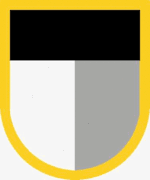
 SWCS, David K Thuma NCO Academy
 SWCS, Special Forces Warrant Officer Institute
 SWCS, Special Warfare Medical Group
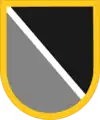 SWCS, 1st Special Warfare Training Group
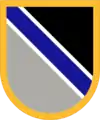 SWCS, 2nd Special Warfare Training Group
 US Army Junior ROTC
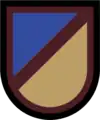 US Army Quartermaster Center and School, 23rd Quartermaster BDE, 262nd Quartermaster BN, Co C
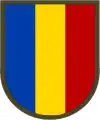 US Army Training and Doctrine CMD, Airborne/Airlift Action Office
 82nd Airborne Div, Advanced Airborne School
- Obsolete
 Fort Irwin National Training Center, Light Infantry and Task Force Observer/Controller Team
 Joint Readiness Training Center and Operations Group (original version)
 US Army Academy of Health Sciences, Academy BDE, 3rd BN, Co F (Special Forces Medic School)
 US Army Armor School, Armor Committee Group
 US Army Armor School Instructor
 US Army Armor School, 1st Armor Training BDE
 US Army Armor School, 16th Cavalry RGT, 3rd SQN, Co D (Reconnaissance and Surveillance Leaders Course)
 US Army Armor School, 194th Armored BDE, 3rd Field Artillery, 3rd BN
 US Army Armor School, 194th Armored BDE, 54th Infantry RGT, 4th BN
 US Army Aviation Center and School, 509th Infantry, Co C (Pathfinder)
 US Army Aviation Center and School, 511th Infantry RGT, Co A (Pathfinder)
 US Army Aviation Center and School, 1st Aviation BDE, 187th Infantry Detachment (Pathfinder)
 US Army Infantry School, Airborne Department
 US Army Infantry School, Ranger Department Recognition Bar
 US Army Quartermaster Center and School, Aerial Delivery & Field Services Department
 US Army School of the Americas' Special Operations and Civil Military Operations Department
 SWCS, Special Forces Training Group
 SWCS, Special Forces Training Group Recognition Bar
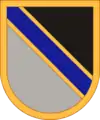 SWCS, Special Warfare Education Group
 US Army Junior ROTC
 US Army ROTC, Ranger Challenge Team
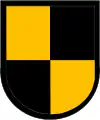 US Army ROTC, Senior Ranger Challenge Team
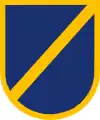 US Army ROTC, Drexel University
 US Army ROTC, Southwest Missouri State University
 –US Army ROTC, Temple University
–Various cavalry units (see "Armor and cavalry" section)
Note that this is the most prolific organizational beret flash in the US Army. US Army ROTC, University of North Carolina–Chapel Hill
 US Army ROTC, University of Puerto Rico– Mayagüez
 US Army ROTC, University of Utah, Ute Scouts Ranger Co
 US Army ROTC, University of Utah Recognition Bar
 US Army ROTC, Western Michigan University
 US Military Academy, Airborne Detachment (original version)
 US Military Academy, Airborne Detachment
- –101st Airborne Div, Screaming Eagle Replacement Training School
–US Army Alaska, 172nd Infantry BDE (original version)
Beret flashes of US defense forces
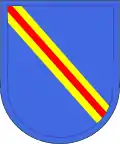
Collectively referred to as state defense forces—also known as state guard, state military reserve, or militia—in many US states and territories wear modified versions of US Army uniforms.[37][90][91] To help separate these state guard members from other federal armed forces, such as the US National Guard, they will wear a unique organizational beret flash on their military beret that is worn in the same manner as their federal counterparts.[37][92][93][94][95][96][97][98] The following is a list of some of these organizational beret flashes worn by various US militia units:
 State Defense Force (worn by various state reserve units)
State, territory, and district specific militia
- Puerto Rico State Guard—formerly Puerto Rico National Guard Headquarters
 Puerto Rico State Guard, Air Div, 1st Air Base Group, Security Forces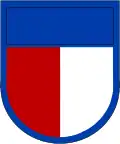
 Washington State Guard, 1st BDE
 Washington State Guard, 2nd BDE
- Obsolete
 District of Columbia Defense Force
 Texas State Guard, 404th Military Police BN
See also
References
- Department of the Army Pamphlet 670–1, Uniform and Insignia Guide to the Wear and Appearance of Army Uniforms and Insignia, Department of the Army, dated 26 January 2021, last accessed 21 June 2021
 This article incorporates text from this source, which is in the public domain.
 - Air Force Instruction 36-2903, Dress and Personal Appearance of Air Force Personnel, US Department of the Air Force, dated 7 February 2020, corrected 2 July 2020, last accessed 14 November 2020
- Beret Insignia of the U.S. Army, by William A Hudspeath, dated 1987, ASIN B06XD7DSY9, last reviewed 1 September 2021
- AR 670–1 1981 (OBSOLETE):Wear and appearance of Army uniforms and insignia, Department of the Army via Ike Skelton Combined Arms Research Library Digital Library, dated 1 November 1981, last accessed 21 November 2020
- US Army / US Army Heraldry / Beret Flash and Background Trimmings, The Institute of Heraldry, last accessed 12 February 2020
- War Eagle Troopers receive Multinational Force and Observers medal, Army.mil, by MAJ Michael Soyka and SGT William A. Tanner, dated 9 May 2016, last accessed 28 April 2018
- Joint Communications Support Element–Government Organization, official Facebook page, last accessed 20 January 2021
- Quiet Professionals don brown beret, US Air Force Special Operations Command, by Capt Monique Roux, dated 8 January 2018, last accessed 28 April 2018
- All American Legacy Podcast Ep 25 - The French Hat, 82nd Airborne Division Official YouTube Channel, dated 26 June 2017, last accessed 24 March 2020
- The colorful and controversial history of the Army's berets, ConnectingVets.Radio.com, by Jack Murphy, dated 23 October 2019, last accessed 18 January 2020
- Rare WWII 509th Parachute Infantry Battalion Airborne Italian Made Patch Superb, Pricing and History, WorthPoint, last accessed 19 October 2021
- 509th PIB Red Beret, 509th Parachute Infantry Battalion, America's First Combat Paratroopers, History of the 509th PIB in WWII (1941 - 1945), 509th Parachute Infantry Association, dated 2006, last accessed 19 October 2021
- Earning it: A complete history of Army berets and who's allowed to wear them, ArmyTimes, by Meghann Myers, dated 19 November 2017, last accessed 19 October 2021
- 509th Infantry Regiment, Distinctive Unit Insignia, Coat of Arms, The US Army Institute of Heraldry, dated 28 May 1970, last accessed 4 July 2021
- Keith Allen Campbell; Specialist Four; Headquarters and Headquarters Company, 1st Battalion, 503rd Infantry, 173rd Airborne Brigade, US Army Reserve; Army of the United States, Arlington, Virginia; March 03, 1946 to February 08, 1967; The Virtual Wall, Vietnam Veterans Memorial; last updated 15 August 2019, last accessed 14 November 2020
- RFK Speech- Authorizations for Green Beret, John F. Kennedy Special Warfare Museum, soc.mil, last accessed 25 April 2021
- US Army Special Forces 1952–84, Bloomsbury Publishing, by Gordon L. Rottman, dated 20 September 2012, ISBN 9781782004462, last accessed 29 March 2019
- Army Regulation 614–200, Enlisted Assignments and Utilization Management, Department of the Army, dated 25 January 2019, last accessed 30 May 2020
- Utrikestjänst, CA besök i USA. Fort Bragg, Digitaltmuseum.se, by SP4 Laverne Fultz (US Army), dated 28 May 1975, last accessed 19 December 2020
- History of the Army Beret, CSA SENDS - THE ARMY BLACK BERET, armyreal.com, last accessed 12 February 2020
- The Beret in U.S. Military Uniform History, The Balance Careers, by Rod Powers, updated 27 June 2019, last accessed 14 September 2019
- A Short History of the Use of Berets in the U.S. Army, army.mil via WebArchive, dated 03 November 2000, last accessed 26 March 2019
- US Army berets - blue, black, green, maroon, tan..., The US Militaria Forum, last accessed 10 September 2021
- Insignia of Airborne Units, U.S. Army, Second World War, Airborne Breast Oval Background Trimmings, American Military Patches, Other Insignia and Decorations of World War Two, by Dr. Howard G. Lanham, dated 2001, last accessed 24 June 2017
- A member of Company B, 2nd Brigade, 82nd Airborne Division, prepares for a troop drop during Exercise NEPTUNE II, Defense Audiovisual Agency, National Archives and Records Administration (locator: 6375832 and local identifier: 330-CFD-DF-SN-84-04750.jpeg), dated 20 August 1977, last accessed 19 December 2020
- 101st Airborne Division Blue Air Assault Beret 1973-1978, U.S. Militaria Forum, last accessed 25 January 2021
- Welcome to the 101st Airborne Division (Air Assault), Army.mil, by 101st Airborne Division Public Affairs Office, dated 2 April 2014, last accessed 25 January 20212
- On episode 25 of the All American Legacy Podcast, we mention the blue beret of the 101st Airborne Division in the 1970s. Well, here is the proof., 82nd Airborne Division official Facebook page, dated 28 June 2017, last accessed 23 March 2020
- Qualification Badges, Air Assault Badge, US Army Institute of Heraldry, dated 18 January 1978, last accessed 16 October 2020
- History of the Black Beret, Army Study Guide, by SMA Jack L. Tilley, last accessed 23 December 2020
- 1st Battalion 22nd Infantry, Regulars 76-78, 1st Battalion 22nd Infantry 1976-1978, Image caption: (Photo taken when Don was with the 172nd INF BDE in Alaska, before being assigned to 1/22 Infantry. Note the olive drab beret. The 172nd was the only unit in the Army authorized to wear the olive beret.), by Don Krewson, dated 2011, last accessed 8 May 2021
- The Black Beret, Tanker's Jackets and Gunnery Qualification Patches: Scouts Out ... Fashion Forward, The Hidden Stories: 1970s - From Starch to Permanent Press, Eaglehorse.org, last accessed 6 May 2020
- Nick's FARRP #7 – First Cavalry Division – 1978, The Days Forward, dated 14 June 2020, last accessed 5 September 2021
- Ranger Hall of Fame, US Army Airborne and Ranger Training Brigade, last Updated 28 November 2018, last accessed 5 September 2021
- Army Regulation 670–1 (2002), Uniforms and Insignia, Wear and Appearance of Army Uniforms and Insignia, Department of the Army, dated 1 July 2002, last accessed 22 April 2020
- Operation Urgent Fury (Grenada) (US Military photo gallery), PBase.com, by Oly Olson, last accessed 4 July 2018
- Army Regulation 670–1 (2021), Uniform and Insignia Wear and Appearance of Army Uniforms and Insignia, Department of the Army, dated 26 January 2021, last accessed 11 April 2021
- Beret Flash, U.S. Army, A-4-187 (manufacturing production sheet), US Army Institute of Heraldry (courtesy of Eagles of War), dated 22 November 2000, last accessed 11 June 2020—a copy is also available on Wikimedia Commons at File:US Army TIOH Manufacturing Instructions Sheet-Army Flash.png
- FAQs-Organizational Insignia, The US Army Institute of Heraldry, last accessed 20 November 2021
- Clothing and Heraldry PSID, US Army TACOM Life Cycle Management Command, last accessed 8 September 2019
- Authorized Insignia for the Security Force Assistance Command; Department of the Army, The Institute of Heraldry; AAMH-IHS; dated 16 November 2018; last accessed 14 April 2020
- Beret Flash for the 1st Security Force Assistance Brigade; Department of the Army, The Institute of Heraldry; AAMH-IHS; dated 9 February 2018; last accessed 14 April 2020
- Beret Flash for the 2d Security Force Assistance Brigade; Department of the Army, The Institute of Heraldry; AAMH-IHS; dated 7 June 2018; last accessed 14 April 2020
- Beret Flash for the 3d Security Force Assistance Brigade; Department of the Army, The Institute of Heraldry; AAMH-IHS; dated 8 August 2018; last accessed 14 April 2020
- Authorized Insignia for the 4th Security Force Assistance Brigade; Department of the Army, The Institute of Heraldry; AAMH-IHS; dated 8 January 2019; last accessed 14 April 2020
- Authorized Insignia for the 5th Security Force Assistance Brigade; Department of the Army, The Institute of Heraldry; SAAA-IHS; dated 31 July 2019; last accessed 14 April 2020
- Authorized Insignia for the 54th Security Force Assistance Brigade; Department of the Army, The Institute of Heraldry; SAAA-IHS; dated 2 December 2019; last accessed 5 June 2020
- U.S. Army Beret Flash, The US Army Institute of Heraldry, dated 20 November 2000, last accessed 1 February 2021
- Youngest Beret, 1st Battalion, 23rdInfantry Regiment, Fort Lewis's 23rd Infantry Regiment official homepage, last updated 15 July 2002, last accessed 29 December 2020
- Defense Leaders Uphold Army's Black Beret Decision (Corrected Copy), American Forces Press Service, by Linda D. Kozaryn, dated 16 March 2001, last accessed 20 November 2021
- 1st SFAB hosts activation ceremony; Heraldry announced, Army.mil, by US Army, dated 8 February 2018, last accessed 29 December 2020
- US Soldier Killed in Afghanistan Returns Home to USA, VOA News (via YouTube), dated 25 December 2019, last accessed 8 December 2021
- Big Picture: Your Army Reports: Number 10, US Army's The Big Picture (TV 713), hosted on PublicResourceOrg YouTube Channel, dated 1967, posted 31 December 2010, last accessed 19 May 2020
- Beret Flash and Background Trimming for the 346th Quartermaster Company; Department of the Army, The Institute of Heraldry; SAAA-IHS; dated 16 December 2019; last accessed 6 June 2020
- TIOH Organization, The US Army Institute of Heraldry, last accessed 7 December 2021
- Air Force Weather, Our Heritage 1937 to 2012, prepared by TSgt C. A. Ravenstein (Historical Division, AW3DI, Hq AWS), dated 22 January 2012, last accessed 14 March 2020
- Special Operations Weather Team, AFSOC, dated 12 August 2014, last accessed 14 November 2020
- Special Operations Weather Technicians and Officers, National Museum of the United States Air Force, dated 2 June 2015, last accessed 16 March 2020
- Earning the gray beret, Keesler Air Force Base public website, dated 10 June 2008, last accessed 18 July 2017
- Christian Shepherd, 18th Weather Squadron Combat Weatherman, flickr.com, dated 7 October 2007, last accessed 18 July 2017
- STS kicks off Kadena's remembrance ceremony, 353sog.af.mil, by SSgt Christopher Hummel, dated 12 November 2010, last accessed 8 March 2020
- 335th TRS student receives Gray Beret, by Andre’ Askew (81st Training Wing Public Affairs), dated 28 March 2017, last accessed 9 August 2021
- Air Force Report: Combat Weathermen, Defense Visual Information Distribution Service, by TSgt Ron Rogers (U.S. Air Force), dated 11 October 2007, last accessed 24 June 2020
- History of the Security Police Beret, by Safeside Association, last accessed 5 July 2018
- USAF Safeside (Part 1 of 2), US Air Force, hosted of Krpinckney YouTube Channel—video extract available on Commons—posted 12 November 2009, last accessed 7 May 2020
- USAF Security Police Squadrons in Vietnam, usmilitariaforum.com, posted 22 March 2009, last accessed 14 July 2017
- Brothers in Berets, The Evolution of Air Force Special Tactics, 1953-2003; Air University Press, Curtis E. LeMay Center for Doctrine Development and Education, Maxwell Air Force Base, Air Force History and Museums Program, in conjunction with Air Force Special Operations Command; by Forrest L. Marion, PhD; dated January 2018; last accessed 1 April 2020
- AIRMAN Will Neville, of the 55th Security Force Squadron, waves incoming traffic onto Offutt Air Force Base, Nebraska. Neville and other 55th security forces personnel are participating in a US Strategic Command exercise, GLOBAL GUARDIAN '99, U.S. Navy's Naval Imaging Command, by PH2 Leland B. Comer (US Navy), dated 26 October 1998, last accessed 20 June 2021
- TACP - Flash and Crest Heraldry, unknown author but suspected to be US Air Force, hosted on ClearedHotProduction YouTube Channel, posted 20 March 2012, last accessed 31 May 2020
- 274th ASOS Change-of-Comand [sic] and Ribbon Cutting Ceremonies, 174attackwing.ang.af.mil, by SSgt James N. Faso, dated 4 June 2011, last accessed 8 March 2020
- AFSC 13LX Air Liaison Officer, Career Field Education and Training Plan, Department of the Air Force, dated 21 May 2013, last accessed 5 March 2020
- TACP Officer Assessment and Selection, Application Process, airforce.com, dated FY2020, last accessed 7 March 2020
- "Garand Thumb," a US Air Force Air Liaison Officer and YouTuber, photographed in his service dress uniform, Facebook, public access photo (unrestricted), dated 27 September 2019, last accessed 30 December 2019
- U.S. Army Europe, Clearing the DZ, US Army Europe Flickr page, dated 29 September 2011, last accessed 7 May 2020
- USAF, Air Mobility Liaison Officer, A-4-299, The Institute of Heraldry via the Eagles of War website, dated 20 January 2015, last accessed 6 September 2021
- More than a pilot: providing air support from the ground, US Air Force, by A1C Daniel Phelps (20th Fighter Wing Public Affairs), dated 23 June 2011, last accessed 20 May 2020
- Quiet Professionals don brown beret, AFSOC, by Capt Monique Roux (919th Special Operations Wing Public Affairs), dated 8 January 2018, last accessed 5 July 2018
- River Patrol Force/River Patrol Flotilla Five (TF-116), Operation Game Warden, 8 November 1967 - 3 November 1968, by Thomas W. Glickman, dated 14 July 2008, last accessed 24 October 2018
- NH 69307 Uniform, Naval History and Heritage Command, last accessed 13 April 2019
- The Gamewardens Association, Vietnam to Present, Official home of Task Force 116 and the Brown Water Navy, last accessed 16 January 2021
- US Navy Riverines wearing berets now?, SNAFU!, by "Solomon," dated 7 November 2014, last accessed 24 October 2018
- 428-GX-USN 1142474, National Archives (2016/04/12)—hosted on Photograph Curator's Flickr page—by PH2 S.P. Langley (US Navy), dated August 1969, last accessed 21 June 2021
- Army Flashes and Ovals, The Salute Uniforms, last accessed 20 October 2021
- Beret Flashes and Background Trimmings in Alphabetica Order with TIOH Drawing Numbers, Eagles of War, last accessed 30 January 2021
- U.S. Special Forces, Special Operations Forces and Airborne Units Insignia, Beret Flashes, United States Military Insignia, last accessed 4 January 2021
- Evaluation of Department of Defense Interaction with State Defense Forces, Report No. DODIG-2014-065, Department of Defense Office of Inspector General, dated 30 April 2014, last accessed 26 May 2020
- SDF Times, Spring 2017, State Guard Association of the United States, dated 2017, last accessed 3 May 2020—Note page 36 which pictures a Mississippi State Guardsman wearing the SDF Beret Flash
- Wear and Appearance of California State Military Reserve Uniforms and Insignia, California State Military Reserve Regulation 670-1 and Instruction 36-2903, California State Military Reserve, dated 1 April 2008, last accessed 1 May 2020
- Wear and Appearance of Uniforms and Insignia, Georgia State Defense Force Regulation 670-1, Georgia State Defense Force, dated 15 November 2009, last accessed 1 May 2020 (alternate source if required:)
- Authorized Headgear-NYGD1334.1, New York Guard, dated 1 March 2015, last accessed 3 May 2020
- Wear and Appearance of Uniforms and Insignia, Ohio Military Reserve Regulation 670-1, Ohio Military Reserve, dated 1 May 2012, last accessed 1 May 2020
- Wear and Appearance of Virginia Defense Force Uniforms and Insignia, Virginia Defense Force Regulation 670-1, Virginia Defense Force, dated 1 February 2016, last accessed 1 May 2020
- State Guard Units (starts at post #89), The US Militaria Forum, last accessed 30 January 2021
- Districted of Colombia Defense Force, Commanding Generl Major General Reeder, Districted of Colombia Defense Force official Facebook page, dated 7 April 2014, last accessed 30 January 2021


.svg.png.webp)



| Leadership |
|  | |||||||||
|---|---|---|---|---|---|---|---|---|---|---|---|
| Components and commands |
| ||||||||||
| Installations | |||||||||||
| Training | |||||||||||
| Uniforms and insignia | |||||||||||
| Equipment | |||||||||||
| Premier ensembles | |||||||||||
| History and traditions |
| ||||||||||
| |||||||||||

| Leadership |  | ||||||||||
|---|---|---|---|---|---|---|---|---|---|---|---|
| Structure |
| ||||||||||
| Personnel and training | |||||||||||
| Uniforms and equipment | |||||||||||
| History and traditions |
| ||||||||||
| |||||||||||