1942 United States Senate election in Massachusetts
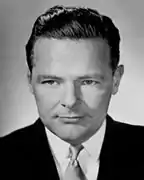
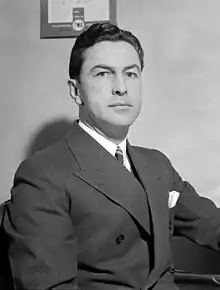
The United States Senate election of 1942 in Massachusetts was held on November 3, 1942. Republican incumbent Henry Cabot Lodge Jr. was re-elected to a second term in office over Democratic U.S. Representative Joseph E. Casey.
.svg.png.webp) | |||||||||||||||||
| |||||||||||||||||
| |||||||||||||||||
| |||||||||||||||||
| Elections in Massachusetts |
|---|
 |
Republican primary
Candidates
- Henry Cabot Lodge Jr., incumbent US Senator since 1937
- Courtenay Crocker, former Boston City Councilor and State Representative
Results
| Party | Candidate | Votes | % | |
|---|---|---|---|---|
| Republican | Henry Cabot Lodge, Jr. (incumbent) | 174,401 | 78.36% | |
| Republican | Courtenay Crocker | 23,503 | 10.56% | |
| Total votes | 197,904 | 100.00% | ||
Democratic primary
Candidates
- Joseph E. Casey, U.S. Representative from Canton
- Daniel H. Coakley, former member of the Massachusetts Executive Council
- John F. Fitzgerald, former U.S. Representative and Mayor of Boston
- Joseph Lee, former member of the Boston School Committee
Results
| Party | Candidate | Votes | % | |
|---|---|---|---|---|
| Democratic | Joseph E. Casey | 108,251 | 40.15% | |
| Democratic | John F. Fitzgerald | 80,456 | 29.84% | |
| Democratic | Joseph Lee | 32,260 | 11.97% | |
| Democratic | Daniel H. Coakley | 17,105 | 6.34% | |
| Total votes | 238,072 | 100.00% | ||
General election
Candidates
- Joseph E. Casey, U.S. Representative from Canton (Democratic)
- Horace Hillis, candidate for Governor in 1936 and Senate in 1940 (Socialist Labor)
- Henry Cabot Lodge Jr., incumbent Senator since 1937
- George Lyman Paine, candidate for Senate in 1940 (Socialist)
- George Thompson, candidate for Governor in 1936 and Senate in 1940 (Prohibition)
Campaign
Casey attempted to make an issue of Lodge's pre-war isolationism, although he had voted for the Lend-Lease Act in 1941. Lodge countered that his isolationism had been rooted in concerns over the nation's lack of military preparedness.[3]
Lodge, an Army reservist himself, was briefly unable to campaign after he enlisted and was sent to Libya for training. While there, he inadvertently took part in a major Allied defeat when Erwin Rommel launched a surprise attack on Lodge's training position in Tobruk.[4] He returned to Massachusetts in July, when President Roosevelt required all members of Congress be relieved from active duty. When Casey attempted to portray his service as a mere "Cook's tour of the Libyan desert," Lodge angrily refuted him.[5]
Late in the campaign, Lodge drew criticism from U.S. Representative John W. McCormack and Secretary of War Henry Stimson for citing a letter from Stimson commending his military service in his campaign. Lodge responded that the use of the letter was only made in response to Casey's and McCormack's earlier "slurs on men in the armed forces."[6]
Results
| Party | Candidate | Votes | % | ±% | |
|---|---|---|---|---|---|
| Republican | Henry Cabot Lodge, Jr. (incumbent) | 721,239 | 52.44 |  3.91 3.91 | |
| Democratic | Joseph E. Casey | 641,042 | 46.61 | 5.62 | |
| Socialist | George Lyman Paine | 4,802 | 0.35 |  0.19 0.19 | |
| Socialist Labor | Horace I. Hillis | 4,781 | 0.35 | 0.35 | |
| Prohibition | George L. Thompson | 3,577 | 0.26 | 0.26 | |
| Total votes | 1,375,441 | 100.00% | |||
See also
References
- "Our Campaigns - MA US Senate - D Primary Race - Sep 15, 1942".
- "Our Campaigns - MA US Senate - D Primary Race - Sep 15, 1942".
- Whalen, Thomas J. (2000). Kennedy versus Lodge: The 1952 United States Senate Election in Massachusetts. Northeastern University Press. p. 47. ISBN 9781555534622.
- Whalen 2000, p. 47.
- Whalen 2000, p. 48.
- "LODGE IS ACCUSED OF MISUSING LETTER". The New York Times. 3 Nov 1942. p. 14.