Vietnam Self-Defence Militia
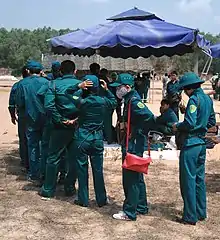
The Self-Defence Militia is a militia under the command of the Communist Party of Vietnam, it is responsible for protecting the government, protecting the people's lives and properties, and the State's property at the commune, agency or organization level.
| Vietnam Self-Defence Militia | |
|---|---|
| Dân quân tự vệ | |
 Vietnam Self-Defence Militia insignia | |
| Founded | 28 March 1935 |
| Country |  Vietnam Vietnam |
| Allegiance | Communist Party of Vietnam |
| Type | Militia |
| Part of |  People's Army of Vietnam People's Army of Vietnam |
| Anniversaries | 28 March 1935 |
| Engagements | |
| Battle honours | |
According to the Law on Militia and Self-Defence No. 43/2009/QH12 dated November 23, 2009 of the 12th National Assembly of Vietnam, militia and self-defence forces are mass armed forces that cannot be separated from production and work.[1][2][3] Units that are organized in communes, wards and townships are called militias; units that are organized in agencies or organizations are called self-defence units.
Duty
Vietnamese citizens, men from the age of 18 to 46, women from the age of 18 to 41, except for some special cases, are obliged to join the militia and self-defence forces. The duration of the militia and self-defence service is generally 4 years. They can apply for more time to perform the service. Retirement age for male servicemen is at 45 years, women at 50 years.
Mission
The VSDM has 7 missions:
- Ready to fight, fight and serve in combat to protect the locality, the base; coordinate with border guards, navy, coast guard and other forces to protect national sovereignty and border security and sovereignty and sovereign rights in Vietnam's seas.
- Coordinating with units of the People's Army, People's Public Security and other forces in the locality to participate in building the all-people national defence and defence zones; maintaining political security, social order and safety, protecting the Party and administration, protecting people's lives and property, and property of the State.
- Carrying out the task of military training, political and legal education, contests, sports festivals, drills and training exercises
- Participating in the implementation of measures on information warfare and cyber warfare according to the provisions of law and decisions of competent authorities.
- Preventing, combating and overcoming consequences of disasters, incidents, natural disasters, epidemics, fires and explosions; search, rescue and rescue; forest protection, environmental protection and other civil defence duties as prescribed by law.
- Propagating and mobilizing the People to implement the Party's guidelines and viewpoints, and the State's policies and laws on national defence and security; participate in building local, comprehensively strong foundations and implementing social policies determined by the CPV and the Government
- Perform other duties as prescribed by legislation
Organization
- By level of use, Civil Defence Force is divided into:
- Core Civil Defence Force: The core militia and self-defence force consist of people who are performing the militia and self-defence service.
- Widespread Civil Defence Force: The broad militia and self-defence force consists of core militia and self-defence members who have completed their militia and self-defence service and are citizens of the prescribed age.
- According to the degree of mobility, the core militia and self-defence force are divided into three types:
- Mobile militia: is the core militia and self-defence force organized into mobile units ready to perform tasks in areas when ordered by competent authorities.
- Local militia: Locally called militia, in agencies of government called as self-defence
- Militia and self-defence forces for air defence, artillery, engineer, reconnaissance, information, chemical and medical defence.
- By staffing, the core militia and self-defence forces are divided into two types:
- Civil Defence Force Infantry
- Civil Self-Defence Forces
- By focus there are:
- Standing militia: is the core Civil Defence Force on permanent duty ready to fight in key areas of national defence and security.
- Maritime Civil Defence Force: is a core militia and self-defence force organized at the level of coastal communes, island communes and agencies and organizations that have means of operation at sea to perform tasks in the maritime waters of Vietnam.
Territorially the VSDM is organized into
- Outposts
- Battalion, battery (for artillery)
- Platoon
- Companies and squadrons (for maritime militia and self-defence forces)
- Battalions, squadrons (for maritime militia and self-defence forces)
The grassroots military command organization includes:
- Village squads: organize on-site militia groups, squads and platoons
- Commune (Commune-level Military Command): Organize a mobile militia platoon
- Military commands at grassroots units: organization of squads, platoons, companies, and self-defence battalions. Agencies and organizations that have means of operation at sea organize marine self-defence squads, platoons, squadrons and squadrons
- Military Commands in Central Agencies
Leader
Civil Defence Force is under the leadership of the Communist Party of Vietnam, the domination of the President of the Socialist Republic of Vietnam as Commander in Chief, the management and administration of the Government of Vietnam, the leadership and direction of the Party committees and local authorities at all levels; under the unified command of the Minister of Defence (Vietnam) and the direct command of the commander of the local military agency. The party secretary of the military command committee or a politician of the self-defence force is the party secretary or permanent deputy secretary of all levels of government and units.
Civil Defence Force is under the direct command of the Chief of the Department of Militias and Reserve Forces, under the General Staff of the Ministry of Defence. He or she holds the rank of Lieutenant General and is responsible for overall supervision of the VSDM.
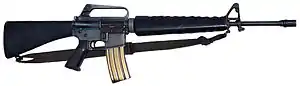
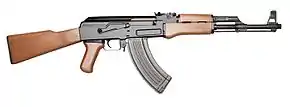
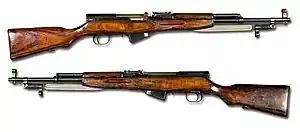
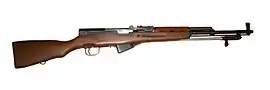
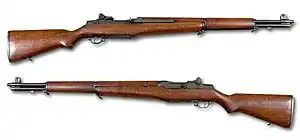
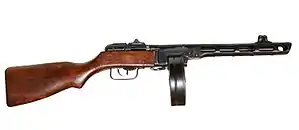
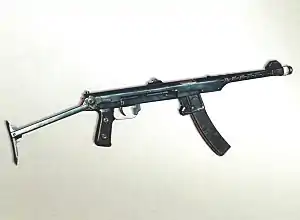
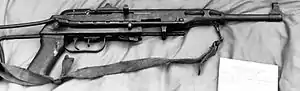
Equipment
.jpg.webp)


_-_UK_-_cal_303_British_-_Arm%C3%A9museum.jpg.webp)


References
- vanbanphapluat.co. "Law No. 43/2009/QH12, on militia and self-defense forces". vanbanphapluat.co. Retrieved 2021-09-28.
- "* LAW ON MILITIA AND SELF-DEFENSE FORCES - Luật tiếng Anh/ Law on English". sites.google.com. Retrieved 2021-09-28.
- "Law 43/2009/QH12 23/11/2009 Militia and self-defense forces". en.luathongduc.com. Retrieved 2021-09-28.