Wenceslao Moguel
Wenceslao Moguel Herrera (c. 1890 – 29 July 1976) was a Mexican man who was captured on March 18, 1915,[1] suspected of taking part in the Mexican Revolution.[2][3] He was sentenced to death without a trial, and was shot 8–9 times by a firing squad in the body, and received the "coup de grâce", or one final shot to the head point-blank range to ensure death, yet managed to survive.
Wenceslao Moguel | |
|---|---|
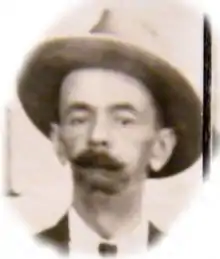 Moguel circa 1940 | |
| Born | Wenceslao Moguel Herrera Circa 1890 |
| Died | July 29, 1976 Mérida, Yucatán, Mexico |
| Known for | Surviving execution by firing squad |
Stories differ as to how he survived. Some sources suggest that he was rescued:
"The next day Moguel was found unconscious among the dead bodies of his comrades. He was given medical attention and recovered."[1]
Others state that he:
"...crawled away to the church of St. James Apostle three blocks away where a church member found him and took him home until he recuperated."[3]
Moguel appeared on the Ripley's Believe it or Not radio show on July 16, 1937.[4]
The British group Chumbawamba wrote a song telling Wenceslao's story.[5]
References
- "The Evening Independent". June 28, 1935. p. 10.
- Pacheco, Edgar A. Santiago (2020-11-04). "Los libros del fusilado de Halachó". Informe Fracto (in Spanish). Retrieved 2021-03-19.
- mexicomystic (21 August 2014). "The Firing Squad". Mexico Mystic's Blog – Expat In Tlaxcala. Retrieved 2016-02-06.
- "The Free Lance-Star". July 16, 1937. p. 5.
- "El Fusilado - Chumbawamba". play.google.com. Retrieved 2016-02-08.
Bibliography
- Wenceslao Moguel. El milagro del Santo de Halachó, o Historia de un Fusilado. – Merida, 1967. – 186 pp.