William B. Jordan
William Bryan Jordan Jr. (May 8, 1940 – January 22, 2018) was an American art historian and expert on Spanish still life paintings. He facilitated acquisitions, curated exhibitions, and authored publications on paintings and artists from the Spanish Golden Age.
William B. Jordan | |
|---|---|
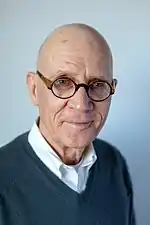 Jordan around 2011–2013 | |
| Born | May 8, 1940 Nashville, Tennessee, U.S. |
| Died | January 22, 2018 (aged 77) Dallas, Texas, U.S. |
| Nationality | American |
| Education | Washington and Lee University (BA) Institute of Fine Arts, New York University (MA, PhD) |
| Occupation | Art historian |
| Years active | 1967–2018 |
| Known for | Art acquisitions, curation, research |
Notable work |
|
| Spouse(s) | Robert Dean Brownlee |
Born and raised in Nashville, Tennessee, and later in San Antonio, Texas, Jordan studied at Washington and Lee University and the Institute of Fine Arts of New York University. He became the founding director of the Meadows Museum at Southern Methodist University in 1967. With Algur H. Meadows' financial support, Jordan helped the museum acquire around 75 paintings and is credited with turning its collection into one of the most prominent collections of Spanish art outside Spain. He also served as the chair of fine arts at the Meadows School of the Arts and adjunct curator of the Dallas Museum of Art.
Jordan joined the Kimbell Art Museum as the deputy director and chief curator in 1981. He chaired the scholars' committee that planned El Greco of Toledo (1982–83), containing the most extensive collection of paintings by El Greco. He retired in 1990 and focused on independent exhibitions and publications. Jordan's research of over 40 years on Juan van der Hamen culminated in his 2005 book Juan Van Der Hamen Y León & the Court of Madrid. He was on the board of various museums and art institutes, and was made an honorary trustee of the Prado Museum in 2017.
Known for his connoisseurship, Jordan worked as an acquisitions expert for various museums and maintained a private collection with his husband Robert Dean Brownlee. He purchased a then-misattributed painting — that he believed was by Diego Velázquez — for £1,000 in 1988. After Velázquez's attribution was confirmed, Jordan donated the painting, then titled Portrait of Philip III (1623–31) and valued at around US$6 million, to the Prado Museum in 2016. Following his death, several art pieces from Jordan and Brownlee's collection were bequeathed to various museums by their estate.
Early life
.jpg.webp)
William Bryan Jordan Jr. was born on May 8, 1940, in Nashville, Tennessee, to Dixie Owen Jordan and William Bryan Jordan. He had three sisters: Ettie Lu Jordan Soard, Frances Jordan Hearn-Rigney, and Sue Jordan Rodarte. They relocated to San Antonio, Texas in 1945, where he attended Alamo Heights High School.[1] Over the summers, he worked at the McNay Art Museum in San Antonio and was mentored by its first director John Palmer Leeper.[2]
Jordan graduated cum laude in 1962 with a bachelor's degree from Washington and Lee University, and completed his master's and doctorate in the history of Spanish art from the Institute of Fine Arts of New York University in 1964 and 1967, respectively.[3] Under the supervision of the Spanish art historian José López-Rey, Jordan focused on Juan van der Hamen for his doctoral thesis.[4] During 1965–66, he spent eleven months in Spain and listed 204 "lost works", most of which were previously unknown.[5] He compiled an illustrated catalog and a monograph on the painter in his two-volume 1967 dissertation, Juan van der Hamen y León.[6]
Career
1967–1981: Meadows Museum
When Jordan was offered the position of the director of the Meadows Museum at Southern Methodist University in Dallas, Texas, the museum was struggling with an art scandal that had damaged its reputation.[7] Forty-four paintings in the museum's collection had turned out to have been forgeries, including counterfeits by Elmyr de Hory.[8] Jordan visited the museum with López-Rey, and concluded that he would have to "essentially build [the collection] from scratch."[9] Algur H. Meadows, the museum's founder and benefactor, pledged US$1 million (approximately US$7.8 million in 2020) to replace their Spanish art collection, and Jordan accepted the job.[10]
.jpg.webp)
Jordan became the founding director of the Meadows Museum and chair of fine arts at the Meadows School of the Arts in 1967.[11] The museum closed for a few months, and Jordan began evaluating its collection with help from López-Rey and Diego Angulo Íñiguez.[7] Jordan revamped the collection by auctioning off paintings he deemed insignificant for a museum collection, and acquiring new paintings before the museum reopened; the collection included Yard with Lunatics (1794) by Francisco Goya, works of Bartolomé Esteban Murillo and Francisco de Zurbarán.[11] In a 1968 article, "A Museum of Spanish Painting in Texas" published in Art Journal, Jordan highlighted the museum's recently acquired paintings and stated that they had begun an acquisitions program to expand their collection further; he followed up on the article with the 1974 book, The Meadows Museum: A Visitor's Guide to the Collection, an illustrated collection catalog of the works in the museum.[12]
In 1971–72, Jordan organized an exhibition on a collection of works related to Dennis Hopper, and a postwar art exhibition of works by Andy Warhol, Robert Rauschenberg and Wallace Burnett at the University Gallery of Southern Methodist University. He was involved in organizing Poets of the Cities: New York and San Francisco 1950–65 (1974), an exhibition on international contemporary arts, at the University Gallery and Dallas Museum of Arts.[13] In 1975, Jordan was appointed a full professor at the Meadows School of the Arts, where he taught courses on Spanish art history and connoisseurship.[11]
Jordan served as the general secretary of the American Society for Hispanic Art Historical Studies from 1976 to 1978, where he was a founding member.[14] He joined the Dallas Museum of Art as the adjunct curator of European art in 1977, a post he held until 1982.[15] He curated Dallas Collects: Impressionist and Early Modern Masters for the 75th anniversary of the Dallas Museum of Art in 1978. Jordan assembled 115 works from private collections in Dallas for the exhibition and published their scholarly descriptions in its exhibition catalog.[16] In the subsequent years, he became a member of the Board of Trustees, and member and chairman of the Committee on Collections of the Dallas Museum of Art.[15]
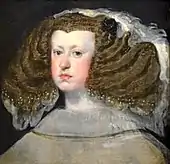
Jordan acquired several prominent works at auctions and from art dealers with Meadows' financial support, and significantly expanded the Meadows Museum's collection throughout his term. The collaboration continued until Meadows' death in a car accident in 1978.[11] He hosted the first exhibition of Patsy and Raymond Nasher's sculpture collection at the Owen Fine Arts Center of the Meadows School of the Arts in 1978; a collection that they subsequently expanded into the Nasher Sculpture Center.[17] In 1980, Jordan oversaw contemporary art exhibitions Paintings and Drawings by Cy Twombly, a scholarly study on works by Cy Twombly, and Livres d'Artiste by Braque, Matisse, and Picasso from the Collection of the Bridwell Library, featuring works in the university's Bridwell Library at the University Gallery.[13]
Jordan left the museum in 1981 but remained involved in the museum's activities, and was a member of the executive board of the Meadows School of the Arts until 2018. Jordan acquired around 75 works during his tenure, and helped develop the museum's sculpture collection at the "Elizabeth Meadows Sculpture Garden". His acquisitions included works by de Zurbarán, Diego Velázquez, Jusepe de Ribera and Murillo, six paintings by Goya from the 18th and 19th centuries, and 20th-century works of Pablo Picasso, Joan Miró and Juan Gris.[11] Jordan is widely credited for turning the Meadows Museum's collection into one of the most prominent collections of Spanish art outside Spain.[18]
1981–1990: Kimbell Art Museum
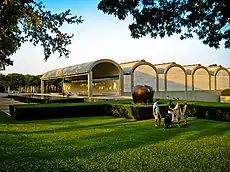
In 1981, Jordan became the deputy director and chief curator of the Kimbell Art Museum in Fort Worth, Texas.[19] The Kimbell provided Jordan a bigger budget to organize exhibitions and acquire paintings than the Meadows Museum.[20] According to Jordan, the museum had not hosted exhibitions of its own artworks before he joined, and they "began an aggressive exhibitions campaign to rebuild and expand the collection."[21] Jordan and Craig Felton, professor of art at Smith College, organized Jusepe De Ribera: Lo Spagnoletto, 1591-1652, the first exhibition to focus only on works by de Ribera in 1982 at Kimbell.[22]
Jordan served as the chairman of the scholars' committee that planned El Greco of Toledo (1982–83) to mark the 400th anniversary of El Greco's move to Toledo, Spain.[23] The committee also selected most works featured in the event; with 66 paintings gathered from several countries, the exhibition contained the most extensive collection of paintings by El Greco.[24] On display at the Prado Museum, National Gallery of Art, Toledo Museum of Art and Dallas Museum of Art, the exhibition was curated by Jonathan Brown, Jordan, Richard L. Kagan and Alfonso E. Pérez Sánchez.[25] Jordan also authored descriptive texts for the works in the accompanying catalog.[26]

In 1985, Jordan curated Spanish Still Life in the Golden Age, 1600–1650 at the Kimbell and Toledo Museum of Art, the first exhibition in the United States to feature a broad range of still life paintings loaned from other countries.[14] The exhibition and its catalog, which analyzed the early history of still life paintings and artists of the Spanish Golden Age, were noted by Jordan's contemporaries for being one of the earlier scholarly works in the study of the genre.[28] Jordan was on the Art Committee of the Hispanic Society of America in 1986, and was knighted in the Order of Isabella the Catholic by the Spanish government at the Embassy of Spain, Washington, D.C. for his contributions to Spanish art history on February 18, 1986.[14]
In collaboration with Pillsbury, Jordan had helped the museum acquire over 40 paintings of European origin by 1987.[29] Jordan wrote an introductory essay on the museum's collection, which was published in the 1987 book In Pursuit of Quality.[30] He served as an editor of A Prosperous Past: The Sumptuous Still Life in the Netherlands, 1600-1700, authored by Dutch biologist and art historian Sam Segal. The book focused on still life painters of Europe, and accompanied an eponymous exhibition at the Fogg Art Museum, Kimbell Art Museum and Museum Het Prinsenhof in 1989.[31]
Jordan decided to retire in 1990 at age 50 — following in his father's footsteps, who had retired at 49 — and worked independently afterwards.[32] During his term, Jordan acquired important Spanish paintings such as Still Life with Oranges, Jars, and Boxes of Sweets (1760) by Luis Egidio Meléndez, Portrait of Heriberto Casany (1918) by Miró, Four Figures on a Step (1655–60) by Murillo and Portrait of Don Pedro de Barberana y Aparregui (1631–33) by Velázquez, and wrote descriptive labels for all European works in the museum.[33]
1990–2018: Independent work
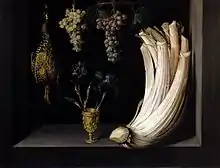
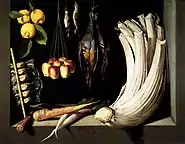
Jordan curated La imitación de la naturaleza: los bodegones de Sánchez Cotán (The Imitation of Nature: The Still Life of Sánchez Cotán) at the Prado Museum in 1992, which included six still life paintings by Juan Sánchez Cotán, and one by Felipe Ramírez.[35] He authored an eponymous catalog discussing life and influence of Cotán in context with the development of bodegóns (still life paintings depicting pantry items) in Europe, and how Ramírez could have imitated Cotán's works.[36]
Jordan and Peter Cherry, lecturer at Trinity College Dublin, curated Spanish Still Life from Velázquez to Goya (1995) at the National Gallery in London, which became the museum's most attended exhibition of the time.[37] In its accompanying catalog, they explored the complete history of Spanish still life paintings and artists, including the decline of the genre and the Spanish Golden Age, and how works of Meléndez and Goya and efforts by the Royal Academy revived interest in the genre subsequently.[38]
Southern Methodist University awarded Jordan with a Doctor of Humane Letters, honoris causa on May 20, 1995, "for his contributions to the world of arts and for the enrichment he has brought to the campus and the city of Dallas."[39] The Matthiesen Gallery organized An Eye on Nature: Spanish Still-Life Paintings from Sánchez Cotán to Goya (1997) exhibition at the Stair Sainty Matthiesen Gallery in New York City; Jordan authored its catalog, analyzing still life paintings and biographical details of artists featured in the exhibition.[40] He joined the Nasher Sculpture Center in Dallas as a member of the board of directors in 2001.[41] He was also a trustee of the center, and founding director and trustee of the Nasher Foundation.[42]


In 2005, Jordan published Juan Van Der Hamen Y León and the Court of Madrid, featuring results of his work of over 40 years on van der Hamen.[44] Jordan focused on van der Hamen's role in the court of Philip IV during the 1620s, discussed his place among significant Spanish Baroque painters, and emphasized on his versatility by assessing his portraits and religious paintings alongside his still life paintings, which he is best known for.[45] He curated an eponymous exhibition — the first monographic exhibition of van der Hamen's paintings — which was displayed at the Patrimonio Nacional in Madrid and Meadows Museum in 2005–06.[46] The work was well received by art historians, with praise for Jordan's depiction of van der Hamen's complete artistic output and impact on the Spanish Golden Age.[47] However, there were reservations about the extent of significance Jordan assigned to van der Hamen's portraits and religious paintings.[48]
Jordan headed the search committee of the Chinati Foundation — where he had been a past president — to find a new director in 2010, leading to the appointment of Thomas Kellein.[49] He worked with Olivier Meslay at the Dallas Museum of Art to create an exhibition and a catalog of modern European paintings in local private collections to promote local collecting in 2013.[20] They curated Mind's Eye: Masterworks on Paper from David to Cézanne the following year with over 120 works on paper of 70 artists from the 18th to 20th century, taken from local private collections and the museum.[50] In 2017, the Prado Museum appointed Jordan as an honorary trustee.[1]
Jordan died on January 22, 2018, at William P. Clements Jr. University Hospital from complications of idiopathic pulmonary fibrosis.[2] He was buried at the Hillcrest Mausoleum and Memorial Park in Dallas.[51] Jordan was compiling a catalogue raisonné of van der Hamen when he died.[4]
Connoisseurship
There's a lot wrong about art now. I mean, so much of the art today is silly. It's hard to find art of very great quality today. But it does exist.
— William B. Jordan, 2007.[21]
Jordan was considered an authority on Spanish art,[52] and one of the foremost experts on Spanish still life paintings.[53] Jordan was recognized for his ability to spot and attribute historically significant paintings, and he collaborated with various museums throughout his career as an expert during art acquisitions.[20]
In 1976, Jordan noticed San Sebastián (1506) by Fernando Yáñez in a gallery in Madrid. The painting was not published previously or attributed to Yáñez at the time, and there were no records in sources on Spanish art to prove it was his work. However, Jordan was convinced that it was a work by Yáñez, and he made the purchase with Meadows' support.[11] Subsequent research established that the painting was done by Yáñez, and it became one of the more important works in the Meadows Museum.[54]
Jordan helped the Dallas Museum of Art acquire Fox in the Snow (1860) by Gustave Courbet in 1979, a painting that was outside his area of expertise.[20] In 1990, he was called as an expert by the San Diego Museum of Art during their acquisition of The Adoration of the Shepherds (1572–74) by El Greco and St. Sebastian (1604) by Cotán. Jordan had noticed St. Sebastian at an auction in New York, where it was vaguely attributed to a "Flemish master". The museum purchased the work after the painting was vetted and its attribution confirmed by Jordan and other experts.[55]


Jordan and Cherry attributed 40 paintings by a then-unknown artist to "Pseudo-Hiepes" in Spanish Still Life from Velázquez to Goya, due to similarities in their themes to the work of Tomás Hiepes.[57] Against the contemporary opinion that the artist was based in Italy, Jordan argued that the artist most likely belonged to Aragon, owing to the style of paintings from that region.[58] Jordan and Cherry's assessments were confirmed when Pewter Dish with Melons, Grapes, Apricots and Plums (17th century), a signed painting by Bernardo Polo of Aragon was discovered in 2009, which Jordan assessed to be nearly identical in its composition to the works of Pseudo-Hiepes.[59]
In Juan Van Der Hamen Y León and the Court of Madrid, Jordan attributed Plate of Pears and Grapes (1626) to van der Hamen, in spite of the painting having the name "Giovanni Battista Crescenzi" inscribed on its back. He stated that the painting exhibited creative techniques and a motif similar to van der Hamen's Still Life with Fruit and Glassware (1629). While Cherry concurred with that assessment, he was skeptical of some other attributions, in particular arguing that a portrait of Francisco de Quevedo, which Jordan had attributed to van der Hamen, should maintain its original attribution to Velázquez.[60]
Private collection
Jordan maintained an art collection with his husband Robert Dean Brownlee at their residence in Turtle Creek, Dallas, which included various types of visual art.[61] Jordan's most notable acquisition was of Portrait of Philip III (1623–31) by Velázquez in 1988.[62] He purchased the piece for £1,000 at a London auction, where it was titled Portrait of a gentleman painted by a follower of Justus Sustermans. Jordan believed it to be a painting by Velázquez instead, done in preparation of The Expulsion of the Moriscos (1627), which is considered by historians to have been burned in the Royal Alcázar of Madrid fire of 1734.[63]
%252C_by_Diego_Vel%C3%A1zquez_(Museo_del_Prado%252C_Madrid).jpg.webp)
Jordan found that historical descriptions of Philip III in The Expulsion of the Moriscos match the expressions and direction of Portrait of Philip III. He also concluded that the style and details of Portrait of Philip III were similar to Velázquez's distinctive style of that period. He further reasoned that the unusual depiction of Philip III looking up, instead of forward and straight, indicated that the work was meant to serve as a model for another painting with a wider scene.[63] Jordan kept the painting in his private collection, and sent it to the Prado Museum for authentication in 2015.[64] After the museum confirmed its authenticity, the painting was valued at around US$6 million.[65] In 2016, Jordan donated it to a non-profit organization, the American Friends of Prado Museum, which then gave the painting to the museum as a long-term deposit.[63]
The Dallas Museum of Art created a Works on Paper Department and established The William B. Jordan and Robert Dean Brownlee Endowment from donations from Jordan and Brownlee's estate in 2019.[66] They donated over 80 different works of art to the museum; 58 of them were works on paper. Their donation included oil paintings and furniture from the 19th and 20th centuries and other antiquities such as silver works, ceramics, and sculptures.[15] The museum organized an exhibition — Point, Line, Plane: The William B. Jordan and Robert Dean Brownlee Bequest — featuring around 50 of those works in 2021–22.[66]
The National Gallery of Art received a bequest from Jordan and Brownlee containing works by Alberto Giacometti, Edgar Degas, Ellsworth Kelly, Eugène Delacroix, František Kupka, Jacques-Louis David, John Cage, Pierre Bonnard, Picasso, and Twombly in 2019. The bequest included a sketch, a print, four medals, and 20 drawings.[67] In 2020, Nasher Sculpture Center received works by Claes Oldenburg, John Chamberlain and Miró as a part of a bequest from Jordan and Brownlee. It included My Father's Watch (For Bill Jordan) by David McManaway; McManaway had made the painting for Jordan using Jordan's father's watch in 1973.[68]
Honors
- Spain: Knight of the Order of Isabella the Catholic (1986)[14]
- Southern Methodist University: Doctor of Humane Letters (1995)[39]
- Prado Museum: Honorary Trustee (2017)[1]
Bibliography
Books
- Jordan, William B. (1967). Juan van der Hamen y León (Dissertation). Institute of Fine Arts, New York University. Ann Arbor: University Microfilm International.
- ———————— (1974). The Meadows Museum: A Visitor's Guide to the Collection. Dallas: Southern Methodist University.
- ———————— (1978). Dallas Collects: Impressionist and Early Modern Masters. Dallas Museum of Art.
- Felton, Craig; ————————, eds. (1982). Jusepe de Ribera, Lo Spagnoletto, 1591-1652. Fort Worth: Kimbell Art Museum. ISBN 978-0-912804-10-1.
- Brown, Jonathan; ————————; Kagan, Richard L.; Sánchez, Alfonso E. Pérez (1982). El Greco of Toledo. Boston: Little, Brown and Company. ISBN 978-0-8212-1501-2.
- ———————— (1985). Spanish Still Life in the Golden Age, 1600–1650. Fort Worth: Kimbell Art Museum. ISBN 978-0-912804-19-4.
- Segal, Sam (1989). ———————— (ed.). A Prosperous Past: The Sumptuous Still Life in the Netherlands, 1600-1700. The Hague: Sdu. ISBN 978-90-12-06238-1.
- ———————— (1992). La imitación de la naturaleza: los bodegones de Sánchez Cotán [The Imitation of Nature: The Still Life of Sánchez Cotán] (in Spanish). Madrid: Prado Museum. ISBN 978-84-87317-20-0.
- ————————; Cherry, Peter (1995). Spanish Still Life from Velázquez to Goya. London: National Gallery. ISBN 978-1-85709-064-2.
- ———————— (1997). An Eye on Nature: Spanish Still-life Paintings from Sanchez Cotan to Goya. London: Matthiesen Gallery. ISBN 978-88-422-0758-0.
- ———————— (2005). Juan Van Der Hamen Y León & the Court of Madrid. New Haven: Yale University Press. ISBN 978-0-300-11318-1.
- Meslay, Olivier; ————————, eds. (2014). Mind's Eye: Masterworks on Paper from David to Cézanne. Dallas Museum of Art. ISBN 978-0-300-20721-7.
Chapters
- Jordan, William B. (1980). "A note on Cy Twombly". Cy Twombly: Paintings and Drawings. By Twombly, Cy. Dallas: Southern Methodist University.
- ———————— (1987). "Collections of the Kimbell Art Museum: Introduction". In Pursuit of Quality: The Kimbell Art Museum: an Illustrated History of the Art and Architecture. By Kimbell Art Museum. New York City: Abrams. pp. 98–100. ISBN 978-0-8109-1124-6.
- ———————— (2002). "A Forgotten Legacy: Murillo's Cabinet Pictures on Stone, Metal, and Wood". Bartolome Esteban Murillo Paintings 1617-1682: Paintings from American Collections. By Stratton-Pruitt, Suzanne L. New York City: Abrams. pp. 63–73. ISBN 978-0-8109-0390-6.
- ———————— (2004). "La aparición de la Inmaculada a San Francisco de Juan van der Hamen del Convento de Santa Isabel de los Reyes de Toledo" [The Appearance of the Immaculate to Saint Francis by Juan van der Hamen from the Convent of Santa Isabel de los Reyes of Toledo]. Juan van der Hamen: La aparición de la Inmaculada a San Francisco, Convento de Santa Isabel de los Reyes, Toledo [Juan van der Hamen: The Appearance of the Immaculate to Saint Francis, Convent of Santa Isabel de los Reyes, Toledo]. By Convent of Santa Isabel de los Reyes (in Spanish). Madrid: Área de Comunicación e Imagen BBVA, Departamento de Actividades Culturales. pp. 9–15.
- ———————— (2008). "La Galería del Mediodía de El Pardo y los orígenes de la naturaleza muerta en Madrid" [The Pardo's Galería del Mediodia and the Origins of Still Life in Madrid]. Los pintores de lo real [The Painters of the Real]. By Prado Museum (in Spanish). Barcelona: Galaxia Gutenberg. pp. 119–138. ISBN 978-84-8109-777-1.
- ———————— (2017). "Velázquez's Lost Expulsion of the Moriscos". Velázquez's Philip III: Donated by William B. Jordan. By Prado Museum. Madrid: Prado Museum. pp. 7–22. ISBN 978-84-8480-363-8.
Articles
- Jordan, William B. (1964–65). "Juan van der Hamen y León: A Madrillenian Still-Life Painter". Marsyas. Institute of Fine Arts, New York University. XII: 52–69. ISSN 0076-4701. OCLC 888248669.
- ———————— (Spring 1968). "A Museum of Spanish Painting in Texas". Art Journal. New York City: College Art Association. 27 (3): 288–296. doi:10.2307/775090. ISSN 0004-3249. JSTOR 775090. OCLC 888248708.
- ———————— (Summer 1968). "Murillo's Jacob Laying the Peeled Rods Before the Flocks of Laban". Art News. 67: 31, 68–69. OCLC 988540627.
- ———————— (Spring 1970). "The Meadows School of the Arts at SMU: Progress Report on a New Enterprise". Art Journal. New York City: College Art Association. 29 (3): 352. doi:10.2307/775474. ISSN 0004-3249. JSTOR 775474. OCLC 5787321907.
- ———————— (December 1981). "Velazquez's Portrait of Don Pedro de Barberana". Apollo. No. 238. Jersey: Press Holdings. pp. 378–379. ISSN 0003-6536. OCLC 888248579.
- Pillsbury, Edmund; ———————— (November 1987). "Recent Painting Acquisitions-III: The Kimbell Art Museum: Supplement". The Burlington Magazine. Vol. 129 no. 1016. London. pp. 767–776. ISSN 0007-6287. JSTOR 883245. OCLC 5548485040.
- ———————— (February 1990). "A Newly-Discovered Still Life by Juan Sánchez Cotán". The Burlington Magazine. Vol. 132 no. 1043. London. pp. 96–99. ISSN 0007-6287. JSTOR 884174. OCLC 5548484246.
- ———————— (September 1992). "Naples, Madrid and New York: Ribera". The Burlington Magazine. Vol. 134 no. 1074. London. pp. 622–625. ISSN 0007-6287. JSTOR 885343. OCLC 887159739.
- ———————— (October 1992). "Reviewed Work: Wadsworth Atheneum Paintings II. Italy and Spain Fourteenth Through Nineteenth Centuries by Jean K. Cadogan". The Burlington Magazine. Vol. 134 no. 1075. London. p. 675. ISSN 0007-6287. JSTOR 885287. OCLC 5548482823.
- ———————— (November–December 1999). "Algur Meadows: un recuerdo personal" [Algur Meadows: A Personal Memory]. Goya: Revista de arte (in Spanish). Madrid: Lázaro Galdiano Foundation (273): 343–352. ISSN 0017-2715. OCLC 886820135.
- ———————— (October–December 2009). "El Pseudo-Hiepes es Bernardo Polo" [The Pseudo-Hiepes is Bernardo Polo]. Archivo Español de Arte (in Spanish). Madrid: Spanish National Research Council. 82 (328): 393–403. doi:10.3989/aearte.2009.v82.i328.311. ISSN 0004-0428. OCLC 506699573.
References
Citations
- San Antonio Express-News (2018).
- Brettell & Simnacher (2018).
- Brettell & Simnacher (2018); San Antonio Express-News (2018).
- Cherry (2018), p. 440.
- Jordan (1967), pp. vi–vii.
- Jordan (1967), pp. i, iv–v.
- Curlee (1995).
- Meadows Museum; Wecker (2017).
- Bothwell (2018); Curlee (1995).
- McWhirter (1967), p. 58.
- Meadows Museum.
- Jordan (1968a), pp. 288–296; Jordan (1974), pp. 7–11.
- Dallas Museum of Art.
- North San Antonio Times (1986).
- Dallas Museum of Art (2019).
- Jordan (1978), pp. 3–5.
- The Nasher (2018), pp. 71–72.
- Brettell & Simnacher (2018); Curlee (1995); North San Antonio Times (1986).
- Brettell & Simnacher (2018); Pulido (2016).
- Edith O'Donnell Institute of Art History (2018).
- Bothwell (2018).
- Felton & Jordan (1982), pp. 3–5.
- Markham (1982); North San Antonio Times (1986).
- National Gallery of Art (1982), p. 2; North San Antonio Times (1986); Ostrow (1982).
- National Gallery of Art.
- National Gallery of Art (1982), pp. 3–4.
- Jordan (1967), p. 333.
- Cherry (1986), pp. 70, 74; Mallory (1985), p. 353.
- Pillsbury & Jordan (1987), p. 767.
- Jordan (1987), pp. 98–100.
- Segal (1989), pp. 3–4.
- Bothwell (2018); Edith O'Donnell Institute of Art History (2018).
- Brettell & Simnacher (2018); Cherry (2018), p. 440.
- Jordan (1992a), pp. 82–84.
- Serraller (1992).
- Jordan (1992a), pp. 13–29, 82–84.
- San Antonio Express-News (2018); Yale University Press.
- Brown (1995); Mann (1997), pp. 941–942.
- Southern Methodist University (1995), p. 8.
- Jordan (1997), pp. title page, 13–15.
- Nasher Sculpture Center (2001).
- Nasher Sculpture Center (2020); The Nasher (2018), p. 72.
- Jordan (2005), pp. 171, 255.
- Jordan (2005), p. 17; Taggard (2007), p. 135.
- Scheffler (2007), p. 177.
- Jordan (2005), pp. 19–20.
- Cherry (2006), pp. 297, 299; de Carlos (2007), p. 298; Taggard (2007), p. 135; Scheffler (2007), pp. 177–178; Zirpolo (2006), p. 1212.
- Cherry (2006), pp. 297–298; Landeira (2007), p. 67; Taggard (2007), p. 134.
- Brettell & Simnacher (2018); Thomson (2010).
- Dallas Museum of Art (2014).
- Dignity Memorial.
- Bothwell (2018); Brettell & Simnacher (2018); North San Antonio Times (1986).
- Cherry (2006), p. 299; Prado Museum (2016); Southern Methodist University (2018).
- Jordan (1999), p. 349.
- Freudenheim (1990).
- Jordan (2009), pp. 393, 395–397.
- Jordan & Cherry (1995), pp. 124–128.
- Jordan (1997), pp. 116–120.
- Jordan (2009), pp. 393, 398.
- Cherry (2006), pp. 298–299.
- Dallas Museum of Art (2021); Edith O'Donnell Institute of Art History (2018).
- Brettell & Simnacher (2018); Edith O'Donnell Institute of Art History (2018).
- Prado Museum (2016).
- Pulido (2016).
- Sullivan (2017).
- Dallas Museum of Art (2021).
- National Gallery of Art (2019).
- Nasher Sculpture Center (2020).
Sources
- Periodicals
- Cherry, Peter (1986). "Reviewed Work: Spanish Still Life in the Golden Age: 1600-1650 by William B. Jordan". Oxford Art Journal. Oxford University Press. 9 (1): 70–74. ISSN 0142-6540. JSTOR 1360375. OCLC 5548193806.
- —————— (April 2006). "Reviewed Work: Juan van der Hamen y León: Madrid and Dallas". The Burlington Magazine. Vol. 148 no. 1237. London. pp. 297–299. ISSN 0007-6287. JSTOR 20074393. OCLC 886762951.
- —————— (May 2018). "William B. Jordan (1940–2018)". The Burlington Magazine. Vol. 160 no. 1382. London. p. 440. ISSN 0007-6287. OCLC 1042904888.
- de Carlos, María Cruz (Spring 2007). "Reviewed Work: Juan van der Hamen y León and the Court of Madrid by William B. Jordan". Sixteenth Century Journal. Kirksville, Missouri: Truman State University Press. 38 (1): 297–298. doi:10.2307/20478354. ISSN 0361-0160. JSTOR 20478354. OCLC 7547510313.
- Landeira, Joy (March 2007). "Reviewed Work: Juan van der Hamen y León and the Court of Madrid by William B. Jordan". Hispania. Birmingham, Alabama: American Association of Teachers of Spanish and Portuguese. 90 (1): 66–67. doi:10.2307/20063443. ISSN 0018-2133. JSTOR 20063443. OCLC 6034626812.
- Mallory, Nina Ayala (Winter 1985). "Reviewed Work: Spanish Still Life in the Golden Age, 1600–1650 by William B. Jordan". Art Journal. New York City: College Art Association. 45 (4): 353–356. doi:10.2307/776812. ISSN 0004-3249. JSTOR 776812. OCLC 888508483.
- Mann, Richard G. (Autumn 1997). "Reviewed Work: Spanish Still Life from Velázquez to Goya by William B. Jordan, Peter Cherry". Renaissance Quarterly. New York City: The Renaissance Society of America. 50 (3): 941–942. doi:10.2307/3039315. ISSN 0034-4338. JSTOR 3039315. OCLC 5552676866.
- McWhirter, William (July 7, 1967). "Art Swindle". Life. Vol. 63 no. 1. New York City: Time Inc. pp. 52–61. ISSN 0024-3019.
- Scheffler, Felix (January 2007). "Review: Juan van der Hamen y León and the Court of Madrid by William B. Jordan". The Catholic Historical Review. Washington, D.C.: The Catholic University of America Press. 93 (1): 176–178. ISSN 0008-8080. JSTOR 25166797. OCLC 704181338.
- Taggard, Mindy Nancarrow (Summer 2007). "Reviewed Work: Juan van der Hamen y León and the Court of Madrid by William B. Jordan". Renaissance and Reformation. Toronto: Iter Press. 30 (3): 133–135. ISSN 0034-429X. JSTOR 43446059. OCLC 5884787724.
- Zirpolo, Lilian H. (Winter 2006). "Reviewed Work: Juan van der Hamen y León and the Court of Madrid by William B. Jordan". Renaissance Quarterly. New York City: The Renaissance Society of America. 59 (4): 1211–1212. doi:10.1353/ren.2008.0560. ISSN 0034-4338. JSTOR 10.1353/ren.2008.0560. OCLC 6822223190. S2CID 161721156.
- "The Legacy of William B. Jordan". The Nasher. Dallas: Nasher Sculpture Center. Summer 2018. pp. 68–73 – via Issuu.
- News
- Bothwell, Anne (January 26, 2018). "Remembering William Jordan, An Art Authority". Art&Seek. Dallas: KERA. Archived from the original on June 12, 2020. Retrieved September 19, 2020.
- Brettell, Rick; Simnacher, Joe (January 23, 2018). "William Jordan, art historian and philanthropist who enriched Dallas-Fort Worth museums, dies at 77". The Dallas Morning News. Archived from the original on September 10, 2020. Retrieved September 10, 2020.
- Brown, Jonathan (March 19, 1995). "Spanish Still Life: The High Art of Humble Objects". The New York Times. p. 43 (sec. 2). Archived from the original on December 3, 2021. Retrieved December 3, 2021.
- Freudenheim, Susan (November 30, 1990). "Museum Buys Early Painting by El Greco : Art: San Diego Museum of Art also acquires piece by 17th-Century Spanish still-life painter Juan Sanchez Cotan". Los Angeles Times. Archived from the original on September 26, 2020. Retrieved September 10, 2020.
- Markham, James M. (April 3, 1982). "El Greco exhibition opens in Madrid". The New York Times. p. 12 (sec. 1). Archived from the original on May 24, 2015. Retrieved September 24, 2020.
- Ostrow, Joanne (July 2, 1982). "The Gifts of El Greco". The Washington Post. Archived from the original on June 9, 2021. Retrieved June 9, 2021.
- Pulido, Natividad (December 19, 2016). "William B. Jordan: "No creo que haya mucho debate sobre la autoría del retrato de Felipe III de Velázquez"" [William B. Jordan: "I don't think there is much debate about the authorship of Velázquez's Portrait of Philip III"]. ABC (in Spanish). Madrid: Grupo Vocento. Archived from the original on March 14, 2018. Retrieved September 25, 2020.
- Serraller, Francisco Calvo (November 18, 1992). "Los bodegones de Sánchez Cotán, en el Prado" [The Still Lifes of Sánchez Cotán, in the Prado]. El País (in Spanish). Madrid: PRISA. Archived from the original on May 5, 2021. Retrieved May 5, 2021.
- Sullivan, Paul (August 11, 2017). "Even for Philanthropists, Museums Can Make Art a Tough Give". The New York Times. Archived from the original on August 5, 2019. Retrieved September 24, 2020.
- Thomson, Steven (August 24, 2010). "Westphalia meets West Texas: Marfa's Chinati Foundation selects German director". CultureMap Houston. Gow Media. Archived from the original on September 26, 2020. Retrieved September 24, 2020.
- Wecker, Menachem (November 17, 2017). "Praying for Success: In the Wake of Scandal, Can the Museum of the Bible Find Mass Appeal?". Artnet. New York City. Archived from the original on June 19, 2020. Retrieved September 15, 2020.
- "Spain honors Alamo Heights graduate". North San Antonio Times. Hearst. May 3, 1986.
- "William Bryan Jordan 1940–2018". Obituaries. San Antonio Express-News. Hearst. November 11, 2018. Archived from the original on May 28, 2021. Retrieved May 28, 2021 – via Legacy.com.
- Websites
- Curlee, Kendall (April 1, 1995). "Meadows Museum". Handbook of Texas Online. Austin: Texas State Historical Association. Archived from the original on May 23, 2021. Retrieved September 27, 2020.
- "Dallas Museum of Art Presents "Point, Line, Plane," Exhibition Honoring Remarkable Gift of Works on Paper from William B. Jordan and Robert Dean Brownlee". Dallas Museum of Art. September 14, 2021. Archived from the original on November 18, 2021. Retrieved November 18, 2021.
- "Dallas Museum of Art Receives Transformative Gifts to Establish New Department and Curatorial Position Dedicated to Works on Paper". Dallas Museum of Art. November 26, 2019. Archived from the original on September 26, 2020. Retrieved September 25, 2020.
- "Mind's Eye: Masterworks on Paper from David to Cézanne". Dallas Museum of Art. June 26, 2014. Archived from the original on September 26, 2015. Retrieved June 1, 2021.
- "University Communities: Shaping the Future". Dallas Museum of Art. Archived from the original on May 20, 2021. Retrieved May 20, 2021.
- "William Jordan Obituary". Dignity Memorial. Houston: Service Corporation International. Archived from the original on November 30, 2020. Retrieved November 30, 2020.
- "Farewell to Bill Jordan". Dallas: Edith O'Donnell Institute of Art History. February 1, 2018. Archived from the original on May 23, 2019. Retrieved September 10, 2020.
- "Mission and History". Dallas: Meadows Museum. Archived from the original on April 15, 2021. Retrieved September 15, 2020.
- "Nasher Sculpture Center Announces Recent Acquisitions and Gifts to the Collection". Dallas: Nasher Sculpture Center. February 10, 2020. Archived from the original on September 26, 2020. Retrieved September 24, 2020.
- "The Nasher Foundation Appoints Board". Dallas: Nasher Sculpture Center. June 29, 2001. Archived from the original on November 27, 2010. Retrieved September 10, 2020.
- "El Greco of Toledo". Washington, D.C.: National Gallery of Art. Archived from the original on May 2, 2021. Retrieved May 31, 2021.
- "El Greco of Toledo, an International Exhibition" (pdf). Washington, D.C.: National Gallery of Art. 1982. Archived (pdf) from the original on March 27, 2021. Retrieved May 31, 2021.
- "The National Gallery of Art Acquisition Announcements 2019". Washington, D.C.: National Gallery of Art. November 5, 2019. Archived from the original on March 21, 2021. Retrieved May 24, 2021.
- "The Museo del Prado is presenting an unpublished work by Velázquez donated to American Friends by William B. Jordan". Madrid: Prado Museum. December 14, 2016. Archived from the original on July 25, 2019. Retrieved September 10, 2020.
- "Eightieth Annual Commencement Convocation" (pdf). Dallas: Southern Methodist University. May 20, 1995. Archived (pdf) from the original on September 24, 2015. Retrieved March 22, 2021.
- "SMU and the Meadows Community Mourn the Passing of an Icon". Dallas: Southern Methodist University. 2018. Archived from the original on May 23, 2019. Retrieved September 10, 2020.
- "Spanish Still Life from Velázquez to Goya". New Haven: Yale University Press. Archived from the original on May 5, 2021. Retrieved May 22, 2021.
Authority control  | |
|---|---|
| General | |
| National libraries | |
| Scientific databases | |
| Other | |