Yerba Buena Steam Tram
The Yerba Buena Steam Tram (Spanish Tranvia rural a vapor de Yerba Buena) was a 12 km (7.5 mi) long narrow-gauge railway with a gauge of 600 mm (1 ft 11+5⁄8 in) in the Argentine city of Yerba Buena. It was inaugurated on 29 June 1916 during the centennial of Argentine independence and was shut down a decade later in 1926.
| Yerba Buena Steam Tram Tranvia rural a vapor de Yerba Buena | |||||||||||||||||||||||||||||||||||||||||||||||||||||||||||||||||
|---|---|---|---|---|---|---|---|---|---|---|---|---|---|---|---|---|---|---|---|---|---|---|---|---|---|---|---|---|---|---|---|---|---|---|---|---|---|---|---|---|---|---|---|---|---|---|---|---|---|---|---|---|---|---|---|---|---|---|---|---|---|---|---|---|---|
 Trencito (small train) or La Chorbita (choo choo train)
| |||||||||||||||||||||||||||||||||||||||||||||||||||||||||||||||||
| Technical | |||||||||||||||||||||||||||||||||||||||||||||||||||||||||||||||||
| Line length | 12 km (7.5 mi) | ||||||||||||||||||||||||||||||||||||||||||||||||||||||||||||||||
| Track gauge | 600 mm (1 ft 11+5⁄8 in) | ||||||||||||||||||||||||||||||||||||||||||||||||||||||||||||||||
| |||||||||||||||||||||||||||||||||||||||||||||||||||||||||||||||||



Route
.jpg.webp)
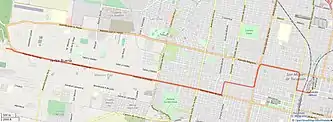
The trains started at Plaza Alberdi (the square at the Central Argentino railway station) and went west on Calle Santiago del Estero, turned right into Avenida Mitre and followed it until they turned left into Avenida Manuel Belgrano. Here they passed the depot and the workshops. From here they drove west again to the Avenida Ejército del Norte. They then turned south until they continued on Calle Córdoba (now Calle Don Bosco) to the west. On the Calle Aconquija (now Calle Luis Federico Nougués) they drove to the Avenida Mate de Luna, which they followed to the terminus Horco Molle at today's El Corte roundabout at the foot of the San Javier Hill.[1]
Operation
.jpg.webp)
The railway ran 6 to 8 times a day.[2] It was colloquially called "Trencito" (little train) or "La Chorbita" (choo choo train). A single trip through the then still rural suburbs took between 45 minutes and one hour. The stops were named with numbers, some of which are still used colloquially today.
Closure
Although a total of 135,505 passengers had been carried by 1925, rail operations were discontinued in 1926 due to a lack of profitability.[1]
References
- El chisporroteo de la chorbita mandó a vía muerta al “Trencito” de Yerba Buena.
- Marta Barbieri und Matilde Silva: Historia del Municipio de Yerba Buena.