Yokohama FC
Yokohama FC (横浜FC, Yokohama Efushī) is a Japanese professional football club based in Yokohama, Kanagawa Prefecture, part of the Greater Tokyo Area. The club currently plays in the J2 League, which is the second tier of football in the country. The club was formed by fans of Yokohama Flügels as a protest against Flügels' merger with Yokohama Marinos in 1999, becoming the first supporter-owned professional sports team in Japan.[1]
 | |||
| Full name | Yokohama FC | ||
|---|---|---|---|
| Nickname(s) | Fulie | ||
| Founded | 1999 | ||
| Ground | Mitsuzawa Stadium Kanagawa-ku, Yokohama | ||
| Capacity | 15,046 | ||
| Chairman | Yuji Onodera | ||
| Manager | Tomonobu Hayakawa | ||
| League | J2 League | ||
| 2021 | J1 League, 20th of 20  (relegated) (relegated) | ||
| Website | Club website | ||
|
| |||
Since gaining J.League membership in 2001, Yokohama FC spent a long time in the second tier of the Japanese football league system. The club gained promotion to J.League Division 1 for 2007 season, as champions of J.League Division 2 in 2006, but were immediately relegated the following season. After twelve years in the J2 League, they returned to the top flight in the 2020 season, earning promotion the previous year.
History
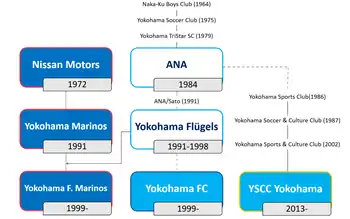
Yokohama FC was formed in 1999 following the merger of Yokohama's two J.League clubs, the Flügels and the Marinos. Flügels supporters felt that their club had essentially been dissolved rather than merged with, so rejected the suggestion that they should start supporting Marinos – who had been their crosstown rivals. Instead, with money raised through donations from the general public and an affiliation with talent management company IMG, the former Flügels supporters founded the Yokohama Fulie Sports Club.[2] Following the socio model used by FC Barcelona, the Fulie Sports Club created Yokohama FC, the first professional sports team in Japan owned and operated by its supporters.[1]
For its first season in 1999, Yokohama FC hired former German national team and World Cup star Pierre Littbarski to be the manager and Yasuhiko Okudera, the first Japanese footballer to play professionally in Europe, to be the chairman.[3] The club attempted to gain entry directly into the professional J.League, but the Japan Football Association only permitted entry to the amateur Japan Football League (JFL), at the time the third level of the Japanese football league system, and ruled that the club would not be eligible for promotion into J.League Division 2 at the end of its first season. So, despite finishing as JFL champion in 1999, Yokohama FC finished as JFL champion again in 2000 before being promoted to J.League Division 2.[4]
The club spent the next 6 seasons in J.League Division 2 before finishing as champions in 2006 and gaining promotion to J.League Division 1. In 2007, just the ninth year of its existence, Yokohama FC played its first season in the top flight of Japanese football. After a poor season, the team were consigned to relegation with five games of the season still remaining. Despite their early relegation, Yokohama FC nevertheless decided the final outcome at the opposite end of the table; by defeating title contenders Urawa Red Diamonds on the last day of the season, Kashima Antlers secured the J.League Division 1 title.[5]
In 2018, Yokohama FC narrowly missed out on automatic promotion by goal difference. The team made it to the J2 promotion final, losing to Tokyo Verdy on an stoppage time winner. In 2019, Yokohama finished second in J2 and gained automatic promotion to J1.
Fight for promotion
Although they had a dire season in 2005, ending 11th out of 12, they were in the top half of table throughout the 2006 season. On 26 November they finished in the top spot of the J2 League, and hence were finally promoted to the J. League 1.
This success story was so dramatic as to make people somewhat excited in Japan. Yokohama FC's financial situation was so poor that they didn't even possess their own football ground or a club house. Players did everything themselves including carrying the goal posts and washing the jerseys.
One of their players, Kazuyoshi Miura, is 54 and a former player, Atsuhiro Miura (one of their main players before his 2010 retirement) was 36 when he last played for the club. These players once played for the Japan national team.
They lost all pre-season matches, even against college students, then also the first official match of the year. After this, they suddenly changed the player-manager to a freshman with little experience named Takuya Takagi, who was 38. At the beginning of the season few expected them to become champions.
Record as J.League member
| Champions | Runners-up | Third place | Promoted | Relegated |
| Season | Div. | Teams | Pos. | Attendance/G | J.League Cup | Emperor's Cup |
|---|---|---|---|---|---|---|
| 2001 | J2 | 12 | 9th | 3,007 | 2nd round | 4th round |
| 2002 | 12 | 12th | 3,477 | – | 3rd round | |
| 2003 | 12 | 11th | 3,743 | 3rd round | ||
| 2004 | 12 | 8th | 4,219 | 5th round | ||
| 2005 | 18 | 11th | 5,938 | 4th round | ||
| 2006 | 13 | 1st | 5,119 | 3rd round | ||
| 2007 | J1 | 18 | 18th | 14,039 | Group stage | 5th round |
| 2008 | J2 | 15 | 10th | 6,793 | – | 4th round |
| 2009 | 18 | 16th | 3,535 | 3rd round | ||
| 2010 | 19 | 6th | 5,791 | 3rd round | ||
| 2011 | 20 | 18th | 5,770 | 2nd round | ||
| 2012 | 22 | 4th | 6,039 | 3rd round | ||
| 2013 | 22 | 11th | 6,064 | 2nd round | ||
| 2014 | 22 | 11th | 5,146 | 2nd round | ||
| 2015 | 22 | 15th | 5,113 | 2nd round | ||
| 2016 | 22 | 8th | 4,892 | Round of 16 | ||
| 2017 | 22 | 10th | 5,967 | 2nd round | ||
| 2018 | 22 | 3rd | 6,141 | 3rd round | ||
| 2019 | 22 | 2nd | 7,061 | 3rd round | ||
| 2020 † | J1 | 18 | 15th | 3,559 | Group stage | Did not qualify |
| 2021 | 20 | 20th | 4,511 | Group stage | 2nd round |
- Key
- Pos. = Position in league.
- Attendance/G = Average home league attendance.
- † 2020 season attendance reduced by COVID-19 worldwide pandemic.
- Source: J. League Data Site
Honours
- Japan Football League
- Champions: 1999, 2000
- J.League Division 2
- Champions: 2006
- Runner-ups: 2019
Current players
- As of 31 August 2021[6]
Note: Flags indicate national team as defined under FIFA eligibility rules. Players may hold more than one non-FIFA nationality.
|
|
Out on loan
Note: Flags indicate national team as defined under FIFA eligibility rules. Players may hold more than one non-FIFA nationality.
|
|
Colours
As they could not adopt directly Flügels' white and blue strip given its similarity to that of Marinos, Yokohama FC decided to adopt an all-cyan kit, after NKK SC, a former company club which had closed in 1994. NKK SC was based in Kawasaki and played most matches at Todoroki Athletics Stadium, but used Mitsuzawa Stadium on days when the other Kawasaki clubs at the time (Verdy Kawasaki, Toshiba and Fujitsu) used it.
Kit Evolution
| FP 1st | ||||
|---|---|---|---|---|
          2001 |
    2002 |
     2003 - 2004 |
     2005 - 2006 |
     2007 - 2008 |
     2009 - 2010 |
     2011 - 2012 |
     2013 |
  2014 |
     2015 |
   2016 |
     2017 |
     2018 |
     2019 |
     2020 |
     2021 - | ||||
| FP 2nd | ||||
|---|---|---|---|---|
     2001 |
    2002 |
     2003 - 2004 |
     2005 - 2006 |
     2007 - 2008 |
     2009 - 2010 |
     2011 - 2012 |
     2013 |
 2014 |
     2015 |
    2016 |
     2017 |
   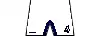 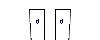 2018 |
    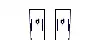 2019 |
   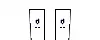 2020 |
     2021 - | ||||
Managers
As of 23 February 2020.
 Pierre Littbarski 1999–2000, 2003–2004
 Yoshikazu Nagai 2001
- Yuji Sakakura 2001
- Katsuyoshi Shinto 2001–2002
- Yusuke Adachi 2005–2006
- Takuya Takagi 2006–2007
 Júlio Leal 2007
- Satoshi Tsunami 2008
- Yasuhiro Higuchi 2009
- Yasuyuki Kishino 2010–2012
- Motohiro Yamaguchi 2012–2014
 Miloš Rus 2015, 2016
- Hitoshi Nakata 2015, 2016–2017
- Edson Tavares 2017–2019
- Takahiro Shimotaira 2019–2021
Affiliated clubs
 YFCMD – a professional football club based in Hong Kong who were once owned by Yokohama FC. Their new club name stands for Yokohama FC Modic.
References
- Ichiro Hirose (2014). スポーツ・マネジメント入門 [Introduction to Sport Management] (in Japanese). Toyo Keizai. p. 123. ISBN 4492502602.
- John Horne, Wolfram Manzenreiter (2013). Japan, Korea and the 2002 World Cup. Routledge. p. 101. ISBN 0415275636.
- Kumi Kinohara (27 July 2000). "Yokohama FC struggling to survive despite JFL success". Japan Times. Retrieved 26 February 2016.
- "Interview with Tomio Tsujino" (PDF) (in Japanese). Yokohama City. 2012. Retrieved 26 February 2016.
- Andrew Mckirdy (2 December 2007). "Inspired Antlers squad captures J.League title". Japan Times. Retrieved 26 February 2016.
- "選手・スタッフ" (in Japanese). Yokohama FC. Retrieved 31 August 2021.
External links
- Official website (in Japanese)