2004 AFC Asian Cup Final
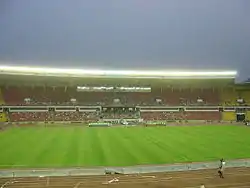
The 2004 AFC Asian Cup Final was an association football match that took place on 7 August 2004 at the Workers' Stadium in Beijing, People's Republic of China, to determine the winner of the 2004 AFC Asian Cup.
 | |||||||
| Event | 2004 AFC Asian Cup | ||||||
|---|---|---|---|---|---|---|---|
| |||||||
| Date | 7 August 2004 | ||||||
| Venue | Workers' Stadium, Beijing | ||||||
| Man of the Match | Shunsuke Nakamura (Japan) | ||||||
| Referee | Saad Kamil Al-Fadhli (Kuwait) | ||||||
| Attendance | 62,000 | ||||||
| Weather | Overcast 19°C <31% humidity | ||||||
Background
The 2004 AFC Asian Cup marked the edition as the 13th of the AFC Asian Cup, a football competition organised by the AFC for senior men's national teams of member associations. Qualifying round began from 21 March to 3 December 2003, divided into two rounds: preliminary and qualifying, with seven groups in each stage. Top two teams of each seven groups in the final qualifying round would progress to the tournament.
China and Japan automatically qualified for the tournament, with China being the hosts and Japan being the defending champions, having beaten Saudi Arabia in the final.[1] Also in the previous edition in Lebanon, China and Japan faced each other in the semi-finals, with Japan triumphed 3–2. Coming to this final, China had won against Japan 15 times while Japan had only beaten China 10; yet China had not won the AFC Asian Cup, already finished second in 1984, while Japan claimed the first Asian Cup title at home in 1992 before winning it again in 2000.
Route to the final
China
China were assigned in the group A as hosts, facing Indonesia, Bahrain and Qatar in process. All of China's three group stage games were held in Beijing. China went to suffer a shock 2–2 draw over minnows Bahrain in the opening fixture, with Husain Ali buried China's hope for a maiden win with a goal in 89'.[2] China then routed Indonesia 5–0, with Shao Jiayi scored twice in China's emphatic win, added with Indonesia only played with ten men due to a red card by Alexander Pulalo after Shao's opening goal.[3] However, China struggled against a highly defensive Qatar in the final game, only won 1–0 by a 77th minute goal from Xu Yunlong to top the group and reached the quarter-finals.[4]
China's first opponents in the knockout stage were against Iraq, which finished second in the group B. China ran riots against Iraq, with Hao Haidong scored an early lead before Zheng Zhi netted two other penalties to give China a triumphant 3–0 win over the Iraqis.[5] In the semi-finals, China faced Iran, a far bigger test than Iraq. The Chinese opened the account first in 18' thank for Shao Jiayi, only to be equalised 20 minutes later by Mohammad Alavi. Iran was later reduced to ten men due to a red card given on Sattar Zare for shoving Shao Jiayi, before another red card was given in the second half on Iran's equaliser Alavi, who was already substituted in early of the second half, yet China failed to capitalise the opportunity and had to settle on penalty shootout, which it won 4–3, with Yahya Golmohammadi missed Iran's crucial penalty to book a place in the final for China.[6]
Japan
As the defending champions, Japan were drawn in group D with debutant Oman, alongside fellow powerhouse Iran and Thailand. All of Japan's group stage fixtures occurred in Chongqing, in which anti-Japanese hostilities were witnessed. Japan began with a hard-fought 1–0 win over Oman, by a courtesy from Shunsuke Nakamura.[7] Japan then overcame a shock goal down to beat Thailand 4–1, effectively knocked Thailand out of the tournament.[8] Japan then confirmed its top place in the group with a goalless draw over fellow powerhouse Iran.[9]
In the quarter-finals, Japan first faced Jordan, a major surprise in the tournament. To make thing difficult, Japan let Jordan to take an early lead by Mahmoud Shelbaieh in 11', before Takayuki Suzuki restore the level just three minutes later; though, Japan was dragged into the penalty shootout, and was expected to flounder after Nakamura and Alessandro dos Santos missed two of Japan's three first penalties while Jordanian counterparts succeeded in converting both, yet Jordan went on to miss four straight kicks due to a controversial decision, allowing Japan time to restore parity before winning 4–3 thanked for the successful final response from Tsuneyasu Miyamoto while Jordan's Bashar Bani Yaseen could not take it right.[10] In the last four, this time in Jinan, Japan once again struggled against another Arab opponents, this time Bahrain, enduring a thriller and even got a red card on Yasuhito Endo in 40', before came out ending victoriously 4–3 after extra times in an epic comeback to set up a final showdown with the Chinese hosts.[11]
| China PR | Round | Japan | ||||||||||||||||||||||||||||||||||||||||||||||||||||||||||||||||||||||||||||||||||||||||||||
|---|---|---|---|---|---|---|---|---|---|---|---|---|---|---|---|---|---|---|---|---|---|---|---|---|---|---|---|---|---|---|---|---|---|---|---|---|---|---|---|---|---|---|---|---|---|---|---|---|---|---|---|---|---|---|---|---|---|---|---|---|---|---|---|---|---|---|---|---|---|---|---|---|---|---|---|---|---|---|---|---|---|---|---|---|---|---|---|---|---|---|---|---|---|---|
| Opponent | Result | Group stage | Opponent | Result | ||||||||||||||||||||||||||||||||||||||||||||||||||||||||||||||||||||||||||||||||||||||||||
 Bahrain Bahrain |
2–2 | Match 1 |  Oman Oman |
1–0 | ||||||||||||||||||||||||||||||||||||||||||||||||||||||||||||||||||||||||||||||||||||||||||
 Indonesia Indonesia |
5–0 | Match 2 |  Thailand Thailand |
4–1 | ||||||||||||||||||||||||||||||||||||||||||||||||||||||||||||||||||||||||||||||||||||||||||
 Qatar Qatar |
1–0 | Match 3 |  Iran Iran |
0–0 | ||||||||||||||||||||||||||||||||||||||||||||||||||||||||||||||||||||||||||||||||||||||||||
|
Final standing |
| ||||||||||||||||||||||||||||||||||||||||||||||||||||||||||||||||||||||||||||||||||||||||||||
| Opponent | Result | Knockout stage | Opponent | Result | ||||||||||||||||||||||||||||||||||||||||||||||||||||||||||||||||||||||||||||||||||||||||||
.svg.png.webp) Iraq Iraq |
3–0 | Quarterfinals |  Jordan Jordan |
1–1 (4–3 pen.) | ||||||||||||||||||||||||||||||||||||||||||||||||||||||||||||||||||||||||||||||||||||||||||
| Iran |
1–1 (4–3 pen.) | Semifinals | Bahrain |
4–3 (a.e.t.) | ||||||||||||||||||||||||||||||||||||||||||||||||||||||||||||||||||||||||||||||||||||||||||
Match
Details
China PR  | 1–3 |  Japan Japan |
|---|---|---|
Li Ming  31' 31' |
Report | Takashi Fukunishi 22' Koji Nakata 65' (Handball) Keiji Tamada 90+1' |
          China PR
|
    Japan
|
|
| |||||||||||||||||||||||||||||||||||||||||||||||||||||||||||||||||||||||||||||||||||||||||||||||||||||||||||||||





|
Man of the Match:
Assistant referees:
|
| AFC Asian Cup 2004 Winners |
|---|
Japan Third title |
See also
References
- https://apnews.com/article/cba5e0b1b90c318c98398b9992de5ad8
- "China held by Bahrain 2-2 in Asian Cup opener".
- "China thrash Indonesia". 21 July 2004.
- "People's Daily Online -- China enter quarterfinals in Asian Cup 2004".
- "China beat Iraq 3-0 to reach Asian Cup semis".
- "China to meet Japan". 3 August 2004.
- "Japan beat Oman, Iran trash Thailand in Asian Cup".
- "Nosrati saves Iran blushes". 24 July 2004.
- "Iran coin a quarter".
- "Japan/Iran into semis". 31 July 2004.
- "Japan, China set up explosive Asian Cup final".