2022 Costa Rican general election
General elections are scheduled to be held in Costa Rica on Sunday, 6 February 2022, in accordance with the Constitution of Costa Rica, to elect the president, two vice-presidents, and all 57 deputies of the Legislative Assembly. If none of the presidential nominees obtains at least 40% of the votes, a second electoral round will be held on Sunday, 3 April 2022, between the two candidates who have obtained the most votes. These will be the eighteenth election of this type to be held in the country since the current Constitution was put in force.
.svg.png.webp) | |||||||||||||||||||||||||||||
| |||||||||||||||||||||||||||||
|
| |||||||||||||||||||||||||||||
Presidential election | |||||||||||||||||||||||||||||
| |||||||||||||||||||||||||||||
| |||||||||||||||||||||||||||||
| |||||||||||||||||||||||||||||
.png.webp)
.png.webp)

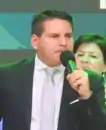
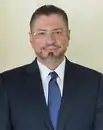
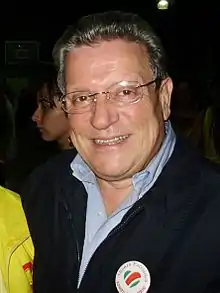
 |
|---|
 Costa Rica portal Costa Rica portal |
Background
In the preceding election, a second electoral round was held for the third time in history, when no political party reached 40% of the votes. The two candidates with the most support were the then deputy, journalist, preacher, and Christian music singer Fabricio Alvarado Muñoz of the conservative National Restoration party, and the former Minister of Labor, journalist and writer Carlos Alvarado Quesada of the ruling Citizens' Action. The election was marked by social and religious issues that included issues such as same-sex marriage, the secular state, and sex education.[1][2] Carlos Alvarado was the winner in the second round by a wide margin.[3][4]
Fabricio Alvarado, runner-up of the second electoral round of the 2018 elections, would resign the National Restoration Party (PREN) soon after, founding a new party named New Republic to which six of the elected deputies for PREN gave their personal allegiance while acting as independent deputies.
Candidates, primaries, and party conferences
Citizens' Action Party
The Constitution of Costa Rica prohibits the incumbent president of the Republic from serving consecutive terms, making the current president, Carlos Alvarado Quesada, ineligible to run in 2022. It has also been established that the government ministers and the directors or managers of the autonomous institutions must resign twelve months before the election is held in case they want to aspire to the presidency or vice-presidency of the Republic.[5]
In March 2021, the National Assembly of the Citizen Action Party announced the holding of the third Citizen Congress of the party, facing the 2022 elections, and through which the aspects related to its internal processes will be defined. Likewise, it was announced that the party would hold face-to-face assemblies, between April and July, to renew its structures in the country's cantons and provinces.[6]
Lawmaker Welmer Ramos was elected on the primaries, winning by a narrow margin over fellow deputy Carolina Hidalgo and former Sports Minister Hernán Solano.
National Liberation Party
The main opposition force National Liberation Party held its primary, known as the National Liberation Convention, on June 6, 2021, electing former President José María Figueres Olsen as a nominee. Political scientist Claudio Alpízar Otoya, former deputy and two-time presidential candidate Rolando Araya Monge, and Carlos Benavides Jiménez and Roberto Thompson Chacón, deputies for the 2018-2022 period, also participated in this process.[7]
Social Christian Unity Party
The Social Christian Unity Party held its National Convention on June 27, 2021, the deputies of the 2018-2022 period will participated in this process for the election of the candidate for president Erwen Masís Castro and Pedro Muñoz Fonseca, and the former vice president (2002-2006) Lineth Saborío Chaverri.
Other parties/coalitions
Several former candidates who participated in the process have already announced their interest in being candidates again. Notably, in most cases, these candidates resigned from the parties for which they tried to obtain the presidency and began the processes of founding new political groups.
- A Just Costa Rica: Independent deputy Dragos Dolanescu Valenciano announced the creation of a new political formation called A Just Costa Rica after his departure from the Social Christian Republican Party following an accusation lodged by the party authorities against him for corruption.[8] Although he announced that he would be measuring the popular support for a possible candidacy[9] Rolando Araya Monge was selected as the presidential candidate for the party; he finished in second place in the PLN primary.[10]
- New Republic: Fabricio Alvarado, who was one of the most successful candidates in the previous election, announced his separation from the party for which he was a deputy and candidate through his Facebook account and the creation of a new political party called Nueva República, although he assures that this would be a secular and non-Christian party unlike its predecessor.[11]
- National Restoration: This party, that held an important role in the last election, is rumored as a possible plataform for the former president of the Legislative Assembly Eduardo Cruickshank.[12] Controversial deputy and pastor Melvin Nuñez Piña would be considering facing Cruickshank for the Restoration candidacy. Núñez was known for phrases such as saying that the deputies "are stupid but not idiots" and that cat food could be made with the offal from trawling.[13] Cruickshank was selected.
- New Generation Party: Sergio Mena Díaz would be repeating for the third time the presidential candidacy with a double nomination for deputy also for the third time for New Generation.[12]
- United We Can: Natalia Díaz Quintana, former deputy and former presidential candidate within the Libertarian Movement who lost in the primaries to perennial candidate Otto Guevara Guth announced the creation of a new liberal party called United We Can, unrelated with Spanish coalition of the same name, although similarly using the color purple. Díaz had previously resigned from the Libertarian and even gave his adhesion to the candidate of the National Liberation Party Antonio Álvarez Desanti in the 2018 election.[14][15] Diaz was ratified as presidential nominee on June 26.[16]
- Liberal Union: Former Libertarian Movement leader Otto Guevara left the Libertarian Movement after the party went bankrupt and in economic disarray, and founded the Liberal Union Party. The former deputy and former Libertarian presidential candidate Federico Guillermo Malavassi Calvo announced his presidential nomination with Guevara as deputy candidate on the party list.[17][18][19]
- Libertarian Movement: Lawyer and financier with a neoliberal tendency, Carlos Valenciano Kamer, known for suing Célimo Guido during the demonstrations of the National Rescue Movement at the end of 2020, was announced as a candidate by the libertarian party, but he quit some months after.[20][21]
- Social Christian Republican Party: After breaking with former minister Rodrigo Chaves, the party's president Otto Vargas announced that they are open for a presidential nominee.[22] Former President Rafael Angel Calderon Fournier was asked to run, but he declined, arguing for health reasons.[23] Nomination finally went to three-time candidate Rodolfo Hernández who was also a candidate in 2014 and 2018.
Personal candidacies in search of a political party
- Juan Diego Castro Fernández: One of the first to make the announcement was criminal lawyer and former Justice Minister Juan Diego Castro, who announced the creation of a new party called "Reconstruction" after his unfriendly break with the National Integration Party. Castro announced in January 2021, he was cancelling the process of forming the party due to difficulties in the registration process, formally requesting the Supreme Electoral Tribunal for the filing. In 2021 Castro Fernández confirmed to Teletica that he would be a presidential candidate for the second time, although he did not clarify by which group, assuring that he is evaluating being one by a party or coalition. He only completely ruled out the return to being one by National Integration, from which he had an unfriendly exit.[24][25][26][27]
- Rodrigo Chaves Robles: The former Minister of Finance of the Alvarado Quesada administration and former World Bank official, Rodrigo Chaves Robles, has held meetings with different sectors and representatives of seven political parties, including the Republican Social Christian and National Integration parties to propose a programmatic proposal and a possible electoral coalition in which, presumably, he could be the candidate.[28] According to Chaves, "I've told them that, first of all, you cannot talk about a long trip if you do not have a vehicle. Secondly, you can much less talk about the driver of a vehicle that does not exist. But I agree with them that in this country, approximately 60 percent of the voters do not find representation in any of the existing parties or feel the need to support them."[29] Chaves affirmed at the end of February 2021 that there are seven participating parties, three already registered: Republican Social Christian, National Integration (with parliamentary representation) and Social Democratic Progress, alongside four in the process of registration: United for Costa Rica, Our Town and the Costa Rican Pacific Union and that they have not defined the candidates for president and vice-presidents.[30] At the end of May, the Republican Social Christian Party and Chaves announced their separation, affirming ideological incompatibilities and breach of agreements, including the candidacy of two-time Republican candidate Rodolfo Hernández for deputy for San José.[31][32][33][34] In July, Chaves announced his candidacy with the recently founded Social Democratic Progress Party.[35]
- Rodolfo Piza Rocafort: The former Minister of the Presidency of Costa Rica and former candidate (twice) of the Social Christian Unity Party Rodolfo Piza Rocafort announced that he would be participating but this time for the Our Town Party, a provincial party in the process of being constituted on a national scale. Piza assured that he would not He rules out being a presidential candidate and that he will define him at the end of June. He also affirmed that he had participated in the coalition talks with both Rodrigo Chaves and Redondo/Feinzaig and proposed an open primary in September.[36][37][38][39][40] However, coalitions were discarded by all parties and Piza finally entered the Our People Party. Our People Party is a provincial political party founded mostly by former PUSC members in the process of reaching the national level. Piza was announced as a presidential candidate (though not as deputy).[41]
- Viviam Quesada: Former Libertarian vice presidential candidate and television presenter Viviam Quesada also announced her presidential candidacy, although it is still unknown through which political party.[42]
Failed coalitions proposal
At the beginning of 2020, the presidents of Social Christian Unity Party, Christian Democratic Alliance and Liberal Union began negotiations for the creation of a conservative-liberal right-wing coalition with the self-proclaimed goal of preventing a third government of the Citizen Action Party Although Natalia Díaz Quintana of Unidos Podemos was invited, she declined to participate preferring to go to the elections alone. The participation of Eliécer Feinzaig Mintz of the Progressive Liberal Party in the negotiations was reported in principle, but their representatives later denied it.[43][44]
The proposal for a Christian-liberal coalition was also promoted by former Social Christian president Miguel Ángel Rodríguez Echeverría. However, the proposal was rejected in the National Assembly of the Partido Unidad Social Cristiana.[45][46]
Cartago mayor Mario Redondo Poveda and former Deputy Minister of Transportation Eliécer Feinzaig Mintz, both presidents respectively of the Christian Democratic Alliance and Liberal Progressive Party, confirmed that they were working on an electoral alliance in mid-May. Asked whether it would join the Rodrigo Chaves proposed coalition, Redondo denied it, assuring «(...) Once he invited me to talk, Eli too, then he met [sic] with us, but Don Rodrigo raises a coalition of 'support me' and that is not really a coalition ».[47]
On June 21, 2021, the alliance of these two parties under the name "Coalition for Change" was made official.[48] This would be the first coalition of right-wing parties to participate in a presidential election since the Unity Coalition in 1978, and the first overall since United Left in 2006.[49][50]
On June 25 Redondo individually abandoned the Coalition due to questionings after it was made public that he held secret meetings with one of the companies involved in the Cochinilla case scandal.[51][52][53]
As of 8 August 2021, the legal deadline for the inscription of alliances passed and no party entered a coalition.[54]
Themes
Popular protests
One of the most controversial aspects of the Alvarado Quesada administration was the approval by the Legislative Assembly of the Law for the Strengthening of Public Finances, popularly known as the Fiscal Plan, which was opposed by both the right and the left, but it was supported by the benches of the majority parties; PLN, PAC and PUSC (ranging from center-right to center-left). Opposition to the project led to the 2018 Costa Rican union strike, one of the largest in recent history, but which did not have the effect of stopping the project.
The opposition to the tax reform, however, generated future protests coupled with other issues of discontent from specific sectors. In mid-2019, protests were raised by fishermen, truck drivers and high school students, the latter calling for the resignation of the Minister of Education Edgar Mora and closing national roads. The students demanded, among other things, the end of the FARO tests and the reestablishment of the traditional high school tests, improvement in infrastructure and the departure of Mora, who effectively resigned on 2 July 2019. The protests were supported by allies as dissimilar as the union movements traditionally associated with the left of leaders such as the unionist Albino Vargas as well as the ultra-conservative neo-Pentecostal political movement led by the presidential candidate Fabricio Alvarado and by far-right movements.[55]
Far-right growth
As in other countries, the phenomenon of the emergence of the extreme right and of movements that claim to be nationalist and irredentist appeared in Costa Rica. Different movements associated with ideas of the extreme right and opposed to immigration (especially Nicaraguan) proliferated in recent years.
In 2018, a wave of false news disseminated by Facebook pages with an ultra-right leaning has been identified as responsible for instigating hatred and increasing xenophobia.[56][57] The pages falsely spread that Nicaraguan groups had burned the Costa Rican flag (when it was actually Costa Rican anarchists in a demonstration many years before) and who had "taken over" La Merced park in San José (known as a meeting place for immigrants) when in fact a Nicaraguan flag had been temporarily raised to collect food for refugees.
A march against Nicaraguan migrants was held on 19 August 2018, in which neo-Nazi groups and hooligans participated.[58][59][60] Although not all the participants were linked to these groups, the protest turned violent and the Public Force intervened with a balance of 44 arrested, 36 Costa Ricans and the rest Nicaraguans.[61]
In 2019 Facebook social network pages such as Deputy 58, Costa Rican Resistance and Salvación Costa Rica described as "ultra-nationalists" and radically opposed to immigration called for an anti-government demonstration on 1 May, with little attendance.[62][63]
In 2019, a paramilitary group that calls itself the July 7 Patriot Front comes to light and makes a call through a video whose participants wore masks and fatigue clothes, to carry out a violent coup that would depose the government. Right-wing populist presidential candidate Juan Diego Castro accused the government of being behind the video and of being a hoax, although this turned out to be false when the judicial authorities discovered those responsible.[64]
The group was quickly identified by the police authorities and its leadership was arrested a few days after the incident.[65] The leaders apparently had links with the ultra-religious far right and the former Cobra Command that carried out violent activities against indigenous people in the 1990s.[66][67]
COVID-19 pandemic
The COVID-19 pandemic, which, as of February 2021, has resulted in more than 2,800 deaths in Costa Rica, has had significant socioeconomic effects in the country that could influence the presidential elections. An example is unemployment, which, influenced by the effects of the pandemic, increased to 21.9% by October 2020.4 According to a study by the Center for Research and Political Studies (CIEP) of the University of Costa Rica, 27.45% of the 877 people consulted in the study throughout the national territory pointed to unemployment as the main problem in the country in the context of the pandemic.5[68][69]
Migration and xenophobia
The first potential candidate to make the issue of migration his own was Sergio Mena Díaz of the right-wing extra-parliamentary New Generation party, who, among other things, proposes to reform the Constitution to remove the Ius soli (right to land, which allows anyone to be Costa Rican by birth by being born in Costa Rican territory).[70][71][72] The bill earned Mena harsh criticism who was even accused of being a "fascist" by the left-wing deputy José María Villalta.[73]
Cannabis legalization
In April 2021, the parliamentary caucus of the Citizen's Action Party proposed through a bill the legalization of the production, consumption and sale of cannabis and its derivatives, including for recreational use and not just medicinal.[74] Conservative legislators opposed the measure.[75][76][77] Conservative deputies oppose the measure. If approved, the bill would establish the power of the ministries of Health, Agriculture and Livestock, Economy, Industry and Commerce and Foreign Trade to regulate production, transformation, industrialization and commercialization activities, and It would give the government the power to issue licenses for production and commercialization as well as possible closures.[78]
Corruption
On February 17, 2020, the Alvarado government created the Presidential Data Analysis Unit (UPAD) through decree number 41996-MP-Mideplan, the same office that would be quickly dissolved days later, on February 23, due to its controversial origins, performance and goals. The UPAD requested personal information about citizens from different government entities since 2019,72, so the Legislative Assembly initiated an investigation on February 26, 2020. On February 28, 2020, the Office of the Attorney General of the Republic carried out a search of a Presidential House where he collects electronic devices as evidence, including President Carlos Alvarado's cell phone and laptop.[79][80]
During 2021, it was discovered that since 2015 an alleged organized drug trafficking group had meetings at the legislative headquarters with some thirteen legislators and former legislators in their offices.[81]
On Monday, June 14, 2021, the Judicial Investigation Agency carried out 57 raids on homes, construction companies and government institutions, including the second raid on the Presidential House during the Carlos Alvarado administration, in which documents were confiscated, and 30 people were arrested. The investigation was nicknamed the Caso Cochinilla (Woodlouase case) in reference to the parasite.
This judicial investigation case revolves around a network of corruption and bribery between construction companies (MECO, H Solís, Montedes and others) and officials of the National Viability Council (Conavi), the entity in charge of the development of highways in the country, which publishes the contracting posters and administers their tenders. President Alvarado ordered a full investigation of the Ministry and suspended all contracts with the involved companies.[82][83]
Opinion polls
Results
President
| Candidate | Party | First round | Second round | |||
|---|---|---|---|---|---|---|
| Votes | % | Votes | % | |||
| Óscar López Arias | Accessibility without Exclusion | - | - | |||
| Welmer Ramos González | Citizens' Action Party | - | - | |||
| Christian Rivera Paniagua | Christian Democratic Alliance | - | - | |||
| Rolando Araya Monge | A Just Costa Rica | - | - | |||
| Jhon Vega Masís | Workers' Party | - | - | |||
| Óscar Campos Chavarría | National Encounter Party | - | - | |||
| José María Villalta Florez-Estrada | Broad Front | - | - | |||
| Greivin Moya Carpio | National Force Party | - | - | |||
| Walter Múñoz Céspedes | National Integration Party | - | - | |||
| Carmen Quesada Santamaría | Costa Rican Social Justice Party | - | - | |||
| José María Figueres Olsen | National Liberation Party | - | - | |||
| Eliécer Feinzaig Mintz | Liberal Progressive Party | - | - | |||
| Luis Alberto Cordero Arias | Libertarian Movement | - | - | |||
| Roulan Jiménez Chavarría | Costa Rican Social Democratic Movement | - | - | |||
| Rodolfo Piza Rocafort | Our People Party | - | - | |||
| Sergio Mena Díaz | New Generation Party | - | - | |||
| Fabricio Alvarado Muñoz | New Republic Party | - | - | |||
| Rodrigo Chaves Robles | Democratic Social Progress | - | - | |||
| Martín Chinchilla Castro | United People | - | - | |||
| Camilo Rodríguez Chaverri | Costa Rican Renewal Party | - | - | |||
| Rodolfo Hernández Gómez | Social Christian Republican Party | - | - | |||
| Eduardo Cruickshank Smith | National Restoration Party | - | - | |||
| Lineth Saborío Chaverri | Social Christian Unity Party | - | - | |||
| Natalia Díaz Quintana | United We Can | - | - | |||
| Maricela Morales Mora | Costa Rican Democratic Union | - | - | |||
| Federico Malavassi Calvo | Liberal Union Party | - | - | |||
| Invalid/blank votes | - | – | - | – | ||
| Total | - | 100 | - | 100 | ||
| Registered voters/turnout | - | - | - | |||
| Source: TSE | ||||||
Legislative Assembly
 | |||||
| Party | Votes | % | Seats | +/– | |
|---|---|---|---|---|---|
| Citizens' Action Party | - | - | - | - | |
| New Socialist Party of San José es | - | - | - | - | |
| Guanacastecan Union Party | - | - | - | - | |
| New Republic Party | - | - | - | New | |
| Liberal Union Party | - | - | - | New | |
| Costa Rican Social Justice Party | - | - | - | New | |
| Recovering Values Party | - | - | - | - | |
| National Force Party | - | - | - | New | |
| United People | - | - | - | New | |
| Social Christian Unity Party | - | - | - | - | |
| Cartago Renewal Party | - | - | - | New | |
| Social Christian Republican Party | - | - | - | - | |
| We Are (Somos) | - | - | - | New | |
| Democratic Force | - | - | - | - | |
| Libertarian Movement | - | - | - | - | |
| Costa Rican Renewal Party | - | - | - | - | |
| National Restoration Party | - | - | - | - | |
| Democratic Social Progress | - | - | - | New | |
| New Socialist Party of Cartago es | - | - | - | New | |
| Costa Rican Anti-Corruption Party | - | - | - | New | |
| Liberal Progressive Party | - | - | - | - | |
| Costa Rican Left Party | - | - | - | New | |
| Christian Democratic Alliance | - | - | - | - | |
| Let's Go (Vamos) es | - | - | - | - | |
| Costa Rican Democratic Union | - | - | - | New | |
| United for Costa Rica Party | - | - | - | New | |
| Costa Rican Social Democratic Movement | - | - | - | New | |
| New Generation Party | - | - | - | - | |
| A Just Costa Rica | - | - | - | New | |
| Accessibility without Exclusion | - | - | - | - | |
| United We Can | - | - | - | New | |
| National Liberation Party | - | - | - | - | |
| National Encounter Party | - | - | - | New | |
| National Integration Party | - | - | - | - | |
| Our People Party | - | - | - | New | |
| Workers' Party | - | - | - | - | |
| Let's Act Now (Actuemos Ya) | - | - | - | - | |
| Broad Front | - | - | - | - | |
| Invalid/blank votes | - | – | – | – | |
| Total | - | 100 | 57 | 0 | |
| Registered voters/turnout | - | – | – | – | |
| Source: TSE | |||||
Notes
References
- Murillo, Álvaro; Rodríguez, Frank (24 January 2018). "Shock religioso impacta apoyo a candidatos". CIEP (UCR). Archived from the original on 26 January 2018. Retrieved 25 January 2018.
- Herrera, Kimberly (22 January 2018). "TSE ha recibido 129 denuncias por uso de religión en campaña política". Mundo. Retrieved 24 January 2018.
- Garcia, David Alire; Pretel, Enrique Andres. "Costa Rica center-left easily wins presidency in vote fought on gay rights". Reuters. Retrieved 2 April 2018.
- Stanley, Katherine. "Carlos Alvarado wins Costa Rica's presidency in a landslide". The Tico Times. Retrieved 2 April 2018.
- Quirós, Bharley (5 January 2021). "Solo queda un mes para renuncia de jerarcas". Diario Extra. Retrieved 3 February 2021.
- Madrigal, Rebeca (21 March 2021). "PAC realizará congreso ciudadano para relanzar el partido". La Nación. Retrieved 23 March 2021.
- Chinchilla Cerdas, Sofía (7 June 2021). "Figueres sigue a la cabeza con el 35% de los votos en nuevo corte emitido por PLN". La Nación. Retrieved 9 June 2021.
- Quesada, Daniel (13 July 2020). "Dragos Dolanescu crea nuevo partido "Costa Rica Justa"". Radio Santa Clara. Retrieved 18 July 2020.
- Ruiz, Paula (6 May 2021). "Diputado Dragos Dolanescu medirá apoyo en redes sociales para decidir candidatura presidencial". El Observador CR. Retrieved 22 October 2021.
- Rolando Araya hace yunta con Dragos Dolanescu e irá por la presidencia con partido Costa Rica Justa
- Madrigal, Luis. "Fabricio Alvarado renuncia a Restauración Nacional: "Su cúpula me vio como una amenaza"". Delfino. Retrieved 24 October 2018.
- Ruiz, Paula (6 December 2020). "Figuras políticas anuncian su interés por postularse como precandidatos presidenciales". El Observador. Retrieved 7 December 2020.
- PulsoCR (8 February 2021). "Pastor Melvin Núñez piensa ser candidato por Restauración en 2022". CulturaCR. Retrieved 10 February 2021.
- Alfaro, Josué (24 May 2018). "Natalia Díaz intentará impulsar un nuevo partido liberal, aunque "menos radical"". Semanario Universidad. Retrieved 29 October 2018.
- Herrera, Kimberly (23 April 2018). "Natalia Díaz fundará nuevo partido "Unidos Podemos"". Mundo. Retrieved 29 October 2018.
- Alvarado, Andrés (26 June 2021). "Exdiputada Natalia Díaz lanza candidatura por el Partido Unidos Podemos". VozyVoto. Retrieved 26 June 2021.
- Pérez, Karla (6 February 2018). "Otto Guevara no descarta sexta candidatura a la presidencia en 2022". Mundo. Retrieved 29 October 2018.
- Arrieta, Esteban (22 March 2018). "Otto Guevara piensa en nuevo partido y desaparecer deudas de un plumazo". La República. Retrieved 29 October 2018.
- Perez, Wendy (10 May 2021). "Federico Malavassi presentará su nombre para ser candidato presidencial por Unión Liberal". El Mundo CR (in Spanish). Retrieved 11 May 2021.
- Perez, Wendy (21 May 2021). "Carlos Valenciano Kamer confirma su candidatura a la presidencia con el Movimiento Libertario". El Mundo CR (in Spanish). Retrieved 21 May 2021.
- www.diarioextra.com. "Diario Extra - Libertario presenta candidato presidencial". www.diarioextra.com (in Spanish). Retrieved 21 May 2021.
- Romero, Fernanda (1 June 2021). "Republicano Social Cristiano en busca de candidato presidencial tras romper relación con exministro Rodrigo Chaves". Retrieved 9 July 2021.
- Romero Fernanda (8 June 2021). "Rafael Ángel Calderón rechaza ser candidato presidencial del Partido Republicano Social Cristiano". Monumental. Retrieved 9 July 2021.
- Murillo, Alvaro (4 January 2021). "Juan Diego Castro aborta inscripción de su nuevo partido para el 2022". Semanario Universidad. Retrieved 5 January 2021.
- Gutiérrez Wa-Chong, Tatiana (17 February 2018). "Juan Diego Castro anuncia su nuevo partido Reconstrucción CR". La República. Retrieved 11 April 2018.
- Montero, Mariela (18 February 2018). "Juan Diego Castro suma fuerzas para crear un nuevo partido político en el país". Columbia. Archived from the original on 12 April 2018. Retrieved 11 April 2018.
- Peña Nassar, Susana (28 April 2021). "Juan Diego Castro: "Estoy decidido por una candidatura"". Teletica. Retrieved 7 June 2021.
- Jimenez Rueda, Antonio (6 February 2021). "En encerrona con diferentes sectores, Rodrigo Chaves explora este sábado si lanza precandidatura". Amelia Rueda. Retrieved 10 February 2021.
- Hidalgo, Kristin (10 February 2021). "Republicano Socialcristiano entre 7 partidos que buscan coalición alrededor de Rodrigo Chaves". Amelia Rueda. Retrieved 10 February 2021.
- Herrera, Juan José (23 February 2021). "Rodrigo Chaves anuncia coalición para buscar presidencia en 2022". Teletica. Retrieved 23 February 2021.
- "PRSC rompe con Rodrigo Chaves: "No cumplió acuerdos ni valoró esfuerzo de la dirigencia", alegan". 27 May 2021.
- "Partido Republicano desiste de posible coalición política junto al exministro Rodrigo Chaves".
- https://elperiodicocr.com/partido-republicano-rompe-relaciones-con-rodrigo-chaves-para-posible-coalicion-politica/
- "Partido Republicano rompe conversaciones con Rodrigo Chaves sobre candidatura presidencial".
- Perez, Wendy (7 July 2021). "Rodrigo Chaves anuncia su candidatura a la presidencia con el Partido Progreso Social Democrático". Mundo. Retrieved 9 July 2021.
- Arrieta, Esteban (8 June 2021). "Rodolfo Piza será candidato por partido minoritario Nuestro Pueblo". La República. Retrieved 8 June 2021.
- Gómez, Tomás (7 June 2021). "Rodolfo Piza buscará Presidencia con el partido "Nuestro Pueblo"". Observador.
- Romero, Fernanda (30 May 2021). "Rodolfo Piza reconoce diálogo con coaliciones y definirá su futuro político a finales de junio". Monumental. Retrieved 9 June 2021.
- Acuña, Pilar (8 June 2021). ""No descarto ser candidato ni dejar de serlo", afirma Rodolfo Piza". Voz y Voto. Retrieved 9 June 2021.
- Arroyo, Alan (8 June 2021). "Rodolfo Piza propone que candidato de eventual coalición sea elegido por votos en septiembre". Columbia. Retrieved 9 June 2021.
- Solano, Hermes (12 August 2021). "Presidente de partido Nuestro Pueblo confirma que Piza será candidato presidencial". Observador. Retrieved 13 August 2021.
- www.diarioextra.com. "Diario Extra - Viviam Quesada anuncia candidatura". www.diarioextra.com (in Spanish). Retrieved 11 May 2021.
- Arrieta, Esteban (25 February 2020). "Coalición liberal 2022 toma forma". La República. Retrieved 25 February 2020.
- Arrieta, Esteban (25 February 2020). "Eli Feinzaig: "Una coalición liberal debe tener programa y objetivos claros"". La República. Retrieved 27 February 2020.
- Romero, Fernanda (7 January 2021). "Expresidente Miguel Ángel Rodríguez llama al PUSC a formar coalición para las próximas elecciones". Monumental. Retrieved 10 February 2021.
- Arrieta, Esteban (7 February 2021). "Unidad cierra las puertas a una coalición para elecciones presidenciales". La República. Retrieved 10 February 2021.
- Alfaro, Josué (16 March 2021). "Mario Redondo y Eli Feinzaig afinan alianza rumbo a elecciones 2022". Amelia Rueda. Retrieved 16 March 2021.
- "Eli Feinzaig y Mario Redondo se unen y crean "Coalición para el Cambio" de cara a elecciones 2022".
- Quirós Navarro, Bharley (19 June 2021). "Coalición de partidos sería la primera desde 1978". Diario Extra. Retrieved 22 June 2021.
- Redacción (20 June 2021). "Mario Redondo y Eli Feinzaig oficializarán coalición este lunes, con miras a Elecciones del 2022". Observador. Retrieved 22 June 2021.
- Molina Mesen, Richard (26 June 2021). "Alcalde de Cartago admite que gente de MECO se le acercó". El Guardián. Retrieved 26 June 2021.
- Muñoz, Fernando (25 June 2021). "Expediente de caso 'cochinilla' evidencia reuniones entre alcalde de Cartago y gerente de MECO". Monumental. Retrieved 26 June 2021.
- Sequeira, Aaron (26 June 2021). "Mario Redondo abandona coalición que formaría con Eli Feinzaig 'para no afectar'". Grupo Nación. Retrieved 26 June 2021.
- Madrigal, Rebeca (5 August 2021). "Partidos descartan coaliciones para elecciones del 2022". La Nación. Retrieved 13 August 2021.
- Avendaño, Manuel (19 November 2019). "El coqueteo político entre Nueva República y Albino Vargas". La República. Retrieved 15 July 2019.
- Mora Pérez, Kenneth (12 April 2018). "El efecto de las noticias falsas o fake news y ¿cómo detectarlas?". Hoy en el TEC. Retrieved 14 July 2019.
- "Las 'fake news' en Costa Rica desatan la xenofobia contra los nicaragüenses". El País. 21 August 2018. Retrieved 14 July 2019.
- Rico (18 August 2018). "44 arrested for xenophobic attacks against Nicaraguans in San José". QCosta Rica. Retrieved 2 November 2018.
- "Costa Rica: symboles nazis lors d'une manifestation anti-migrants nicaraguayens". Journal de Montreal. 19 August 2018. Retrieved 2 November 2018.
- Castillo, Bryan (18 August 2018). "'Neonazis' e integrantes de barras de fútbol participaron en agresiones a nicaragüenses". La Teja. Retrieved 25 May 2019.
- "Costa Rica: violenta protesta contra inmigración nicaragüense". DW. Retrieved 2 November 2018.
- Chinchilla, Aarón (30 April 2019). "Ultranacionalistas costarricenses convocan marcha contra Gobierno en 1 de Mayo". El Periódico. Retrieved 24 June 2019.
- Cartín, Cristian (30 April 2019). "Llaman a concentrarse contra Carlos Alvarado". Diario Extra. Retrieved 24 June 2019.
- Gómez, Dylan (13 July 2019). "Juan Diego Castro sigue pensando que video de grupo armado es un show del PAC". NCR. Retrieved 15 July 2019.
- Solano, Hugo; Salas, Yeryis (13 July 2019). "Líderes de comando que difundía videos incitando a la violencia serán procesados por motín". La Nación. Retrieved 14 July 2019.
- Salas, Yeryis (14 July 2019). "Líder del 'Brazo Armado del Pueblo' y candidato a alcalde: el historial del detenido por video con amenazas al presidente". La Nación. Retrieved 14 July 2019.
- Quirós, Juan Manuel (13 July 2019). "Minor Masís y la infame historia del Comando Cobra". Teletica. Retrieved 14 July 2019.
- "Situación Nacional Covid-19". Ministerio de Salud Pública. Retrieved 27 February 2021.
- Montero, Andrea Méndez (19 August 2020). "El desempleo preocupa a la ciudadanía más que el COVID-19". Universidad de Costa Rica. Retrieved 27 February 2021.
- Barrantes, Fabián (29 April 2019). "Polémico proyecto xenófobo causa cientos de críticas a Sergio Mena". NCR. Retrieved 14 July 2019.
- "Líder de partido tico propone negar nacionalidad "automática" a hijos". CRHoy. 27 April 2017. Retrieved 14 July 2019.
- Redacción (16 May 2019). "Reforma busca que no se otorgue nacionalidad tica a recién nacidos de padres extranjeros". Teletica. Retrieved 14 July 2019.
- Soto Sibaja, Juan Enrique (29 May 2019). "José María Villalta califica de "fascista" propuesta para negar nacionalidad a hijos de extranjeros". Monumental. Retrieved 14 July 2019.
- "PAC presenta proyecto de ley para legalizar la marihuana en Costa Rica". 20 April 2021.
- Abarca, Fiorella (20 April 2021). "Carmen Chan asegura que el PAC quiere polarizar con tema de legalización de la marihuana". elmundo.cr. Retrieved 26 April 2021.
- Mora, Carlos (21 April 2021). "Oposición censura al PAC por proponer legalización de la marihuana". crhoy.com. Retrieved 26 April 2021.
- Mora, Carlos (20 April 2021). "En el popular 4/20, PAC propone legalizar el consumo de la marihuana". crhoy.com. Retrieved 26 April 2021.
- Villalobos, Paulo (20 April 2021). "Legalización del consumo recreacional del cannabis, incluida su producción y venta, propone PAC". Amelia Rueda. Retrieved 26 April 2021.
- "UPAD recopiló datos personales sin respaldo legal, argumentó Fiscalía en solicitud de allanamiento". Semanario Universidad. 29 February 2020. Retrieved 13 December 2020.
- Bravo, Josué (28 February 2020). "Fiscala General allana Casa Presidencial por caso UPAD; Carlos Alvarado figura como investigado". La Nación. Retrieved 13 December 2020.
- Arrieta, Esteban (1 June 2021). "Visitas de supuesto grupo narco a la Asamblea Legislativa serán investigadas por los diputados". La República. Retrieved 21 June 2021.
- González, Rodolfo (14 June 2021). "¿En qué consiste el "Caso Cochinilla"?". Teletica.com. Retrieved 19 June 2021.
- Corrales, Eric (17 June 2021). "Caso "Cochinilla": Piden 1 año de prisión preventiva para 15 de los detenidos". Teletica.com. Retrieved 19 June 2021.
| Presidential elections | |
|---|---|
| Parliamentary elections | |
| Local elections | |
| Referendums | |
See also: Elections in the Federal Republic of Central America | |