Anarkali Bazaar
Anarkali Bazaar (Punjabi, Urdu: اناركلى بازار) is a major bazaar[1] in Lahore, Punjab, Pakistan. Anarkali also serves as a neighbourhood and union council of Data Gunj Buksh Tehsil of Lahore.
Anarkali Bazaar
اناركلى بازار | |
|---|---|
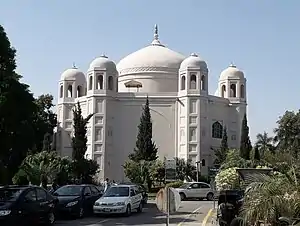 Tomb of Anarkali | |
| Country |  Pakistan Pakistan |
| Province | Punjab |
| City | Lahore |
| Administrative town | Data Gunj Buksh |
| Union council | 72 |
| Web Site | www.banobazaar.com |
History
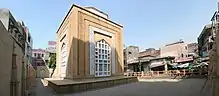
Anarkali remains one of the oldest surviving markets in Indian Subcontinent, dating back at least 200 years and derives its name from the nearby mausoleum thought to be that of a courtesan girl named Anārkalī, who was 'chased out of town' by order of the Mughal Emperor Akbar for having a love affair with his son, Prince Salīm, who would later become Emperor Jahāngīr.
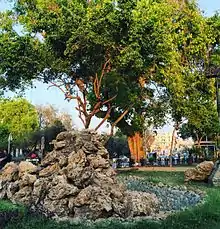
Bazaar
Anarkali mainly sells textiles, garments, jewellery, and many other items.[2] The bazaar is now divided into two sections: the 'Old Anarkali Bazaar' and the 'New Anarkali Bazaar'. The Old Anarkali Bazaar is noted for its traditional food items while the New Anarakli Bazaar is noted for its traditional handicraft and embroidery.[3] Within the New Anarkali Baazaar are markets known as Bano Bazaar, Dhoni Ram Lane and Paan Gali.
The mausoleum of Sultan Qutb ud-Din Aibak of Mamluk Sultanate is also located at Anarkali Bazaar. In the early 1970s, the mausoleum was renovated at the orders of the then Prime Minister Zulfiqar Ali Bhutto.
References
- Maneesha Tikekar (2004). The Anarkali Bazaar (Across the Wagah: An Indian's Sojourn in Pakistan). Google Books website. pp. 83, 88 and 357. ISBN 9788185002347. Retrieved 7 March 2021.
- Tikekar, Maneesha (2004). Across the Wagah: An Indian's Sojourn in Pakistan, Anarkali Bazaar. Bibliophile South Asia. p. 83. ISBN 978-81-85002-34-7. Retrieved 7 March 2021.
- "Anarkali Bazaar". travel.hamariweb.com. Retrieved 7 March 2021.
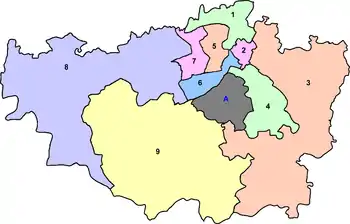
| Ravi |
|  |
|---|---|---|
| Aziz Bhatti |
| |
| Shalimar |
| |
| Gulberg |
| |
| Data Gunj Bakhsh |
| |
| Samanabad |
| |
| Allama Iqbal Zone |
| |
| Wahga |
| |
| Nishtar |
| |
| Cantonment |
| |