Azekura-zukuri
Azekura-zukuri (校倉造) or azekura is a Japanese architectural style of simple wooden construction, used for storehouses (kura), granaries, and other utilitarian structures.[2] This style probably dates to the early centuries of the Common Era,[2] such as during the Yayoi or Kofun periods. It is characterized by joined-log structures of triangular cross-section, and commonly built of cypress timbers.[3]
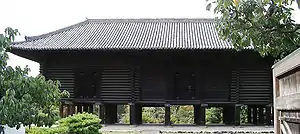
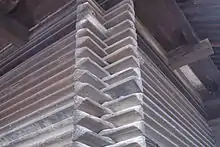
Details of beam installation at the corner of a storehouse at Tōdai-ji Temple
See also
References
- "azekura 校倉". Japanese Architecture and Art Net Users System. 2001. Retrieved 10 March 2021.
- Louis Frédéric (2002). Japan Encyclopedia. Harvard University Press. p. 63. ISBN 978-0-674-01753-5. Retrieved 24 August 2012.
- "Azekura-zukuri | Japanese architecture".
Elements of Japanese architecture | ||||||||||
|---|---|---|---|---|---|---|---|---|---|---|
| Styles |
| |||||||||
| Types of building |
| |||||||||
| Roof styles | ||||||||||
| Structural and spatial | ||||||||||
| ||||||||||
| Rooms | ||||||||||
| Furnishings | ||||||||||
| Partitions | ||||||||||
| Outdoor objects | ||||||||||
| Measurements | ||||||||||
| Organizations | ||||||||||
| Related topics |
| |||||||||
Authority control: National libraries  |
|---|
This article is issued from Wikipedia. The text is licensed under Creative Commons - Attribution - Sharealike. Additional terms may apply for the media files.