Baati, Oromia Zone
Baati is a town in north-central Ethiopia. Located in the Oromia Zone of the Amhara Region , east of Dessie this town has a latitude and longitude of 11°11′N 40°1′E with an elevation of 1502 metres above sea level. It is the largest town in Baati woreda.
Baati | |
|---|---|
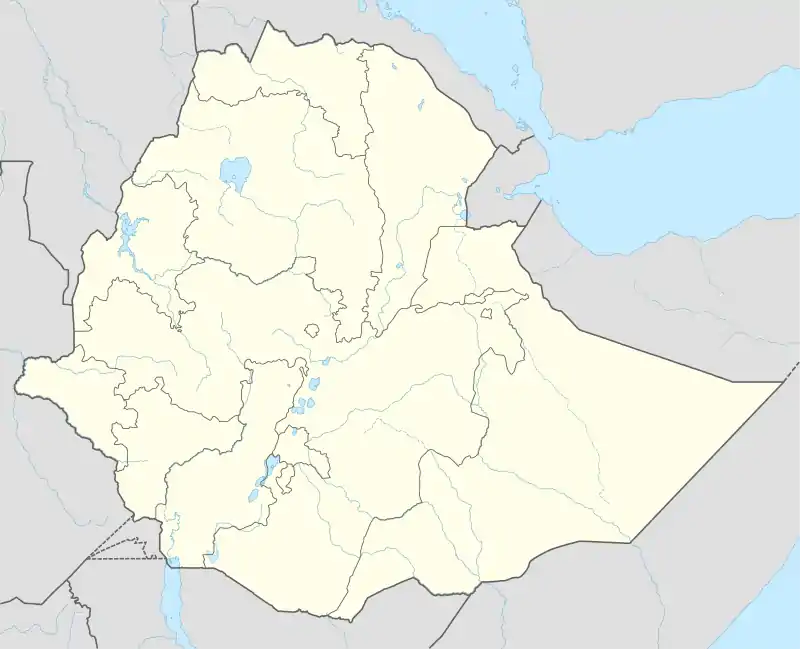  Baati Location within Ethiopia 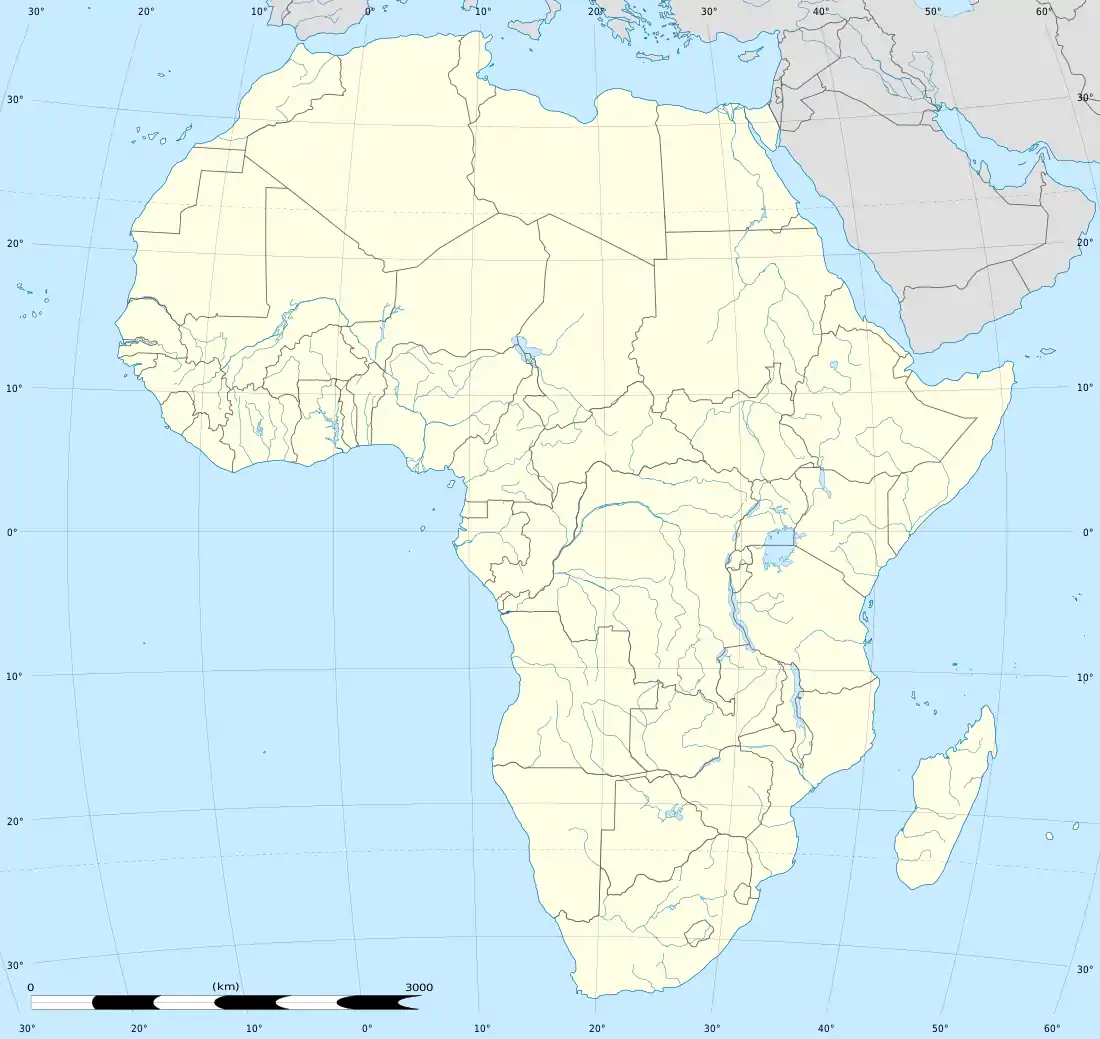 Baati Baati (Africa) | |
| Coordinates: 11°11′N 40°1′E | |
| Country | Ethiopia |
| Region | Amhara Region |
| Zone | Oromia Zone |
| District | Baati |
| Elevation | 1,502 m (4,928 ft) |
| Population (2005) | |
| • Total | 24,257 (est) |
| Time zone | UTC+3 (EAT) |
Baati is known for its market, located between the Ethiopian highlands and the Great Rift Valley. According to Philip Briggs, this market "forms an important cultural crossroads for the Amhara, Oromo and semi-nomadic, desert-dwelling Afar people. Baati has hosted Ethiopia's largest cattle and camel market, attracting up to 20,000 people every Monday."[1]
Based on figures from the Central Statistical Agency in 2005, Baati has an estimated total population of 24,257 of whom 12,229 are men and 11,958 are women.[2] The 1994 census reported this town had a total population of 13,965 of whom 6,471 were men and 7,494 were women.
History
20th Century
Before the Italian invasion, most of a 100-kilometer road between Baati and Dessie had been completed.[3] Telephone service reached Baati by 1956: the town had two telephones, for the police and for the residence of the Crown Prince.[4] The town also had postal service well before that time.
The earliest mention of Baati is in the 1930s, but Paul B. Henze believed that the market "must antedate the town by at least 200 or 300 years." He adds, "I have been unable to find references of very early travellers to Baati, which may have had a different name in earlier times."[5]
The town was the site of one of the refugee camps of the 1984-5 famine, which was closed at the end of 1986.[4]
21st Century
On 21 March 2021 and following days, numerous atrocities were committed in Baati by the Amhara Region special forces, Fano, and reportedly by soldiers pertaining to the Eritrean Defence Forces. The killing spree started in Ataye, where they murdered Oromo children, mothers, elders and religious leaders. The next day, relatives and witnesses called the ENDF for help, which did not come, rather internet and telephone services were shut down by the Ethiopian authorities. There were victims all over the Oromia Zone of Amhara region.[6]
Notes
- Philip Briggs, Ethiopia: the Bradt Travel Guide, third edition (London: Bradt, 2002), pp. 289f
- CSA 2005 National Statistics Archived July 31, 2008, at the Wayback Machine, Table B.4
- Richard Pankhurst, Economic History of Ethiopia (Addis Ababa: Haile Selassie University, 1968), p. 293
- "Local History in Ethiopia" The Nordic Africa Institute website (accessed 21 November 2007)
- Henze, Ethiopian Journeys (2001), cited in "Local History in Ethiopia"
- Advocacy for Justice for the Oromo People (AJOP), 30 April 2021: Ethnic cleansing against Oromo people in Wollo Zone of Amhara region in Ethiopia
Woredas of the Oromia Zone | ||
|---|---|---|
| Former woredas |  | |
| Current woredas | ||