Bibiani gold mine
Bibiani is a historically significant Ghanaian gold mine located in the western region of Ghana. It has mining and processing infrastructure consisting of a processing plant and existing infrastructure for underground mining.
| Location | |
|---|---|
  Bibiani mine | |
| Location | Bibiani |
| Western Region | |
| Country | Ghana |
| Coordinates | 6°46′23.25″N 2°30′58.53″W |
| Production | |
| Products | Gold |
| Owner | |
| Company | Asante Gold Corporation |
Location
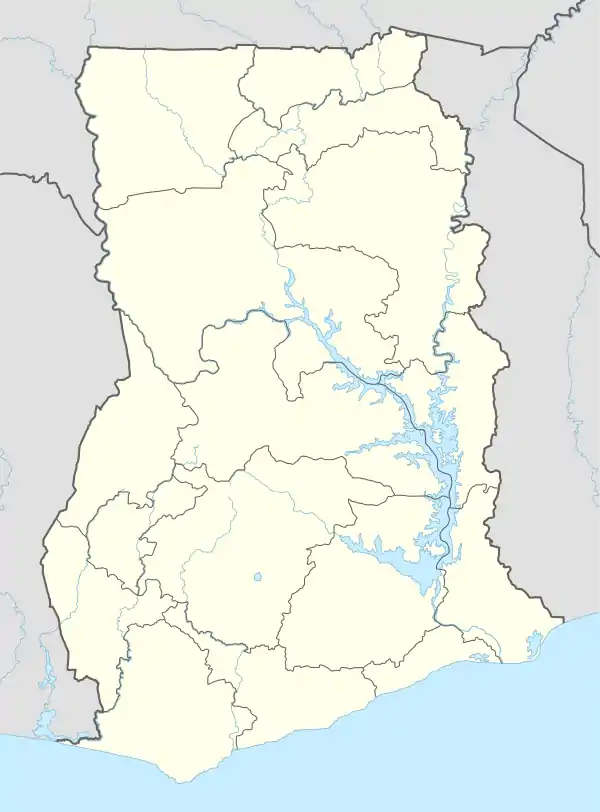
The Bibiani gold mine is an underground mine located in the western region of Ghana, 250 kilometres north-west of Accra. The mineral concessions of the deposit are located approximately 80km south-west of Kumasi, the capital city of the Ashanti Region.
Geology
The Bibiani gold mine is found within a series of fine-grained graded turbidites containing localised interbeds of fine to medium-grained turbiditic sandstones. The orebody is a mesothermal lode-type deposit which is similar to the lode deposits in the Konongo-Axim belt hosting the Obuasi deposit. The Bibiani orebody geometry is structurally controlled by a steep, north to north-east trending shear corridor 200 - 400m wide, within Lower Birimian sediments and close to the \ eastern contact of the Upper Birimian. Over 2km long mineralized trend; Mined historically down to approximately 800m below surface.[1]
History
Gold was originally discovered at this site around 1900. Prior to 1915, shallow surface and underground mining produced approximately 200,000 ounces.
In 1927 Acquired by " AGC's " - Production peaked at about 70-80 thousand ounces per year in the 1940s-1950s. The mine was nationalized in 1961, production declined, and then closed in 1967. [2]
GLAMCO acquired the project in the 1980s, starting drilling around the old workings in 1992. In the mid-1990s, Ashanti Goldfields is acquired.[2] Construction of the 2.7 million ton per year CIL plant then begins and production begins in 1997. Geotechnical problems in late 2003 - underground development to grade 9 and development of low-grade satellite deposits (Strauss, Walsh, etc.) began.
Total 1.8 million ounces of Au mined (through 2005), totaling >4 million ounces.[3]
Sold to Central African Gold (CAG) in 2006.[4] Underground operations resumed - long hole open-pit mining, produced approximately 35,000 ounces of Au and penetrated 727 m of GH drawdown before operations ceased in 2008. Noble Mineral Resources acquired Bibiani in late 2009.[5] The upgrading of the processing plant (up to 3 million tons per year) was initiated. Gold miner "Resolute Mining" has taken full ownership of the Bibiani gold project, in Ghana, after buying the project from Noble Mineral Resources in December 2013.[6] In 2021, Asante Gold Corporation successful completion of the purchase of the Bibiani Gold Mine from Resolute Mining Limited for a total cash consideration of US$90 million.[7][8]
References
- "Mining Data Solutions - Bibiani Project".
- "an economic history of the ashanti goldfields corporation 1895-2004, page 148, 158" (PDF).
- "ASX Announcement - Bibiani Update / page 4" (PDF).
- "Anglogold Ashanti to Sell the Bibiani Mine".
- "Noble Mineral Resources closes acquisition of advanced Bibiani Gold Project in Ghana". Proactiveinvestors UK. 2010-07-27.
- "Resolute gains hold of Bibiani gold project".
- "Asante Gold Closes Acquisition of Bibiani Mine". www.asantegold.com.
- "Asante Gold completes $90 million Bibiani mine buy". MINING.COM. 2021-08-19.