Dayspring Christian Academy
Dayspring Christian Academy is an award winning[1] preschool to Grade 12 private, Christian school in Lancaster, PA. Voted “best school” by Lancastrians in Lancaster County Magazine’s Best of Lancaster awards[2] in 2018,[3] 2019, and 2020,[4] Dayspring Christian Academy is accredited by the Association of Christian Schools International[5] and Mid-Atlantic Christian Schools Association.[6] Dayspring Christian Academy offers dual credit and AP courses.[7] The school uses the kind of education that was prevalent in America during her first 200 years. Dayspring offers a form of classical education [8]including logic, rhetoric, Latin, Greek, the sciences, mathematics, history and the arts. This form of education, championed by abolitionist[9] and the Father of American Scholarship and Education, Noah Webster, as well as women’s education advocate,[10] Founding Father,[11] the father of American psychiatry, Benjamin Rush, places the Word of God at the center of every subject.[12]
| Dayspring Christian Academy | |
|---|---|
| Address | |
| |
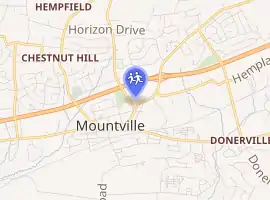
120 College Avenue Mountville , Lancaster County , PA 17554 United States | |
| Information | |
| Type | Private |
| Religious affiliation(s) | Christian |
| Established | 1987 |
| Principal | Lower School: Delinda Henry, Upper School: Dr. Randy Hilton |
| Grades | Preschool through 12th |
| Campus type | Suburban |
| Color(s) | Red, white and blue |
| Mascot | Warrior |
| Website | https://www.dayspringchristian.com/ |
According to Private School Review, Dayspring Christian Academy ranks among the top 20% of private schools in PA for student body, sports offered, and extracurriculars.[13] Additionally, according to Niche.com, Dayspring Christian Academy ranks in the top 5 Best Private K-12 schools in the Lancaster, PA area.[14]
History
Locations
- 1987-2004 The Lord’s House of Prayer, Vine Street, Lancaster, PA
- 1992-1996 The Teamster’s Building, Duke Street, Lancaster, PA
- 1996-2004 Pearl Street, Lancaster, PA
- 2001-2010 Burle Business Park, New Holland Avenue, Lancaster, PA
- 2010-present College Avenue, Mountville, PA
Founding
Dayspring Christian Academy was founded in 1987.
Philosophy/Methodology
The Value of the Individual
Every person is created in the image of God and therefore, has value. Every person is unique; no two people are the same. There are outward characteristics of each person and inward characteristics of each person. Dayspring students are taught to identify outward and inward characteristics and see each person as a unique individual created for a unique purpose. (Genesis 1, John 1:3, 1 Corinthians 12:4-11)
The Importance of Self-Government
Students are taught the concepts in Proverbs 16:32 and 1 Timothy 3:5. They memorize Hugo Grotius’ quote in 9th grade – “He knows not how to rule a kingdom, that cannot manage a province; nor can he wield a province, that cannot order a city; nor he order a city, that knows not how to regulate a village; nor he a village, that cannot guide a family, nor can that man govern well a family that knows not how to govern himself; neither can any govern himself unless reason be lord, will and appetite her vassal; nor can reason rule unless herself be ruled by God, and (wholly) obedient to him.”
Sowing Seeds of Character
With a basis in Matthew 7:24-29, 2 Timothy 4:7, Philippians 4:13, and Acts 24:16, Dayspring students learn their heritage of Christian character including faith, steadfastness, brotherly love and Christian care, diligence, industry, and liberty of conscience. They study the lives of the Pilgrims through William Bradford’s journal, Of Plimoth Plantation which brings these character traits to life and encourages students to develop their own character.
Biblical Civil Government
Students at Dayspring learn the biblical model of government found in Deuteronomy 1:9-18, Isaiah 33:22, and Matthew 22:35-40 which show that the Law and the Gospel are the basis for government. Further, as quoted by abolitionist and Founding Father John Adams, our form of government was made for a moral people holding to moral principles and is key to liberty. Dayspring students recognize that American government is Christian in form, and this is not dependent on its creators being Christian themselves. Students recognize the role of the church in the creation of America’s government, and the involvement of the clergy at the time. Additionally, students study the impact of philosopher Charles de Montesquieu’s identification of the functions of the legislative, executive, and judicial powers in government and their roles in providing checks and balance upon each other.
The Importance of Christian Character for the Continuance of Liberty
In 1843, women’s rights activist, Emma Willard wrote, “The government of the United States is acknowledged by the wise and good of other nations, to be the most free, impartial, and righteous government of the world; but all agree, that for such a government to be sustained many years, the principles of truth and righteousness, taught in the Holy Scriptures, must be practiced. The rulers must govern in fear of God, and the people obey the laws.” Dayspring students study the Mayflower Compact, which established self-government at the center of government in the Plymouth colony and from which American government was birthed. They study the life of Samuel Adams, the Father of the American Revolution, whose life centered on the “study and practice of the exalted virtues of the Christian system.” Dayspring students study the Committees of Correspondence, which united the colonies in knowledge, sentiment, and purpose. Through these in-depth studies, students learn that liberty is internal, springing from conviction (conscience). Deuteronomy 10:12-14, Isaiah 9:6, and Luke 9:6 are the foundation of this principle.
Property and the Individual
Rooted in Genesis 1:1, Isaiah 43:7, Ephesians 2:10, and Revelation 4:11, students study William Blackstone’s insight on the concept of property. They also study the writings of John Locke, whose theory of civil society was studied by generations including the American Colonists. Concepts in this principle include man is God’s property, property is what God has entrusted to the care of the individual, respecting property rights, respecting the rights of others, stewardship of property, and conscience is the most sacred of all property.
Unity for Community
The Boston Patriots and the Tea Act are studied alongside the Biblical context of 1 Corinthians 1:10, Psalms 133:1, and Ephesians 4:1-3. Students study the events leading to the American Revolution, discovering that self-government is predicated upon the rights of man, and emphasized in the Declaration of Independence, “We hold these Truths to be self-evident, that all Men are created equal, that they are endowed by their Creator with certain unalienable Rights, that among those are Life, Liberty, and the Pursuit of Happiness—That to secure these Rights, Governments are instituted among Men.” Students learn that leadership alone did not accomplish the union among the colonies; the Tea Act of 1773 ignited the righteous indignation needed to cement unity in the colonies. The colonists held mutual understanding of their rights endowed by their Creator which inspired their desire for liberty. The outcome created a form of government that allows for the fullest expression of liberty given to an individual, united by the truth that all men are created equal and have rights that cannot be taken away.
Curriculum
- Shurley Grammar[15]
- Writing Road to Reading[16]
- Math
- Lower School (Grades 1-5) use Purposeful Design by ACSI[17]
- Upper School (Middle and High School) use Holt Mathematics[18] for Math 2, Alg 1A, Alg. 1B, Geometry, Precalculus
- Liberal Arts Mathematics (High School) uses Thinking Mathematically[19] by Blitzer, published by Pearson
- Calculus AB, BC are AP courses which use Sullivan & Miranda’s Calculus for the AP Course[20]
- Learning Support programs use Purposeful Design[21] and Math U See[22]
Classical Literature
The literary focus at Dayspring is on the classics.
Preschool—Mother Goose
Prekindergarten—Mother Goose, Peter Rabbit
Kindergarten—Winnie the Pooh, Dr. Seuss, Little House on the Prairie
Grade 1—Pinocchio, Abigail Adams, Little House in the Big Woods
Grade 2—Heidi, Daniel Boone, Charlotte’s Web
Grade 3—Trumpet of the Swan, Hans Brinker and the Silver Skates, Ben West and His Cat Grimalkin
Grade 4—The Secret Garden, Treasure Island, Carry on Mr. Bowditch
Grade 5—Little Women
Grade 6 – The Mixed Up Files of Mrs. Basil E. Frankweiler, The Gift of the Magi, The Necklace, The Fun They Had, A Christmas Carol, The Adventures of Tom Sawyer, Up From Slavery. Poetry includes The Fish, When Icicles Hang, The Eagle, Hush’d Be The Camps Today, This Dust Was Once the Man, O Captain! My Captain!
Grade 7—The Imitation of Christ, Theogony, King Arthur and His Knights, Perelandra, The Little Prince, God Sees the Truth But Waits, The Sire de Maletroit’s Door, Mowgli’s Brothers, Agamemnon, The Frogs, Pygmalion, Cleopatra. Poetry includes the Iliad and The Song of Roland.
Grade 8—The Odyssey, Ben-Hur: A Tale of the Christ, The Miracle Worker, A Tell-Tale Heart, Open Window, The Red Headed League.
Grade 9—My Antonia, Selections from poetry and historical documents including Captain John Smith: “A Description of New England”, William Bradford: Of Plymouth Plantation (selections), John Winthrop: “A Model of Christian Charity”, Anne Bradstreet: Selected Poems, Edward Taylor: “Huswifrey”, Cotton Mather: “The Education of Children”, Jonathan Edwards: “Sinners in the Hands of an Angry God”, Benjamin Franklin: “Moral Perfection”, John Adams: Selected Letters, Olaudah Equiano: excerpts from The Interesting Narrative of the Life--, Phillis Wheatley: Selected Poems, James Fenimore Cooper: Excerpts from The Deerslayer, Washington Irving: “The Devil and Tom Walker”, William Cullen Bryant: “Thanatopsis”, Ralph Waldo Emerson: “Each and All”, Nathaniel Hawthorne: “The Minister’s Black Veil”, Henry Wadsworth Longfellow: “The Courtship of Miles Standish”, Herman Melville: “What Lancelot Saw in Redburn’s Hey”, Walt Whitman: Selected Poems, Oliver Wendell Holmes: Selected Poems, Emily Dickinson: Selected Poems
Grade 10—Great Gasby, Great Expectations, House of the Seven Gables, Old Man and the Sea, The Crucible, The Old Man and the Sea, To Kill a Mockingbird
Grade 11—A Doll’s House, A Tale of Two Cities, Fahrenheit 451, Pilgrim’s Progress, Frankenstein: A Modern Prometheus, Narrative of the Life of Frederick Douglass, An American Slave
Grade 12—Jane Eyre, Beowulf, selections from The Canterbury Tales, Hamlet, Heart of Darkness, Great Expectations
Bible as Literature
The Bible is used as a reader at Dayspring Christian Academy. For example, students in 6th grade literature read the Epistle of Philemon. Students in 7th grade literature read Romans chapters 1-5 and write an essay, and 8th grade students read Paul’s speech in Athens. First grade students read the story of Noah in Genesis 6:9 to Genesis 9:17. Second grade students read the Parables of Jesus, while Fifth grade reads the book of Ruth.
Webster’s 1828 Dictionary
To understand what the meanings and intents of historical documents are, students at Dayspring use Webster’s American Dictionary of the English Language to gain clarity into the definition of words used in their era of study.
Shakespeare
Every year, Dayspring students in prekindergarten up to Grade 11 read a work by Shakespeare.
Hallmarks of Education
Hallmarks of Education at Dayspring include: teaching the oration process, studying classical literature, studying history from a providential perspective, and keeping a record of learning through daily notebook compilation.
History
History at Dayspring is taught through a providential viewpoint. The school teaches that there are two ways to view history: through the lens that man is in control of his own destiny or that God is in control and is actively involved in the lives of men. Using a timeline, Dayspring students can understand the order of events through history and see God’s hand moving throughout it. The timeline of history is divided into the following sections showing how the Gospel came to be and how it moved West throughout history: Creation, Moses and the Law, Jesus as the Turning Point of History, Paul Takes the Gospel Westward, the Bible Translated into English, Christopher Columbus Arrives in the Americas, the Pilgrims Bring the Gospel to America, the Patriots Found the First Constitutional Federal Republic, the Pioneers Take the Gospel Westward, and America’s modern era.
America’s Historic Method of Classical Education vs. European Classical Education
Classical schools differ from conventional schools in that Classical educators teach from the presupposition that “the world makes sense and that the sense it makes is knowable” ( CiRCE ). This principle is called the Logos. By contrast, conventional educators focus not on discovering the order and sense of the world, but on how to teach what is practical and useful in a chaotic, disorderly world. Classical education seeks[23] to teach the ideals of wisdom and virtue, where conventional education seeks to teach pragmatics.
Classical education, based on ancient Greek and Roman methodology, pursues the study of the nature of man, to elevate man with the end goal of “knowing thyself.” By contrast, Classical Christian Education is based on the Hebrew methodology of education, which is to teach with the end goal of “knowing God.” Classical Christian education seeks to acquire knowledge to know Christ and elevate him. The Logos of Classical Christian education is Christ.
Dayspring Christian Academy’s approach augments Classical Christian education by putting biblical principles at the core of every subject, not just tacking Bible classes onto a traditional Classical Christian curriculum. It promotes the idea that mastery of every subject is based on the understanding of that subject through a biblical lens or worldview. Dayspring’s teachers strive to inculcate students with the ability to apply biblical principles to every area of life.
Dayspring Christian Academy employs classic literature, original source historical material, the teaching of science that presupposes a Creation narrative while contrasting other worldviews, mathematics taught as integral to God’s character, intensive studies in Old and New Testament, Rhetoric, Hermeneutics, Latin, Greek, and the arts, all with the ubiquity of scripture and its principles in and across each subject.
Orations/Public Speaking
One of the distinctive attributes of Dayspring Christian Academy is the annual writing and presenting of the oration. The oration is a two-step process, the writing phase, and the public speaking phase. Webster defines an oratory[24] this way: The art of speaking well, or of speaking according to the rules of rhetoric, in order to persuade. To constitute oratory, the speaking must be just and pertinent to the subject; it must be methodical, all parts of the discourse being disposed in due order and connection; and it must be embellished with the beauties of language and pronounced with eloquence. Oratory consists of four parts: invention, disposition, elocution, and pronunciation. Students at Dayspring Christian Academy are taught all four parts of the oration process[25] and compete in the annual Headmaster’s Oration Competition. Headmaster’s Oration Competition Finalists are selected to present their orations at events including the Patriots Celebration Dinner and the Remember America Speaker Series. Dayspring teaches that it is important to ask questions. Students are taught to seek original and primary sources, ask the question “why?” and relentlessly pursue truth. Dayspring students learn to articulate their beliefs and convey them in writing and in speaking. Topics are passionately held beliefs of the students who learn to effectively communicate through written and spoken word.
Field Studies
A large part of the curriculum at Dayspring Christian Academy are field studies.[26] Since students are taught to seek original sources, going as close as possible to the source enhances the learning opportunities for Dayspring students. Students at Dayspring typically take several trips per year.
Dayspring Preschool Field Studies
Country Barn (unit on Fall), RailRoad Museum of Strasburg – (unit on transportation), Tiny Town – (community helpers unit)
Dayspring Prekindergarten Field Studies
Cherry Crest Adventure Farm (science, study of the seasons), Choo Choo Barn (science, study of travel/transportation), Tiny Town (community helpers unit), Lancaster County Park (study of habitats) or National Watch and Clock Museum (science), Oregon Dairy (Spring on the farm unit), Lancaster Science Factory (hands-on science exploration)
Dayspring Kindergarten Field Studies
Zoo America (science), The North Museum (science), Long’s Park (science), Lancaster County Park (science), Kitchen Kettle Village (science), Evergreens Estate (Bible), Cherry Hill Orchard (science)
Dayspring First Grade Field Studies
Lancaster County Park Sugar Maple Syrup Demonstration (science), “The Nutcracker” Ballet (literature), Landis Valley Farm Museum (history)
Dayspring Second Grade Field Studies
Indian Echo Caverns (science), Daniel Boone Homestead (literature)
Dayspring Third Grade Field Studies
Lancaster Ice Rink (literature), Lake Grubb (literature), Four-day study in Plymouth, MA (history)
Dayspring Fourth Grade Field Studies
Walking tour of Lancaster, PA (history), Conestoga House & Gardens (literature), Lancaster County Park (science), Secret Garden Tea (literature), Philadelphia, PA (history), Refreshing Mountain Camp (character-building)
Dayspring Fifth Grade Field Studies
Sea Grant Consortium in Sandy Hook, NJ (science), Adventure Aquarium in Camden, NJ (science), Fort McHenry, Baltimore, MD (history)
Dayspring Sixth Grade Field Studies
James Buchanan’s Wheatland (history), Two-day study to Gettysburg, PA (history)
Dayspring Seventh Grade Field Studies
One-day study at University of Pennsylvania Museum of Archaeology and Anthropology (history/bible), Four-day study to the Creation Museum in Petersburg, KY and the Ark Encounter in Williamstown, KY. This trip includes a day at the Carnegie Museum in Pittsburgh, PA and a stop at the Flight 93 Memorial in Stoystown, PA (science), Half-day visit to the Biblical Tabernacle Reproduction, Lancaster PA (Bible)
Dayspring Eighth Grade Field Studies
State capitol building and the State Museum in Harrisburg, PA (history, civics), Lancaster County Courthouse, Lancaster Pa (civics), STEM trip to Washington, D.C.
Dayspring Ninth Grade Field Studies
Five-day field study to New England, including Boston, MA, Lexington, MA and Plymouth, MA (history), Philip Merrill Environmental Center, Annapolis, MD (ecology)
Dayspring Tenth Grade Field Studies
Two-day field study to Washington, D.C. (history), ASL II students dine in at a restaurant in Lancaster, PA where they may only use American Sign Language to communicate. (ASL II)
Dayspring Eleventh Grade Field Studies
Two-day field study to New York, NY (history), AP Students one-day field study to Philadelphia, PA (AP U.S. History)
Dayspring Twelfth Grade Field Studies
Two week field study to Israel (Bible, history)
Dayspring Bright Horizons Learning Support Field Studies
Field studies for Bright Horizons students vary but 1-2 large field studies that complement the curriculum take place each year. Field studies for Bright Horizons students are tailored to the needs of the individual. Bright Horizons students may accompany other grades to give the students greater social interaction with their peers. In the past, Bright Horizons students have gone on field studies to Zoo America, Turkey Hill Experience, Mountville Public Library, Chick-Fil-A, Giant, Salvation Army Thrift Store
Dayspring Illumine Learning Support Field Studies
Dayspring students who have been identified through a formal evaluation as academically gifted, or who consistently maintain a 98% or higher grade average may participate in additional field studies. This type of field study may be different every year. Past Illumine field studies include: iFly, Philadelphia, PA, LCSWMA transfer station and incinerator, The Kienbusch Collection of European Medieval Armor at the Philadelphia Museum of Art, Escape Games, York, PA
Dayspring STEM Field Studies
STEM field studies may be available as opportunities arise. Past STEM-specific studies include STEM Bowl at IU-13, Lancaster, PA, Harley-Davidson Plant, York, PA, National Science and Engineering Fair, Washington, DC, Escape Room, Lancaster, PA
Languages[27]
Students are taught several languages at Dayspring Christian Academy. Students in Grades 1-4 learn Spanish, students in Grades 5-7 learn Greek, students in Grades 9-10 may choose between Spanish and American Sign Language, students in Grade 12 learn Greek.
Logic and Rhetoric
In tenth grade, Dayspring students study the biblical foundation of logic and begin the critique and construction of logical arguments. Students study and compose propositions, syllogisms, and sophisms (fallacies) from Isaac Watts’ approach; another, more modern, approach to argument analysis (including the discovery of fallacies) is also followed. The Lincoln-Douglas debate structure is presented. Students prepare and engage in a formal debate. In Rhetoric, Dayspring students develop “the art of speaking with propriety, elegance and force” (Webster, 1828[28]). Students follow biblical models of composition, then practice techniques of effective delivery, with attention given to volume, enunciation, articulation rate and pause, inflection, facial expression, eye contact and gesture.
The Methodology[29]
Dayspring Christian Academy teaches that there are 4 steps to learning: research, reason, relate, and record. Additionally, students keep a record of their learning in notebook form. Lower school and early childhood classes keep a physical notebook. Upper school students keep both a physical notebook and a digital notebook as their records of learning. Using this system, students are required to participate in the learning process which results in the student taking ownership of their learning. This method also enables teachers and parents to see progress in the student’s learning and demonstrates the character development taking place. This record of learning produces a productive individual who can problem solve, communicate, organize, and glean understanding of the material set before him.
Bible as Center of Every Subject
Every subject at Dayspring Christian Academy is rooted in the Bible. See 3.3 for details.
Biblical Worldview,[30] PEERS testing/Nehemiah Institute[31]
Dayspring Christian Academy offers biblical worldview development. The Nehemiah Institute annually administers the PEERS test among high school students in grades 9 and 12. The test consists of a series of statements carefully structured to identify a person’s worldview in five categories: Politics, Economics, Education, Religion, and Social Issues (PEERS). Each statement is framed to either agree or disagree with a biblical principle. Students’ scores will place their worldview in four categories: Biblical Theism, Moderate Christian, Secular Humanism, or Socialism.
Dual Enrollment
Dayspring Christian Academy offers a dual enrollment program through a partnership with Cairn University.[32] The program allows students to earn up to 30 college credits before graduating from high school.
Extra-Curricular Activities[33]
According to Private School Review, Dayspring Christian Academy ranks among the top 20% of private schools in PA for large student body, amount of sports offered, and the number of extracurriculars offered.[34] Additionally, according to Niche.com, Dayspring Christian Academy ranks in the top 5 Best Private K-12 schools in the Lancaster, PA area.[35]
Upper School students can participate in clubs, choir, a spring musical, as well as Dayspring and Remember America® events desk Examples of past clubs:
- Student Government
- Art Club
- Yearbook
- Robotics
- Worship Team
- School Newspaper
- String Orchestra
- Ukulele
- Home Economics
- Varsity Leadership
- Ultimate Frisbee
- Volleyball
- Science Cinema
Attributes
Learning Space[36]
Dayspring Christian Academy has 24 classrooms total as well as an auditorium and gymnasium, and administrative offices.
Learning Levels (grades)
Dayspring Christian Academy has the following grade levels: preschool, prekindergarten, kindergarten, elementary school (lower school) grades 1 to 5, middle school grades 6 to 8, and high school grades 9 to 12. Additionally, Dayspring Christian Academy offers Honors high school for college-bound students who are academically gifted or high achieving.
Learning Services (for gifted students and students with disabilities)
Dayspring Christian Academy offers learning support services. The program is called P139 after Psalm 139. The program is designed to teach students at all levels who require alternate or differentiated methods of instruction. Levels of support offered range from mild to moderate (Daybreak program) up to profound learning and functional needs (Bright Horizons program). Dayspring Christian Academy also offers enhanced programs for students with a GIEP or who consistently maintain a 98% or higher grade average.
Athletics[37]
Dayspring Christian Academy offers sports to middle and high school students, and clinics for elementary aged students. Middle school sports include boys soccer, girls volleyball, boys basketball, girls basketball, and track & field. High school sports offered include boys soccer, girls volleyball, golf, boys basketball, girls basketball, girls lacrosse, boys volleyball, and track & field. The school’s colors are red, white, and blue, and student athletes are called the Dayspring Warriors. The athletic logo is red, white, and blue with a warrior holding a shield and spear.
School
Location
Dayspring Christian Academy is located at 120 College Avenue, Mountville, PA 17554. It is within the Mountville borough in Lancaster County, in the state of Pennsylvania, in the United States of America.
Associations, Accreditations
Dayspring Christian Academy is accredited by the Association of Christian Schools International and Mid-Atlantic Christian Schools Association.
Dayspring Christian Academy Student Government
Student leaders work together to assist in official school events, and plan events for the student body. Leaders are elected yearly.
Dayspring Christian Academy National Honor Society
The National Honor Society is recognized as the nation's top organization designed to recognize outstanding high school students. Membership in the NHS is based on four criteria: scholarship, character, leadership, and service. Eligible students may be inducted into the National Honor Society as sophomores, juniors, or seniors. The induction ceremony occurs at the end of the school year for the subsequent year.
The starting point for NHS consideration is an overall high school grade average of 90%.
The Dayspring chapter meets on a regular basis, and members design and participate in service activities throughout the school year, including at least one group service activity and one personal service. Past projects have included a lunchtime forum to prepare high school students for the college SAT, a Christmas card-making project to bless nursing home residents, and a dinner for local public servants.
Early Childhood Education
Dayspring Christian Academy offers three early childhood education programs:
- Dayspring Christian Academy’s preschool meets on Tuesday and Thursday mornings from 8:00 a.m. to 11:00 a.m. Students who are age 3&4 may attend preschool at Dayspring Christian Academy.
- Dayspring Christian Academy’s prekindergarten meets on Monday, Wednesday, and Friday from 8:00 a.m. to 3:00 p.m. Students who are age 4&5 may attend prekindergarten at Dayspring Christian Academy. Supplemental enrichment days on Tuesdays and Thursdays may be added to prekindergarten to make a full-day, 5-day prekindergarten.
- Dayspring Christian Academy’s kindergarten meets on Monday, Wednesday, and Friday from 8:00 a.m. to 3:00 p.m. Students who are age 5&6 may attend kindergarten at Dayspring Christian Academy. Supplemental enrichment days on Tuesdays and Thursdays may be added to prekindergarten to make a full-day, 5-day prekindergarten.
Lower School
Dayspring Christian Academy’s Lower School meets Monday through Friday from the end of August to the beginning of June. Lower school at Dayspring Christian Academy is for elementary aged students in Grades 1 to 5.
Middle School
Dayspring Christian Academy’s Middle School meets Monday through Friday from the end of August to the beginning of June. Middle school at Dayspring Christian Academy is for students in Grades 6 to 8.
High School
Dayspring Christian Academy’s High School meets Monday through Friday from the end of August to the beginning of June. High school at Dayspring Christian Academy is for students in Grades 9 to 12. Apprenticeship career program for Juniors. Senior thesis is written and defended. Senior thesis is a graduation requirement along with 25 hours of community service.
Honors High School/Dual Credit/AP
Dayspring Christian Academy’s Honors High School meets Monday through Friday from the end of August to the beginning of June. Honors High school at Dayspring Christian Academy is for students in Grades 10 to 12.Dayspring’s Honors High School program provides a distinctive educational experience for high-achieving and academically-gifted students.
Dual Credit Program: Students are given the opportunity to build their college transcript while completing High School through our dual credit program with Cairn University. Earning college credits before graduation can save time and money after high school.
Advanced Placement (AP) classes include: Psychology, US History, English Composition, English Literature, Physics, Statistics, and Calculus.
Apprenticeship career program for Juniors.
Senior thesis is written and defended. Senior thesis is a graduation requirement.
Fine Arts
Dayspring Christian Academy offers courses in the Fine Arts in all grade levels of the school.
Fine Arts in High School:
Dayspring Christian Academy offers Art I, Art II, and AP Studio Art: 2-D Art & Design in its high school. Additionally, Choir, Performance Choir, Musicianship and a spring musical are offered.
Art I is for tenth or eleventh grade, and is a study of the ideas, expressions, and values evidenced in major eras from Rome to the present. Students take a field student to the Philadelphia Museum of Art.
Art II is for twelfth grade students and is a study of the impact of the Enlightenment including Impressionism, Dadaism, and contemporary modern art. Students take a field study to Lancaster City/Gallery Row.
AP Studio Art: 2-D Art & Design is for advanced art students and follows the prescribed College Board Advanced Placement (AP) curriculum and promotes artistic development as students explore the process of sustained investigation in art and its documentation. Students develop mastery (i.e., “quality”) in concept, composition, and execution of 2-D design. Students take a field study to Lancaster City/Gallery Row.
High School Choir is open to all high school students as an elective. High school students learn sight reading, solfege, rhythm reading, singing in foreign languages, vocal technique, and four part harmony. Choir performs at school concerts and other school events.
High School Performance Choir is an auditioned choir designed for students with more advanced musicianship skills. Students in Performance Choir also participate in High School Choir. Students rehearse and perform more challenging literature with an emphasis on vocal blend, divisi and jazz harmony, diction, and a cappella singing. Performance choir performs at school concerts and other events.
Musicianship class reviews the basics of reading musical notation then advances to key signatures/circle of 5ths, chord theory, intervals, and advanced rhythm. Students build practical musicianship skills through ear training, writing musical dictations, sight singing, bucket drumming, and individual keyboard practice.
Fine Arts in Middle School:
Dayspring Christian Academy offers Drawing on the Right Side of the Brain and Principles of Art in its middle school. Additionally, Choir, Orchestra, Music Appreciation and a spring musical are offered.
Drawing on the Right Side of the Brain is offered to seventh grade students at Dayspring Christian Academy. The course follows Betty Edwards book Drawing from the Right Side of the Brain as students engage in a plethora of
exercises, technique instruction, and philosophical/psychological shifts in thinking.
Principles of Art is offered to eighth grade students and focused on artistic theory and technique using many mediums. Color theory, tessellation, and pointillism are studied.
Music Appreciation is offered to sixth grade students and introduces music of various styles and time periods. Elements of music are identified. Great composers such as Bach, Mozart, and Beethoven are studied. Students learn basic music reading and performance skills as they learn to read and write musical notation. A second course by the same name is offered as an elective to eighth grade students who wish to study the evolution of American music. Students study the origins and characteristics of musical genres including timeless hymns, spirituals, blues, jazz, folk, and musical theater. The class holds a hands-on component as students regularly practice piano keyboard skills in a setting tailored to each student's individual level of skill. Students will also explore basic playing techniques for various instruments which may include trumpet, trombone, saxophone, drums, and handbells.
Middle School Choir is open to all middle school students as an elective. Middle school students learn sight reading, solfege, rhythm reading, singing in foreign languages, vocal technique, and four part harmony. Choir performs at school concerts and other school events.
String orchestra is open to all middle school students who play a string instrument. Orchestra performs at school concerts and other school events.
Fine Arts in Elementary School:
Art and Music are offered at all elementary grade levels including Kindergarten. Additionally, an annual musical is offered for elementary student participation.
Kindergarten and Grade one art students experience a variety of art media. Basic shapes, seasons, animal habitats, and holidays are some of the themes. Many activities require cutting and tracing, working on the development and coordination of the small hand muscles. Following step-by-step directions is also an emphasis.
Grade two students learn the art elements of color, value line texture, shape, and space.
In Third grade art, students develop a level of competence in drawing what is seen. Basic drawing techniques are taught, as is the correct usage of various art media. Students study line, shape, color, texture, form, and space.
Fourth grade art begins with the art of the Early Christian church and continues to18th century England, where the students get an overview of the way Christianity influenced art. Hands-on projects enhance each unit, both experientially
and by allowing the students to express their own creativity. Students also experience and learn how to use a variety of art media. Units covered are Early Christian Art, Middle Ages, Renaissance, Reformation, Baroque,
and the Royal Academy of Art (in England).
Fifth grade students study American art from the time of the Puritans through chosen 20th century artists, particularly focusing on the colonial and early American artists. As artistic movements, artists, and themes are studied, students complete art projects that reinforce these concepts. In cooperation with the classroom teacher, a “landscape” of the ocean floor is formed and painted. The final unit of the year contrasts and compares Christian-themed art to the art of pagan cultures.
Music in Kindergarten develops an appreciation for the aesthetic value of music and shows how music is used in the world around.
First grade, second grade, third grade, fourth grade, and fifth grade music provides a general introduction to music. Students learn musical elements using various techniques and activities to build a foundation of musical knowledge. Third grade students learn to play recorders. Fourth grade students learn to play the ukulele. Fifth grade students learn to play a string instrument. Third through fifth grade students are also required to participate in choir.
STEM[38]
Dayspring Christian Academy launched its STEM program in 2014. Elementary students in grades K to 5 learn coding robotics, three dimensional computer design, reverse engineering computers to learn how they work, building suspension bridges, learning about the NASA space program, designing a successful parachute prototype that could land a rover on Mars, brainstorming ways to make potable water for impoverished areas, and engineering a house that will withstand earthquakes or hurricanes.
Middle and high school students participate in projects that are focused on physical science. Past projects include CO2 powered race cars, rocketry, Rube Goldberg projects, cardboard chairs designed to hold people, hydraulic machines, electrical engineering using Arduino micro controllers, designing working pinball machines and snack dispensers, as well as projects that incorporate green energy sources.
The STEM team projects, two of which earned the team second place in a regional competition, included a sensor system connected to a road sign which alerts drivers to a flooded roadway, GPS-guided drones that pollinate fields in the face of a bee shortage, and a programmable water craft that can collect trash from waterways.
Clubs[39]/Electives[40]
Clubs enable students to learn and grow in specific areas of interest. Clubs vary by school year. Clubs offered in the past include: STEM-based activities such as robotics, CO2 cars, and pinewood derby, Music-based clubs such as strings, ukulele, and worship team, Student government, stewardship, National Honor Society, and Bibles 2 School, Math Olympics, Yearbook & Middle School Newspaper, Varsity Leadership (Athletics), Ultimate Frisbee, Planet Earth (science), Water Painting (art), and debate, Aeronautics, Off-grid living, Playwright’s Club, Game Club, and Cooking Clubs.
Homeschool
Dayspring Christian Academy offers homeschool interaction courses to local students in elementary, middle, and high school. Students may enroll for classes a la carte. AP and Dual Enrollment courses are offered to homeschool students as well.
Online Learning
Dayspring Christian Academy offers online learning for enrolled students who must remain at home temporarily. Full time online learning is not available.
International Students
Dayspring Christian Academy accepts international students who are high school aged and initially qualified through a student exchange agency. International students may participate in athletics. The school offers English Language Learning classes on site.
Demographics
| Asian | 0.97% | |
| Black or African American | 8.71% | |
| Hispanic | 2.26% | |
| Two or more races | 7.42% | |
| White | 80.65% |
Remember America
Remember America is an outreach of Dayspring Christian Academy. It was created after the success of a radio segment titled, “It’s Time to Remember, America!” that airs on local radio station WDAC. This radio show was later compiled into the book by the same title, It’s Time to Remember, America! From this foundation, the Remember America Speaker Series was born. Since then, Dayspring Christian Academy has launched several initiatives under its Remember America brand.
Remember America Speaker Series
Dayspring Christian Academy’s Remember America Speaker Series is an award winning event which brings high-caliber speakers to our community who can cogently articulate their message, which is based on their own research of original sources and personal experiences. Past speakers include:
- Dr. Ben Carson, neurosurgeon and politician, and author of Gifted Hands and New York Times Bestseller America The Beautiful: Rediscovering What Made This Nation Great.
- Dr. Alveda King, niece of civil rights leader, Dr. Martin Luther King Jr. and contributor for Fox News. She is a minister, former college professor, and civil rights activist.
- Jonathan Cahn, head of Beth Israel Worship Center, and New York Times Bestselling author. He has been featured on Fox News’ Lighthouse Faith.
- Trey Gowdy, author of New York Times Bestseller Unified: How Our Unlikely Friendship Gives Us Hope For A Divided Country. He is a prosecutor and hosts the Trey Gowdy Podcast for Fox News.
In 2022, the series will host Charlie Kirk, an advocate for free markets and limited government, and founder of Turning Point USA. Charlie Kirk is the host of the top-rated podcast and nationally syndicated Salem radio program, The Charlie Kirk Show.
Remember America Lecture Series
The Remember America Lecture Series draws from the expertise of Dayspring educators to teach foundational elements of America’s beginning, including founding documents and principles, principled education, its Founders, and more.
Remember America Films
In 2016, Dayspring partnered with LampHouse Films, Lancaster, to produce the first movie in the initiative. The film, Carry Me Home, depicts the life and faith of Harriet Tubman, who helped to set more than 300 slaves free through the Underground Railroad in the 1800s.
Remember America Restore Initiative
The goal of the Remember America Restore Initiative is to help Christians understand their duties in local and county government and to become active in their local political arena.
Thanksgiving Exposed
Thanksgiving Exposed is a one-night, annual reenactment that tells the Pilgrim story from their beginnings in Scrooby, England, through their escape to Holland, and their voyage to the New World.
Events
The Extraordinary Give
Dayspring Christian Academy participates in The Extraordinary Give.[41] Hosted by Lancaster County Community Foundation, The Extraordinary Give connects 501(c)(3) organizations to community donors.
References
- "2020 Best of Lancaster". www.lancastercountymag.com. Retrieved 2021-10-15.
- "Lancaster County Magazine – Since 1988". www.lancastercountymag.com. Retrieved 2021-10-15.
- "2018 Best of Lancaster". www.lancastercountymag.com. Retrieved 2021-10-15.
- "2020 Best of Lancaster". www.lancastercountymag.com. Retrieved 2021-10-15.
- "Find a School". ACSI. Retrieved 2021-10-15.
- "MACSA - Home". macsaonline.org. Retrieved 2021-10-15.
- "Dual Enrollment". Dayspring Christian Academy in Lancaster County, PA. Retrieved 2021-10-15.
- "What Is Classical Education? | Circe Institute". www.circeinstitute.org. Retrieved 2021-10-15.
- "Noah Webster History – Noah Webster House". Retrieved 2021-10-15.
- explorepahistory.com https://explorepahistory.com/odocument.php?docId=1-4-218. Retrieved 2021-10-15. Missing or empty
|title=(help) - "Signers of the Declaration of Independence: Benjamin Rush". www.ushistory.org. Retrieved 2021-10-15.
- "The Principle Approach - Dayspring Christian Academy". Dayspring Christian Academy in Lancaster County, PA. Retrieved 2021-10-15.
- "Dayspring Christian Academy Profile (2021-22) | Mountville, PA". Private School Review. Retrieved 2021-10-15.
- "Explore Dayspring Christian Academy". Niche. Retrieved 2021-10-15.
- "Shurley Instructional Materials". www.shurley.com. Retrieved 2021-10-15.
- "Spalding Education". Spalding Education. Retrieved 2021-10-15.
- "Math Textbook Support". your.acsi.org. Retrieved 2021-10-15.
- "Math Textbooks & Digital Programs | Houghton Mifflin Harcourt". www.hmhco.com. Retrieved 2021-10-15.
- "Thinking Mathematically". www.pearson.com. Retrieved 2021-10-15.
- "Calculus for the AP® Course, 3rd Edition | BFW High School Publishers". www.bfwpub.com. Retrieved 2021-10-15.
- "Math Textbook Support". your.acsi.org. Retrieved 2021-10-15.
- "Math-U-See". store.demmelearning.com. Retrieved 2021-10-15.
- "Classical scholarship". Encyclopedia Britannica. Retrieved 2021-10-15.
- "Websters Dictionary 1828 - Webster's Dictionary 1828 - Oratory". Websters Dictionary 1828. Retrieved 2021-10-15.
- "The Oration Process at Dayspring Christian Academy". Dayspring Christian Academy in Lancaster County, PA. 2016-10-11. Retrieved 2021-10-15.
- "Field Studies (More Than Just Field Trips)". Dayspring Christian Academy in Lancaster County, PA. Retrieved 2021-10-15.
- "Course Catalogs and Grading Scale". Dayspring Christian Academy in Lancaster County, PA. Retrieved 2021-10-15.
- "Websters Dictionary 1828 - Webster's Dictionary 1828 - Rhetoric". Websters Dictionary 1828. Retrieved 2021-10-15.
- "The Notebook Method". Dayspring Christian Academy in Lancaster County, PA. 2016-09-28. Retrieved 2021-10-15.
- "Sending Christian Children to Public Schools: What the Results Show". Dayspring Christian Academy in Lancaster County, PA. 2018-01-23. Retrieved 2021-10-15.
- "Sending Christian Children to Public Schools: What the Results Show". Dayspring Christian Academy in Lancaster County, PA. 2018-01-23. Retrieved 2021-10-15.
- https://cairn.edu/dualenrollment/
- "Extra-Curricular Activities".
- "Dayspring Christian Academy Profile (2021-22) | Mountville, PA". Private School Review. Retrieved 2021-10-07.
- "Explore Dayspring Christian Academy". Niche. Retrieved 2021-10-07.
- "Mountville Area Community Center". Mountville Macc.
- "Athletics". Dayspring Christian Academy in Lancaster County, PA. Retrieved 2021-11-19.
- "Dayspring Christian Academy's K-12 STEM Program impacts students". Dayspring Christian Academy in Lancaster County, PA. 2021-04-08. Retrieved 2021-11-19.
- "Extra-Curricular Activities". Dayspring Christian Academy in Lancaster County, PA. Retrieved 2021-11-19.
- "Student Life". Dayspring Christian Academy in Lancaster County, PA. Retrieved 2021-11-19.
- "Support Dayspring Christian Academy in #ExtraGive! | ExtraGive".
Authority control  | |
|---|---|
| General | |
| National libraries | |