Depopulation of Havaru Thinadhoo
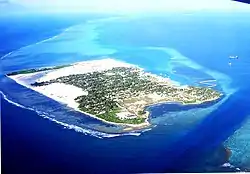
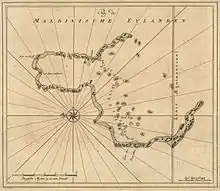
Thenadu or Thinadhoo is the capital of Huvadhu atoll located in the southern Maldives. It has its own dialect of Dhivehi which is considerably different from northern speech.
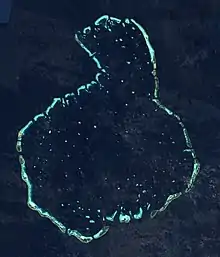
It is pronounced as Thenadu in the Southern Maldives dialect. The island was historically known as Havaru Thinadhoo and it was the traditional seat of the Atoll Chief.
The Depopulation of Havaru Thinadhoo occurred in 1962 as the aftermath to the formation of the United Suvadive Republic.
Thinadhoo was the wealthiest island in the country until it was forcefully depopulated and destroyed.[1] Havaru Thinadhoo operated 9 long haul ships, Gadhdhoo 2 ships, Nilandhoo 3 ships and Dhaandhoo 2 ships with a total of 16 ships in Huvadhu.[2] Thinadhoo was famous throughout the Indian Ocean for their frequent trips.[3] The accumulation of wealth outside the monopoly of the Sultan enabled the southern atolls of Maldives to form an embryo of thalassocracy.[4]

First invasion
On July 1959 Ibrahim Nasir traveled in a gunboat with army personnel to Thinadhoo[7] and attacked the residents, arresting the alleged leaders of United Suvadive Republic present at the time.
Great Britain expressed their disapproval to the Maldivian government because of the violent attack against inhabitants of Huvadu on 7th August 1959.[8]
Second invasion
On the 4th February 1962 the Kingdom of Maldives again sent a gunboat to Havaru Thinadhoo commanded by Prime Minister Ibrahim Nasir.[9] The event destroyed Havaru Thinadhoo which was the heart of the economic capital of United Suvadive Republic.
Ibrahim Nasir demanded the surrender of United Suvadive Republic leaders after opening fire upon the civilians in Thinadhoo.[10] After they surrendered, they were brought to the gunboat and held captive.[10]
The next morning the entire population, including women, children and the elderly, were forced to stay in shallow water up to their necks. Then the island was ransacked, looted and stripped of its wealth. All of the homes in the island were destroyed during the raid.[11] Survivors allege many went homeless and countless lives were lost from what followed with the event.[12] Several boats were burnt making it difficult for the Thinadhoo population of around 6,000 people to leave the island.[10]
Many from Havaru Thinadhoo were arrested, tortured and systematic abuse and rape occurred.[13]
The population of Thinadhoo was forced to leave by 6 p.m. that day[10] and were prohibited from resettling the island for six years.[13]
Between 200 and 300 people were allegedly deported to Malé where they were tortured and many killed. Thousands are said to have died or vanished as a result of the depopulation.[14] The leaders of United Suvadive Republic in Thinadhoo along with many others died in jail under highly questionable circumstances.[15] Those who died in jail were buried in unmarked graves and their relatives informed of the death after many months. It is believed that there were many undocumented deaths due to starvation of Thinadhoo residents who fled to uninhabited islands and from those who drifted off course in small vessels into the Indian Ocean.
Prior to depopulation as of 1959, Thinadhoo had an estimated population of 6000 people.[10] After resettlement from the beginning of 22nd August 1966 it only had an estimated 1800 people.
The Mayor of Addu, speaking at an event commemorating the 55th anniversary of Thinadhoo's repopulation, said that displacing the island's occupants was one of the cruelest incidents in Maldivian history.[14]
Partitioning of Huvadu Atoll
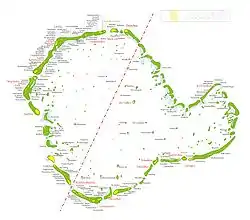
Huvadu Atoll was partitioned to two administrative regions after depopulation of Havaru Thinadhoo. It was called Huvadu East and West and later renamed to Huvadu South and North.[15] The partitions are currently known as Gaafu Alif Atoll and Gaaf Dhaal Atoll.
References
- "އައްޒަގެ ދިރާސީ ބަސް: ސުވަދުންމަތީ މީހުންގެ ނުތަނަވަސްކަމުގެ ފެށުން". Aafathis.
- "އައްޒަގެ ދިރާސީ ބަސް: ސުވަދުންމަތީ މީހުން އަރުމާދު އޮޑީގައި ކުރި ވިޔަފާރި ދަތުރު!". Aafathis.
- Koechlin, Bernard (1979). "Notes sur l'histoire et le navire long-courrier, odi, aujourd'hui disparu, des Maldives". Archipel. 18: 288. doi:10.3406/arch.1979.1516.
- Koechlin, Bernard (1979). "Notes sur l'histoire et le navire long-courrier, odi, aujourd'hui disparu, des Maldives". Archipel. 18: 288. doi:10.3406/arch.1979.1516.
- FRIAS, Xavier ROMERO. RULES FOR MALDI VIAN TRADING SHIPS TRA VELLING ABROAD (1925) AND A SOJOURN IN SOUTHERN CEYLON. http://www.jstor.org/stable/24920196: jstor. p. 3.CS1 maint: location (link)
- Bernard, Koechlin. "In: Archipel, 1979. Commerces et navires dans les mers du Sud". Notes sur l'histoire et le navire long-courrier, odi, aujourd'hui disparu, des Maldives. volume 18: 293.
|volume=has extra text (help) - "United Suvadive Republic".
- "The Month in Review. (1959)". Current History, 37(218), . Retrieved August 28, 2021: 245–256.
- "United Suvadive Republic".
- Maloney, C. "The Maldives". New Stresses in an Old Nation. Asian Survey: 654–671.
- Lonely Planet, 1997. p. 163.
- "Thinadhoo revolution, bloodbath and peace" (PDF).
- Mohamed, Ibrahim. "Adaptive capacity of islands of the Maldives to climate change. PhD Thesis, James Cook University" (PDF). Adaptive capacity of islands of the Maldives to climate change. PhD Thesis, James Cook University.
- "The depopulation of Thinadhoo was "Genocide": Addu Mayor".
- "United Suvadive Republic".