Ephemera
Ephemera are any transitory written or printed matters that are not meant to be retained or preserved. The word derives from the neuter nominative etc. plural of the Greek ephemeros, meaning "lasting only one day, short-lived",[1] and it is thus a plural word. Artistic ephemera include sand paintings, sculptures composed of intentionally transient material; graffiti and guerrilla art—ephemera is also significantly present in American literature.[2][3] Due to the understanding of ephemera fading, the objects, of which are "out of time" and a record of time, become associated with a "projected past" and "what we have forgotten".[4][5][6]
| Collecting |
|---|
| Terms |
| Topics |
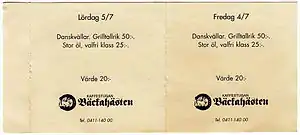
Some collectible ephemera are advertising, trade cards, airsickness bags, bookmarks, catalogues, coasters, greeting cards, letters, pamphlets, postcards, posters, prospectuses, defunct stock certificates or tickets, and zines.
Etymology and categorisation
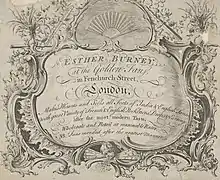
The etymological origin of Ephemera (ἐφήμερα) is the Greek epi (ἐπί) – "on, for" and hemera (ἡμέρα) – "day". This combination generated the term ephemeron in neuter gender; the neuter plural form is ephemera, the source of the modern word, which can be traced back to the works of Aristotle.[7] The initial sense extended to the mayfly and other short-lived insects and flowers, belonging to the biological order Ephemeroptera.[8] In 1751, Samuel Johnson used the term ephemerae in reference to "the papers of the day" – and is frequently cited as the term's creator.[9] This application of ephemera has been cited as the first example of aligning it with transient prints.[10] Ephemeral, by the mid-19th century, began to be used to generically refer to printed items; Ephemera's present understanding was established the next century and entered prominence in either the 1960s or 1970s.[7][9]
Writing for Book History, Anne Garner asserted that ephemera, ambiguous in nature, has been "applied inconsistently over time by historians and collection stewards...[having] meant different things to collectors, librarians, and historians" — professor of English, Dianne Dugaw identified the misuse of the term as "centuries-long".[9][11] Ephemerist, Maurice Rickards noted a "battered history" with Ephemera and provided the presently sovereign definition: "the minor transient documents of everyday life".[9] A hierarchy of printed material is established via the definition and ephemera's primary category is suggested to be that of mundanities.[9] "[E]veryday life" establishes a connection to popular culture and social history.[12]
Scholar of material culture, Sarah Wasserman noted that the traditional form of ephemera is printed material, as paper is inherently able to either be discarded or withstand.[13] John Lewis posited that they're a type of graphic art.[9] With a virtual consensus between librarians that ephemera is "difficult", categorisation has burdened the field of library science.[14] With regards to historiography, Garner deemed it a "major challenge", with grouping composed of various elements; she claimed that "many categories of ephemera...challenge the notion that they were meant to be thrown away".[9][15] Various elements are invoked by librarians to conclude arrangement: purpose, field of use and geography are among them.[16]
Challenges pretaining to ephemera include determining its creator, purpose, date and location of origin and "what impact it had in its particular context".[17][18] Professor of English, Paula McDowell noted that the "value" of ephemera has always been relevant to its categorisation; according to Michael Twyman, such a component distinguishes ephemera from jobbing print, as well does ephemera's emphasised temporality.[10][14]
José Esteban Muñoz argued that "ephemera is always about specificity and resisting dominant systems of aesthetic and institutional classification" without being divorced from social experiences.[19] As the breadth of printed ephemera is vast, there's various "different textual complexity and meaning" present.[20] Wasserman categorised the following as ephemera:[13]
- air transport labels
- bank checks
- bingo cards
- bookmarks
- broadsides
- bus tickets
- catalogs
- envelopes
- flyers
- maps
- menus
- newspapers
- pamphlets
- paper dolls
- postcards
- receipts
- sheet music
- stamps
- theater programs
- ticket stubs
- valentines
Further items that have been categorised as ephemera include: posters, album covers, meeting minutes, buttons, stickers, financial records and personal memorabilia.[15][21] The curator, Timothy Young wrote that "anything bearing text", such as cigarette packages and bottle caps, could befit an argument concerning catergorisation as ephemera.[7] Alison Byerly described ephemera as items that are "more or less spontaneous manifestations of cultural preoccupations".[22] Over 500 categories are listed in The Encyclopedia of Ephemera, ranging from the 18th to 20th century.[22][23]
Forms
There is scarcely a subject that has not generated its own ephemera.[24]
— Rickards and, the librarian, Julie Anne Lambert
Printed ephemera
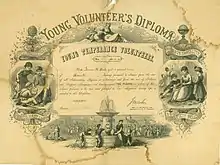
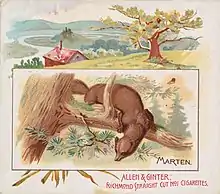
Per the common understanding, printed ephemera does not exceed "more than thirty-two pages in length", although some understandings posit it as all printed materials which are not books or the "antithesis of litera[ture]".[25][26][27][lower-alpha 1] Ephemera is chiefly observed as single page materials.[29] The material usage of printed ephemera is very often minimal and much are without art; some are highly decorated and make use of a distinct design lexicon, with there exist significant amounts of art which could be classified as ephemera. Fine art has at times been associated with ephemera, such as William Hogarth's early trade cards.[7][24][30] Other notable artists who produced ephemera include: Francesco Rosselli, Albrecht Dürer, Stefano della Bella, Francesco Bartolozzi and Giovanni Battista Piranesi.[30] Bold design details found in ephemera denote an advertising element, the opposite or united element being information.[31]
Various forms of printed ephemera, such as chapbooks, dime novels and penny dreadfuls, deteriorate quickly – disposability is a recurring and emphasised characteristic of ephemera in "Nearly all working definitions over time" and the survival rate of material before 1800 is low, although ephemera had still been broad.[9][10][32] The range of printed ephemera is complex and often eludes simple definition.[28] The Temperance movement instigated instances of ephemera with robust ubiquity; some printed ephemera have had production quantities of millions.[33][15][lower-alpha 2]
Distinct from more literary types – such as the fitful relation to poetry – some printed ephemera feature a "cultural function": funeral elegies and invitations are among them.[25][35][36][37] Ephemera is notably utilitarian.[22] Art ephemera is that which promotes a showcase of art.[38] Specific genres, those that include postcards, broadsides, and posters, are defined by their function.[7] Broadsides, themselves, have been identified as a genre: the graphic arts, manuscript material and substantial pamphlets have been articulated as the three other major genres.[38] Other types of ephemera, the resultingly modern replications of duplicating machines and photocopiers, differ from the previous transactional approach in being chiefly informative.[7] Some ephemera has been deemed avant-garde.[39]
Ephemera has functioned as a substantial means of disseminating information, in public sectors such as tourism, finance, law and recreation.[31] Printed ephemera such as handbills were prominent in the French Revolution as a means to mobilise and disperse political messages.[15] In mid-18th century England, a considerable amount of ephemera was iconoclastic in their critique of the nation's opulence.[40] Health and social norms were established in 1970s Ireland via ephemera pertaining to health education.[41] Post-World War II, ephemera become instrumental to the "American kitchen".[42] Martin Andrews and Gillian Russell – printing historian and English professor, respectively – identified the mid-15th century as the origin of ephemera, following the Printing Revolution.[10][38] According to Andrews, the first product of Western printing was ephemera.[38] Streets remain a significant means of dispersing ephemera.[29]
Certain printed ephemera: newspapers, playbills and tickets were used, during the 19th century, as a "mediating element between the absolute ephemerality of the performance event itself and more 'permanent' historical and literary records".[43] Lottery tickets – followed by playbills – were the most prominent printed ephemera of the late Georgian era; illustrated trade cards were among the most common ephemera in the United States during the mid-to-late 19th century – the range of ephemera in the nation increased from there onwards.[44][45] In Russia, around this time, "Saccharine images of young peasants were particularly common in confectionary ephemera".[46] Panoramic paintings were a far-reaching class of ephemera, few remaining as a result.[47] Junk mail is a contemporary example of prominent ephemera.[31]
Smoking related ephemera – such as publications and collectable cards – via encyclopedic-style facts "aided the proliferation of print media as an exchange of information".[48] Discussing an increase in ephemera by the mid-19th century, E.S Dallas wrote, at the time, that "by the mere fact of that increase, it has introduced new processes and habits, and it inaugurates a new era", espousing the impression that authorship and literature were no longer hermetic.[49]
Video and audio ephemera
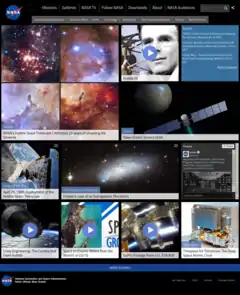
By extension, video ephemera and audio ephemera refer to transitory audiovisual matter not intended to be retained or preserved. The great bulk of video and audio expression has, until recently, been ephemeral. Media scholar, Paul Moore wrote that "Early cinema culture was as ephemeral as nitrate film was flammable" – early practices have been documented by printed ephemera, with digital archiving increasing the prospect of more information.[51] The ephemera of this context includes fan-creations.[52] Early TV broadcasts were not preserved (indeed, the technology to preserve them postdates the invention of television, and even after such technology came into use in the 1950s, much of the content of programming not in prime time was destroyed for economic reasons well into the 1970s). Even if radio and television stations preserve archives of their broadcasts, those backcatalogs are inaccessible in practice to the general public, leaving it to a small number of underground tape traders to exchange the rare, lucky moments when something unexpected or historical came across the air.
The large capacity and reach provided by resources such as the Internet Archive and YouTube have made finding and sharing video ephemera (past and present) dramatically easier.
In 1998, Stone wrote that the internet "can be seen as the ultimate in ephemera with its vast amount of information and advertising which is extremely transitory and volatile in nature, and vulnerable to change or deletion".[28] Within the context of modern media dissemination, YouTube videos, viral emails and photos have been identified as ephemeral.[2] Distinguishing between printed ephemera, Byerly speculated that "future ephemera will need to have been ignored and forgotten in our time", then questioning as to what is neglected on the internet; Russell, five years later, conversely wrote that ephemera is "set to make the transition from print to the digital age and, indeed, to become more visible than ever before".[10][22]
Collecting
As ephemera are items that are not supposed to be retained, they are easily accessible and attractive for collectors. Most of them can be obtained by asking either family members or friends to save it. Printed ephemera usually contain various promotional images and texts. Different themes, types, sizes, and shapes make these items perfect for collecting. Online collector catalogs exist to showcase different types of ephemera and provide information to enthusiasts.[53] Professor of English, Susan Zieger determined that the first instance of printed ephemera that was intended to be collected was cigarette cards.[54][lower-alpha 3] Janet S. Byrne, Curator in the Department of Prints and Photographs at The Metropolitan Museum of Art, wrote that ephemera constituted some of the museum's "most important prints".[30]
Playbills were substantially collected during the Georgian era and collecting the "the full spectrum of printed ephemera" has occurred since the 17th century.[20][44] Victorian families pasted their collections of ephemera, acquiring chromolithographic trade cards in particular, in scrapbooks. Chromolithography was instrumental in producing Victorian ephemera; woodcut and wood/copper engraving were similarly featured in ephemera.[55][47] Victorian scraps were an instance of ephemera intended for scrapbooks.[56] Of late 19th century ephemera, women and children composed one of the three general groups of collectors – children's literature was intertwined with ephemera.[57][58] Hobbyists and institutions were the other two. It was a private endeavour, with little outward cultural presence, although an eminent interpersonal function.[57][59]
Libraries may collect, organize, and preserve ephemera. One example of such an archive is the John Johnson Collection of Printed Ephemera at the Bodleian Library, Oxford. Johnson's collection was one of the first ephemera collections to be accepted by a major library, in 1968 – Johnson, who acquired 1.5 million pieces of ephemera, has been called "the most significant English ephemerist of the twentieth century".[9][27] "[O]nce upon a time only a few librarians and archivists bothered preserving such materials; but disdain for ephemera has long been on the wane", wrote, music historian, Christina Bashford in 2008 – also noting that ephemera collections can be difficult to peruse and those that are digital are rare; Byerly wrote that digital archiving of ephemera renders its "aura" void.[22][60] Later literature from librarians has argued in favour of digitalisation; efficiency and wider dissemenation were among Lambert's positions for digitalisation.[9][61]
Collectors steered the decision towards preserving ephemera, following publications by them, in the 1960s and 70s, about their collections.[9] From 1972 onwards, the conceptualisation of a sufficient manner of collecting ephemera began to be discussed.[62] A decade earlier, Printed Ephemera by John Lewis was released, bolstering ephemera's cultural notice – as did the formation of ephemera societies in Britain and America by 1980.[10][57] Around this time, professional associations dedicated to ephemera arose. By the early 1990s there would be "little established practice" for collecting ephemera, although this decade did see gradual improvement.[9][28] Most major collections are idiosyncratic and sequential in nature.[22]

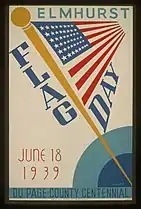
The late Georgian era saw significant archiving, particularly of playbills – British librarians have placed particular value on collecting ephemera and significantly influenced the practice, the history going back to the mid-17th century with John Selden.[24][44][60] Tiffany & Co's first public exhibition, occurring in the mid 19th century, was chiefly composed of military and sporting ephemera.[63] "Interest in ephemera is predominantly British and North American", wrote Rickards and Lambert, in 2003 – ephemera does exist globally extending to expeditions to the Antarctica.[24][64] Johnson and Bella Clara Landauer initiated "comprehensive collections of printed ephemera" in Britain and America, respectively.[24]
Discussing how digital ephemera will be collected, Garner said that "like print ephemera, [it] will survive in part accidentally, and in other cases because it has been intentionally archived".[9] A decade earlier, Byerly, conversely, wrote that its difficult to determine the interest in preserving digital ephemera, even for contemporary purposes.[22] Institutions, including the Library of Congress, have attempted to preserve digital ephemera; a partnership between Twitter and the Library of Congress arose for this purpose, although the project became unfeasible as a result of the vast scope.[65]
Media scholar, Gabriella Giannachi surmised that digital archiving of ephemera is to "prompt and share memories"; menus are often collected as mementos.[66][67] Much of ephemera is adjacent to keepsakes.[22] William Woys Weaver, food historian and collector of culinary ephemera, surmised that fellow collectors "are often partly motivated by nostalgia", although he attributed his interest to curiosity; Byler said that the "tangible" connection to the past, for collectors, is "perhaps predominant".[22][68] Stone also articulated a connection to memory and nostalgia, saying ephemera's relation to the latter could be populist.[28] Small-scale collections of ephemera from 19th century American patrons were assembled in the hopes of "guarantee[ing] permanence"; Johnson, conversely, rarely collected preemptively, believing that the persistence of ephemera should be incidental.[69][61]
Academia
In the 21st century, Victorian era ephemera has seen renewed visibility via digital archives; material such as newspapers, postcards and advertisements are made accessible for cultural and academic attention.[54] Digitisation of ephemera strongly aids in the accessibility of ephemera for education.[61] As "[e]very item of ephemera tells a story, or at the very least reveals specific information about something", the material has recently been more "fully integrated" into conceptions of social histories; political and cultural, as well.[9][61] Literature scholar, Matthew Franks and, librarian, Richard Stone concured that, although its study isn't expansive, ephemera is a significant prospect to sociological theory.[70][28] Russell viewed ephemera's pressence in the field as megear and wrote that the interest is still considered as "amatuerish".[27]
Since its inception, the study of print ephemera has seen much contention; various viewpoints and interpretations have been proposed from scholars.[71] The literature around ephemera has placed focus upon on the production of ephemera.[29] Ephemera's fragile nature makes insights garnered from them ostensibly precarious – and can only provide an impression of the past.[72][5] The markedly sparse existence of ephemera before 1800 has led to the 19th and 20th century being predominantly identified with ephemera by scholars.[29]
Various scholars have still identified ephemera as illustrating or providing insight into diverse matters; ephemera has been said to detail:
- The nature of social and daily life; the enforcement of social norms; the development of communication and social mobility;[7][38]
- the history of printing, which ephemera has been long intertwined;[72][9][10]
- popular, topical and leisurely culture; the general cultural interests of a period;[7][38]
- for Victorian children, intended to teach them about pictures, colour and form;[57]
- detail the social, political, economic and cultural histories of working-class people, women, African Americans and immigrants[23][lower-alpha 4]
- and document transient groups.[17]
Ephemera studies is frequently said to have begun with John Lewis, a now burgeoning and gradually accepted field in academia – more so is the category of ephemera.[9][27] Dugaw considered the analytic framework of folklore studies to be analogous with the study of ephemera: both subject matters evoke "remembrance and echoed retellings".[11] Stone said similar regarding pop culture studies. Both disciplines use "defintion[s] by example", then work outwards; both disciplines contend that which is more prestigious.[28] Rickard identified the prospecting contributions of ephemera to cultural studies.[9] Young viewed ephemera as beneficial to both the study of folklore and culture.[7]
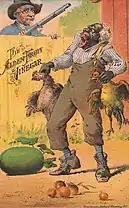
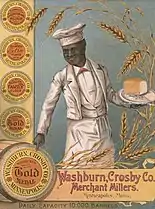
Marketing scholar, Fred Beard viewed ephemera, in tandem with advertisements, as beneficial to historians of marketing, as well as an assorted amount of subjects:[74]
- agriculture
- business
- consumerism
- ethnicities
- film and media
- graphic design and printing
- health and recreation
- politics
- popular culture
- and women's history
Ephemera has been seen as "crucial" to the remit of both performance studies and black print culture studies.[60][75][lower-alpha 5] Expanding upon the scholarly argument that ephemera, when securely collected, contributes to an inclusive historical record, Garner argued that if ephemera was to be absent from collection planning then "traces of black culture" could be erased from the historical record – ephemera has been significant to the creation of queer archives and has a notable presence in queer studies and theory.[9][20][15]
Notes
- A qualifier from the National Library of Australia, devised in 1992, virtually excluded material of more than five pages.[28]
- Ephemera relating to beer, wine and drinking is vast and developed in accordance with drinking movements.[34]
- In an overview of ephemera, Rickards and Lambert wrote that the specification of cigarette cards as collectable means they should not be classified as ephemera, though rarely is this distinction acknowledged.[24]
- Following the California Gold Rush of 1849, by means of visual ephemera, the citizens of San Francisco, regardless of race or class, "were exposed to one another".[73]
- Ephemera attributed to the 19th century painter William Sidney Mount, alongside his life and art, has been said to "provide contemporaneous, precisely observed documentation on the blackface experience".[76] Ephemera produced in America by this time and soon after featured imagery, namely for white consumers, of enslaved and emancipated African Americans.[77] The portrayal of African Americans in culinary ephemera has frequently been derogatory, with caricature-esque features.[78]
- http://www.dictionary.com/browse/ephemera
- London, Justin (2013-02-04). "Ephemeral Media, Ephemeral Works, and Sonny Boy Williamson's "Little Village"". The Journal of Aesthetics and Art Criticism. 71 (1): 45–53. doi:10.1111/j.1540-6245.2012.01540.x. ISSN 0021-8529.
- Wasserman 2020, p. 23.
- Wasserman 2020, p. 9.
- Mussell, James (2012). "The Passing of Print". Media History. 18 (1): 77–92. doi:10.1080/13688804.2011.637666. ISSN 1368-8804.
- Blum 2019, p. 3.
- Young, Timothy G. (2003). "Evidence: Toward a Library Definition of Ephemera". RBM: A Journal of Rare Books, Manuscripts, and Cultural Heritage. 4 (1): 11–26. doi:10.5860/rbm.4.1.214. ISSN 2150-668X.
- Wasserman 2020, p. 2.
- Garner, Anne (2021). "State of the Discipline: Throwaway History: Towards a Historiography of Ephemera". Book History. 24 (1): 244–263. doi:10.1353/bh.2021.0008. ISSN 1529-1499.
- Russell, Gillian (2014). "The neglected history of the history of printed ephemera". Melbourne Historical Journal. 42 (1): 7–37.
- Dugaw, Dianne (2020). "Transcendent Ephemera: Performing Deep Structure in Elegies, Ballads, and Other Occasional Forms". Eighteenth-Century Life. 44 (2): 17–42. ISSN 1086-3192.
- Stone 2005, p. 7.
- Wasserman 2020, p. 2.
- McDowell, Paula (2012). "Of Grubs and Other Insects: Constructing the Categories of "Ephemera" and "Literature" in Eighteenth-Century British Writing". Book History. 15 (1): 48–70. doi:10.1353/bh.2012.0009. ISSN 1529-1499.
- Russell, Gillian (2018). "Ephemeraphilia". Angelaki. 23 (1): 174–186. doi:10.1080/0969725x.2018.1435393. ISSN 0969-725X.
- Massip, Catherine (2020-10-01), Watt, Paul; Collins, Sarah; Allis, Michael (eds.), "Ephemera", The Oxford Handbook of Music and Intellectual Culture in the Nineteenth Century, Oxford University Press, pp. 168–188, doi:10.1093/oxfordhb/9780190616922.013.8, ISBN 978-0-19-061692-2, retrieved 2021-12-11
- Reichard, David A. (2012). "Animating Ephemera through Oral History: Interpreting Visual Traces of California Gay College Student Organizing from the 1970s". Oral History Review. 39 (1): 37–60. ISSN 1533-8592.
- Weaver 2010, p. 6.
- Muñoz, José Esteban (1996-01-01). "Ephemera as Evidence: Introductory Notes to Queer Acts". Women & Performance: a journal of feminist theory. 8 (2): 5–16. doi:10.1080/07407709608571228. ISSN 0740-770X.
- Russell, Gillian (2015). "Sarah Sophia Banks's Private Theatricals: Ephemera, Sociability, and the Archiving of Fashionable Life". Eighteenth-Century Fiction. 27 (3): 535–555. ISSN 1911-0243.
- Verfasser, Cvetkovich, Ann (2003). An Archive of Feelings. Duke University Press. p. 243. ISBN 978-0-8223-8443-4. OCLC 1139770505.
- Byerly, Alison (2009). "What not to save: The future of ephemera" (PDF): 45–49. Cite journal requires
|journal=(help) - Altermatt, Rebecca; Hilton, Adrien (2012). "Hidden Collections within Hidden Collections: Providing Access to Printed Ephemera". The American Archivist. 75 (1). ISSN 0360-9081.
- Lambert, Julie Anne; Rickards, Maurice (2003), "Ephemera, printed", Oxford Art Online, retrieved 2021-11-28
- Jung, Sandro (2020). "Literary Ephemera: Understanding the Media of Literacy and Culture Formation". Eighteenth-Century Life. 44 (2): 1–16. ISSN 1086-3192.
- Cocks, Harry G.; Rubery, Matthew (2012). "Introduction". Media History. 18 (1): 1–5. doi:10.1080/13688804.2011.634650. ISSN 1368-8804.
- Russell, Gillian (2020). The Ephemeral Eighteenth Century: Print, Sociability, and the Cultures of Collecting. Cambridge Studies in Romanticism. Cambridge University Press. pp. 1–10. ISBN 978-1-108-48758-0.
- Stone, Richard (1998). "Junk mail: Printed ephemera and preservation of the everyday". Journal of Australian Studies. 22 (58): 99–106. doi:10.1080/14443059809387406. ISSN 1444-3058.
- Harris, Michael (2010). "Printed Ephemera". In Suarez, Michael F.; Woudhuysen, H.R. (eds.). The Oxford companion to the book. Oxford University Press. ISBN 978-0-19-957014-0. OCLC 502389441.
- Byrne, Janet S. (1989). "Ephemera and the Print Room". Metropolitan Museum Journal. 24: 285–303. doi:10.2307/1512886. ISSN 0077-8958.
- Stone 2005, p. 6.
- Quirk, Linda (2016). "Proliferating Ephemera in Print and Digital Media". ESC: English Studies in Canada. 42 (3): 22–24. doi:10.1353/esc.2016.0027. ISSN 1913-4835.
- Linley, Margaret (2019). "The Mediated Mind: Affect, Ephemera, and Consumerism in the Nineteenth Century by Susan Zieger (review)". Victorian Studies. 62 (1): 125–127. ISSN 1527-2052.
- Weaver 2010, p. 41–50.
- Hoffman, Daniel (1995). "Edgar Allan Poe: The Artist of the Beautiful". The American Poetry Review. 24 (6): 11–18. ISSN 0360-3709.
- Hilder, Jamie (2013). "Concrete Poetry and Conceptual Art: A Misunderstanding". Contemporary Literature. 54 (3): 578–614. ISSN 0010-7484.
- Hadjiafxendi, Kyriaki (2011). "Introduction: George Eliot and the Poetics of Disbelief". George Eliot - George Henry Lewes Studies (60/61): 7–16. ISSN 2372-1901.
- Andrews, Martin J. (2006). "The stuff of everyday life: a brief introduction to the history and definition of printed ephemera". Art Libraries Journal. 31 (4): 5–8. doi:10.1017/S030747220001467X. ISSN 0307-4722.
- Sherin, Aaris (2014). Elaine Lustig Cohen: Modernism Re-Imagined. RIT Press. p. 47. ISBN 978-1-939125-06-4.
- Craske, Matthew (1999). "Plan and Control: Design and the Competitive Spirit in Early and Mid-Eighteenth-Century England". Journal of Design History. 12 (3): 187–216. ISSN 0952-4649.
- Holmes, Nina (2019). "Maternal subjects: representations of women in Irish government health ephemera, 1970s-1980s". The History of the Family. 24 (4): 707–743. doi:10.1080/1081602X.2019.1610667. ISSN 1081-602X.
- Weaver 2010, p. 2.
- Newman, Ian; Russell, Gillian (2019). "Metropolitan Songs and Songsters: Ephemerality in the World City". Studies in Romanticism. 58 (4): 429–449. doi:10.1353/srm.2019.0034. ISSN 2330-118X.
- Russell, Gillian (2015). ""Announcing each day the performances": Playbills, Ephemerality, and Romantic Period Media/Theater History". Studies in Romanticism. 54 (2): 241–268. doi:10.1353/srm.2015.0024. ISSN 2330-118X.
- Bellows 2020, p. 159–160.
- Bellows 2020, p. 168.
- Teukolsky, Rachel (2020). Picture World: Image, Aesthetics, and Victorian New Media (1 ed.). Oxford University Press. pp. 100, 357. doi:10.1093/oso/9780198859734.001.0001. ISBN 978-0-19-885973-4.
- Grisham, Leah (2019). "The Mediated Mind: Affect, Ephemera, and Consumerism in the Nineteenth Century by Susan Zieger (review)". Victorian Periodicals Review. 52 (1): 210–212. doi:10.1353/vpr.2019.0011. ISSN 1712-526X.
- Fyfe, Paul (2015). By Accident or Design: Writing the Victorian Metropolis. Oxford University Press. p. 165. doi:10.1093/acprof:oso/9780198732334.001.0001. ISBN 978-0-19-873233-4.
- Slania, Heather (2013). "Online Art Ephemera: Web Archiving at the National Museum of Women in the Arts". Art Documentation: Journal of the Art Libraries Society of North America. 32 (1): 112–126. doi:10.1086/669993. ISSN 0730-7187.
- Moore, Paul S. (2016). "Ephemera as Medium: The Afterlife of Lost Films". The Moving Image. 16 (1): 134–139. ISSN 1542-4235.
- Stead, Lisa; Smith, Carrie, eds. (2013). "Letter Writing, Cinemagoing and Archive Ephemera". The boundaries of the literary archive : reclamation and representation. Farnham, Surrey, England: Ashgate. ISBN 978-1-4094-4323-0. OCLC 855019740.
- SAPO. "Coleciona "coisas"? Organize e partilhe com o Colnect". SAPO Tek (in Portuguese). Retrieved 2019-04-03.
- Salmon, Richard (2020). "Consuming Ephemera". Criticism. 62 (1): 151–155. ISSN 1536-0342.
- Snyder, Terry (2014). "Spectacular Ephemera". Transformations: The Journal of Inclusive Scholarship and Pedagogy. 24 (1–2): 101–109. doi:10.5325/trajincschped.24.1-2.0101. ISSN 1052-5017.
- Field 2019, p. 81.
- Haug, Mary-Elise (1995). "The Life Cycle of Printed Ephemera: A Case Study of the Maxine Waldron and Thelma Mendsen Collections". Winterthur Portfolio. 30 (1): 59–72. ISSN 0084-0416.
- Field 2019, p. 20.
- Zieger 2018.
- Bashford, Christina (2008). "Writing (British) Concert History: The Blessing and Curse of Ephemera". Notes. 64 (3): 458–473. doi:10.1353/not.2008.0023. ISSN 1534-150X.
- Lambert, Julie Anne (2017). "Immortalizing the Mayfly: Permanent Ephemera: An Illusion or a (Virtual) Reality?". RBM: A Journal of Rare Books, Manuscripts, and Cultural Heritage. 9 (1): 142–156. doi:10.5860/rbm.9.1.304.
- Smith, Kai Alexis (2016). "Digitizing Ephemera Reloaded: A Digitization Plan for an Art Museum Library". Art Documentation: Journal of the Art Libraries Society of North America. 35 (2): 329–338. doi:10.1086/688732. ISSN 0730-7187.
- Bauer, Dominique; Murgia, Camilla, eds. (2021). Ephemeral Spectacles, Exhibition Spaces and Museums. Amsterdam University Press. pp. 19–20. doi:10.1017/9789048542932. ISBN 978-90-485-4293-2.
- Weaver 2010, p. 2; Blum 2019, p. xix.
- Doster, Adam (2016). "Saving Digital Ephemera". American Libraries. 47 (1/2): 18–18. ISSN 0002-9769.
- Giannachi, Gabriella (2016). Archive Everything: Mapping the Everyday. The MIT Press. p. 76. doi:10.7551/mitpress/9780262035293.001.0001. ISBN 978-0-262-03529-3.
- Weaver 2010, p. 135.
- Weaver 2010, p. 188.
- Bold, Christine, ed. (2011). The Oxford History of Popular Print Culture: Volume Six: US Popular Print Culture 1860-1920. Oxford University Press. p. 150. doi:10.1093/acprof:osobl/9780199234066.001.0001. ISBN 978-0-19-923406-6.
- Franks, Matthew (2017). "Laboratory, Library, Database: London's Avant-Garde Drama Societies and Ephemeral Repertoire". Modernism/modernity. 24 (3). doi:10.1353/mod.2017.0049. ISSN 1080-6601.
- Randall, David (2004). "Recent Studies in Print Culture: News, Propaganda, and Ephemera". Huntington Library Quarterly. 67 (3): 457–472. doi:10.1525/hlq.2004.67.3.457. ISSN 0018-7895.
- Wasserman 2020, p. 3.
- Lippert, Amy DeFalco (2018). Consuming Identities. Oxford University Press. p. 319. doi:10.1093/oso/9780190268978.001.0001. ISBN 978-0-19-026897-8.
- Beard, Fred (2018). "Archiving the archives: The world's collections of historical advertisements and marketing ephemera". Journal of Historical Research in Marketing. 10 (1): 86–106. doi:10.1108/JHRM-08-2017-0044. ISSN 1755-750X.
- Benjamin, Shanna Greene (2015). "Intimacy and Ephemera: In Search of Our Mother's Letters". MELUS: Multi-Ethnic Literature of the U.S. 40 (3): 16–27. ISSN 1946-3170.
- Smith, Christopher J. (2013). Recovering the Creole Synthesis: The Roots of Blackface Minstrelsy. The Creolization of American Culture. University of Illinois Press. p. 2. doi:10.5406/illinois/9780252037764.003.0001. ISBN 978-0-252-03776-4.
- Bellows 2020, p. 175.
- Weaver, William Woys (2006). "The Dark Side of Culinary Ephemera: The Portrayal of African Americans". Gastronomica. 6 (3): 76–81. doi:10.1525/gfc.2006.6.3.76. ISSN 1529-3262.
- Bellows, Amanda Brickell (2020). American Slavery and Russian Serfdom in the Post-Emancipation Imagination. University of North Carolina Press. doi:10.5149/northcarolina/9781469655543.001.0001. ISBN 978-1-4696-5554-3.
- Blum, Hester (2019). The News at the Ends of the Earth: The Print Culture of Polar Exploration. Duke University Press. ISBN 978-1-4780-0448-6.
- Field, Hannah (2019). Playing with the Book: Victorian Movable Picture Books and the Child Reader. University of Minnesota Press. ISBN 978-1-4529-5958-0.
- Stone, Richard (2005). Fragments of the Everyday: A Book of Australian Ephemera. National Library of Australia. ISBN 978-0-642-27601-8.
- Wasserman, Sarah (2020). The Death of Things: Ephemera and the American Novel. Minneapolis: University of Minnesota Press. ISBN 978-1-4529-6414-0.
- Weaver, William Woys (2010). Culinary Ephemera : an Illustrated History. University of California Press. ISBN 978-0-520-94706-1. OCLC 794663706.
- Zieger, Susan (2018). The Mediated Mind: Affect, Ephemera, and Consumerism in the Nineteenth Century. Fordham University Press. ISBN 978-0-8232-7985-2.
Further reading
- Printed Ephemera: The Changing Uses of Type and Letterforms in English and American Printing, John Lewis, Ipswich, Suffolk, Eng.: W. S. Cowell, 1962
- The Encyclopedia of Ephemera: A Guide to the Fragmentary Documents of Everyday Life for the Collector, Curator, and Historian by Maurice Rickards et alia. London: The British Library; New York: Routledge, 2000.
- Fragments of the Everyday: A Book of Australian Ephemera by Richard Stone (2005, ISBN 0-642-27601-3)
- Twyman, Michael (August 2002). "Ephemera: whose responsibility are they?". Library and Information Update. 1 (5): 54–55. ISSN 1476-7171.
External links
 |
Look up ephemeron in Wiktionary, the free dictionary. |
 |
Wikimedia Commons has media related to Ephemera. |
- Ephemera Society of Australia
- The Ephemera Society
- Ephemera Society of America
- Printed Ephemera in the Rare Book and Special Collections Division of the Library of Congress
- Australian Lesbian and Gay Archives – Ephemera Collection
- National Library of Australia – Ephemera Collection
- The Gjenvick-Gjønvik Archives – Ephemera Collection
- British Library – Evanian Collection of Ephemera
- State Library of Victoria – Ephemera
- State Library of Western Australia – Ephemera
- The John Grossman Collection of Antique Images
- New Zealand Ephemera Society website
- Bibliothèque Nationale de France – Ephemera
- ephemerastudies.org at Louisiana Tech University
- Sheaff, Dick. "Sheaff: Ephemera". Ephemera. Retrieved 12 December 2011.
- Collection of digitized ephemera at Biblioteca Digital Hispánica, Biblioteca Nacional de España
- Ephemerajournal. theory & politics of organization