Hungarian Electrographic Art Association
Hungarian Electrographic Art Association (Hungarian: Magyar Elektrográfiai Társaság) — Hungarian and international new media artists group using copiers, computers and other devices to create digital art, computer art, electronic, video etc. HEAA is the organizer of the famous international exhibitions "Matrix", "Mega Pixel", "Agora Digitalis", "Art Market" and others which take place at galleries and museums in Hungary, Czech Republic, Poland, Romania, Netherlands, Finland, Germany. Since 2014 Association has its own HEAA/MET Gallery at 9 Bolcho str., Budapest. President —Ágnes HAász, 79 members (on 2021)[1]
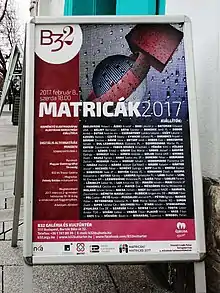 Matriсes 2017 HEAA poster at the B32-Gallery, 32 Bartok str., Budapest | |||
| Native name | Magyar Elektrográfiai Társaság(in Hungarian) | ||
|---|---|---|---|
| Location | 8 Adony Street V/24, Budapest, Hungary | ||
| Postal code | H-1116 | ||
| Other | |||
| Website |
www | ||
Key people
Ágnes HAász, Fruzsina Spitzer, Judit Albert, Dénes Ruzsa, Eniko Gabor, Árpád Daradics, József Gábos, Eszter Láng, Péter Botos, Attila Csáji, Ferenc Harangozó, Magdolna Kovácsné Lux, József Pinczehelyi, PhD Ferenc Winkler József Bárdosi, Gergely Kovács, Julia N. Mesaros, Bertalan Bálint, László Csízy, Agota Krnach, Maria Teller.
History
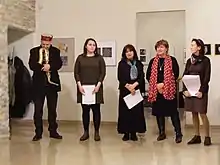

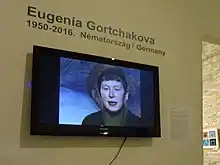

HEAA's activities began with a program exhibition of 19 artists on August 17, 2001, at the B32-Gallery (32 Bartok str., Budapest). Most of the association's founders used to be the center of the Shadow Knitters art group. These were talented artists Antal Lux, Andras Bohar (1961-2006), Gabor Zentai (1976-2016), Ágnes HAász, Istvan Horkay and others. They initiated regular new media art exhibitions which proposed to be called electrography art. Computer and digital technology, photocopying and others attract artists who have previously worked in traditional genres (painters, graphic artists, sculptors and even writers). Every 2–3 years, large international exhibitions "Matrix", "Agora", "Mega Pixel", "Art Market" with catalogs and articles in the press.
HEAA's support
Experimental art is supported by state and non-state organizations of Hungary, among them:
Creative activity
The exhibitions of the association demonstrate the phenomenon of Hungarian electrography in interaction with world art in common humanity purposes. One of the important tasks of new media is a special attraction to the visual (and mental) synthesis needed to maintain integrity in a destructive environment. PhD Edith Bart writes: «If we take look at the exhibition we will obviously notice the striking presence of the human being placed in the context of civilization and society…. Some series of woks start from our broader context and they investigate the relationship of the individual and the collectivity full of conflicts. Our micro universe contains enough elements and potentials waiting for synthesis. I am thinking first of all to the conflicts of genders, but above all to the relationship vis à vis ourselves. The works are dealing in-length the questions related our own identity, the relationship between body and soul and the consistency of the personality in the light of its own life story.» [2]
Artists reveal the potential of creative self-expression in the free category. A good tradition of exhibitions is the category proposed by the organizers, dedicated to one great artist heritage. Media artists find visual bridges between the ingenious ideas of the classics and the extremely emotional events of today. There were interesting images on memories Nicolas Schöffer[3] and Wassily Kandinsky. The press noted the diverse interest of European countries in the work of the first abstractionist: «He identified new ways of visual forms that are currently being developed by media art. It is significant that the biography of the genius is partly related to Ukraine. W. Kandinsky's childhood and youth took place in Odessa (from 1871 to 1885)».[4] [5]
The HEAA series of events entitled "Digital Effects in Contemporary Hungarian Fine Arts" focuses mainly on the development of the new artistic language, as it has formed the modern visual connections and attitudes of genre mixes in recent decades to the present day. The Association organizes a professional review "History of Hungarian Electrography" based on the materials of the Foundation of Photographic Art and Archives in Budapest.
HEAA has warm relations with foreign creative teams, initiates many exhibitions abroad and invites foreign artists to Hungary. HEAA members successfully participate in various international exhibitions and festivals and receive awards. Dénes Ruzsa and Fruzsina Spitzer awarded the Best experimental short film at the AIFF, USA.[6] Olena Golub received 3rd prize for digital print Keys at Voix Visuelle, Ottawa, Canada, 2020[7]
References
- "Tagságunk". www.computerart.hu.
- MATRICES catalog 2010, p.21. HEAA. Budapest
- "HOMMAGE À NICOLAS SCHÖFFER". Catalog Matrices 2012. HEAA. Budapest 2012, pp. 62-69
- in Ukrainian: From Kyiv's Metagraphic Impressions to Matrix 2017 in Budapest // UA Foreign Affairs, №2, p. 63.
- Kandinsky’s heritage. Catalog Matrices, 2017, HEAA. Budapest, 2017, pp. 65-79
- Best experimental short film at the AIFF, USA
- 3rd prize for digital print Keys at Voix Visuelle, Ottawa, Canada, 2020
Sources
- In Ukrainian: Petro Yakovenko . Contemporary art in the Pannonhalma Archabbey (about activity of the HEAA and Ágnes HAász)// UA Foreign Affairs (Kyiv's magazine), 2017, №6, pp. 1, 64
- In Ukrainian: Olena Golub . Where is the Kyiv digital art directed? //OM (Kyiv Fine arts magazine), 2019, №2, pp.48-49
- In Ukrainian: PhD Gabor Pataki. Olena Golub and her art works // OM (Kyiv Fine arts magazine), 2019, №4, pp.54-55