South Korea men's national basketball team
The South Korea men's national basketball team represents South Korea in international men's basketball competitions. It is administered by the Korea Basketball Association (Korean: 대한농구협회; Daehan Nonggu Hyeobhoe).
| FIBA ranking | 30  1 (7 December 2021)[1] 1 (7 December 2021)[1] | ||||||||||||||||||||||||||||||||
|---|---|---|---|---|---|---|---|---|---|---|---|---|---|---|---|---|---|---|---|---|---|---|---|---|---|---|---|---|---|---|---|---|---|
| Joined FIBA | 1947 | ||||||||||||||||||||||||||||||||
| FIBA zone | FIBA Asia | ||||||||||||||||||||||||||||||||
| National federation | Korea Basketball Association | ||||||||||||||||||||||||||||||||
| Coach | Cho Sang-hyun | ||||||||||||||||||||||||||||||||
| Olympic Games | |||||||||||||||||||||||||||||||||
| Appearances | 6 | ||||||||||||||||||||||||||||||||
| Medals | None | ||||||||||||||||||||||||||||||||
| FIBA World Cup | |||||||||||||||||||||||||||||||||
| Appearances | 8 | ||||||||||||||||||||||||||||||||
| Medals | None | ||||||||||||||||||||||||||||||||
| FIBA Asia Cup | |||||||||||||||||||||||||||||||||
| Appearances | 29 | ||||||||||||||||||||||||||||||||
| Medals |  Gold: (1969, 1997) Gold: (1969, 1997) Silver: (1967, 1973, 1977, 1981, 1985, 1987, 1989, 1991, 1995, 1999, 2003) Silver: (1967, 1973, 1977, 1981, 1985, 1987, 1989, 1991, 1995, 1999, 2003) Bronze: (1963, 1965, 1971, 1975, 1979, 1983, 1993, 2001, 2007, 2011, 2013, 2017) Bronze: (1963, 1965, 1971, 1975, 1979, 1983, 1993, 2001, 2007, 2011, 2013, 2017) | ||||||||||||||||||||||||||||||||
| Asian Games | |||||||||||||||||||||||||||||||||
| Appearances | 17 (First in 1954) | ||||||||||||||||||||||||||||||||
| Medals | Gold: (1970, 1982, 2002, 2014) Silver: (1974, 1978, 1986, 1994, 1998, 2010) Bronze: (1962, 1966, 1990, 2018) | ||||||||||||||||||||||||||||||||
| |||||||||||||||||||||||||||||||||
| First international | |||||||||||||||||||||||||||||||||
.svg.png.webp) Belgium 27–29 South Korea Belgium 27–29 South Korea .svg.png.webp) (London, United Kingdom; 30 July 1948) | |||||||||||||||||||||||||||||||||
| Biggest win | |||||||||||||||||||||||||||||||||
 South Korea 134–47 Hong Kong South Korea 134–47 Hong Kong  (Nanjing, China; June 10, 2011) | |||||||||||||||||||||||||||||||||
| Biggest defeat | |||||||||||||||||||||||||||||||||
 United States 146–67 South Korea United States 146–67 South Korea .svg.png.webp) (Villa Ballester, Argentina; 8 August 1990) | |||||||||||||||||||||||||||||||||
Medal record
| |||||||||||||||||||||||||||||||||




Based on the number of overall medals won, South Korea is a major force among basketball teams of FIBA Asia. The team has won a record number of 24 medals at the FIBA Asia Championship. Furthermore, South Korea is the only nation that has qualified for this event every year since it was first held in 1960.[2]
History
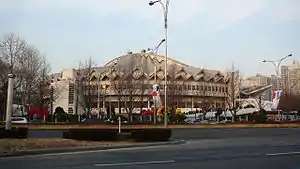

Initiation (1947–1951)
In 1947, two years after the establishment of the People's Republic of Korea, the Korea Basketball Association joined the International Federation of Basketball (FIBA) and sent its national teams to FIBA-sponsored events. Only one year later, the team already celebrated its first major accomplishment at the 1948 Summer Olympics, when it finished 8th, better than any other Asian nation, and ahead of teams such as Canada, Argentina, and Italy.
Steady improvements (1952–1968)
At the 1954 Asian Games, for the first time ever, South Korea finished in the Final Four of a major international basketball tournament in Asia. The team slowly improved its position within Asia almost every year and qualified for the Basketball World Cup several times.
Golden years (1969–1970)
In 1969 and 1970, the team enjoyed a brief period to shine, when it won the 1969 Asian Championship[3] and the 1970 Asian Games and ultimately qualified for the 1970 FIBA World Championship. As the only Asian team that had remained in the championship, South Korea finished ahead of Australia (champion of FIBA Oceania) and Egypt (champion of FIBA Africa) and showed its best performance ever at this event. Korea's Shin Dong-Pa dominated all scorers at the 1970 FIBA World Cup as he averaged 32.6 points per game, almost 13 points more than the runner up, Davis Peralta, from Panama.
Asian elite position behind China (1971–2007)
At the Asian Championship, South Korea stayed among the top three teams at 21 straight events, a record that is still unmatched until today.
At the 1996 Olympics, Hyun Joo-Yup averaged 16.6 points through the entire tournament.[4]
At the 2005 FIBA Asia Championship, South Korea's medal-winning streak finally ended when they lost to Qatar at the 3rd place game . Between 1975 and 2005, South Korea was the only nation besides the Philippines that was able to seriously challenge China's dominance. It interrupted China's championship winning streak in 1997, when it defeated its dominant neighbor in the semifinals and ultimately won the crown as 1997 Champion of Asia.
At the 2007 FIBA Asia Championship, South Korea was able to go on a streak, and won the first 5 games. Because of the "four centers" Ha Seung-jin (221 cm), Kim Joo-sung (205 cm), Lee Dong-jun (202 cm), and Kim Min-soo (200 cm), South Korea had the tournament's highest 2-point field goal percentage (61%). South Korea was also a team that had a strong back court with Kim Seung-hyun (179 cm), Yang Dong-geun (182 cm), Kim Dong-woo (198 cm), and Choi Jin-soo (205 cm), who guaranteed that the team was in the tournaments top-3 in free throw percentage (70.6) and assists per game (11.5).[5] All these players helped their team to win the bronze medal once again.
Emergence of West Asian competition (2008–present)
In the modern era, South Korea's competition from West Asia intensified as countries such as Jordan, Qatar, Lebanon, and especially Iran improved their basketball programs. South Korea is still considered one of Asia's major teams but its position among the top three teams in Asia is not guaranteed anymore. In 2014, the team qualified for the Basketball World Cup for the first time in almost 20 years. Even though the team was eliminated in the first round, the qualification itself has been a success and provided much needed global exposure. Most of the players that played at the 2014 World Cup returned for the 2014 Asian Games where they helped secure the gold medal on home soil.
Competitions
Olympic Games
FIBA World Cup
|
Asian Games
FIBA Asia Championship
| |||||||||||||||||||||||||||||||||||||||||||||||||||||||||||||||||||||||||||||||||||||||||||||||||||||||||||||||||||||||||||||||||||||||||||||||||||||||||||||||||||||||||||||||||||||||||||||||||||||||||||||||||||||||||||||||||||||||||||||||||||||||||||||||||||||||||||||||||||||||||||||||||||||||||||||||||||||||||||||||||||||||||||||||||||||||||||||||||||||||||||||||||||||||||||||||||||||||||||||||||||||||||||||||||||||||||||||||||||||||||||
.svg.png.webp)

.svg.png.webp)
.svg.png.webp)


East Asian Games
|
East Asia Basketball Championship
|
FIBA Asia Challenge
| ||||||||||||||||||||||||||||||||||||||||||||||||||||||||||||||||||||||||||||||||||||||||||||||||||||||||||||||||||||||||

William Jones Cup
| William Jones Cup | ||||
|---|---|---|---|---|
| Year | Rank | Pld | W | L |
 1977 1977 | ||||
| 1978 | Runners-up | |||
| 1979 | Not held | |||
| 1980 | ||||
| 1981 | ||||
| 1982 | ||||
| 1983 | ||||
| 1984 | ||||
| 1985 | ||||
| 1986 | Runners-up | |||
| 1987 | ||||
| 1988 | Third place | |||
| 1989 | Not held | |||
| 1990 | ||||
| 1991 | Third place | |||
| 1992 | ||||
| 1993 | ||||
| 1994 | ||||
| 1995 | ||||
| 1996 | ||||
| 1997 | ||||
| 1998 | Third place | |||
| 1999 | Champions | |||
| 2000 | Runners-up | 6 | 5 | 1 |
| 2001 | Runners-up | |||
| 2002 | ||||
| 2003 | Not held | |||
| 2004 | ||||
| 2005 | ||||
| 2006 | ||||
| 2007 | ||||
| 2008 | ||||
| 2009 | 5th Place | 8 | 5 | 3 |
| 2010 | Did not enter | |||
| 2011 | Runners-up | 9 | 7 | 2 |
| 2012 | 5th Place | 8 | 5 | 3 |
| 2013 | Third place | 7 | 5 | 2 |
| 2014 | Did not enter | |||
| 2015 | 5th Place | 8 | 4 | 4 |
| 2016 | Runners-up | 8 | 6 | 2 |
| 2017 | Third place | 9 | 6 | 3 |
| 2018 | Third place | 8 | 6 | 2 |
| 2019 | Runners-up | 8 | 7 | 1 |
| 2020 | Not held | |||
| 2021 | Not held | |||
| Total | ?/37 | ? | ? | ? |
Team
Current roster
2021 Squad at the 2020 FIBA Men's Olympic Qualifying Tournaments – Kaunas[6]
| South Korea FIBA Men's Olympic Qualifying Tournaments roster | ||||||||||||||||||||||||||||||||||||||||||||||||||||||||||||||||||||||||||||||||||||||||||||
|---|---|---|---|---|---|---|---|---|---|---|---|---|---|---|---|---|---|---|---|---|---|---|---|---|---|---|---|---|---|---|---|---|---|---|---|---|---|---|---|---|---|---|---|---|---|---|---|---|---|---|---|---|---|---|---|---|---|---|---|---|---|---|---|---|---|---|---|---|---|---|---|---|---|---|---|---|---|---|---|---|---|---|---|---|---|---|---|---|---|---|---|---|
| Players | Coaches | |||||||||||||||||||||||||||||||||||||||||||||||||||||||||||||||||||||||||||||||||||||||||||
|
| |||||||||||||||||||||||||||||||||||||||||||||||||||||||||||||||||||||||||||||||||||||||||||
Depth chart
| Pos. | Starting 5 | Bench 1 | Bench 2 |
|---|---|---|---|
| C | Ricardo Ratliffe | Kim Jong-kyu | |
| PF | Lee Seung-hyun | Kang Sang-jae | |
| SF | Choi Jun-yong | Jeong Hyo-geun | Yang Hee-jong |
| SG | Lee Jung-hyun | Lee Dae-sung | |
| PG | Kim Sun-hyung | Park Chan-hee | Heo Hoon |
Past rosters
| .svg.png.webp) | |
| ||
| ||
| ||
1970 World Championship: finished 11th among 13 teams
Shin Dong-pa, Lee In-pyo, Kim In-kun, Kim Young-il, Park Han, Choi Jong-kyu, Yoo Hee-hyung, Lee Byung-koo, Yoo Jung-kun, Lee Ja-young, Shin Hyun-soo, Kwak Hyun-chae (Coach: Kim Young-ki)
1978 World Championship: finished 13th among 14 teams
Kim In-Jin, Kim Pyung-Man, Jung Young-Soo, Jang Bong-Hak, Park Sang-Ung, Park Soo-Kyo, Kim Sang-Chun, Kim Hyung-Nyun, Kim Dong-Kwang, Koo Jong-Hoo, Lee Mun-Kyu, Choi Bu-Young (Coach: Kim Moo-Hyung)
1986 World Championship: finished 22nd among 24 teams
Hur Jae, Park In-kyu, Lee Min-hyun, Cho Yoon-ho, Han Ki-bum, Lee Mun-kyu, Kim Hyun-jun, Kim You-taek, Kim Sung-wook, Lee Won-woo, Lee Chung-hee, Goh Myong-hwa (Coach: Kim In-kun)
| ||
Roster for the 2019 FIBA Basketball World Cup.
| Players | Coaches | |||||||||||||||||||||||||||||||||||||||||||||||||||||||||||||||||||||||||||||||||||||||||||
|---|---|---|---|---|---|---|---|---|---|---|---|---|---|---|---|---|---|---|---|---|---|---|---|---|---|---|---|---|---|---|---|---|---|---|---|---|---|---|---|---|---|---|---|---|---|---|---|---|---|---|---|---|---|---|---|---|---|---|---|---|---|---|---|---|---|---|---|---|---|---|---|---|---|---|---|---|---|---|---|---|---|---|---|---|---|---|---|---|---|---|---|---|
|
| |||||||||||||||||||||||||||||||||||||||||||||||||||||||||||||||||||||||||||||||||||||||||||
Head coaches
- Jung Sang-yun - 1948
- Kim Young-ki - 1970
- Bang Yeol - 1982–1983
- Choi Bu-young - 2006–2007
- Hur Jae - 2008–2009
- Yoo Jae-hak - 2010–2014
- Kim Dong-gwang - 2015
- Hur Jae - 2016–2018
- Kim Sang-sik - 2018–2021
- Cho Sang-hyun - 2021–

See also
References
- "FIBA Ranking Presented by Nike". FIBA. 7 December 2021. Retrieved 7 December 2021.
- , fibaasia.net, accessed 16 December 2010.
- "대한뉴스 제 755호-국위를 세계에 떨치고". YouTube.
- "Yao, Hamed, and Patty shined as stars from Asia & Oceania at the Olympics". FIBA. 21 July 2021. Retrieved 4 August 2021.
- 2007 FIBA Asia Championship, Tokushima, Japan, fiba.com, accessed 18 December 2010.
- "Korea - FIBA Olympic Qualifying Tournament Kaunas, Lithuania 2020". FIBA. Retrieved 22 June 2021.
- Korea - FIBA Asia Challenge 2016, FIBA.com, Retrieved 17 October 2016.
External links
 |
Wikimedia Commons has media related to Korea men's national basketball team. |
- (in Korean and English) Official website
- FIBA profile
- (in English) Asia-Basket.com
- South Korea Basketball Records at FIBA Archive
Videos
- Korea v Iraq - Semi-Final Highlights - FIBA Asia Challenge 2016 YouTube.com video
FIBA Asia Championship winners | ||||||
|---|---|---|---|---|---|---|
.svg.png.webp)
.svg.png.webp)
| |